
In interior design, decoration is easy to notice. A painting on the wall, a colorful cushion, a sculptural lamp, or a luxury ornament can immediately attract attention. But true spatial quality often comes from something deeper than decoration. It comes from proportion, light, material, rhythm, function, and atmosphere.
This is why modern high-end interiors are paying more attention to furniture that does not simply decorate a room, but improves the overall character of the space. Among these choices, synthetic crystal acrylic furniture has become a powerful design element.
With its crystal-like clarity, transparent visual effect, smooth surface, and modern form, acrylic furniture can make a space feel lighter, cleaner, brighter, and more refined. It does not rely on heavy decoration to create beauty. Instead, it elevates the room through openness, reflection, and visual balance.
1. From Decoration to Spatial Temperament
A beautifully decorated space is not always a high-quality space. Decoration may make a room look attractive for a moment, but spatial temperament determines whether the room feels comfortable, elegant, and lasting.
Spatial temperament refers to the overall emotional impression of a space. It includes how open the room feels, how light moves through it, how materials communicate with one another, and how furniture supports the atmosphere.
Synthetic crystal acrylic furniture helps create this temperament because it does not visually overload the room. A transparent acrylic chair, coffee table, console table, or display stand provides function while keeping the space visually breathable.
Compared with heavy wooden furniture or dark metal pieces, acrylic furniture feels more fluid. It allows the background to remain visible and makes the room feel more continuous. This quality is especially valuable in modern interiors, where people want simplicity without emptiness and elegance without pressure.
2. What Makes Synthetic Crystal Acrylic Furniture Different
Synthetic crystal acrylic furniture is usually made from high-quality acrylic material, also known as PMMA. It has excellent transparency and a polished surface that can resemble crystal or glass.
However, acrylic is not simply a glass substitute. It has its own design language. It is lighter than glass, easier to shape, and more flexible for custom furniture production. Through cutting, polishing, bending, bonding, and molding, acrylic can become chairs, tables, shelves, stools, display stands, partitions, and decorative furniture pieces.
The beauty of synthetic crystal acrylic furniture lies in its balance. It is visible but not heavy. It is decorative but not excessive. It has presence, but it does not dominate the room.
This makes it suitable for many design styles, including minimalist interiors, luxury homes, boutique hotels, modern offices, galleries, retail stores, and showrooms.
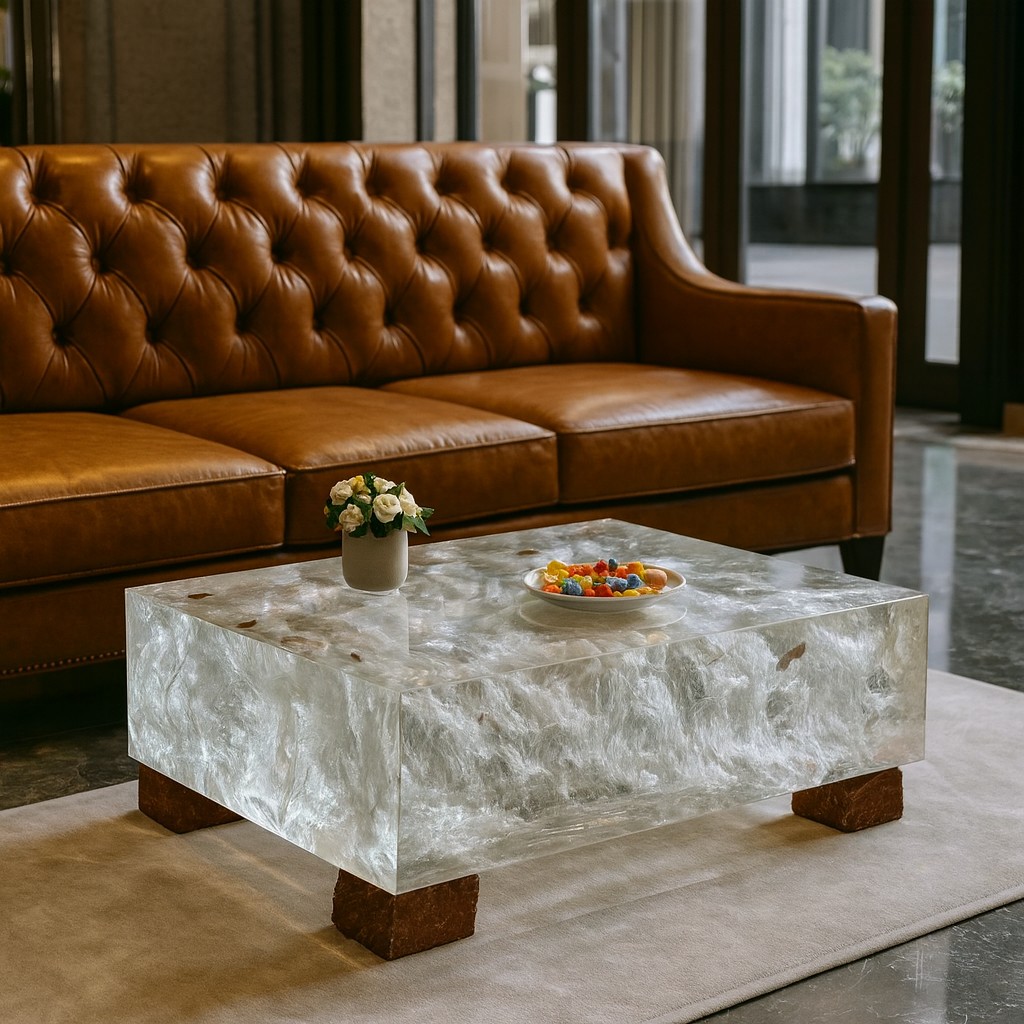
3. Transparency as a Tool for Visual Lightness
Transparency is one of the most important reasons acrylic furniture can elevate a space. In interior design, visual weight matters. A large dark sofa, a thick wooden table, or a bulky cabinet can make a room feel smaller and heavier.
Acrylic furniture reduces this visual weight. Because the eye can pass through it, the furniture feels lighter than its actual size. This helps preserve openness and makes the room appear more spacious.
For small apartments, this effect is extremely useful. A clear acrylic dining chair can make a dining area feel less crowded. A transparent coffee table can keep the living room open. A clear side table can add function without blocking light or movement.
For larger luxury spaces, transparency adds elegance. It creates layers without creating clutter. It allows marble, wood, fabric, metal, and lighting to interact more naturally.
Acrylic furniture also works beautifully with natural light. When sunlight touches polished acrylic edges, the furniture gains a subtle crystal-like glow. Under warm artificial lighting, it can create soft reflections that make the space feel more refined.
4. How Acrylic Furniture Enhances Modern Luxury
Modern luxury is no longer only about expensive materials. It is about restraint, detail, comfort, and emotional quality. Synthetic crystal acrylic furniture fits this new luxury language perfectly.
First, it brings quiet sophistication. Instead of using heavy decorative forms, acrylic furniture improves the room through clarity and precision. Its clean lines and transparent body create a calm but premium feeling.
Second, it supports the idea of “invisible presence.” High-end design increasingly values elements that serve the space without overwhelming it. Acrylic furniture has exactly this quality. It exists, functions, and reflects light, but it does not visually compete with architecture or decoration.
Third, it makes other materials look better. When placed beside marble, acrylic emphasizes luxury. When paired with wood, it creates warmth and balance. When used with metal, it feels modern and sharp. When combined with fabric, it softens the room and adds contrast.
Fourth, acrylic furniture can highlight products or artworks. In showrooms and retail spaces, transparent display stands allow the displayed objects to become the focus. This is why acrylic is widely used for jewelry, cosmetics, art pieces, fashion accessories, and premium product displays.
5. Practical Value Behind the Elegant Appearance
Although synthetic crystal acrylic furniture looks delicate and artistic, it also has strong practical value.
It is lighter than glass, which makes it easier to move and arrange. This is useful for homes, events, offices, and commercial spaces that need flexible layouts.
It has good impact resistance compared with ordinary glass, making it safer for daily use. While acrylic still needs proper care, it is less likely to break into sharp fragments.
It is also easy to clean. Dust and fingerprints can usually be removed with a soft cloth and mild cleaner. To protect the surface, abrasive cleaning tools should be avoided.
Another advantage is customization. Acrylic can be produced in many shapes, thicknesses, colors, and finishes. Designers can create transparent, frosted, tinted, curved, or sculptural pieces according to the needs of the space.
This flexibility allows acrylic furniture to be used not only as functional furniture, but also as part of the spatial concept.
.jpg)
6. Choosing Acrylic Furniture for Different Spaces
For living rooms, acrylic coffee tables, side tables, and display shelves can make the area feel open and stylish. They are especially suitable for spaces with soft rugs, marble floors, or neutral-colored sofas.
For dining rooms, clear acrylic chairs can reduce visual pressure around the table and make the dining area feel brighter.
For bedrooms, acrylic bedside tables, vanity chairs, and small stools can create a light and elegant atmosphere without making the room feel crowded.
For offices, acrylic desks, chairs, partitions, and display stands can express creativity, clarity, and modern professionalism.
For hotels and villas, thicker crystal acrylic pieces can create a refined luxury feeling. Polished edges, clean shapes, and careful lighting can make the furniture look like sculptural objects.
For retail and showroom spaces, acrylic display furniture is especially effective because it supports products without stealing attention from them.
Conclusion
Synthetic crystal acrylic furniture is more than decoration. It is a design tool that can improve spatial temperament, create visual lightness, enhance modern luxury, and support practical function.
Its transparent appearance allows rooms to feel more open and breathable. Its crystal-like surface brings elegance without heaviness. Its flexible form makes it suitable for homes, hotels, offices, showrooms, and commercial interiors.
In modern design, the most advanced beauty is often not the loudest. It is the beauty that quietly improves the entire atmosphere. Synthetic crystal acrylic furniture does exactly that. It does not simply decorate a space. It elevates the character of the space itself.
READ MORE:
- Which Commercial Scenarios Are Best for Platinum Acrylic? Application Strategies from Showrooms to Retail Stores
- How Premium Materials Help Commercial Spaces Elevate Brand Image
- High-End Commercial Material Selection Guide: Don’t Judge by Looks Alone—Evaluate Maintenance Cost First
- From Ordinary to Premium: How One Material Choice Can Elevate the Quality of a Space
- Platinum Acrylic in High-End Spaces: Beautiful, Durable, and Easy to Maintain
- Synthetic Crystal Acrylic Furniture: The Light-Luxury Visual Answer for Modern Homes
- One Piece of Furniture That Lets Light, Space, and Texture Be Seen at the Same Time
- Why Is High-End Design Increasingly Pursuing an “Invisible Presence”?
- Synthetic Crystal Acrylic Furniture: Giving Spaces a “Breathing Sense of Transparency”


