In the world of high-end furniture design, every detail carries meaning. Luxury furniture is no longer defined only by craftsmanship, shape, or brand reputation. Today’s discerning clients, architects, and interior designers are looking deeper into the materials behind each piece. They want to understand not only how a product looks, but also why a specific material was selected, how it performs, and how it contributes to the overall value of the project.
This growing demand for knowledge has made material transparency one of the most important factors in modern luxury furniture projects. Clients investing in premium interiors expect honesty, expertise, and clear communication from furniture brands. They want confidence that the materials used in their spaces reflect quality, innovation, sustainability, and long-term value.
For luxury furniture manufacturers, transparency is not simply about providing technical information. It is about creating trust, strengthening relationships, and helping clients make informed design decisions. When a brand openly communicates the characteristics, advantages, and possibilities of its materials, it transforms the purchasing experience from a simple transaction into a professional design journey.
Among innovative luxury materials, synthetic crystal has gained increasing attention because it represents the perfect combination of advanced technology and timeless elegance. Its exceptional clarity, refined appearance, and design flexibility allow furniture creators to develop unique pieces that meet the expectations of modern luxury interiors.
Understanding why material transparency matters helps explain how premium furniture brands can create stronger connections with clients and deliver exceptional value through every project.
The Changing Expectations of Luxury Furniture Clients
Luxury furniture clients today are more informed than ever before. They have access to global design trends, architectural inspiration, and extensive product information. Before making significant investments, they research materials, compare options, and seek professional opinions.
In previous generations, luxury purchases were often influenced primarily by brand recognition and visual appeal. While aesthetics remain important, modern clients now expect deeper knowledge. They want to know the origin of materials, the manufacturing process, performance characteristics, customization possibilities, and long-term maintenance requirements.
For designers and architects working on premium projects, material selection directly affects the success of the entire interior concept. A beautiful design can lose its impact if the chosen material does not provide the expected performance or visual experience.
This is why transparent communication between furniture brands and clients has become essential.
A luxury furniture company that clearly explains its material choices demonstrates confidence in its products. It shows that the brand values quality and respects clients enough to provide complete information.
Material Transparency Builds Trust in Luxury Design
Trust is one of the most valuable assets in the luxury furniture industry. High-end projects often involve significant investment, detailed customization, and long production timelines. Clients need confidence that their chosen furniture will meet expectations.
Material transparency helps establish this confidence.
When brands explain their materials openly, clients can better understand the relationship between design, function, and value. Instead of simply seeing a beautiful surface, they begin to appreciate the craftsmanship and technology behind the product.
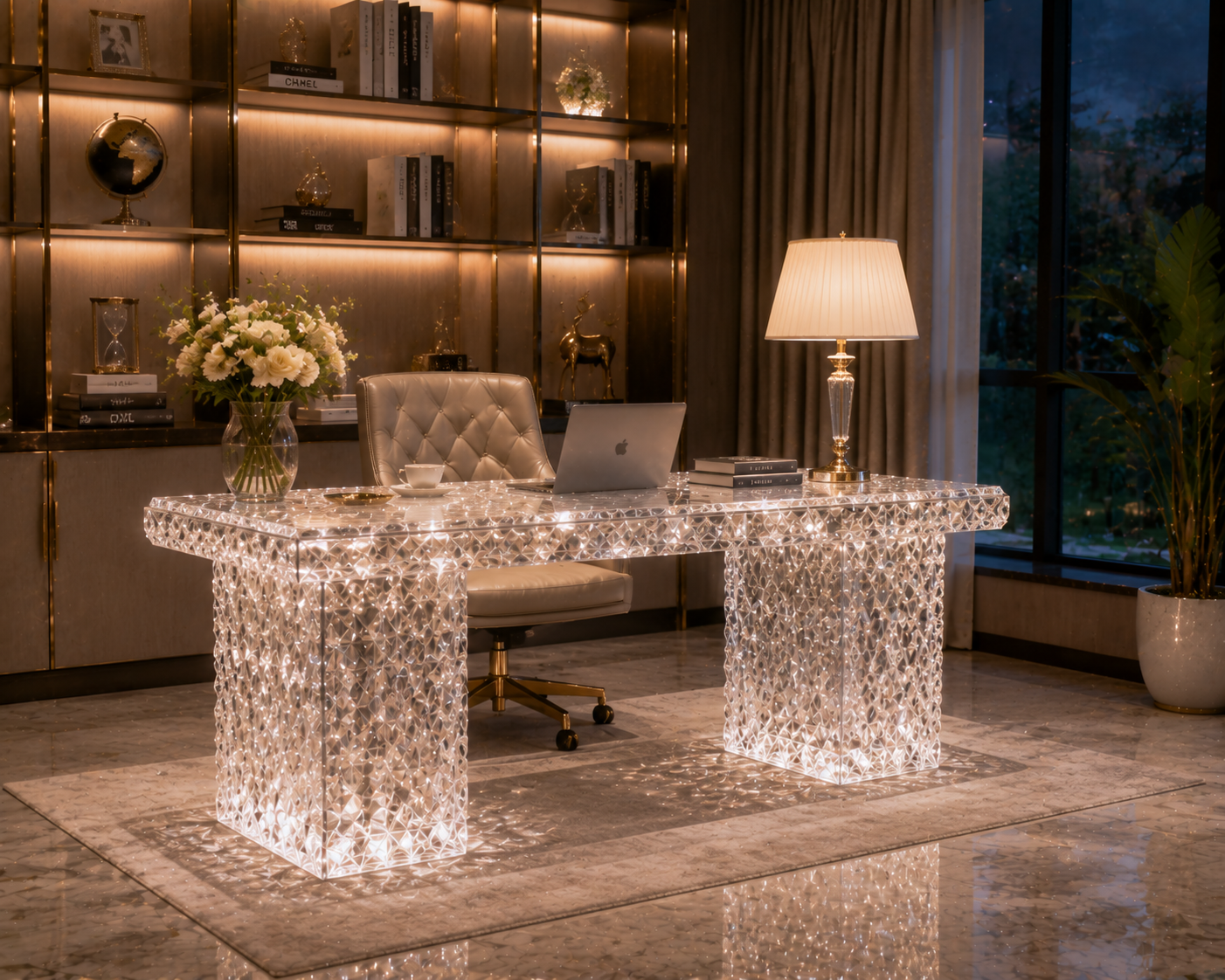
For example, synthetic crystal furniture is not just visually attractive because of its crystal-like appearance. Its value comes from a combination of carefully developed properties, including optical clarity, customization flexibility, structural possibilities, and compatibility with modern luxury design concepts.
By explaining these qualities, furniture brands help clients understand why synthetic crystal is suitable for premium applications.
Transparency allows clients to move from asking “Does this look beautiful?” to understanding “Why is this the right material for my project?”
The Importance of Explaining Material Characteristics
Every premium material has unique characteristics, and professional furniture brands should help clients understand them clearly.
Synthetic crystal is a strong example of how material education can enhance the luxury experience.
Optical Beauty and Light Interaction
One of the defining features of synthetic crystal is its ability to create a sophisticated visual effect through transparency and light reflection.
In luxury interiors, lighting plays a major role in creating atmosphere. Materials that interact beautifully with natural or artificial light can transform a space from ordinary to extraordinary.
Synthetic crystal furniture elements can create depth, brightness, and elegance, making them ideal for statement pieces such as luxury dining tables, coffee tables, side tables, decorative structures, and architectural installations.
Explaining this relationship between material and lighting helps clients understand how the furniture will influence the entire environment.
Custom Design Possibilities
High-end furniture projects often require unique solutions. Designers and clients are rarely looking for standard products. They want furniture that reflects personality, architecture, and brand identity.
Material transparency allows clients to understand how a material can support creative possibilities.
Synthetic crystal offers designers opportunities to explore different shapes, dimensions, colors, textures, and artistic effects. This flexibility allows furniture manufacturers to create customized pieces that become the focal point of a luxury interior.
When clients understand these possibilities, they can participate more confidently in the creative process.
Performance and Long-Term Value
Luxury furniture is an investment. Clients want materials that maintain their beauty and value over time.
A transparent explanation of material performance helps clients make realistic expectations about durability, maintenance, and usage.
Professional furniture brands should provide clear guidance about how materials should be cared for and how they perform in different environments.
This level of communication demonstrates responsibility and reinforces the idea that luxury is not only about appearance but also about lasting quality.
Transparency Helps Designers Make Better Decisions
Interior designers and architects play a crucial role in luxury furniture projects. They need reliable information to select materials that support their creative vision.
When furniture brands provide detailed material knowledge, designers can make more accurate decisions.
For example, understanding the visual qualities of synthetic crystal allows designers to determine where it works best within a space. They can consider how it interacts with lighting, surrounding materials, color schemes, and architectural elements.
Material transparency also encourages collaboration between manufacturers and designers.
Instead of simply choosing from existing products, designers can work with manufacturers to develop customized solutions based on specific project requirements.
This collaborative approach creates better results and strengthens the relationship between all parties involved.
Transparency Differentiates Premium Furniture Brands
The luxury furniture market is highly competitive. Many brands offer visually attractive products, but fewer provide genuine expertise and complete material communication.
A brand that prioritizes transparency creates a meaningful difference.
Clients remember companies that provide professional guidance, answer questions clearly, and demonstrate confidence in their materials.
For synthetic crystal furniture manufacturers, transparency can become a powerful brand advantage. Since synthetic crystal is an advanced and innovative material, educating clients about its benefits helps overcome uncertainty and creates appreciation for its unique value.
A well-informed client is more likely to recognize the craftsmanship behind the product and understand why it represents a premium choice.
Material Transparency and the Future of Sustainable Luxury
Sustainability has become increasingly important in luxury design. Many clients now consider environmental responsibility when selecting furniture materials.
Material transparency supports this movement by encouraging brands to communicate more openly about production methods, material characteristics, and responsible practices.
Modern luxury is evolving toward conscious design. Clients want products that combine beauty with thoughtful manufacturing.
Although luxury materials vary widely in their environmental impact and production methods, transparent communication allows clients to evaluate choices based on reliable information.
Furniture brands that embrace openness demonstrate that luxury and responsibility can exist together.
Creating Better Client Experiences Through Education
A successful luxury furniture brand does not simply provide products. It provides knowledge.
Material education creates a better client experience because it allows customers to participate in the design process with confidence.
Instead of feeling uncertain about technical information, clients become active partners in creating their ideal space.
This educational approach is especially valuable for international projects where communication and trust are critical. Clear material information, professional documentation, and expert consultation help create smoother collaboration across different markets.
For synthetic crystal furniture brands, education is an opportunity to introduce clients to a material that represents innovation, elegance, and future-oriented design.
Why Transparency Will Define the Next Generation of Luxury Furniture
The future of luxury furniture will be shaped by brands that understand the importance of authenticity and communication.
Clients no longer want mystery without explanation. They want beauty supported by knowledge, craftsmanship supported by technology, and luxury supported by trust.
Material transparency provides the foundation for this new approach.
By openly sharing information about materials, luxury furniture brands can create stronger relationships, support better design decisions, and demonstrate the true value behind their products.
Synthetic crystal represents an exciting direction for modern luxury furniture because it combines artistic expression with advanced material innovation. As designers continue searching for unique ways to create unforgettable interiors, materials that offer both beauty and transparency will become increasingly important.
In the end, luxury is not only about what people see when they enter a space; it is about understanding the story, technology, and craftsmanship behind every detail. The brands that reveal this story today will be the ones creating the most inspiring luxury environments of tomorrow.
READ MORE:
- How Luxury Furniture Suppliers Can Support Designers From Concept to Final Installation
- The Role of Artistic Furniture in Creating Memorable Interior Experiences
- How to Create a More Efficient Selection Process for Custom Furniture Projects
- How Luxury Furniture Brands Can Help Clients Choose Materials With Confidence
- Mobili in acrilico effetto cristallo: la nuova frontiera emergente del mercato dell’arredamento di alta gamma
- Come può emergere un marchio di arredamento di alta gamma? Le opportunità di differenziazione offerte dall’acrilico effetto cristallo
- Mobili in acrilico effetto cristallo: trasformare un prodotto “sostituibile” in un prodotto “difficile da replicare”
- Dal mobile funzionale al mobile artistico: l’evoluzione del valore introdotta dall’acrilico effetto cristallo
- Perché la “qualità trasparente” sta diventando una nuova forza competitiva nel design dei mobili?


