Manufacturing capability is equally important. Cutting, polishing, bonding, bending, assembly, packaging, and quality control determine whether the finished product feels premium or ordinary. Strong production systems reduce defects, protect profit margins, and improve customer confidence.
To move beyond price-based competition, manufacturers must develop original collections, recognizable design features, customized solutions, and targeted products for different markets. Residential buyers, designers, hotels, retailers, galleries, and distributors each have different expectations and purchasing priorities.
Brand upgrading requires more than attractive products. Companies must provide professional communication, reliable delivery, technical support, clear storytelling, high-quality photography, and after-sales service. When product quality, design identity, customer experience, and market positioning work together, acrylic furniture becomes more than a manufactured item. It becomes a premium design solution capable of generating stronger margins, long-term partnerships, international growth, and sustainable brand value.
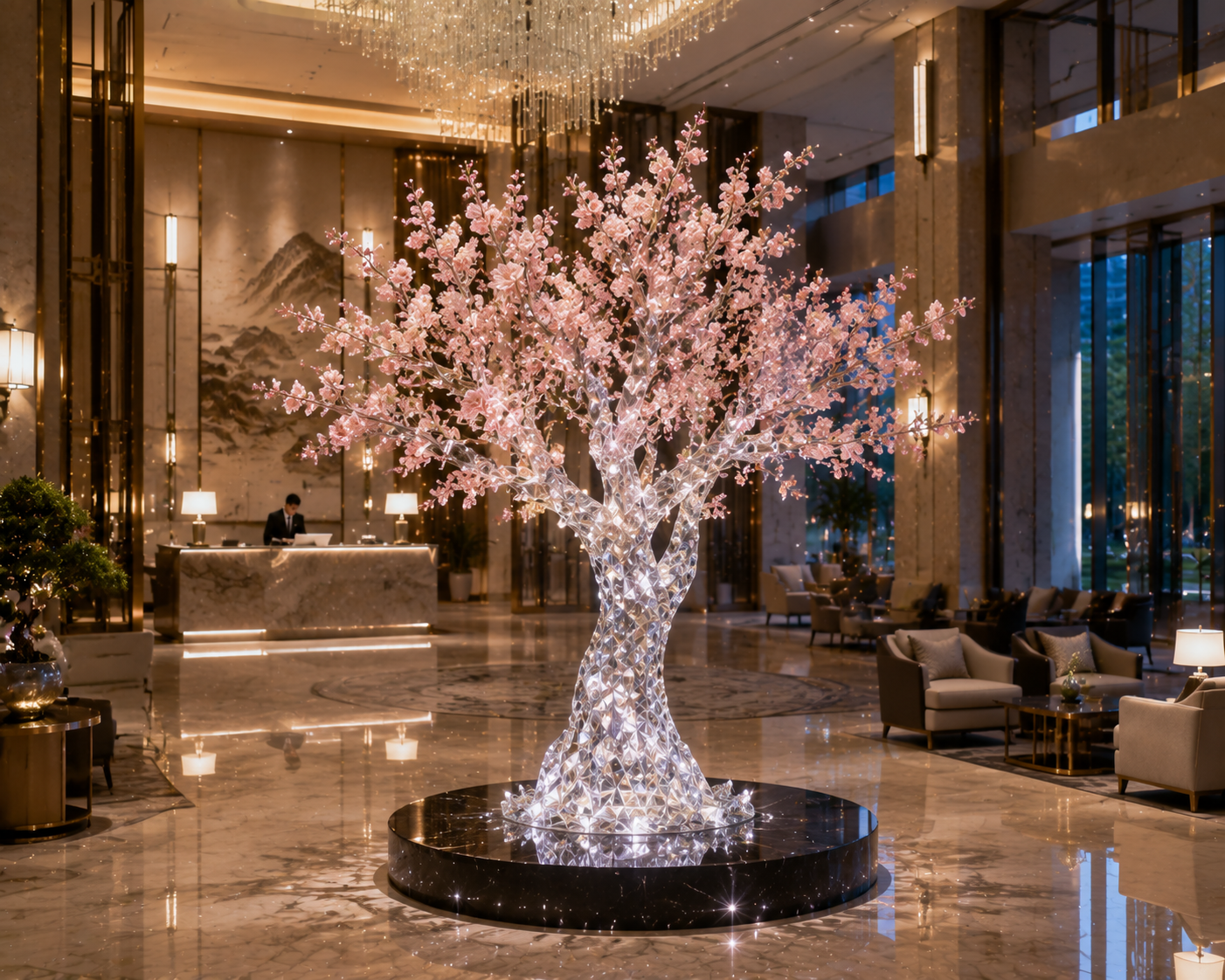
The commercial value of synthetic crystal acrylic furniture cannot be understood simply by looking at the cost of acrylic sheets, production equipment, or labor. The real value of this category is created through a complete chain that begins with material selection and ends with brand positioning, customer experience, and long-term market influence.
At the lower end of the market, acrylic furniture may be treated as a transparent alternative to glass, wood, or metal. Products are often compared mainly by price, size, and basic appearance. At the higher end, however, synthetic crystal acrylic furniture becomes a design product, a decorative object, a commercial display tool, and even a symbol of modern luxury.
The difference between these two positions is not created by marketing alone.
It begins with the quality of the raw material. It continues through cutting, polishing, bonding, forming, assembly, packaging, and installation. It is strengthened by design originality, product consistency, customization capability, and professional service. Finally, it is transformed into brand value through communication, customer trust, and repeated market recognition.
For manufacturers, wholesalers, exporters, interior design companies, furniture brands, and project suppliers, this transformation is commercially important. A company that competes only on material cost and production price will usually face strong price pressure. A company that develops product standards, design advantages, and brand credibility can enter higher-value markets and build stronger margins.
Synthetic crystal acrylic furniture is especially suitable for this kind of value upgrading because the material has both industrial and artistic characteristics. It can be standardized for efficient production, but it can also be customized into sculptural forms. It can serve practical functions, but it can also create visual impact. It can be used in homes, hotels, retail stores, offices, exhibitions, galleries, restaurants, clubs, and luxury commercial spaces.
This article examines the commercial value of synthetic crystal acrylic furniture through six major areas: material selection, manufacturing capability, product design, market segmentation, brand upgrading, and long-term growth.
1. Material Selection as the Foundation of Product Value
Every acrylic furniture product begins with raw material, and material quality determines the upper limit of the final product.
In low-price markets, buyers may focus mainly on whether the furniture is transparent and whether the dimensions meet basic requirements. In premium markets, customers examine optical clarity, color consistency, thickness, surface quality, structural stability, and long-term appearance.
These factors are directly related to material selection.
Acrylic, commonly known as polymethyl methacrylate or PMMA, can be produced through different processes and supplied in different quality levels. Cast acrylic is often preferred for high-end furniture because it generally offers good optical performance, thickness options, machining characteristics, and polishing potential.
However, not all cast acrylic performs equally.
The purity of the raw material affects transparency. The production process affects thickness tolerance. Internal stress affects cutting and bonding behavior. Color consistency affects whether multiple panels look visually unified. Surface quality affects the amount of finishing work required.
For transparent furniture, small material defects can become major commercial problems.
A slight color difference between panels may be clearly visible after assembly. Internal bubbles may reduce the perceived quality of a thick table leg. A cloudy surface may make the entire product look inexpensive. Uneven thickness may create problems during bonding or structural assembly.
This means that material procurement is not only a purchasing activity. It is a quality strategy.
A manufacturer that buys material only according to the lowest price may reduce short-term production costs, but it may also increase waste, rework, customer complaints, and product returns. A premium supplier must evaluate the total commercial cost of the material rather than only the purchase price.
The total cost includes processing stability, defect rates, finishing time, packaging risk, and brand reputation.
Thickness is another important commercial factor.
Thin acrylic sheets are suitable for some decorative applications, but premium furniture often requires thicker material to create visual depth and structural presence. Thick acrylic can make a console table, coffee table, or display pedestal look more substantial and luxurious. It also creates stronger reflections and a crystal-like edge effect.
However, thick material increases cost, processing difficulty, transportation weight, and production risk.
Manufacturers must therefore balance visual impact, structural requirements, and commercial feasibility. Using the thickest possible acrylic is not always the best strategy. The correct thickness depends on the product category, expected load, design language, target market, and price range.
Color selection also contributes to commercial differentiation.
Clear acrylic remains popular because of its transparency and adaptability. At the same time, smoke gray, bronze, amber, blue, black, champagne, rose, and custom translucent colors can help brands create more recognizable collections.
Colored acrylic can increase perceived design value, especially when it is carefully matched with metal, wood, stone, fabric, or leather. It can also help a brand avoid direct price comparison with standard clear products.
Material selection therefore affects more than product quality. It influences design identity, market position, customer perception, and profit potential.
For a company seeking brand upgrading, the first commercial question should not be, “What is the cheapest acceptable material?”
The better question is, “What material standard supports the position we want to achieve?”
2. Manufacturing Capability and Cost Structure
Raw material creates potential, but manufacturing determines whether that potential becomes commercial value.
Synthetic crystal acrylic furniture often appears visually simple. A transparent side table may consist of only a few panels. A console may use clean geometric lines. A chair may appear to be formed from one continuous structure.
This simplicity can be misleading.
Transparent materials expose every manufacturing detail. Scratches, bubbles, uneven edges, poor joints, distorted reflections, and inaccurate alignment are difficult to hide. In solid wood furniture, grain and color may reduce the visibility of some defects. In transparent acrylic furniture, defects often become part of the visual experience.
For this reason, manufacturing capability is one of the strongest commercial barriers in the industry.
The main processes may include material inspection, cutting, CNC machining, drilling, edge finishing, polishing, bending, bonding, assembly, cleaning, quality inspection, packaging, and installation.
Each stage affects the next.
If the cutting is inaccurate, bonding becomes difficult. If the edge is poorly finished, polishing requires more time. If heating is uneven during bending, the material may warp. If bonding surfaces are not properly prepared, bubbles or white marks may appear. If packaging is weak, a perfect product may arrive scratched.
The commercial value of manufacturing lies in consistency.
A manufacturer may be able to produce one excellent sample, but a brand or project client needs reliable quality across ten, one hundred, or one thousand units. Premium buyers expect repeatable color, dimensions, surface finish, and structural performance.
Consistency requires documented standards.
The company must define acceptable tolerances, polishing requirements, bonding appearance, protective procedures, hardware specifications, and inspection methods. Workers must understand these standards. Supervisors must be able to identify defects before the product reaches the customer.
This system increases operational discipline, but it also protects profit margins.
Without quality control, defective products create hidden costs. These include material waste, labor duplication, production delays, transport claims, customer compensation, replacement products, and damage to reputation.
In export business, the cost of a single quality problem can be especially high. A scratched table delivered to another country may require international communication, partial refunds, replacement production, and additional shipping.
Manufacturing excellence therefore has direct financial value.
It also affects pricing.
A company with advanced cutting, polishing, and bonding capability can produce designs that competitors cannot easily copy. It can accept thicker materials, larger dimensions, complex curves, and mixed-material structures. It can provide customized solutions to designers and project clients.
This technical capability becomes a reason for customers to pay more.
Cost structure must still be managed carefully. Premium quality does not mean uncontrolled cost. Successful companies identify which processes create visible customer value and which processes can be standardized or automated.
CNC cutting may improve precision and efficiency. Reusable fixtures may reduce assembly errors. Standardized packaging modules may lower damage rates. Digital production records may help control custom orders.
The goal is not simply to make products more expensive. The goal is to create a production system that supports premium pricing while protecting margins.
Logistics is also part of manufacturing value.
Acrylic furniture is lighter than equivalent glass furniture, but large pieces can still be heavy and difficult to handle. Transparent surfaces are sensitive to scratches. Corners and edges require protection. Certain products may need to be shipped fully assembled, while others can be designed for safer modular assembly.
A company that develops professional packaging, clear installation instructions, and reliable transport solutions gains a significant commercial advantage.
The customer does not separate production from delivery. The entire experience is judged as one service.
.png)
3. From Functional Furniture to Design-Led Products
Many acrylic furniture companies begin as manufacturers. They receive drawings, produce according to customer requirements, and earn revenue from processing.
This model can create stable business, but it often limits brand value.
When the customer controls the design and the manufacturer competes mainly on cost, the company remains replaceable. Another factory with similar equipment may offer a lower price.
To increase commercial value, manufacturers must gradually move from production-led thinking to design-led thinking.
This does not mean abandoning manufacturing services. It means creating additional value through original products, recognizable collections, and stronger market understanding.
A functional acrylic table answers a basic question: where can a customer place an object?
A design-led acrylic table answers a larger question: how should this product influence the room?
Its proportions, transparency, edge treatment, color, and structure are developed as part of a visual concept. The product becomes more than a practical object. It becomes part of an interior identity.
Design-led products are easier to position at higher price levels because they are not directly comparable with generic alternatives.
A standard clear cube may be compared by size and price. A sculptural table with a signature curved base, custom color, and carefully developed proportions is compared by design value.
This difference is essential for brand upgrading.
Product collections can help create this value.
Instead of offering unrelated individual items, a company can develop a complete collection based on a consistent language. A collection may include a coffee table, console, side table, bench, dining table, chair, shelf, and display pedestal.
The products may share the same edge detail, color palette, geometry, or material combination.
Collections improve commercial performance in several ways.
They make the brand easier to recognize. They encourage customers to buy multiple products. They help interior designers specify coordinated items. They make photography, catalog design, and showroom presentation more coherent.
They also make product development more efficient. Once a successful design language is established, it can be adapted across different categories.
Application scenarios are equally important.
Acrylic furniture should not be marketed only as a product. It should be shown in the environments where it creates value.
A transparent console can be positioned for luxury residential entrances. An acrylic pedestal can be marketed to galleries and jewelry stores. A smoke-colored table can be developed for boutique hotels. A clear bench can be shown in a fashion showroom or dressing room.
Different scenarios create different commercial meanings.
The same material may be sold as household furniture, commercial display equipment, event decoration, or gallery presentation. Each market has different expectations, purchasing processes, and price structures.
A company that understands these differences can create more targeted products and messages.
Design also reduces dependence on customization.
Customization is valuable, but fully custom production can be slow and difficult to scale. A balanced business model may combine standard collections with controlled customization.
For example, a company may offer standard designs with optional dimensions, colors, thicknesses, hardware, or finishes. This allows customers to feel that the product is personalized while the manufacturer maintains production efficiency.
The strongest brands often combine originality with repeatability.
They create products that feel special but can still be produced consistently.
4. Market Segmentation and Premium Customer Demand
Synthetic crystal acrylic furniture serves several customer groups, and each group defines value differently.
Understanding these differences is essential for pricing, product development, communication, and sales strategy.
The first group is high-end residential consumers.
These buyers are often interested in visual appeal, customization, exclusivity, and compatibility with their interiors. They may purchase through interior designers, furniture showrooms, online platforms, or direct brand channels.
For residential customers, emotion plays a major role.
The product must look beautiful in the home. It should feel special. It should create a sense of luxury without making the room feel heavy. Clear acrylic is especially attractive in smaller spaces or interiors with strong architectural details.
Residential buyers may also care about maintenance, safety, delivery, and installation. Brands must explain how to clean the surface, avoid scratches, and protect the product during everyday use.
The second group is interior designers and architects.
These professionals value technical information, customization, reliable lead times, drawings, samples, and project coordination. They need suppliers who understand design intent and can communicate clearly.
For designers, a strong supplier reduces risk.
They want to know that dimensions will be accurate, colors will match, joints will be clean, and installation will be completed correctly. A manufacturer that provides technical support can become a long-term partner rather than a one-time vendor.
The third group is hotels, restaurants, clubs, and other hospitality clients.
These buyers often require visual impact, durability, project pricing, schedule control, and consistent production across multiple units. Furniture may need to meet specific operational or safety requirements.
Hospitality projects can generate larger orders, but they often involve complex approval processes. Samples, mockups, revisions, and coordination with other suppliers may be necessary.
The fourth group is luxury retail.
Fashion, jewelry, beauty, watch, and lifestyle brands frequently use acrylic for displays, counters, pedestals, shelving, and decorative structures. In this market, furniture is part of the brand experience.
Optical quality and finish are extremely important because acrylic often appears next to expensive products.
Retail clients may also require short production schedules, strict color control, special packaging, and international delivery. A supplier that understands visual merchandising can charge for more than basic fabrication.
The fifth group is galleries, exhibitions, and museums.
These clients may use acrylic pedestals, vitrines, display bases, and protective structures. Precision, clarity, and object presentation are central.
The furniture or display system must support the artwork without distracting from it.
The sixth group is wholesalers and furniture distributors.
These buyers focus on product reliability, margin potential, packaging size, market demand, and after-sales risk. They may prefer standardized collections that can be stocked and sold efficiently.
Each market requires a different commercial strategy.
A product catalog designed for retail distributors may emphasize dimensions, packaging, and order quantities. A presentation for interior designers may emphasize customization, finishes, technical drawings, and project references. A luxury consumer campaign may focus on lifestyle, emotion, and visual storytelling.
Companies that use the same message for every customer often lose opportunities.
Market segmentation also helps avoid unnecessary price competition.
A manufacturer selling directly to wholesalers may compete strongly on unit price. The same manufacturer selling a custom-designed installation to a luxury store may compete on design interpretation, production speed, and project execution.
The material is similar, but the commercial value is different.
This is why companies should think in terms of solutions rather than products.
5. Brand Upgrading Through Quality, Service, and Storytelling
A premium brand is not created by a logo or an expensive catalog.
It is created when customers repeatedly experience a clear and credible standard.
For synthetic crystal acrylic furniture, brand upgrading depends on three connected elements: product quality, service quality, and communication quality.
Product quality is the foundation.
The company must deliver consistent clarity, polishing, bonding, structure, and packaging. A brand cannot maintain a premium position if customers receive products with visible defects.
Service quality begins before the order.
Sales representatives should understand the material and production process. They should be able to explain thickness, color options, structural limitations, maintenance, and delivery conditions.
This professional knowledge creates confidence.
During the order, customers need clear communication about drawings, approvals, production schedules, and changes. After delivery, they may need installation support, care instructions, replacement parts, or restoration advice.
For custom and project business, service can be as important as the product itself.
Storytelling turns these capabilities into market perception.
Many manufacturers have strong technical ability but communicate only through product photos and basic specifications. They do not explain why the material was selected, how the edges were finished, what design problem was solved, or how the product was developed.
As a result, customers see the product but not the value behind it.
Effective brand storytelling can show the complete process.
It can present raw material inspection, precision cutting, hand polishing, sample testing, custom color development, assembly, and final installation. It can introduce designers, technicians, and project partners.
This content helps customers understand why one product costs more than another.
Visual identity is also important.
Premium acrylic furniture requires high-quality photography because transparency is difficult to present. Lighting, background, styling, and camera angle must reveal the edge quality, thickness, reflection, and relationship with the space.
Poor photography can make an excellent product look ordinary.
Strong brands invest in room scenes, detailed close-ups, videos, and project case studies. They show the product in real environments rather than only on white backgrounds.
Packaging can also support brand upgrading.
A clean, organized unboxing experience communicates professionalism. Protective materials, printed instructions, labeled hardware, and clear handling guidance reduce customer anxiety.
Even documents matter.
Quotations, drawings, material samples, warranty information, and care manuals should reflect the same level of quality as the furniture.
Brand value is created through every contact point.
Partnerships can accelerate this process.
Working with interior designers, architects, artists, hospitality groups, luxury retailers, and furniture distributors can strengthen credibility. Co-designed collections and project collaborations can help a manufacturer enter markets that would be difficult to reach alone.
However, partnerships must be selected carefully. A premium brand should maintain control over product quality, visual presentation, and pricing logic.
Digital marketing also creates opportunities.
Acrylic furniture performs well in visual content because of its reflections, transparency, and sculptural effects. Short videos can show light moving across polished edges. Production content can demonstrate craftsmanship. Before-and-after interior projects can show how transparency changes a space.
The purpose of this content is not simply to attract attention. It is to build a clear association between the brand and specific values.
Those values may include precision, modernity, customization, transparency, or artistic design.
When customers remember these values, the company begins to move beyond factory identity and toward brand identity.
.png)
6. Long-Term Commercial Value and Growth Opportunities
The long-term commercial value of synthetic crystal acrylic furniture lies in its ability to connect several markets.
It belongs to the furniture industry, but it also overlaps with interior design, luxury retail, commercial display, hospitality, art presentation, and architectural decoration.
This creates multiple paths for growth.
The first opportunity is premium product development.
Companies can improve margins by developing original collections, special finishes, thicker structures, mixed materials, and limited editions. These products can target design-conscious consumers and professional buyers who value differentiation.
The second opportunity is controlled customization.
A company can offer standard product families with flexible dimensions, colors, and materials. This model allows higher pricing without the full cost of one-off engineering.
The third opportunity is project business.
Hotels, stores, clubs, offices, galleries, and exhibitions can generate larger orders and long-term relationships. To succeed in this market, companies need professional project management, sample development, and installation capability.
The fourth opportunity is international expansion.
Acrylic furniture has global visual appeal. Clear and neutral designs can adapt to many interior styles. However, international business requires attention to packaging, transport, certification, documentation, and after-sales service.
Brands should not enter new markets based only on low price.
They should identify the customer groups that value their design and technical advantages. A company with strong custom production may target design studios. A company with scalable collections may target distributors. A company with advanced display capability may target luxury retail contractors.
The fifth opportunity is material innovation.
Acrylic can be combined with recycled content, special surface treatments, integrated lighting, digital printing, embedded materials, and smart functions. These developments can create new product categories and support stronger design stories.
Sustainability will also become increasingly important.
Acrylic is a synthetic material, so brands must communicate responsibly. They should avoid unsupported environmental claims. Instead, they can focus on durable design, repairability, replaceable components, efficient cutting, waste reduction, long product life, and recycling partnerships where available.
A product that remains useful and desirable for many years may create more value than a low-cost product that is quickly replaced.
The sixth opportunity is intellectual property and design ownership.
Original designs can become long-term assets. A successful table, chair, or display system can generate repeated sales, licensing opportunities, and brand recognition.
This is different from contract manufacturing, where value ends when the order is completed.
Design ownership allows a company to accumulate commercial influence over time.
The seventh opportunity is data and customer knowledge.
Brands that sell directly or maintain long-term designer relationships can learn which sizes, colors, and styles perform best. They can use this information to improve inventory, product development, and marketing.
This knowledge becomes a competitive advantage.
The strongest long-term position is created when several advantages work together: reliable material, strong production, original design, professional service, clear branding, and market relationships.
Competitors may copy one product, but they will find it harder to copy the entire system.
Conclusion
The commercial value of synthetic crystal acrylic furniture is created through transformation.
Raw acrylic becomes furniture through manufacturing. Furniture becomes a design product through creativity. A design product becomes a premium offering through quality, service, and presentation. A premium offering becomes a brand through consistency and market trust.
Material selection is the first step because it determines optical quality, processing stability, and product potential.
Manufacturing capability turns that material into a reliable product. Precision cutting, polishing, bonding, forming, assembly, inspection, and packaging all contribute to customer value.
Design moves the company away from direct price competition. Recognizable products and collections create differentiation and support premium pricing.
Market segmentation helps the company understand what different customers are actually buying. Residential consumers may buy beauty and atmosphere. Designers may buy flexibility and reliability. Luxury retailers may buy presentation and execution. Distributors may buy consistency and margin potential.
Brand upgrading connects all of these elements.
A strong brand does not simply claim to be premium. It demonstrates premium value through materials, products, communication, delivery, and service.
For companies in the synthetic crystal acrylic furniture industry, the greatest opportunity is not to sell more transparent furniture at lower prices. It is to build a complete value system that customers can see, understand, and trust.
When this system is established, acrylic is no longer viewed as a simple plastic material.
It becomes a design medium, a commercial solution, and a foundation for long-term brand growth.
READ MORE:
- From Functional Furniture to Art Installation: How Transparent Materials Elevate Hotel Brand Recognition
- How Can One Transparent Piece of Furniture Activate Hotel Corners and Transitional Spaces?
- Luxury Without Excess: How Resin and Synthetic Crystal Create a Premium Furniture Aesthetic
- Transparency, Refraction and Light: How Synthetic Crystal Furniture Adds Depth to Hotel Interiors
- Hotel Corridors Should Never Be Boring: How Transparent Furniture Creates a Distinctive Spatial Memory
- Synthetic Crystal Acrylic Furniture: Creating Stronger Market Competitiveness Through a Distinctive Material
- Why Is Transparent Furniture Becoming an Important Trend in Modern Luxury Design?
- Synthetic Crystal Acrylic Furniture: A Key Element in Creating Differentiated Experiences for High-End Projects
- Synthetic Crystal Acrylic Furniture: Why Are More High-End Buyers Willing to Pay for “Quality and Texture”?


