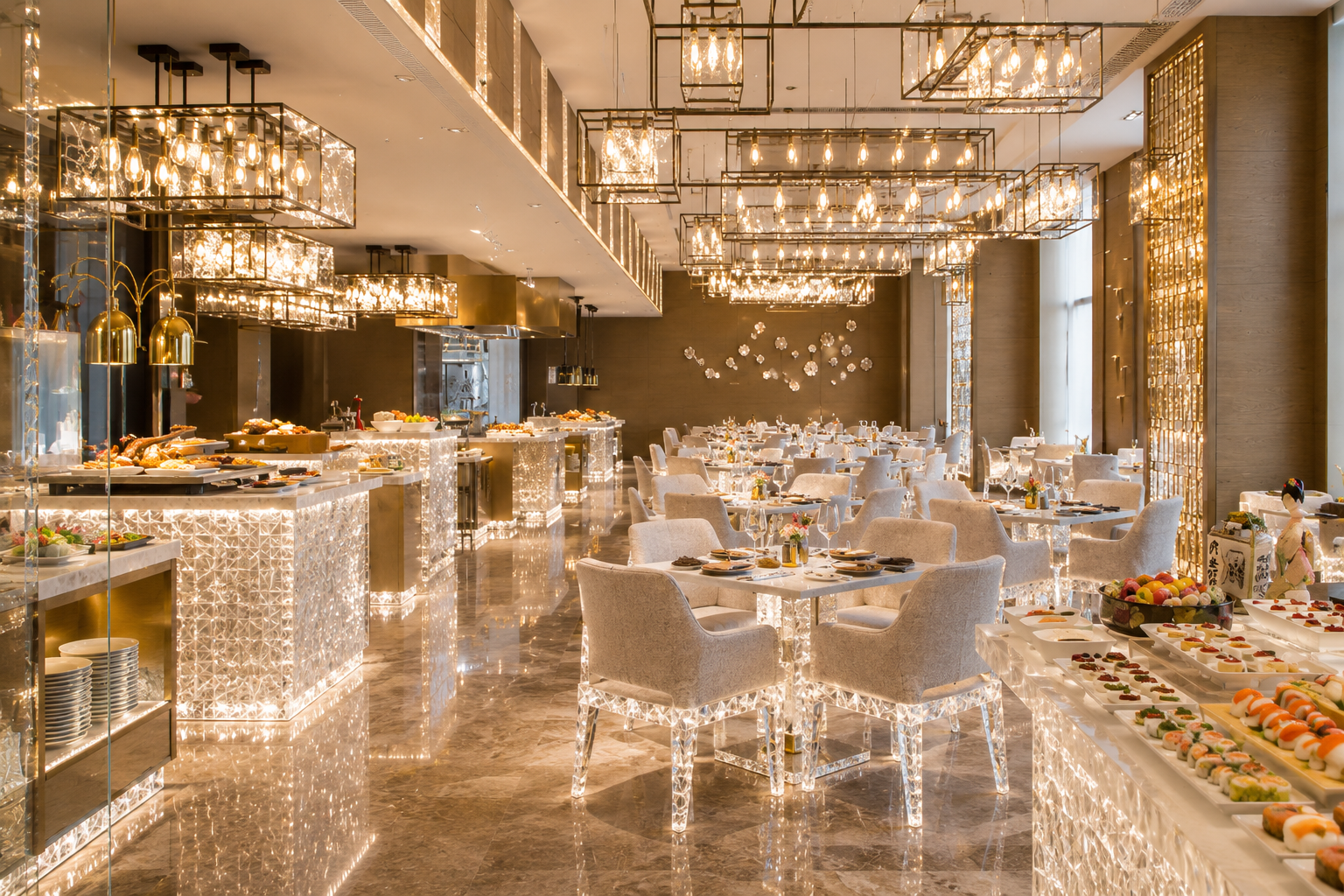
In premium interiors, material choice is never only about appearance. A luxury hotel lobby, private villa, flagship retail store, art gallery, club lounge, executive office, or high-end restaurant must look refined on opening day and remain impressive after months or years of real use. Surfaces are touched, cleaned, moved, photographed, exposed to lighting, and judged by visitors from very close distances. This is why platinum acrylic has become an increasingly valuable material language for high-end spaces: it combines visual clarity, sculptural elegance, practical durability, and simple day-to-day care.
In this article, “platinum acrylic” refers to premium design-grade acrylic, usually based on PMMA, used in clear, smoky, champagne, silver-toned, frosted, metallic, or crystal-like applications. It may appear as furniture, display plinths, partitions, decorative panels, reception counters, art bases, lighting covers, shelving, signage, wall features, or custom installations. Its greatest advantage is that it delivers a high-end look without the visual heaviness of many traditional luxury materials.
Acrylic is often compared with glass because of its clarity, but it should not be understood as a glass substitute only. In luxury design, it performs as a distinct material: lighter in visual expression, easier to shape, warmer in atmosphere, more flexible in fabrication, and more adaptable to contemporary interiors. Technical data from ACRYLITE shows that colorless extruded acrylic sheet can offer glass-like clarity with 92% light transmission, which explains why it is widely used where transparency, brightness, and premium presentation matter.
1. It creates a luxurious visual effect without making the space feel heavy
The first advantage of platinum acrylic is its ability to make a space look expensive while still feeling open. In high-end interiors, visual weight matters. Marble, metal, stone, dark wood, and leather can all communicate luxury, but when overused, they may make a space feel dense or visually crowded. Platinum acrylic offers a different kind of luxury: clean, luminous, polished, and almost floating.
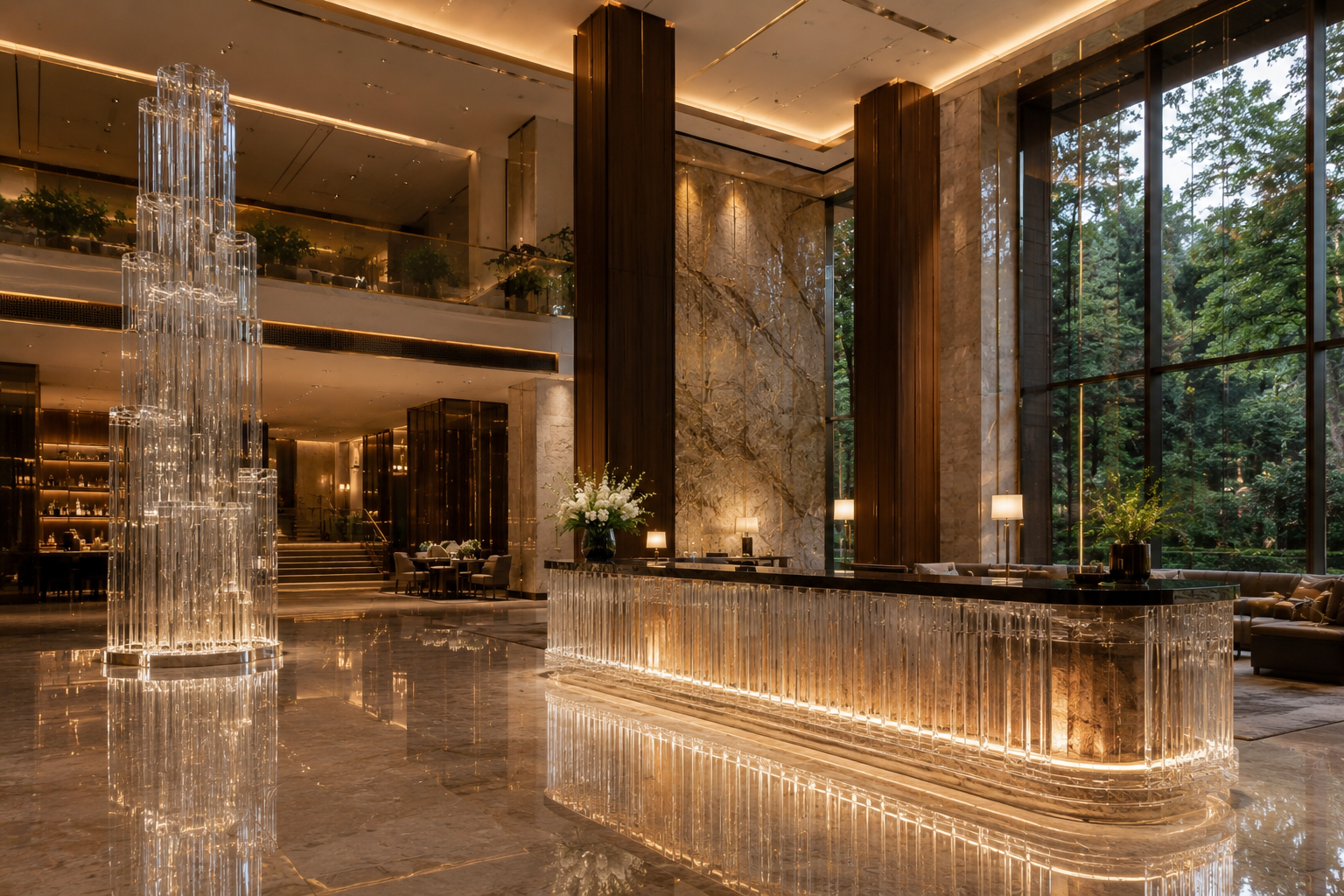
This is especially useful in spaces where designers need both elegance and openness. For example, a boutique may use platinum acrylic display blocks to elevate handbags, jewelry, cosmetics, watches, or art objects without visually blocking the merchandise. A villa may use an acrylic side table beside a sofa because it reflects light and preserves the openness of the living room. A hotel lobby may use acrylic partitions or sculptural features to create zoning while keeping the guest’s sightline open.
The material works well because it interacts beautifully with light. Clear and lightly tinted acrylic can soften reflections, catch highlights on polished edges, and create a layered crystal effect. When placed near warm lighting, stone walls, brushed metal, or textured fabrics, platinum acrylic can make the whole setting feel more refined. This is not only a decorative effect; it is a spatial strategy. The transparent or semi-transparent quality allows designers to add furniture, display, or structure without visually shrinking the room.
This is where acrylic becomes especially valuable in modern luxury. Many high-end projects now seek a balance between richness and simplicity. Instead of filling a room with heavy ornament, designers use fewer materials with stronger detail. A platinum acrylic console, shelving unit, partition, or display stand can become a visual highlight while still allowing the surrounding architecture to breathe.
The clarity of premium acrylic also supports product presentation. In retail and showroom environments, the display material should not fight with the product. A transparent or platinum-toned acrylic base can make the displayed item appear more important while remaining visually quiet. That is why acrylic is often used in luxury retail windows, museum-like product displays, cosmetic counters, jewelry trays, and art installations.
PLEXIGLAS describes its acrylic material as colorless and transparent in its purest form, while also offering many color options and functional surfaces. In practical design terms, this means platinum acrylic can support many styles: modern minimalism, art deco luxury, boutique futurism, quiet luxury, soft contemporary, and even warm residential interiors when paired with wood, fabric, or stone.
The key is proportion. In a luxury space, acrylic should not be used randomly. It works best when treated as a controlled accent: a display riser, a table base, a panel insert, a lighting diffuser, a sculptural object, or a refined transparent layer. When properly designed, platinum acrylic does not look “plastic.” It looks intentional, architectural, and polished.
2. It offers practical durability for real high-end use
A luxury material must survive real life. High-end spaces may look calm in photos, but they are often high-traffic environments. Hotel lobbies receive luggage, handbags, children, cleaning teams, and constant guest movement. Retail stores experience repeated product handling and display changes. Restaurants and clubs need surfaces that can handle service routines. Private homes require materials that stay elegant despite daily use.
Platinum acrylic is valuable because it gives designers a strong balance between appearance and durability. Compared with glass, acrylic is much lighter and more resistant to breakage in many applications. One PLEXIGLAS technical sheet lists general properties including excellent light transmission, outstanding weather resistance, high surface hardness, light weight at about half the weight of glass, and significantly higher break resistance than glass for the specified product sheet.
This matters in real projects. A large acrylic display block can be easier to transport and install than an equivalent glass element. A custom acrylic partition may reduce breakage concerns during handling. A table, pedestal, or shelf can provide visual clarity while avoiding some of the fragility associated with glass. In commercial interiors, this can reduce operational anxiety because fixtures must often be moved, cleaned, restocked, and adjusted.
Durability also depends on specification. Not all acrylic is equal. Thickness, grade, fabrication method, edge treatment, coating, installation details, and cleaning policy all affect performance. For a high-end project, designers should avoid treating acrylic as a generic material. A reception desk panel, retail display block, decorative screen, or dining table base should be specified according to use conditions.
For example, an acrylic side table in a private bedroom has different requirements from a retail display shelf holding heavy products. A decorative wall panel behind a bar has different exposure than an acrylic partition near a busy entrance. A hotel display plinth must resist frequent cleaning, while a gallery base may need optical clarity and polished edges above all else. Good specification turns acrylic from a decorative material into a professional interior solution.
There are also acrylic variants designed for improved impact performance. ACRYLITE notes that its impact-modified acrylic products can offer high optical quality with greater impact strength for durability during manufacturing, shipping, and in-store use. For premium interiors, this is important because damage risk does not only happen after installation; it also occurs during fabrication, transport, installation, cleaning, and seasonal display changes.
The material’s durability is not only physical. It is also visual. A high-end surface must continue to look clean, bright, and intentional. Some premium acrylic products are designed for long-term optical performance. PLEXIGLAS states that clear-transparent sheets are guaranteed to retain light transmission of up to 90%, depending on material type and region, even after 30 years of use, because of UV-stable technology that helps prevent yellowing.
For high-end spaces, this long-term clarity is a strong advantage. A yellowed, cloudy, or dull surface quickly makes an interior look old. When acrylic is properly selected, fabricated, installed, and maintained, it can preserve the clean and luminous quality that made it attractive at the beginning.
3. It is easier to maintain than many visually luxurious materials
The third major advantage of platinum acrylic is ease of maintenance. In luxury interiors, cleaning is part of brand experience. A hotel guest notices fingerprints on a display table. A boutique customer notices dust on a transparent shelf. A villa owner notices scratches on a decorative object. A restaurant guest notices cloudy panels or poorly maintained surfaces. Even beautiful materials lose value when they are difficult to keep clean.
Acrylic has a practical maintenance advantage because it can usually be cleaned with simple methods when the correct care rules are followed. For daily care, soft microfiber cloths and acrylic-safe cleaners are typically preferred. Architectural Digest, citing care advice for acrylic and Lucite furniture, warns against ammonia-based cleaners because they can make acrylic cloudy, and it recommends gentle handling, microfiber cloths, and appropriate plastic cleaning products.
This guidance is especially important in commercial interiors, where cleaning staff may automatically use glass cleaner on transparent surfaces. Acrylic should not be treated exactly like glass. The wrong cleaner can damage the surface, reduce clarity, or create haze. A high-end project should therefore include a simple maintenance card for housekeeping, retail staff, or the homeowner. The care protocol should state what to use, what to avoid, and how to handle objects placed on acrylic surfaces.
The good news is that correct maintenance is not complicated. For most decorative and furniture applications, the routine is simple: remove dust gently, wipe with a soft cloth, use mild soap or acrylic-safe cleaner when needed, avoid abrasive pads, avoid ammonia, avoid dragging hard objects across the surface, and use protective pads under metal or ceramic accessories. These small habits preserve the material’s polished look.
This maintenance advantage becomes more important when compared with other high-end materials. Marble is beautiful but can stain or etch. Brass can oxidize and require polishing. Lacquer can chip. Glass shows fingerprints and may break. Wood can swell, scratch, or discolor if poorly protected. Acrylic is not maintenance-free, but it offers a practical balance: it looks refined, cleans easily, and can remain attractive with basic care discipline.
In commercial design, cleanability is now a professional concern rather than a minor detail. BIFMA’s updated furniture surfaces guideline is intended to help manufacturers, specifiers, and end users evaluate how furniture surfaces perform when exposed to commonly used cleaning, sanitizing, and disinfecting products. This reflects a broader shift: designers must think not only about how a material looks at handover, but also how it responds to repeated cleaning in real environments.
For high-end spaces, this is essential. A beautiful material that cannot tolerate normal cleaning becomes a liability. Platinum acrylic can perform well when the right grade is selected and the cleaning method is controlled. This makes it especially suitable for retail counters, reception areas, vanity accessories, display units, bar shelving, private dressing rooms, and decorative partitions.
The practical recommendation is clear: specify acrylic professionally, train the cleaning team, and avoid harsh chemicals. With this approach, platinum acrylic can deliver the polished visual quality of luxury design while remaining manageable in everyday operation.
4. It supports custom design, fabrication, and brand identity
High-end spaces rarely use purely standard solutions. A luxury project often requires special dimensions, unique colors, custom display formats, integrated lighting, brand details, curved shapes, engraved logos, layered panels, or unusual furniture forms. Platinum acrylic is strong in this area because it is highly adaptable.
Acrylic can be cut, polished, bonded, engraved, printed, thermoformed, bent, layered, tinted, frosted, mirrored, or combined with metal, stone, wood, leather, fabric, and lighting. This gives designers freedom to create a material language that feels exclusive. A simple clear acrylic block can look minimal and gallery-like. A smoky platinum acrylic partition can feel architectural. A frosted acrylic panel with backlighting can create a soft hospitality atmosphere. A thick polished acrylic table base can create the impression of crystal mass without the weight and fragility of glass.
This flexibility is valuable in luxury retail. Brands often need display systems that match their identity. A jewelry brand may prefer high-clarity acrylic that makes small products appear precise and elevated. A cosmetics brand may use frosted or tinted acrylic to create softness and color harmony. A fashion boutique may use platinum acrylic risers to add height and rhythm to product displays. A watch store may use acrylic trays, blocks, and protective covers to combine visibility with order.
It is also valuable in hospitality and residential projects. In a hotel, acrylic can be used for signage, bar shelving, lighting diffusers, decorative screens, menu holders, amenities trays, and art installations. In a private villa, it may appear as coffee tables, side tables, vanity organizers, display shelves, wine-room accessories, wardrobe inserts, or sculptural lighting pieces. The same material can be subtle or dramatic depending on finish and detail.
PLEXIGLAS identifies optical acrylic products as suitable for furniture, exhibition booth construction, shopfitting, large-scale wall claddings, picture glazing, and rear-side printing, showing how widely acrylic can be applied in design and display environments. ACRYLITE also lists glazing applications that include interior partitions, room dividers, picture frames, fascia panels, and other architectural uses.
This range is one reason platinum acrylic works in high-end spaces. It can connect different design elements under one visual system. For example, a boutique hotel could use the same acrylic family for the reception logo, suite-number signs, lobby display shelves, bar bottle risers, spa product stands, and bathroom amenity trays. This creates consistency without making the space feel repetitive.
Good custom acrylic design depends on detail. Edge polishing, joint quality, hardware selection, thickness, anti-slip pads, lighting temperature, and installation tolerances all influence the final impression. Poorly finished acrylic can look cheap. Well-finished acrylic can look like a luxury object. In high-end projects, the fabrication quality is as important as the material itself.
A professional approach should include mockups. Designers should test the acrylic color under project lighting, check reflections, confirm transparency, evaluate edge glow, and review fingerprints under real conditions. This ensures that the final installation supports the intended luxury atmosphere.
5. It improves the user experience through light, openness, and order
The fifth advantage is experiential. High-end design is not only about expensive materials; it is about how people feel inside the space. Platinum acrylic contributes to comfort by supporting lightness, openness, visibility, and order.
In small luxury spaces, such as boutique stores, dressing rooms, private offices, or apartment interiors, transparent or lightly tinted acrylic helps reduce visual clutter. A clear table or display shelf can perform its function without blocking the room. This makes the interior feel larger and more organized. In spaces where photography matters, acrylic can also create elegant reflections and highlights without overwhelming the scene.
In larger spaces, acrylic supports zoning. A platinum acrylic screen can define a VIP seating area without fully separating it. A translucent panel can soften light while maintaining privacy. A display wall can organize products while allowing depth. This is useful in hotel lobbies, salons, showrooms, galleries, luxury clinics, and branded experience centers.
Acrylic also supports better product visibility. In a retail setting, customers should see the product first, not the fixture. Transparent or platinum-toned acrylic creates a quiet stage. It can lift products, guide attention, and create a sense of precision. The display becomes part of the experience but does not dominate it.
There is also a psychological aspect. Clean, luminous, well-maintained materials communicate care. When a guest sees polished acrylic surfaces, clear signage, organized displays, and dust-free transparent elements, the space feels controlled and premium. In luxury environments, this sense of care is part of the brand promise.
Health and safety expectations have also changed the way designers think about interiors. The WELL Building Standard positions buildings and organizations around strategies related to health, safety, and performance, which shows that modern spaces are increasingly evaluated through user well-being as well as aesthetics. While WELL does not prescribe platinum acrylic as a material, its framework supports the broader idea that surfaces, maintenance, cleaning, and user experience are connected.
In environments with strict cleaning expectations, such as clinics, wellness centers, salons, and hospitality spaces, cleanable surfaces are especially important. CDC environmental cleaning guidance focuses on best practices for cleaning procedures in patient-care settings, showing how seriously surface cleaning is treated in professional environments where hygiene matters. High-end commercial spaces may not need healthcare-level protocols, but they can learn from the same principle: surfaces should be selected with maintenance and cleaning behavior in mind.
Platinum acrylic fits this new expectation because it combines design value with operational clarity. It can be beautiful, but it can also be part of a disciplined maintenance system. This makes it suitable for modern premium spaces where aesthetics, hygiene perception, and long-term presentation all matter.
6. It delivers long-term value when selected and maintained correctly
The final advantage of platinum acrylic is long-term value. In high-end projects, the cheapest material is not always the most economical, and the most expensive material is not always the most luxurious. True value comes from the relationship between appearance, durability, maintenance, replacement cost, installation complexity, and brand effect.
Platinum acrylic can offer strong value because it provides a high-end look without some of the practical disadvantages of heavier or more fragile materials. It can reduce visual mass, simplify installation, support custom forms, and remain attractive when properly cared for. In many applications, this makes it a smart alternative to glass, stone, or metal-heavy solutions.
The long-term value is strongest when acrylic is specified with the correct expectations. Designers and owners should understand that acrylic can scratch if abused, can be damaged by the wrong cleaner, and should be protected from harsh handling. These are not reasons to avoid it; they are reasons to manage it professionally. Every luxury material has rules. Marble needs sealing and careful cleaning. Leather needs conditioning. Brass needs oxidation control. Wood needs humidity awareness. Acrylic needs soft cleaning, correct chemicals, and thoughtful handling.
When those rules are followed, acrylic can remain visually strong for years. Some scratches can be polished depending on depth and finish, and individual components can often be replaced more easily than integrated stone or glass assemblies. Modular acrylic display pieces are especially useful in retail because they can be refreshed, rearranged, stored, and reused for different campaigns.
Sustainability should also be discussed carefully. Acrylic is a plastic, so it should not be promoted with vague environmental claims. However, durability, repairability, reuse, and emerging recycling technologies are relevant. Research on waste PMMA recycling describes approaches including depolymerization to recover MMA monomer, followed by repolymerization or other uses of recovered products. Mitsubishi Chemical Group also describes chemical recycling work that turns used acrylic resin into MMA monomer for new acrylic resin production.
For high-end interiors, the practical sustainability lesson is this: use acrylic intentionally, design it to last, avoid disposable applications, and work with suppliers who can support responsible material sourcing, fabrication efficiency, offcut management, and recycling pathways where available. A well-made acrylic display system used for years is very different from cheap short-term plastic decoration.
Long-term value also includes brand value. In a luxury space, visitors often remember how materials made them feel. Platinum acrylic can create a sense of clarity, modernity, and quiet sophistication. It photographs well, supports lighting, pairs with premium materials, and adapts to many design identities. For hotels, retail stores, villas, galleries, and executive interiors, that visual impression can become part of the space’s signature.
The best use of platinum acrylic is therefore not as a simple substitute for glass, but as a strategic luxury material. It should be selected for the way it shapes light, reduces heaviness, supports clean display, simplifies maintenance, and delivers custom detail. When designed and fabricated well, it gives high-end spaces exactly what they need: beauty that is practical, durability that is elegant, and maintenance that does not compromise the atmosphere.
READ MORE:
- Which Commercial Scenarios Are Best for Platinum Acrylic? Application Strategies from Showrooms to Retail Stores
- How Premium Materials Help Commercial Spaces Elevate Brand Image
- High-End Commercial Material Selection Guide: Don’t Judge by Looks Alone—Evaluate Maintenance Cost First
- From Ordinary to Premium: How One Material Choice Can Elevate the Quality of a Space
- Synthetic Crystal Acrylic Furniture: The Light-Luxury Visual Answer for Modern Homes
- One Piece of Furniture That Lets Light, Space, and Texture Be Seen at the Same Time
- Beyond Decoration: How Synthetic Crystal Acrylic Furniture Elevates the Character of a Space?
- Why Is High-End Design Increasingly Pursuing an “Invisible Presence”?
- Synthetic Crystal Acrylic Furniture: Giving Spaces a “Breathing Sense of Transparency”


