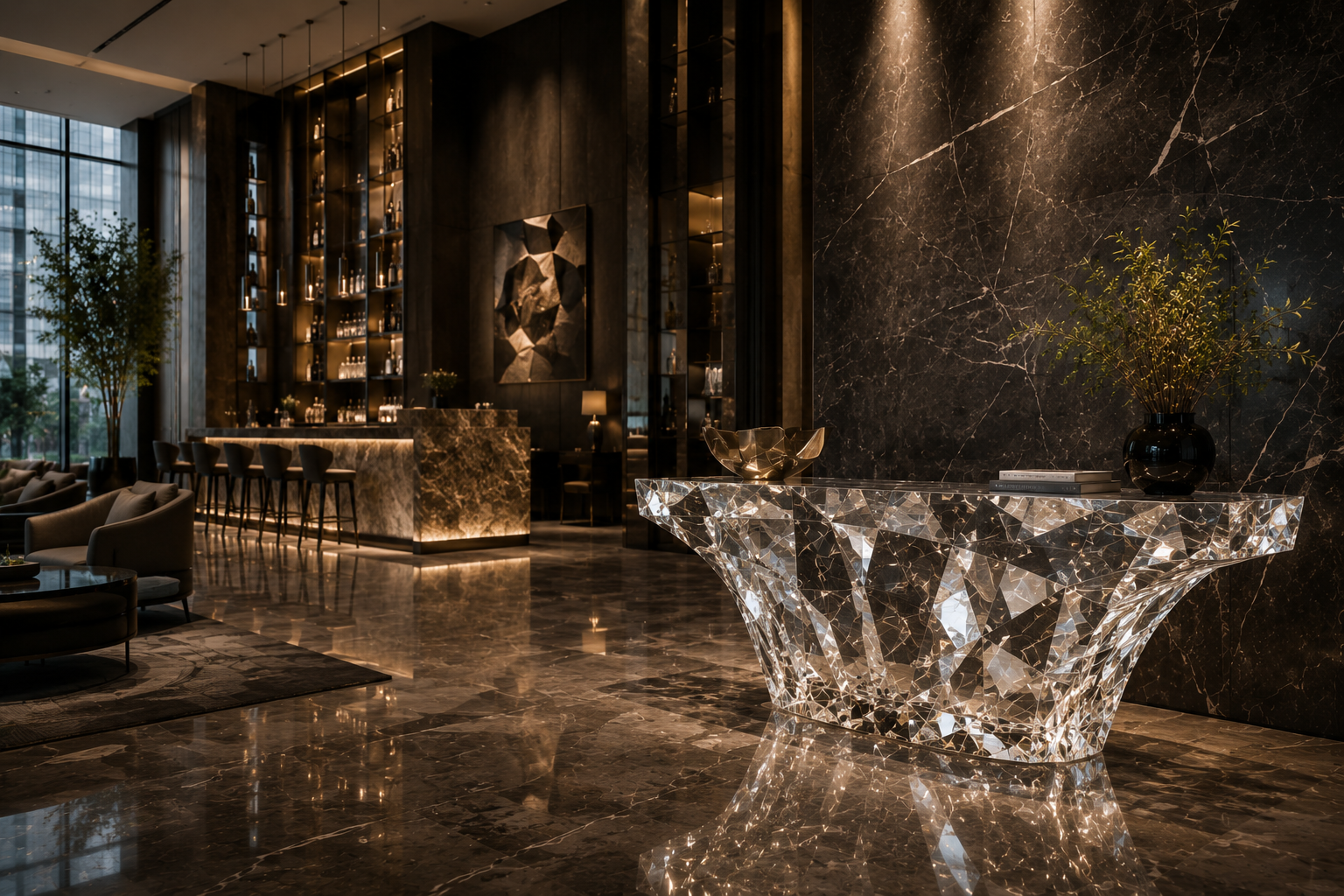
In commercial space design, materials are no longer selected only for durability or cost. They are selected for what they communicate. A luxury watch counter, a beauty-product island, a technology showroom, a jewelry display case, and a high-end reception wall all need to tell customers the same thing before a sales associate speaks: this brand is precise, premium, clean, and worth trusting. Platinum acrylic is particularly valuable in this context because it combines the visual language of metal, glass, light, and modern retail display into one adaptable material system.
In practical commercial use, “platinum acrylic” usually refers to acrylic material presented in a platinum-silver, mirror, metallic, frosted, translucent, or light-diffusing finish. It may be used as sheet, panel, display block, signage surface, furniture element, partition, pedestal, countertop detail, or decorative structure. Its value is not simply that it looks elegant. The stronger value is that it can be fabricated into curves, boxes, illuminated panels, display plinths, branded walls, and modular fixtures more easily than many traditional hard materials. Acrylic product data from ACRYLITE shows many clear acrylic grades with around 92% light transmission, including applications for LED signage, gallery protection, digital print, optical uses, and light-guiding sheets. This explains why acrylic is widely used where visibility, lighting, and product presentation matter.
The commercial opportunity is also supported by broader retail behavior. Physical stores are not disappearing; they are being redefined. ICSC’s 2025 holiday shopping research found that 92% of shoppers planned to spend in a physical store, while 52% planned to use buy-online-pick-up-in-store options, showing that retail space must now work as both sales floor and omnichannel experience hub. PwC also reports that 43% of consumers shop in-store weekly, compared with 34% via mobile, and that retailers combining experience with efficiency can see sales per square foot rise by 5–15% and conversion rates improve by 10–20%. Against this background, platinum acrylic is suitable for brands that need their spaces to feel refined, photogenic, flexible, and commercially efficient.
1. Brand Showrooms: Building a Premium First Impression
Showrooms are one of the most suitable commercial scenarios for platinum acrylic because they are built around controlled perception. Unlike ordinary stores, showrooms are not only selling products; they are explaining brand identity, product technology, design values, and future lifestyle. In a furniture showroom, platinum acrylic can be used for floating product labels, transparent side tables, display cubes, wall-mounted specification panels, and illuminated material boards. In an automotive, electronics, or appliance showroom, it can frame hero products without visually overpowering them.
The advantage of platinum acrylic in showrooms is its ability to sit between transparency and luxury. Glass communicates clarity, metal communicates strength, and acrylic can borrow from both while remaining easier to shape, polish, print, and illuminate. A platinum-tone acrylic panel behind a product can create a cool, high-precision background. A mirrored acrylic pedestal can make a small product feel more valuable by reflecting light and increasing visual volume. A frosted platinum acrylic divider can separate consultation areas without making the showroom feel closed.
This matters because showroom visitors often need time to compare details. They may not purchase immediately, but the environment influences whether they remember the brand as premium and organized. PwC’s 2025 Customer Experience Survey notes that 52% of consumers stopped buying from a brand after a bad product or service experience, while 29% stopped because of poor customer experience online or in person. A showroom that feels cluttered, dim, cheap, or inconsistent can therefore damage trust even before pricing is discussed.
For practical design, platinum acrylic works best in three showroom layers. The first layer is brand architecture: logo walls, reception counters, and large decorative panels. The second layer is product explanation: specification plaques, sample holders, comparison boards, and interactive zones. The third layer is sales support: small tables, brochure stands, QR-code holders, and consultation partitions. By repeating the same platinum acrylic language across these layers, the showroom feels coherent rather than decorated.
However, designers should avoid excessive mirror surfaces in showrooms. Too much reflection can create glare, visual confusion, and fingerprint problems. For premium showrooms, a balanced combination of brushed-metal color, frosted acrylic, clear acrylic, and selective mirror acrylic is usually more effective than using one shiny surface everywhere.
2. Retail Stores: Turning Product Displays into Conversion Tools
Retail stores are another strong application area because platinum acrylic supports product visibility, brand differentiation, and flexible merchandising. In cosmetics, fragrance, jewelry, eyewear, accessories, watches, fashion, and lifestyle retail, the material can be used for countertop displays, tiered risers, shelf-edge signs, illuminated logo blocks, product trays, small display boxes, and freestanding promotional islands.
The commercial logic is simple: customers need to see products clearly, understand product hierarchy quickly, and feel that the displayed items are worth attention. Platinum acrylic helps create that hierarchy. A hero product placed on a platinum acrylic riser appears more important than surrounding stock. A row of small items placed on clear-and-platinum acrylic trays looks cleaner and more curated. A backlit acrylic brand panel can pull attention from the aisle without the heaviness of metal or stone.
The retail context supports investment in physical display quality. ICSC’s 2025 Post-Holiday Consumer Survey found that more than nine in ten holiday shoppers made purchases in physical stores, about three-quarters shopped both in-store and online, and 75% visited a mall or shopping center. This means stores must perform as discovery spaces, transaction points, return centers, pickup locations, and brand media environments at the same time.
The National Retail Federation also emphasized that physical retail stores continue to be important for retention, customer acquisition, brand identity, and loyalty, especially when they offer immersive experiences that cannot be replicated online. Platinum acrylic fits that need because it can make a retail display feel designed rather than improvised. A simple shelf becomes more brand-specific when paired with custom acrylic edging, lighting, and product storytelling panels.
In actual store planning, the best uses include beauty islands with platinum acrylic drawer fronts, jewelry counters with clear acrylic display covers and platinum bases, eyewear walls with metallic acrylic brand strips, sneaker displays with reflective acrylic platforms, and gift-product areas with modular acrylic risers. For high-touch areas, scratch-resistant coatings or replaceable top layers should be considered because acrylic is easier to scratch than glass or metal. Maintenance planning is part of the design, not an afterthought.
3. Exhibition Booths and Trade Shows: Lightweight Luxury for Temporary Spaces
Trade shows, exhibitions, and product launch events are ideal for platinum acrylic because they require a balance between visual impact, transport efficiency, fast installation, and reusability. A booth must attract attention in seconds, survive shipping and assembly, and still look premium under strong venue lighting. Platinum acrylic can serve as a solution for illuminated logos, product plinths, hanging signs, reception desks, sample walls, display shelves, divider panels, and photo-friendly brand moments.
This use case is especially relevant because the exhibition industry has continued to adapt and recover. UFI, the Global Association of the Exhibition Industry, reported that 34% of companies expected rented space in their domestic market to increase by more than 5% in 2025 compared with 2024, while 40% planned to increase staff numbers in the following six months. In another UFI release, global results showed that 34% of respondents expected more than 5% revenue growth from renting space and 39% expected more than 5% growth from selling services in 2025 versus 2024. This suggests that brands are still investing in physical event channels, but they need booth materials that deliver both experience and efficiency.
Compared with stone, stainless steel, or thick glass, acrylic can reduce transport burden and fabrication complexity. It can be laser-cut, CNC-routed, bonded, polished, printed, thermoformed, and integrated with LED lighting. A platinum acrylic reception counter can be designed as a modular structure that looks permanent but travels like a temporary fixture. A product wall can combine metallic acrylic trims with clear sample pockets, allowing the same booth structure to be reused for different markets.
For trade shows, platinum acrylic is most effective when used to highlight the brand’s signature zone. This could be the welcome counter, the main product pedestal, the hero-product wall, or a meeting-room divider. Using it everywhere may increase cost and create too much shine under exhibition lighting. A better approach is to use matte platinum acrylic for structure, clear acrylic for product visibility, and mirror platinum acrylic only for controlled accents.
Another practical advantage is photography. Many exhibitions now depend on social media sharing, press coverage, and post-event sales follow-up. Platinum acrylic can create clean reflections and futuristic surfaces that make products easier to photograph. For beauty, electronics, home décor, premium packaging, and lifestyle brands, a well-lit platinum acrylic display can become a reusable content background.
4. Hospitality, Reception, and Corporate Spaces: Creating Trust at the First Touchpoint
Platinum acrylic is also suitable for hotels, clinics, salons, offices, galleries, clubs, restaurants, and corporate reception areas. These spaces are not always retail stores, but they still sell confidence. A hotel lobby sells comfort and status. A medical beauty clinic sells professionalism and hygiene. A corporate showroom sells capability. A salon sells taste. In all these environments, material choice affects how visitors interpret the brand.
In reception spaces, platinum acrylic can be used for logo walls, wayfinding signs, counter fronts, brochure displays, privacy panels, menu boards, room-number signs, and decorative wall features. The platinum tone communicates calm modernity. It is less aggressive than gold, warmer than chrome if selected carefully, and more distinctive than ordinary white or black acrylic. When paired with indirect lighting, it can create a refined glow without the expense of fully fabricated metalwork.
The customer-experience argument is important here. PwC reports that 70% of executives say customer expectations are evolving faster than their company can adapt. This applies not only to online service but also to the physical environment. Visitors expect spaces to be easy to navigate, visually consistent, clean, and comfortable. A reception desk with poor signage, inconsistent materials, and weak lighting can make even a competent business feel less trustworthy.
In clinics and beauty-service spaces, platinum acrylic should be used carefully to support cleanliness rather than excessive luxury. Frosted acrylic partitions, clean product shelving, illuminated treatment-room signs, and organized consultation displays can help create a professional atmosphere. In hotels and restaurants, platinum acrylic can appear in host stands, wine displays, dessert vitrines, table-number signs, and wall features. In corporate offices, it can frame awards, product samples, certification displays, and mission statements.
The material is especially useful when a business needs a custom appearance but cannot use heavy construction. For leased commercial spaces, acrylic fixtures can often be installed with less structural impact than stone or metal. They can also be replaced as branding evolves. This makes platinum acrylic suitable for brands that update campaigns, seasonal themes, or service menus frequently.
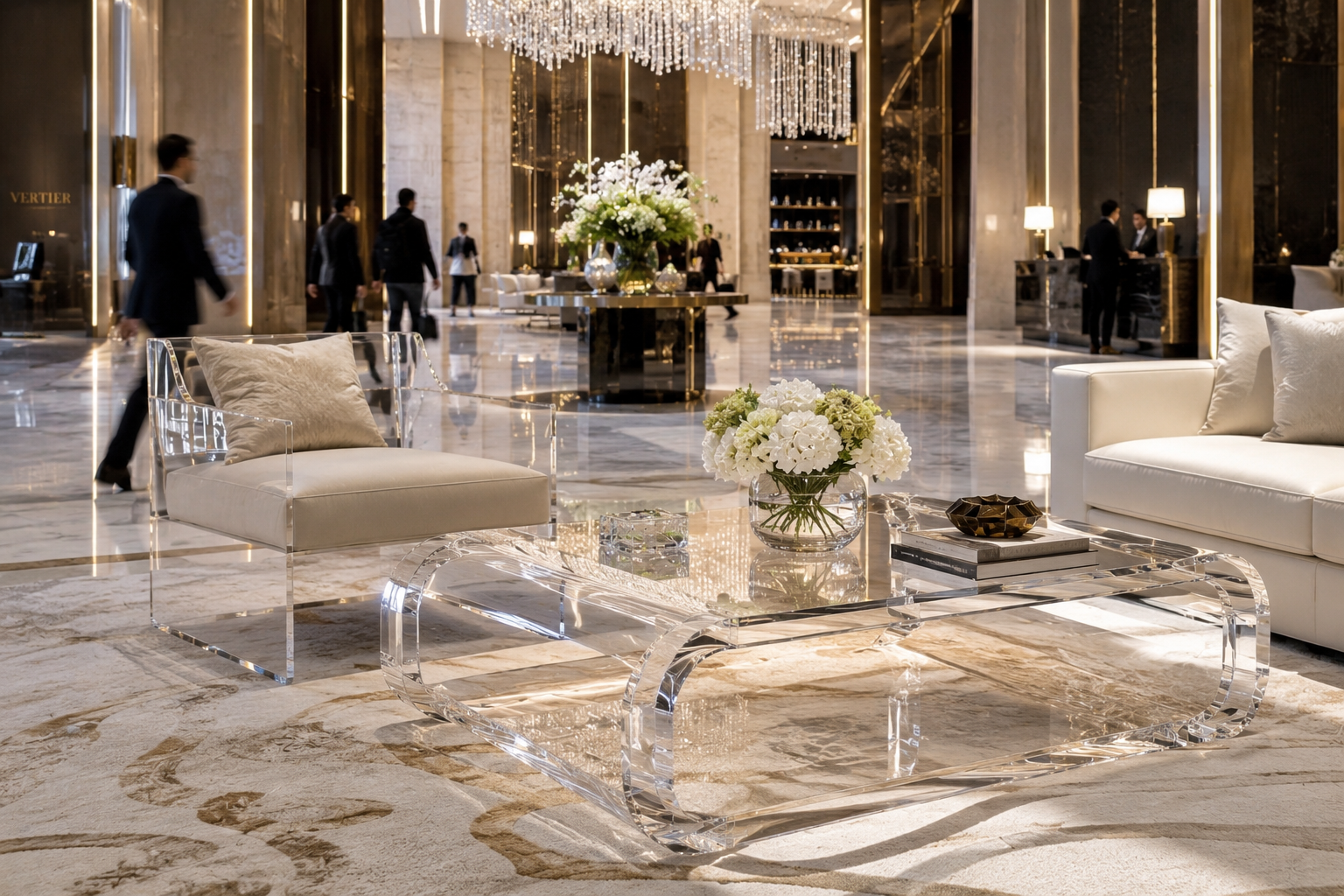
5. Pop-Ups, Product Launches, and IP Collaborations: Fast, Photogenic, and Modular
Pop-up retail and limited-time brand activations are another natural fit. These spaces need to produce high attention in a short period. They often operate in malls, airports, event venues, hotel lobbies, street-level units, or department-store atriums. Platinum acrylic works well because it can create a polished brand environment without permanent construction.
Deloitte’s China Consumer Products and Retail Industry Overview 2025 points to the growing role of emotional value, IP collaboration, technological innovation, and new retail scenarios in attracting consumers. It also notes that nearly 60% of surveyed consumers pay attention to green, low-carbon, and sustainable offline stores, indicating that brands need not only products but also new physical scenes that strengthen appeal. For pop-ups, this means materials must support storytelling, visual recognition, and operational flexibility.
A platinum acrylic pop-up can include modular counters, stackable product risers, QR-code stands, campaign hashtag signs, selfie mirrors, limited-edition display cases, and illuminated brand icons. Because acrylic can be printed, cut, bent, and bonded into many forms, it supports short-cycle creative production. For example, a fragrance brand might use platinum acrylic to create a reflective scent lab island. A skincare brand might use frosted platinum acrylic for a clinical-science look. A fashion accessory brand might use mirror platinum acrylic for a futuristic launch corner. A toy, collectible, or IP collaboration brand might combine colored acrylic with platinum details to create a premium collector-display effect.
The key is modularity. Pop-ups are often moved, reassembled, stored, or refreshed. Platinum acrylic fixtures should therefore be designed with replaceable graphic panels, removable logo plates, interchangeable risers, and standardized packing sizes. This reduces waste and improves return on investment across multiple campaigns.
One common mistake is treating acrylic as only a decorative material. In successful pop-ups, it should be part of the sales journey. It should guide visitors from attraction to product trial, from photo moment to purchase, from QR scan to membership registration. A platinum acrylic display should not merely look good; it should help customers know where to stand, what to touch, what to photograph, and what to buy.
6. Museums, Galleries, Luxury Displays, and High-Value Product Protection
Platinum acrylic can also be used in museums, galleries, luxury retail, collector stores, jewelry counters, watch displays, trophy cases, and cultural-product shops. These spaces require a difficult balance: the display must protect the object, but it must not visually compete with it. Acrylic’s optical clarity, fabrication flexibility, and lighter weight make it valuable for display covers, vitrines, risers, object mounts, label holders, and protective barriers.
For clear acrylic grades, high light transmission is a major advantage. ACRYLITE lists many transparent products at 92% light transmission, including gallery, optical, digital print, LED, and general applications. This matters when the goal is to make a display case visually disappear. In luxury scenarios, the platinum element can be used in the base, frame, plinth, or label system rather than the transparent viewing surface. This keeps the product visible while adding a premium visual foundation.
In jewelry and watch retail, platinum acrylic can be combined with velvet, leather, glass, stainless steel, or LED lighting. A ring tray with a platinum acrylic outer frame can look modern without feeling cold. A watch pedestal with a mirror platinum base can make the product feel more sculptural. A transparent acrylic security cover with platinum acrylic edging can create a luxury boundary while keeping the product visible.
In museums and galleries, the application should be more restrained. Platinum acrylic may work for temporary exhibition titles, directional signs, donor walls, or merchandise displays, but the main object display should prioritize neutrality, conservation requirements, and low visual interference. For commercial galleries and art retail, however, platinum acrylic can help create an upscale retail layer around prints, sculptures, design objects, or limited-edition collectibles.
The main practical considerations are cleaning, scratching, lighting heat, and safety. Acrylic surfaces should be cleaned with suitable non-abrasive products. High-contact zones may need anti-scratch or abrasion-resistant grades. Lighting should be specified to avoid heat concentration. Edges should be polished safely, especially in public areas. When used properly, platinum acrylic can create a high-value display environment that feels lighter than metal, warmer than glass, and more customizable than standard fixtures.
Conclusion: The Best Commercial Fit for Platinum Acrylic
Platinum acrylic is most suitable for commercial scenarios where visual quality, product focus, lighting, flexibility, and brand atmosphere matter. It is especially strong in showrooms, retail stores, exhibitions, reception spaces, pop-ups, luxury displays, and cultural or gallery environments. Its greatest value is not simply that it looks premium. Its real value is that it helps businesses build spaces that are memorable, modular, brand-consistent, and commercially purposeful.
For brands planning a new space, the best approach is to define the role of platinum acrylic before production begins. Is it the hero material for the logo wall? A display material for products? A lighting diffuser? A modular fixture system? A premium accent? A protective case? The answer should determine thickness, finish, fabrication method, lighting design, cleaning plan, and budget.
As physical spaces become more experience-driven, the materials inside them must do more than decorate. They must guide customers, support conversion, communicate trust, and photograph well. Platinum acrylic is effective because it sits at the intersection of luxury aesthetics and practical commercial fabrication. From showrooms to stores, from trade shows to pop-ups, it gives brands a flexible way to make physical environments feel sharper, brighter, and more valuable.
READ MORE:
- How Premium Materials Help Commercial Spaces Elevate Brand Image
- High-End Commercial Material Selection Guide: Don’t Judge by Looks Alone—Evaluate Maintenance Cost First
- From Ordinary to Premium: How One Material Choice Can Elevate the Quality of a Space
- Platinum Acrylic in High-End Spaces: Beautiful, Durable, and Easy to Maintain
- Synthetic Crystal Acrylic Furniture: The Light-Luxury Visual Answer for Modern Homes
- One Piece of Furniture That Lets Light, Space, and Texture Be Seen at the Same Time
- Beyond Decoration: How Synthetic Crystal Acrylic Furniture Elevates the Character of a Space?
- Why Is High-End Design Increasingly Pursuing an “Invisible Presence”?
- Synthetic Crystal Acrylic Furniture: Giving Spaces a “Breathing Sense of Transparency”


