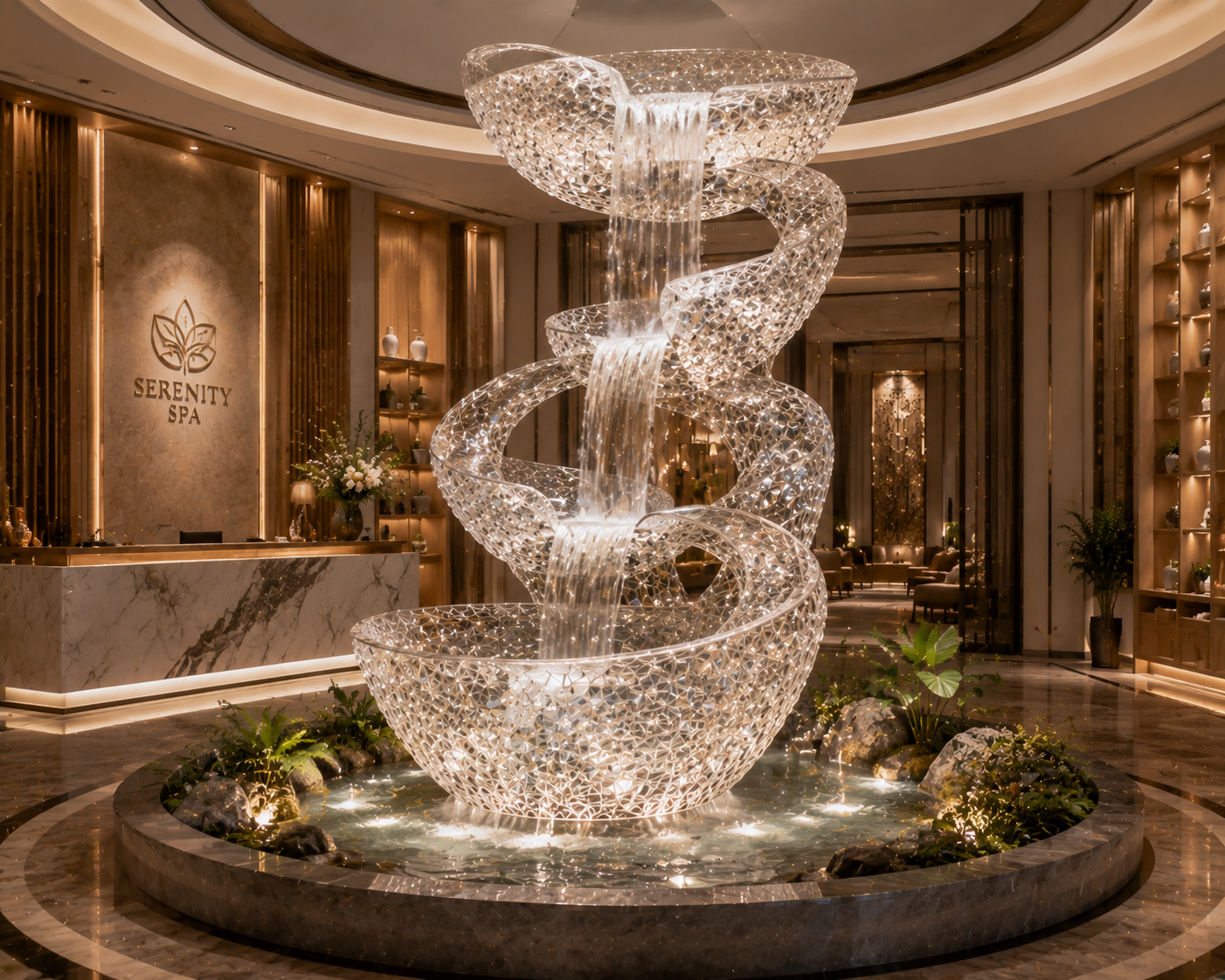

In a hotel, furniture is rarely judged by function alone. A lobby table may provide a surface for drinks, but it also appears in guests’ photographs, reflects the surrounding lighting, shapes circulation, and communicates the property’s positioning before a staff member says a word. The same is true of reception desks, lounge chairs, consoles, room dividers, display plinths, and decorative panels.
This matters because hospitality is becoming increasingly experience-led. Hilton’s 2025 Trends Report, based on an Ipsos survey of 13,001 adults across 13 countries and regions, found that one in four travelers planned to seek unique experiences. The report also showed that travelers wanted to maximize both their time and financial investment, raising expectations for accommodations to deliver more than basic comfort.
Transparent materials—particularly synthetic crystal, high-end cast resin, and premium or “platinum” acrylic—offer hotels a way to meet that expectation. They can transmit, refract, diffuse, or color light while producing forms that appear lighter than stone, more sculptural than conventional timber furniture, and more adaptable than standard glass.
Their greatest value, however, is not transparency itself. It is their ability to turn an ordinary furnishing into a recognizable brand asset.
1. Brand Recognition Begins with a Repeatable Material Signature
Many hotels still approach furniture procurement as a process of filling space. The designer selects a reception desk, lobby tables, lounge seating, and decorative accessories that fit the approved style. Each item may look attractive, yet the overall environment can remain difficult to remember because it lacks a proprietary visual signature.
A stronger strategy begins with a different question: What object, material effect, or silhouette could a guest recognize without seeing the hotel logo?
Cornell University’s hotel planning and design curriculum connects branding and marketing decisions directly with the planning of guestrooms, public spaces, and operational areas. In other words, the brand should not be applied after the space is designed; it should influence the physical environment from the beginning.
Transparent materials are particularly effective in this role because they can be customized at multiple levels. A hotel can develop a proprietary smoke tint, an embedded metallic pattern, a suspended crystal-like inclusion, a recognizable edge profile, or a gradient based on the colors of its location. The resulting design language can then be repeated in different forms: a monumental lobby table, smaller guestroom side tables, bar shelving, spa displays, or sculptural wayfinding elements.
This repetition creates recognition without monotony. The pieces do not need to be identical. They need to share a controlled family resemblance.
A coastal resort might develop pale blue resin containing wave-like layers. An urban lifestyle hotel could use sharply polished, platinum-toned acrylic with illuminated edges. A heritage property could suspend fragments of local textiles, maps, or botanical elements inside clear resin. In each case, the material becomes part of the hotel’s identity rather than a neutral construction choice.
The objective is not to make every item transparent. It is to establish one memorable visual code and use it consistently enough to become associated with the brand.
2. Transparent Materials Turn Light into a Branded Experience
Traditional furniture is primarily perceived through its surface, color, and silhouette. Transparent furniture adds another variable: the way light moves through the object.
This can transform both the furnishing and the space surrounding it. Clear forms allow flooring, rugs, architecture, and landscape views to remain visible, reducing visual obstruction. Frosted surfaces soften brightness and create privacy without producing a completely solid boundary. Colored transparent materials cast subtle tones onto nearby surfaces. Thick cast pieces create internal reflections that give the object depth and a jewel-like presence.
ArchDaily notes that translucent materials can create distinctive atmospheres by controlling light, views, privacy, and the perceived relationship between adjoining spaces. This makes transparency a spatial tool, not merely an aesthetic finish.
Premium PMMA acrylic provides measurable optical potential. Technical information published by ACRYLITE states that its colorless, smooth extruded acrylic sheet achieves 92% light transmission. The same documentation shows how bronze, grey, and white formulations can be selected to control light and glare at different levels.
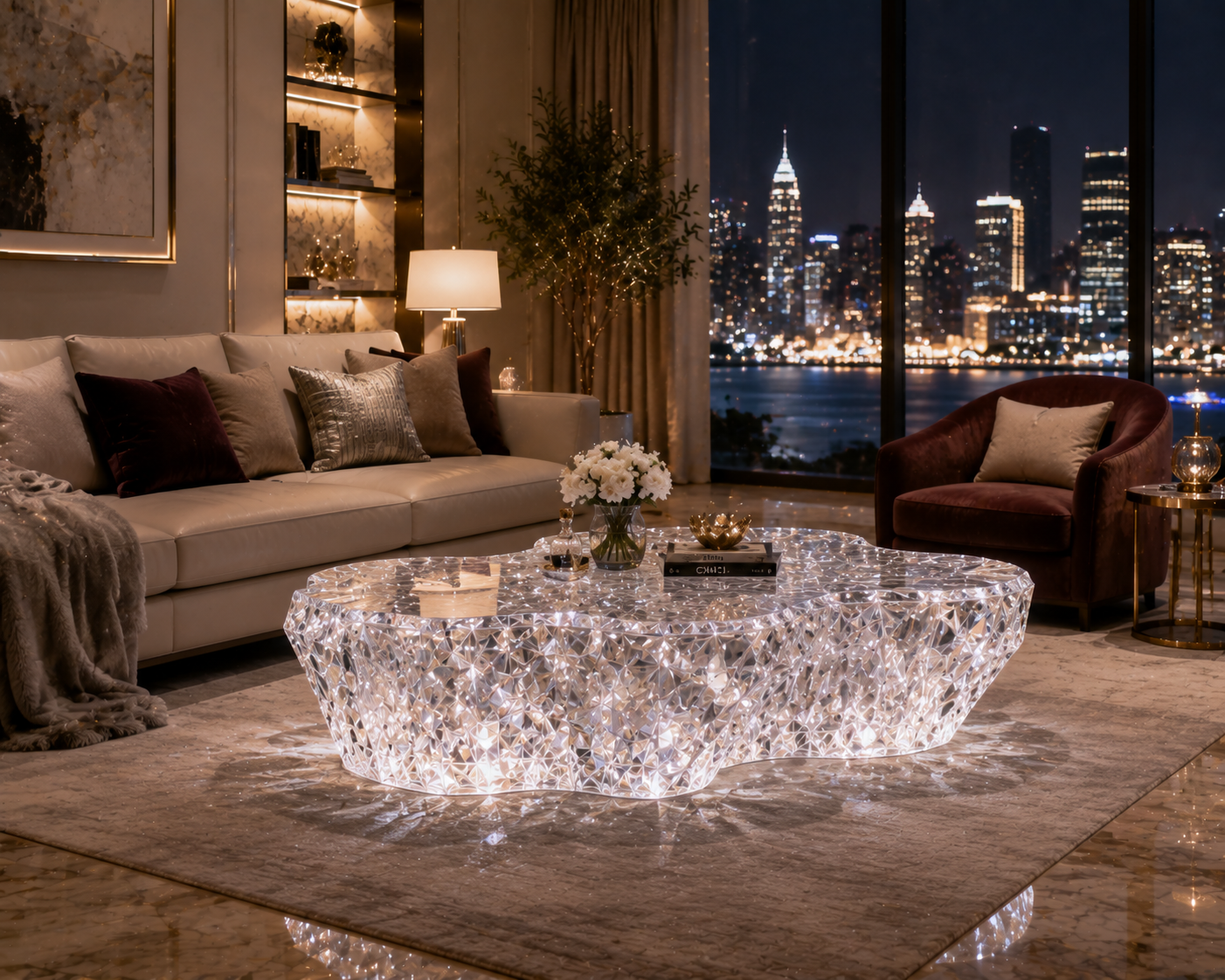
For hotels, this creates opportunities to treat furniture as part of the lighting scheme. An acrylic console can receive concealed edge lighting so that a logo or engraved pattern glows from within. A resin reception desk can transition from a quiet object during the day to a luminous installation at night. Semi-transparent screens can separate restaurant tables or spa areas while preserving brightness and visual continuity.
The effect should be carefully controlled. Excessive clarity can expose cables, fixings, fingerprints, and visual clutter. Excessive gloss can create glare. Transparent furniture works best when lighting temperature, background materials, viewing angles, and nighttime conditions are tested together.
The most successful projects do not simply place a clear object in a room. They choreograph how the object changes from morning to evening, allowing light itself to become part of the hotel’s recognizable atmosphere.
3. Furniture Becomes Brand Media When It Is Designed as an Installation
A functional table is evaluated by stability, dimensions, and usability. An installation is evaluated by the emotion, story, and behavior it generates. The most valuable hospitality pieces can perform both roles.
The history of design demonstrates how transparent furniture can move beyond utility and become a cultural object. Shiro Kuramata’s Miss Blanche, designed in 1988, suspended artificial red roses inside clear acrylic resin. The chair is now represented in major museum and design collections, including M+ in Hong Kong, and remains one of the best-known examples of furniture achieving the presence of sculpture.
Hotels can apply the same principle without creating an untouchable museum piece. A lobby installation can still function as a table, bench, display, or reception point. What changes is the level of narrative intention.
Bermonds Locke in London provides a practical hospitality example. The hotel’s interiors were developed around a desert-inspired narrative, using repurposed construction materials, iridescent surfaces, and bespoke modular sofas made with a sand-and-resin lay-up to recreate the tones of the landscape. The material choice did more than provide seating; it helped place the Mojave-inspired concept inside the hotel’s physical DNA.
Similarly, the W Atlanta-Downtown uses custom sculptural elements, unconventional materials, layered lighting, and glossy acrylic finishes to create what its designers describe as an art-gallery effect. The furniture and installations support the theatrical, cosmopolitan identity associated with the W brand rather than acting as anonymous background objects.
For manufacturers, this changes the sales conversation. The product is no longer simply “a clear resin table.” It becomes a guest touchpoint, photography backdrop, local storytelling device, or physical brand symbol.
A strong installation should create at least one intentional guest behavior: stopping, touching, photographing, asking a question, gathering around it, or remembering it after departure. When an object repeatedly generates those behaviors, it begins functioning as media—without requiring the hotel to purchase additional advertising space.

4. Each Transparent Material Should Have a Clearly Defined Role
“Synthetic crystal,” “high-end resin,” and “platinum acrylic” are sometimes used as broad commercial descriptions. For professional hotel procurement, these terms should be supported by the actual polymer type, casting process, thickness, finish, coating, performance data, and maintenance requirements.
Each material category has a different strategic role.
Synthetic crystal-style materials are best suited to pieces that require optical mass and a gemstone-like impression. Thick tables, pedestal bases, decorative columns, sculptural blocks, and ceremonial display pieces benefit from the sense of depth. Their strength lies in perceived rarity and visual weight, even when the object remains transparent.
High-end cast resin offers greater narrative freedom. Pigments, gradients, aggregates, metallic elements, fibers, botanical references, and other inclusions can be suspended within the material. It is therefore well suited to properties that need site-specific storytelling: resorts, destination hotels, cultural properties, branded residences, and boutique hotels with a strong artistic concept.
Premium or platinum acrylic, understood here as high-quality PMMA in clear, smoked, frosted, mirrored, or metallic-toned finishes, is appropriate when the project requires crisp geometry, polished edges, consistent color, repeatable production, and precise fabrication. It works well for coordinated furniture families, display systems, consoles, shelving, partitions, illuminated elements, and multi-property rollouts.
The material should follow the guest experience rather than the other way around. A resort seeking organic visual depth may benefit from cast resin. A fashion-led city hotel may require sharply detailed acrylic. A flagship luxury property may use synthetic crystal-like volumes for a small number of visually dominant pieces.
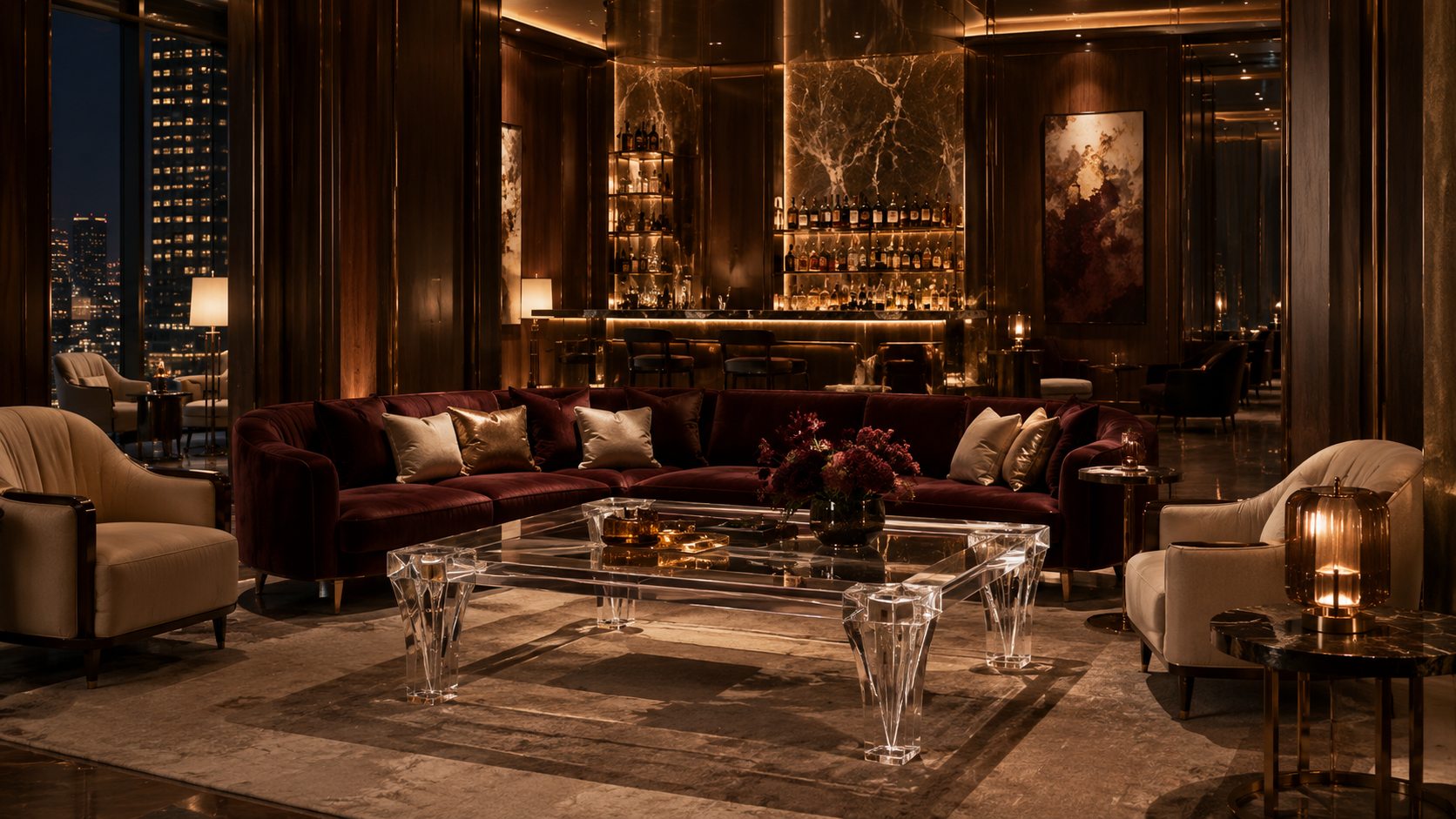
Material contrast is equally important. A room made entirely from glossy transparent surfaces can feel cold and commercially staged. Transparent materials become more luxurious when paired with tactile opposites: wool, timber, leather, textured stone, brushed metal, plaster, or woven fabric.
The transparent element provides lightness and precision. The contrasting material provides warmth, acoustic softness, and physical grounding. Together, they create a more convincing luxury environment than either material could achieve alone.
5. Hotel Luxury Must Survive Housekeeping, Safety, and Daily Use
A visually striking prototype is not automatically hotel-ready. Hospitality furniture faces rolling luggage, drink spills, cleaning chemicals, sunlight, repeated repositioning, concentrated loads, and guests who do not treat objects as carefully as showroom visitors.
This is where material expertise becomes more important than styling.
Acrylic, for example, offers excellent optical clarity, but its surface is not as hard as glass. ACRYLITE’s technical guidance specifically advises careful handling and cleaning and warns that incompatible solvents can damage acrylic. It also notes that acrylic expands and contracts more than glass or metal, meaning large components and rigidly fixed installations require appropriate tolerances.
Hotel specifications should therefore address more than overall dimensions and color. They should define acceptable cleaners, scratch-repair procedures, edge profiles, load capacity, fixing details, UV exposure, replacement parts, and access for maintenance.
Structural testing is equally important. ISO 19682:2023 provides test methods for evaluating the stability, strength, and durability of tables and desks, including static loads, impact, deflection, castor durability, and top-to-leg assembly strength. The standard emphasizes that tests should demonstrate whether an item can provide satisfactory service in its intended environment.
Indoor environmental performance should also be documented. UL Solutions’ GREENGUARD program establishes chemical-emission testing and limits for furniture, building materials, and interior products. Hotels seeking healthier interiors or green-building recognition may request information about the resin formulation, adhesives, coatings, and VOC emissions rather than accepting a vague claim that a material is “eco-friendly.”
Sustainability should be considered through service life, not marketing language alone. Replaceable glides, removable hardware, repairable surfaces, modular construction, and take-back programs can keep valuable pieces in use longer. The Ellen MacArthur Foundation highlights modularity, disassembly, repair, and life extension as core strategies for retaining the embedded value of furniture.
In hospitality, true luxury is not a perfect object on opening day. It is an object that still looks intentional after thousands of guest interactions.

6. Create a Scalable Signature System—and Measure Its Return
A one-off installation may attract attention, but a brand system creates long-term recognition. Hotels should therefore develop transparent furniture in three coordinated levels.
The first is the hero piece: a major lobby table, reception desk, suspended artwork, illuminated bar front, or sculptural seating element. Its purpose is to establish the strongest expression of the material story.
The second is the supporting family: side tables, consoles, partitions, plinths, lighting components, or guestroom accessories that repeat the signature through smaller forms.
The third is the portable brand detail: an embedded pattern, color gradient, edge treatment, or internal motif that can be adapted across different properties while responding to each location.
This approach balances consistency and localization. McKinsey’s discussion of the hotel of the future notes that younger travelers increasingly want differences between properties and expect hotels to reflect their surroundings rather than reproduce a sense of sameness.
A hotel group might retain the same transparent material language while changing the inclusions or colors by destination. A coastal hotel could use marine-inspired layers, while an urban property in the same collection uses architectural lines or metallic particles. The brand remains recognizable, but the local story changes.
Before rollout, manufacturers and hotel teams should approve full-scale mock-ups under the actual lighting conditions. They should document color tolerances, polishing standards, seams, structural supports, packaging methods, installation procedures, and replacement-component availability. This prevents a carefully designed concept from becoming inconsistent across production batches or properties.
Return on investment can then be evaluated through practical indicators: guest photographs featuring the piece, social-media tags, lobby dwell time, design-press coverage, event inquiries, brand-recall surveys, maintenance costs, and the number of years before replacement or refurbishment.
Measurement is especially important as hotels face rising operating expenses and pressure to protect profitability. AHLA’s 2026 State of the Industry report identified operating costs as a continuing constraint on hotel profitability, while Deloitte’s European hotel survey found that maintaining or improving profitability had become a leading executive priority.
The business case for transparent furniture is therefore not “art versus function.” The strongest projects deliver both: operationally credible furniture and a visual experience competitors cannot easily reproduce.
Conclusion
Transparent materials can make hotel interiors feel brighter, more spacious, more contemporary, and more theatrical. Yet appearance alone does not create brand recognition.
Recognition emerges when the material is tied to a distinctive story, repeated through a controlled design family, engineered for hospitality use, and integrated with lighting, architecture, and guest behavior.
Synthetic crystal can provide ceremonial presence. High-end resin can preserve color, texture, and local narrative within the object. Premium acrylic can deliver precision, optical clarity, and repeatability across an international hotel portfolio.
When these materials are treated only as substitutes for glass, their value remains limited. When they are treated as a brand language, furniture stops being something that merely occupies a hotel.
It becomes part of what the hotel is remembered for.
READ MORE:
- How Can One Transparent Piece of Furniture Activate Hotel Corners and Transitional Spaces?
- Luxury Without Excess: How Resin and Synthetic Crystal Create a Premium Furniture Aesthetic
- Transparency, Refraction and Light: How Synthetic Crystal Furniture Adds Depth to Hotel Interiors
- Hotel Corridors Should Never Be Boring: How Transparent Furniture Creates a Distinctive Spatial Memory
- Synthetic Crystal Acrylic Furniture: Creating Stronger Market Competitiveness Through a Distinctive Material
- Why Is Transparent Furniture Becoming an Important Trend in Modern Luxury Design?
- Synthetic Crystal Acrylic Furniture: A Key Element in Creating Differentiated Experiences for High-End Projects
- From Material Selection to Brand Upgrading: An Analysis of the Commercial Value of Synthetic Crystal Acrylic Furniture
- Synthetic Crystal Acrylic Furniture: Why Are More High-End Buyers Willing to Pay for “Quality and Texture”?
READ MORE:
- Dalla prima installazione alla manutenzione: come preservare nel tempo l'aspetto di un arredo trasparente
- Come integrare un'opera scultorea negli spazi commerciali senza ostacolare il flusso delle persone
- Trasparenza, colore e spessore: come valutare davvero la qualità di un arredo in cristallo sintetico
- Come scegliere i materiali più adatti ai diversi climi senza compromettere estetica e durata
- Come rendere uno spazio memorabile anche di notte attraverso la luce
- How Can One Transparent Piece of Furniture Activate Hotel Corners and Transitional Spaces?
- Luxury Without Excess: How Resin and Synthetic Crystal Create a Premium Furniture Aesthetic
- Transparency, Refraction and Light: How Synthetic Crystal Furniture Adds Depth to Hotel Interiors
- Hotel Corridors Should Never Be Boring: How Transparent Furniture Creates a Distinctive Spatial Memory


