In commercial interior design, perception is formed almost instantly. Before a customer examines the products, speaks with a receptionist, studies a menu, or enters a meeting room, the space has already communicated something about the business. Materials, lighting, proportions, surfaces, and visual details shape expectations within seconds.
This is why material selection is one of the most powerful decisions in any commercial space upgrade.
A complete renovation can be expensive, disruptive, and time-consuming. However, the right materials can transform how a space feels without requiring major structural changes. A carefully selected reception desk, display table, feature wall, console, bar counter, or statement furniture piece can make an existing interior appear more refined, more valuable, and more memorable almost immediately.
For businesses seeking a premium visual identity, synthetic crystal furniture offers a particularly effective solution. It combines clarity, sculptural presence, modern craftsmanship, and strong decorative impact. When designed correctly, synthetic crystal does more than fill a functional need. It changes how light moves through a room, how visitors interpret the brand, and how the entire environment is perceived.
Why Material Perception Matters in Commercial Interiors
Customers do not evaluate commercial spaces only through logic. They respond emotionally to visual and tactile signals.
A polished stone surface may suggest permanence. Dark wood can communicate tradition and stability. Brushed metal may create an industrial or technological impression. Soft textiles can make a space feel comfortable and approachable. Transparent synthetic crystal can suggest precision, exclusivity, innovation, and modern luxury.
These associations influence the way people interpret a business.
In a luxury retail store, materials help justify premium pricing. In a hotel lobby, they shape the guest’s expectations before check-in. In a corporate office, they affect how clients perceive the company’s professionalism. In a restaurant or lounge, they influence atmosphere, photography, and the amount of time guests want to remain in the space.
The strongest commercial interiors use materials intentionally. Every major surface supports a larger brand message.
This means that upgrading a space should not begin with the question, “What furniture do we need?” It should begin with a more strategic question: “What should customers feel when they enter?”
Once the desired perception is clear, materials can be selected to reinforce it.
The Fastest Upgrades Are Often Visual, Not Structural
Many businesses assume that meaningful transformation requires demolition, construction, and a complete redesign. In reality, visual perception can often be changed much faster through targeted material upgrades.
High-impact elements usually include:
Reception Desks
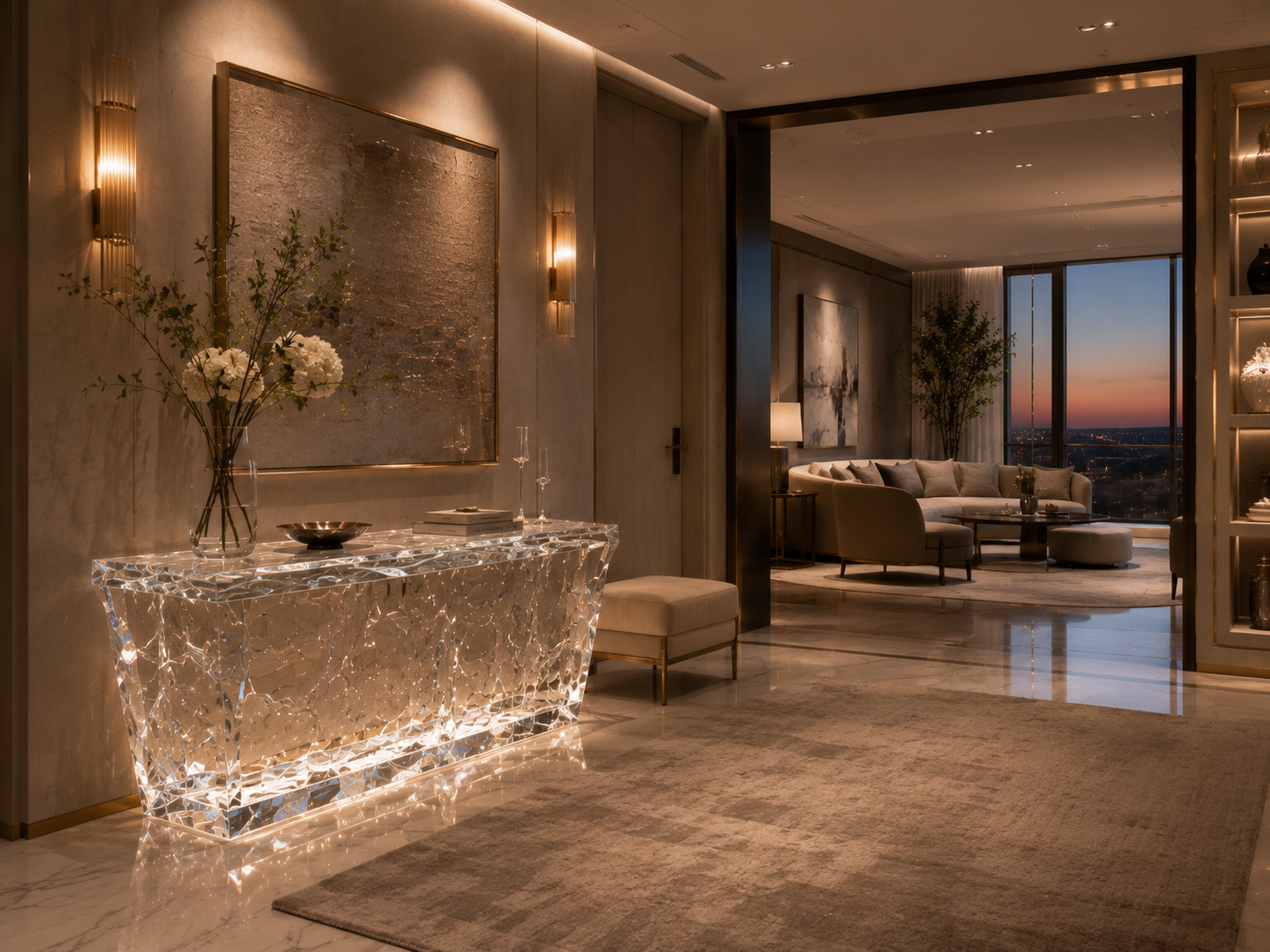
The reception area establishes the first formal interaction between a visitor and a business. A conventional desk may perform its function, but a sculptural synthetic crystal reception desk can immediately create a sense of distinction.
Its transparent or translucent body can reduce visual heaviness while still providing a strong focal point. Integrated lighting can reveal internal textures, layered colors, embedded patterns, or geometric details, allowing the desk to function as both furniture and brand installation.
Display Tables and Product Pedestals
In retail environments, presentation influences perceived product value.
A premium watch, handbag, cosmetic product, jewelry collection, or art object can appear more exclusive when placed on a carefully designed synthetic crystal display surface. The material can reflect and transmit light without visually competing with the displayed item.
Unlike bulky opaque fixtures, clear synthetic crystal structures can make a display appear lighter and more spacious. This is especially useful in boutiques where visual density must be controlled carefully.
Console Tables and Statement Pieces
A console table positioned near an entrance, corridor, elevator lobby, showroom, or private dining area can reshape an otherwise overlooked zone.
Synthetic crystal consoles can be produced in minimalist, sculptural, architectural, or decorative forms. Their reflective qualities make them particularly effective in areas with controlled lighting. Even a single piece can introduce a new visual language into an existing interior.
Bar Counters and Hospitality Furniture
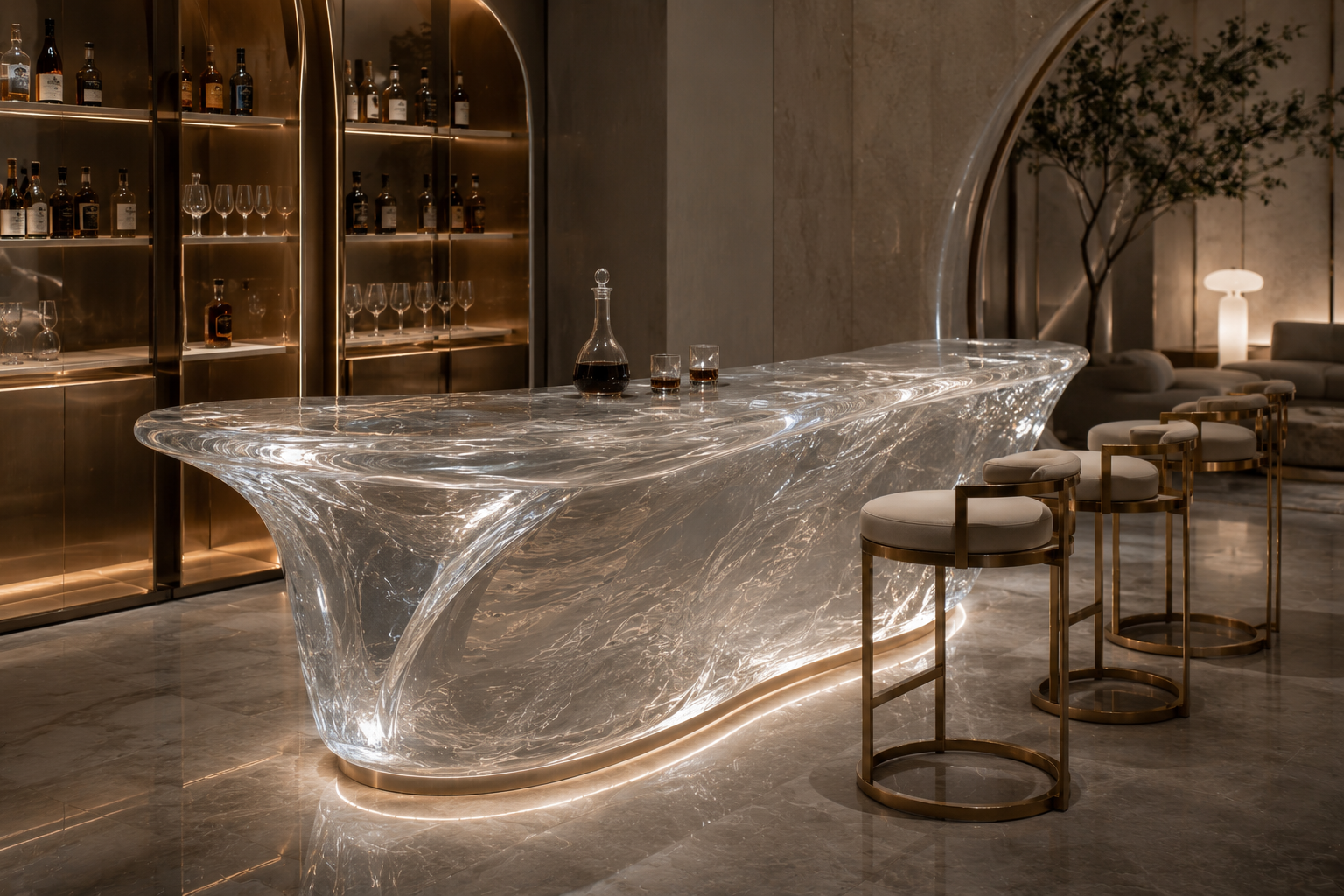
Bars, lounges, restaurants, and hotels benefit greatly from materials that react to light.
A synthetic crystal bar front, illuminated counter, side table, or communal table can become a photographic centerpiece. Guests increasingly document visually distinctive interiors, which means furniture is no longer experienced only in person. It also becomes part of the business’s digital presence.
A memorable furniture installation can generate social media exposure, customer engagement, and repeat visits without functioning like traditional advertising.
What Makes Synthetic Crystal Different
Synthetic crystal is valuable in commercial interiors because it combines strong visual impact with exceptional design flexibility.
It can be clear, frosted, colored, layered, faceted, illuminated, carved, polished, or combined with metal, stone, wood, glass, and lighting systems. This allows designers to use it across a wide range of interior styles.
In a contemporary space, synthetic crystal can appear clean and architectural. In a luxury environment, it can feel jewel-like and decorative. In an artistic interior, it can be sculpted into expressive forms. In a minimalist project, it can create visual interest without adding excessive color or weight.
The material also interacts with its surroundings in a distinctive way. It does not simply occupy space. It captures reflections, refracts light, reveals depth, and changes appearance depending on the viewer’s position.
This dynamic quality makes synthetic crystal furniture feel more alive than many conventional materials.
Transparency Creates Space Without Removing Presence
One of the most useful qualities of synthetic crystal is its ability to create physical presence without creating visual heaviness.
Commercial spaces often need substantial furniture, but large opaque pieces can make interiors feel crowded. This is especially challenging in luxury boutiques, compact reception areas, private clubs, beauty salons, galleries, and urban hospitality environments.
Transparent or lightly tinted synthetic crystal can help solve this problem.
A large table can feel visually lighter because the eye can see through portions of the structure. A display pedestal can support an important product without appearing bulky. A reception desk can remain impressive while preserving openness around the entrance.
This balance between presence and transparency is difficult to achieve with traditional materials.
The result is an interior that feels more spacious, controlled, and sophisticated.
Light Becomes Part of the Furniture
Lighting is one of the fastest ways to transform perception, and synthetic crystal allows lighting to become part of the furniture itself.
When illuminated correctly, synthetic crystal can glow from within, highlight polished edges, reveal embedded details, or create soft reflections across nearby surfaces. This opens creative possibilities that are difficult to achieve with wood, stone, or metal alone.
Designers can use warm lighting to create an inviting luxury atmosphere. Cooler lighting can produce a more futuristic or technical appearance. Color-changing systems may be used in event spaces, entertainment venues, branded installations, and dynamic hospitality environments.
However, lighting should be integrated with restraint.
The goal is not simply to make the furniture brighter. The goal is to control where the eye goes and how the material reveals itself. Hidden light sources, carefully planned edge illumination, and subtle gradients often produce a more premium result than highly visible lighting components.
In high-end projects, the most impressive effects often feel effortless.
Material Quality Determines Whether the Result Looks Premium
Not all transparent materials create the same impression.
The perceived quality of synthetic crystal furniture depends on clarity, thickness, polishing, internal consistency, edge treatment, joinery, structural design, and craftsmanship. Even small imperfections can become visible when light passes through the material.
For this reason, high-end synthetic crystal furniture requires precise manufacturing.
Surfaces should appear smooth and controlled. Edges should be polished according to the intended design language. Connections should feel intentional rather than improvised. Internal elements, if present, should be positioned carefully. Proportions must be considered from multiple viewing angles.
A premium result also depends on how the material is combined with other components.
Metal frames should support the design without overwhelming it. Hardware should be concealed where appropriate. Lighting systems should be integrated cleanly. Bases should provide stability while maintaining visual balance.
The difference between ordinary transparent furniture and luxury synthetic crystal furniture is not transparency alone. It is the level of control behind every visible detail.
Choosing the Right Finish
Synthetic crystal does not need to be completely clear. Different finishes create different emotional effects.
Clear Finishes
Clear synthetic crystal produces a clean, precise, and contemporary appearance. It works well in luxury retail, modern offices, galleries, fashion boutiques, hotel lobbies, and high-end residential-style commercial spaces.
Clear finishes are especially effective when the surrounding architecture is already refined. They reflect nearby materials and allow the furniture to become visually integrated with the interior.
Frosted Finishes
Frosted surfaces create softness and privacy while still allowing light to pass through. They can reduce reflections and provide a more understated appearance.
This finish is useful in wellness spaces, beauty clinics, spas, reception areas, and interiors where a calm atmosphere is important.
Colored Synthetic Crystal
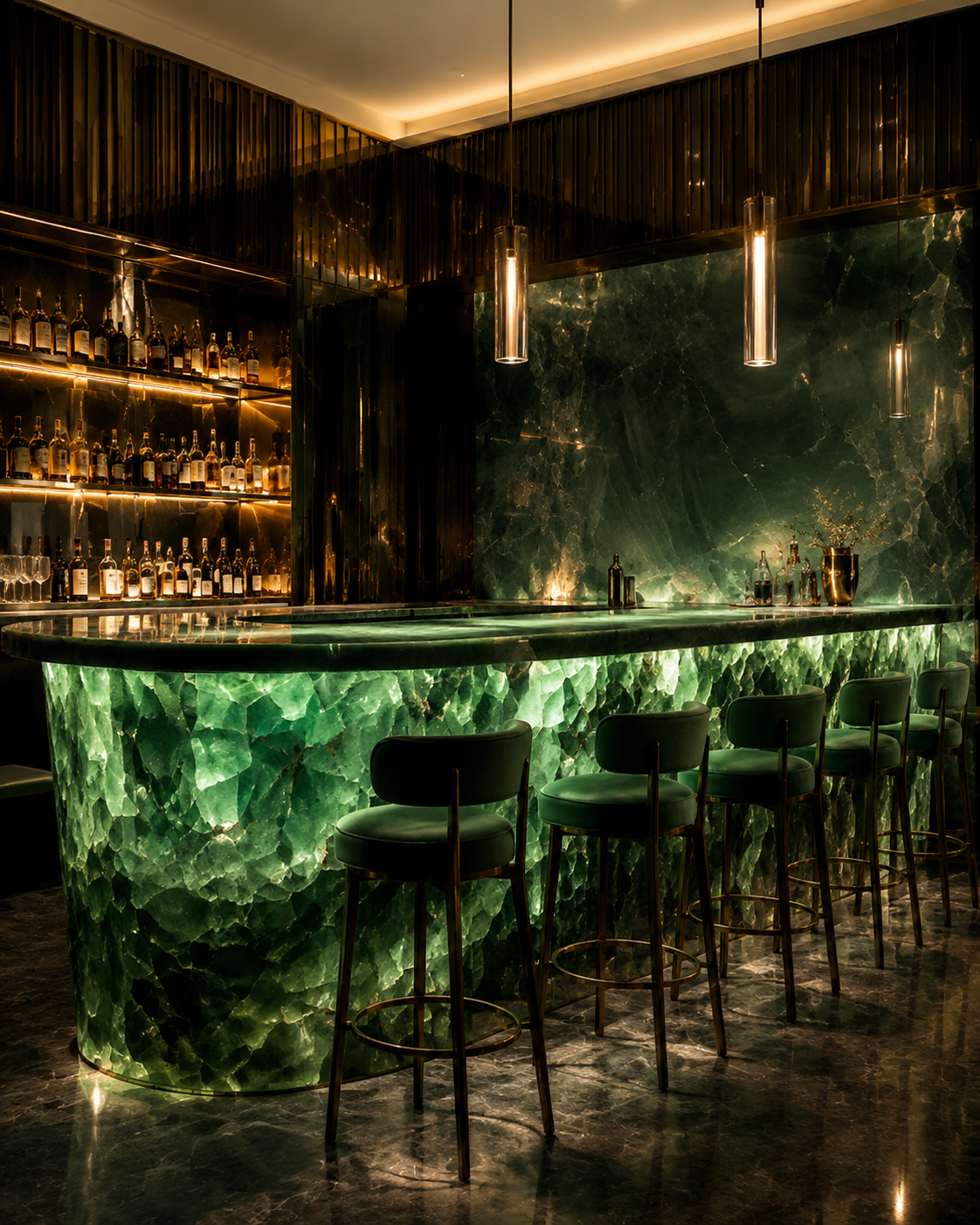
Tinted or colored synthetic crystal can reinforce brand identity. Deep amber, smoke gray, blue, green, champagne, rose, and other customized tones can introduce color without relying on paint or upholstery.
Color should be selected carefully. Strong tones may create a dramatic focal point, while subtle tones can add depth without dominating the interior.
Textured and Sculptural Finishes
Carved, rippled, faceted, layered, or irregular surfaces create more artistic effects. These finishes interact strongly with light and shadow, making them suitable for feature pieces and branded installations.
A sculptural finish can turn a functional table or desk into a recognizable signature element.
Matching Materials to Brand Positioning
The most successful commercial furniture does not look expensive simply because of the material used. It feels appropriate to the brand.
A luxury fashion store may prefer clean transparent surfaces with polished metal details. A premium beauty brand may choose soft pink or champagne tones. A technology company may use sharp geometry and cool lighting. A boutique hotel may select warmer colors, organic forms, and handcrafted textures.
Before selecting a synthetic crystal design, businesses should define their brand personality in clear visual terms.
Is the brand minimal or expressive?
Is it classic or experimental?
Should the space feel exclusive, welcoming, futuristic, artistic, calm, or dramatic?
These decisions affect color, form, finish, scale, and lighting.
When furniture aligns with the brand, customers experience the space as coherent. When it does not, even an expensive piece may feel disconnected.
Focus on High-Visibility Areas First
A fast commercial upgrade should prioritize areas that influence the greatest number of visitors.
The entrance is usually the first priority. A customer’s initial impression often determines how they interpret everything that follows. Upgrading the reception desk, entrance console, signage base, or central display can immediately raise the perceived level of the entire space.
The second priority is the main customer interaction area. This may be a sales counter, consultation table, bar, product display, or waiting area.
The third priority is photography.
Businesses should identify which parts of the space are most likely to appear in customer photos, social media posts, online reviews, promotional videos, and press coverage. A synthetic crystal statement piece placed in a highly photographed area can produce value far beyond its physical function.
One well-positioned object can become a recognizable part of the brand’s visual identity.
Scale and Proportion Must Be Carefully Controlled
Synthetic crystal furniture naturally attracts attention, which makes proportion especially important.
A piece that is too small may not create enough visual impact. A piece that is too large may dominate the room and disrupt circulation. Designers must consider ceiling height, floor area, sightlines, nearby furniture, lighting, and the distance from which the piece will be viewed.
In a large hotel lobby, a bold sculptural table may be appropriate. In a compact boutique, a more refined console or display pedestal may create a stronger result.
Thickness also affects perception.
Thicker forms can feel substantial, architectural, and luxurious. Thinner forms may feel lighter and more delicate. The correct choice depends on the desired atmosphere and the structural requirements of the piece.
Proportion should never be treated as a purely technical issue. It directly influences how valuable and intentional the furniture appears.
Combining Synthetic Crystal With Other Premium Materials
Synthetic crystal becomes even more versatile when paired with contrasting materials.
Metal introduces structure and precision. Brass, stainless steel, bronze, blackened metal, and polished finishes can each create a different character.
Stone adds weight and permanence. Marble, granite, quartzite, and engineered stone can provide a strong visual foundation for transparent crystal elements.
Wood brings warmth and natural texture. It can soften the modern appearance of synthetic crystal and make a space feel more welcoming.
Leather and textiles introduce comfort. They are particularly useful when synthetic crystal is incorporated into seating areas, lounges, private consultation rooms, or hospitality spaces.
The strongest combinations are based on contrast.
Transparent and solid. Smooth and textured. Reflective and matte. Cool and warm. Precise and organic.
These contrasts create visual depth and prevent the interior from feeling one-dimensional.
Durability and Practical Use Should Shape the Design
Commercial furniture must perform under real operating conditions.
A beautiful piece is not successful if it is difficult to maintain, unstable, poorly positioned, or unsuitable for frequent use. The design process should account for traffic volume, cleaning routines, expected loads, customer behavior, and environmental conditions.
Edges should be appropriate for the location. Bases should provide reliable stability. Surfaces should be designed for the intended function. Access for maintenance and lighting replacement should be considered before installation.
In restaurants and bars, resistance to spills and frequent cleaning is essential. In retail, display flexibility may be important. In offices and reception areas, cable management and equipment integration may be required.
High-end design is not the opposite of practicality. The best luxury furniture hides its technical intelligence behind a clean and effortless appearance.
Customization Creates a Stronger Competitive Advantage
One of the greatest benefits of synthetic crystal furniture is the opportunity for customization.
A custom piece can reflect brand colors, architectural forms, logos, product shapes, local culture, or a specific design concept. It can be created for a particular location rather than selected from a standard furniture catalog.
This makes the space more difficult to imitate.
In competitive industries, visual uniqueness matters. Hotels, restaurants, boutiques, clubs, offices, and showrooms all compete for attention. A generic interior may be attractive, but a customized interior is more likely to be remembered.
Customization can include dimensions, colors, embedded elements, surface patterns, lighting, engraving, sculptural forms, and mixed-material details.
The result is not simply furniture. It is a physical expression of the brand.
Avoiding Common Design Mistakes
Synthetic crystal furniture can create exceptional results, but only when used with discipline.
The first mistake is overuse. Filling an entire space with highly reflective statement pieces can reduce their impact. Synthetic crystal is often most effective when used selectively.
The second mistake is poor lighting. Without thoughtful illumination, the material may appear flat or lose its visual depth.
The third mistake is choosing style without considering function. A dramatic shape must still support the practical requirements of the business.
The fourth mistake is ignoring surrounding materials. Synthetic crystal should connect with the flooring, walls, ceiling, lighting, and existing furniture.
The fifth mistake is selecting a design based only on an isolated product image. Commercial furniture must be evaluated within the complete environment.
A successful piece should improve the entire room, not only attract attention to itself.
How Synthetic Crystal Raises Perceived Value
Perceived value is not created by price alone. It is created by detail, rarity, consistency, presentation, and emotional response.
Synthetic crystal furniture can raise perceived value because it feels designed rather than merely purchased. Its optical qualities make it visually distinctive, while its customization possibilities allow it to support a unique brand story.
When customers see a space that appears carefully considered, they often assume the same level of care applies to the products and services offered there.
This is particularly important for premium businesses.
A high-end clinic, jewelry boutique, executive office, luxury hotel, private club, designer showroom, or fine dining venue must communicate quality before the transaction begins. The environment becomes evidence of the brand’s standards.
Materials are part of that evidence.
Designing for Memory, Not Only Appearance
A beautiful space may impress customers once. A memorable space gives them something to describe later.
Synthetic crystal furniture can create memorable moments because its appearance changes with light, angle, and movement. Visitors may notice reflections, internal depth, illuminated edges, or unexpected color transitions as they move through the room.
This creates a more active visual experience.
The furniture becomes something to discover rather than simply observe.
For commercial brands, this matters because memory supports recognition. Recognition supports trust. Trust supports purchasing decisions, recommendations, and repeat visits.
The goal of a material upgrade should therefore extend beyond making a space look newer. It should make the space easier to remember.
A Strategic Investment in Brand Experience
Commercial interiors are not static backgrounds. They are active parts of the customer experience.
Every reception desk, table, counter, display, and decorative feature contributes to how a brand is understood. When these elements are ordinary, the space may struggle to communicate distinction. When they are thoughtfully designed, they can elevate even a familiar environment.
Synthetic crystal furniture offers a powerful combination of transparency, light interaction, customization, and sculptural impact. It can introduce luxury without making a space feel heavy. It can create visual drama without requiring extensive construction. It can support brand identity while remaining functional.
Most importantly, it can transform perception quickly.
For businesses planning an upgrade, the most effective approach is to identify the spaces customers see first, the areas they photograph most often, and the interactions that matter most. A custom synthetic crystal reception desk, illuminated display, sculptural console, or signature table can then be designed to concentrate visual impact where it delivers the greatest commercial value.
The right material does not simply change the appearance of a room. It changes expectations, influences emotion, strengthens brand positioning, and gives customers a reason to look twice.
The only question is: what could your space become when one extraordinary piece changes everything?
READ MORE:
- A New Approach to Building a High-End Furniture Brand: From Design Differentiation to Material Differentiation
- Why Is Synthetic Crystal Acrylic Becoming a New Symbol of High-End Furniture?
- Synthetic Crystal Acrylic Furniture: Giving Ordinary Furniture a High-End Design Language
- From Transparent Aesthetics to Commercial Value: Where Are the Growth Opportunities for Synthetic Crystal Acrylic Furniture?
- Synthetic Crystal Acrylic Furniture: Why Are High-End Spaces Paying More Attention to Material Identity?
- The Hidden Cost of Low-Quality Furniture in Premium Commercial Projects
- How Light Interacts with Crystal Materials to Create Memorable Commercial Spaces
- Why Luxury Interiors Need Statement Pieces Instead of More Decorations
- How Material Quality Shapes Brand Trust Before a Customer Speaks to You


