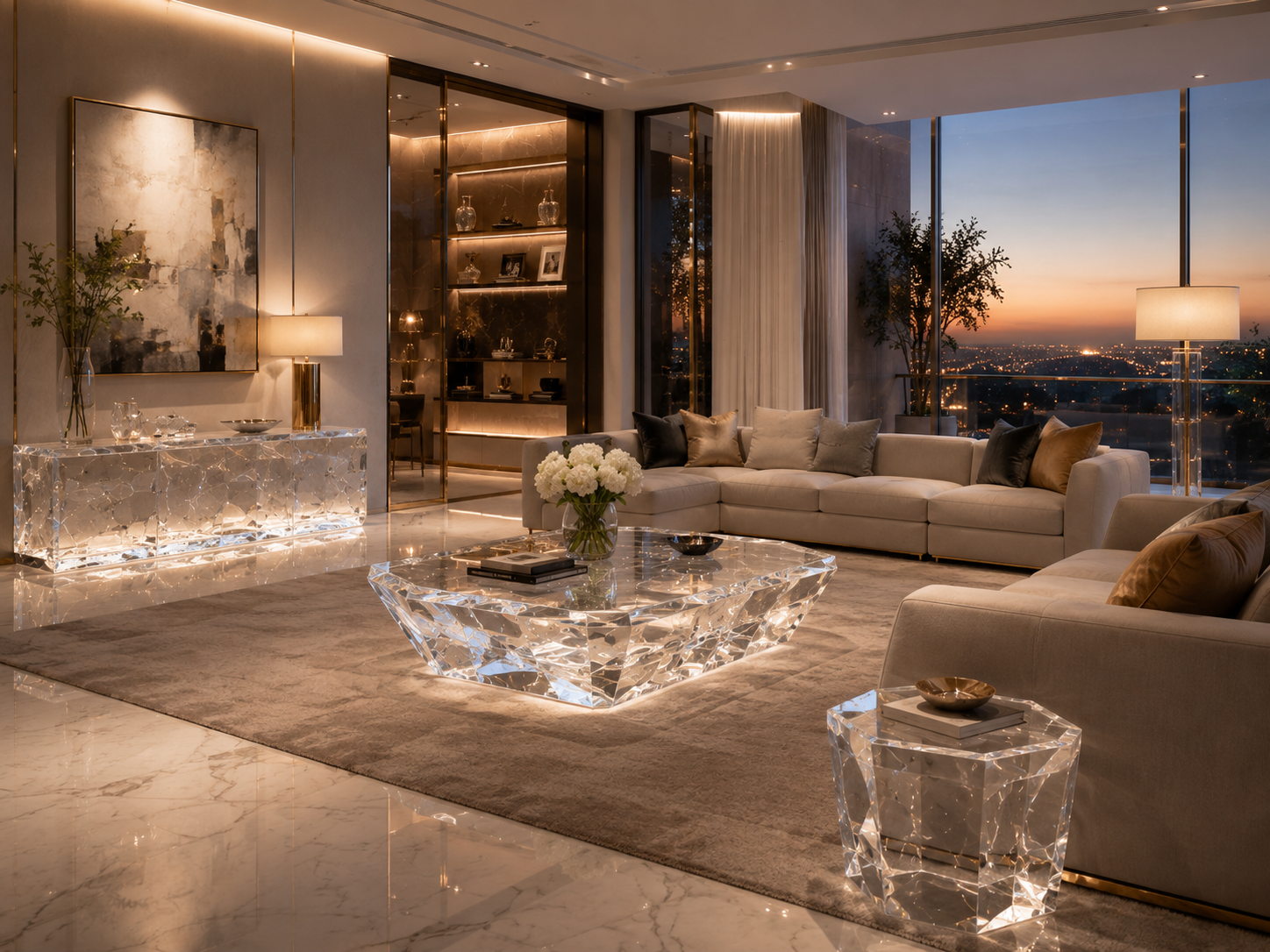
A customer begins judging a brand long before a conversation starts.
They notice the entrance, the lighting, the reception desk, the way products are displayed, and the materials used throughout the space. Within seconds, they form assumptions about quality, professionalism, reliability, and price positioning. They may not consciously analyze every surface, but they still respond to what those surfaces communicate.
This is especially important in premium commercial environments.
A luxury boutique, hotel lobby, jewelry showroom, private office, beauty clinic, restaurant, or high-end retail space cannot rely on words alone to communicate value. The physical environment must support the promise of the brand. If the brand claims precision, exclusivity, and craftsmanship, but the furniture looks generic, poorly finished, or visually inconsistent, customers notice the contradiction immediately.
Material quality is therefore not simply a design concern. It is part of brand communication.
For businesses that want to create a strong first impression, high-quality synthetic crystal furniture can play a powerful role. Its clarity, optical depth, polished surfaces, sculptural possibilities, and interaction with light make it capable of expressing luxury in a way that conventional commercial furniture often cannot.
However, the impact depends entirely on quality.
A well-designed synthetic crystal reception desk can make an entrance feel refined and memorable. A poorly executed piece can have the opposite effect. Uneven polishing, visible joints, incorrect proportions, unstable support, badly positioned lighting, or low-quality transparent material can quickly weaken trust.
The difference is not always obvious in a product image. It becomes clear when the furniture is seen in person, installed in a real space, touched by staff, photographed by customers, and used every day.
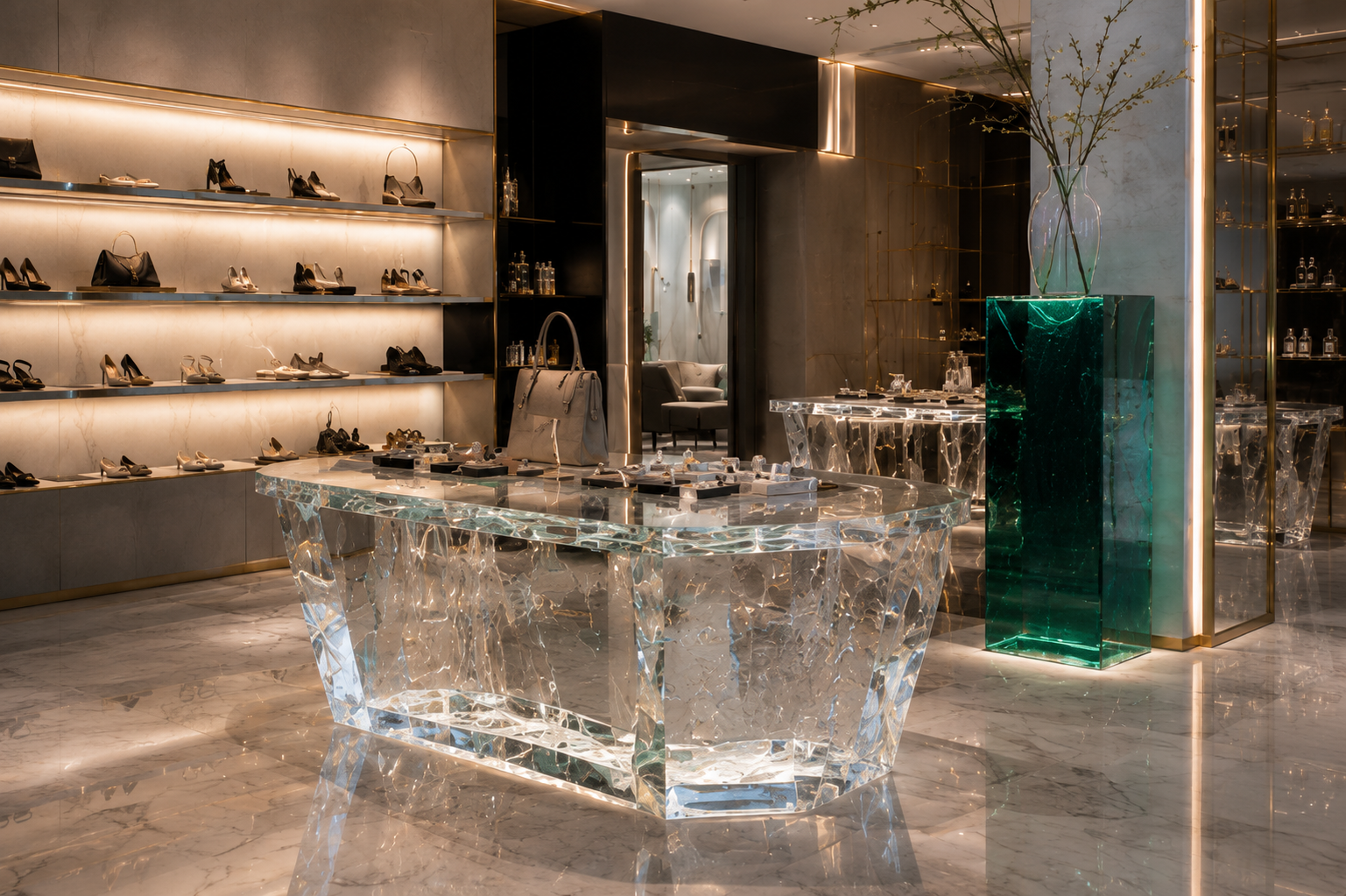
Customers Read Materials as Evidence
Customers rarely ask what thickness a furniture panel is or how the edges were polished. Yet they still interpret these details emotionally.
A surface that feels substantial suggests permanence.
A clean joint suggests precision.
Consistent transparency suggests material control.
A stable structure suggests reliability.
A well-integrated lighting system suggests thoughtful engineering.
These qualities become evidence that the company behind the space pays attention to detail.
The reverse is also true.
If a reception desk flexes slightly when someone leans on it, the customer may not understand the structural reason, but the piece will feel less premium. If internal hardware is visible through a transparent section, the design may appear unfinished. If LED strips create bright spots instead of an even glow, the effect can feel decorative rather than luxurious.
Every visible detail contributes to the customer’s judgment.
This is why material quality cannot be separated from brand trust. Customers may never visit the factory, meet the furniture manufacturer, or see the production process, but they experience the result of those decisions as soon as they enter the space.
Synthetic Crystal Is Visually Honest
One of the most important characteristics of synthetic crystal is that it reveals quality very clearly.
Opaque materials can hide internal structures, fixings, adhesive lines, and minor production inconsistencies. Transparent and translucent materials are less forgiving. Light passes through them, reflections travel across their surfaces, and small defects can become more visible from different viewing angles.
This makes synthetic crystal highly effective in premium interiors, but it also makes manufacturing quality critical.
The material must be selected, cut, shaped, joined, polished, and finished with control. Designers must think about how the piece will look from the front, sides, top, and rear. They must also consider how daylight, spotlights, concealed LEDs, and nearby reflective surfaces will interact with it.
A synthetic crystal table may look flawless under soft factory lighting but behave differently beneath direct commercial spotlights. A clear reception desk may appear elegant from the customer side while exposing wiring or structural components from another angle. A dark tinted surface may look dramatic in a rendering but show fingerprints more easily in a high-traffic setting.
These are not theoretical concerns. They are practical decisions that should be addressed before production begins.
Material Quality Starts Before Manufacturing
A successful piece of synthetic crystal furniture begins with more than choosing a color or shape.
The first step is understanding the commercial environment.
Before finalizing a design, it is important to evaluate where the furniture will be placed, how people will approach it, which angles will be visible, how much natural light enters the space, and what type of artificial lighting will be used. The furniture must also be designed around its function.
A reception desk needs appropriate working height, cable routing, equipment space, storage, and staff access.
A display table must support products securely without distracting from them.
A bar counter requires practical cleaning, edge protection, maintenance access, and durable integration with other materials.
A console table placed near an entrance may need to create impact while preserving circulation.
These requirements influence thickness, structure, surface treatment, lighting, and installation method.
When quality is treated only as a visual issue, practical problems often appear later. When quality is considered from the beginning, the finished piece feels more coherent because appearance and performance support each other.
Optical Clarity Changes Perceived Value
Clear materials are often described simply as transparent, but transparency alone does not create a premium result.
The perceived value of synthetic crystal depends on optical consistency, depth, surface finish, and the way light travels through the material. A high-quality piece should not look flat or plastic-like. It should have visual depth and controlled reflections.
Thickness plays an important role.
A thicker crystal element can create a stronger sense of substance and luxury. It allows polished edges to catch light and makes the piece feel architectural rather than decorative. However, increased thickness also affects weight, structural planning, packaging, and installation.
The correct thickness should therefore be chosen according to the design, not simply increased for visual impact.
In some projects, a lighter structure is more appropriate because the furniture should appear delicate and open. In others, a substantial block-like form communicates strength and exclusivity. The goal is not to use the most material. The goal is to use the right amount of material in the right way.
Color also changes perception.
Clear synthetic crystal can feel precise, modern, and minimal. Smoke tones can add depth and sophistication. Champagne or amber finishes may create warmth. Frosted surfaces can soften reflections and make a space feel calmer. Colored layers can reinforce brand identity or create a stronger focal point.
The premium effect comes from control, not from intensity.
Edge Finishing Reveals Craftsmanship
Edges are among the first places where furniture quality becomes visible.
On synthetic crystal furniture, a polished edge can capture light and create a clean, jewel-like appearance. If the polishing is inconsistent, the edge may appear cloudy, uneven, or visually rough. This reduces the sense of precision even when the overall shape is attractive.
Different edge treatments create different impressions.
Sharp geometric edges can feel architectural and contemporary. Softened edges can improve safety and create a more comfortable visual language. Faceted edges can increase reflection and produce a more decorative effect. Rounded transitions can make large forms feel more fluid.
The choice should be based on the location and intended use.
For a customer-facing counter, edge comfort and durability are important. For a display pedestal, sharper forms may be acceptable because direct contact is limited. For hospitality furniture, corners should be considered carefully because staff and guests move around the piece repeatedly.
A premium design is not defined by complexity. A simple shape with excellent edge finishing often appears more valuable than a complicated form with inconsistent details.
Joints Should Look Intentional
Transparent furniture requires careful attention to connections.
Joints, internal supports, metal components, and fixing points may remain visible. If they are treated as an afterthought, they can interrupt the visual clarity of the piece.
A strong design decides early which elements should be hidden and which should become part of the aesthetic.
Some synthetic crystal furniture is designed to appear almost seamless. In this case, alignment, bonding, polishing, and structural planning must be extremely precise. Other pieces use visible metal connections intentionally, creating contrast between transparency and structure.
Both approaches can work.
The problem arises when a joint looks accidental.
Uneven adhesive lines, misaligned panels, exposed fasteners, or poorly finished transitions can make expensive material feel ordinary. Customers may not identify the technical issue, but they sense that the piece lacks refinement.
For brands positioned at the premium end of the market, this matters because customers expect consistency. A company cannot claim excellence in its products or services while presenting furniture that appears carelessly assembled.
Lighting Must Be Designed With the Furniture
Lighting can transform synthetic crystal, but it can also expose mistakes.
One of the most important practical lessons in illuminated furniture is that the lighting system should be developed together with the structure. Adding LED strips after the furniture has already been designed often creates uneven brightness, visible hotspots, awkward wiring, or difficult maintenance.
The path of the light must be considered before final assembly.
Designers need to evaluate where the LEDs will sit, how heat will be managed, how the light will enter the crystal, and whether the final effect should be a soft glow, illuminated edge, internal reflection, or dramatic color feature.
Brighter is not always better.
Exposed lighting strips can make a premium piece look commercial or temporary. Concealed lighting usually produces a more refined effect because the customer sees the glow rather than the source. Diffusion is also important. Without proper control, individual LED points may be visible through the material.
Color temperature affects brand perception as well.
Warm lighting can make synthetic crystal feel elegant and welcoming. Neutral lighting can preserve clarity and work well in retail or corporate settings. Cooler tones may create a futuristic or technical appearance, but they should be used carefully because excessive blue light can make a space feel less comfortable.
Lighting should also be tested under conditions similar to the final installation environment. Daylight, ceiling spotlights, reflective flooring, mirrors, and nearby glass can all change the result.
High-Quality Furniture Must Work Behind the Scenes
Customers see the front of a reception desk. Staff experience the back.
This difference is important.
A piece can look impressive from the customer side while being difficult to use every day. Insufficient storage, poor cable management, inaccessible lighting components, uncomfortable working height, or limited equipment space can create long-term problems.
True quality includes the parts customers do not see.
For reception furniture, internal layouts should account for monitors, payment equipment, printers, communication systems, personal storage, and cable access. Ventilation may be necessary if electronic equipment is enclosed. Removable panels can make maintenance easier.
For illuminated pieces, the power supply and control system should be accessible without requiring the entire structure to be dismantled.
For bars and hospitality counters, staff need surfaces that can be cleaned efficiently and sections that can withstand repeated contact. If water, beverages, or cleaning products are present, joints and electrical areas must be planned carefully.
A high-end appearance creates the first impression. Practical performance protects that impression over time.
Surface Maintenance Influences Long-Term Trust
Commercial furniture is not judged only on installation day.
It must continue to look intentional after months and years of use. This is why maintenance should influence material and finish selection.
Highly polished transparent surfaces can show fingerprints, dust, and cleaning marks more easily than some opaque materials. This does not make them unsuitable for commercial use, but it means the operating environment should be considered.
In a luxury boutique with regular staff cleaning, a clear polished finish may remain visually impressive. In a very high-traffic environment, a lighter tint, textured section, or frosted detail may reduce the visibility of daily contact.
Darker finishes can appear rich and dramatic, but they may reveal fingerprints more clearly under direct lighting. Horizontal surfaces usually require more frequent cleaning than vertical surfaces. Strong overhead spotlights can make dust or fine surface marks more noticeable.
Cleaning methods matter as well.
Staff should use suitable soft materials and appropriate cleaning products. Aggressive chemicals, abrasive pads, or incorrect tools can affect the finish over time. Clear maintenance instructions should therefore be provided as part of a professional furniture delivery.
When a premium furniture piece remains clean, stable, and visually consistent, it continues reinforcing trust. When it quickly looks neglected, the effect spreads to the brand around it.
Structural Quality Is Part of Visual Quality
Synthetic crystal furniture may appear light because of its transparency, but large pieces can be substantial in weight.
This creates practical considerations for internal support, transportation, floor loading, access, and installation.
A large reception desk should not be designed only as a visual form. Its structure must support daily use, internal equipment, customer contact, and movement during delivery. Reinforced frames may be required depending on the shape and scale.
The support system must also be visually compatible with the design.
An oversized metal frame can make transparent furniture feel heavy. An insufficient frame can create movement or instability. The goal is to provide reliable support while preserving the intended visual effect.
Large dimensions may also require modular construction.
In many commercial spaces, elevators, doorways, corridors, and site access determine whether a piece can be delivered in one section. A design that looks ideal on a computer screen may be impossible to move into the building.
For this reason, access measurements should be reviewed before production. If the furniture needs to be divided into modules, the joint positions should be integrated into the design rather than decided during installation.
Good planning prevents visible compromises later.
Packaging Quality Protects Brand Quality
The appearance of synthetic crystal furniture depends heavily on surface condition. Packaging is therefore not a minor logistics detail.
Polished surfaces and corners need protection during handling and international transport. Movement inside the crate can cause damage even when the outer packaging appears intact. Large pieces may also require clear lifting instructions, balanced support points, and careful unloading procedures.
The packaging approach should reflect the shape, weight, finish, and destination of the furniture.
Protective films can help preserve polished surfaces, but they must be applied and removed correctly. Corners need special reinforcement. Internal padding should prevent contact without placing harmful pressure on delicate sections. Crates should allow safe handling by forklifts or lifting equipment where necessary.
Installation teams should also understand how the furniture should be unpacked.
Removing support too early or lifting from the wrong point can place unnecessary stress on the structure. Clear labeling and installation guidance reduce this risk.
For international commercial projects, packaging quality is part of product quality. The customer does not separate the furniture from the delivery experience. Damage, confusion, or poor preparation can weaken confidence before the piece is even installed.
Installation Is the Final Stage of Manufacturing
A synthetic crystal furniture project is not complete when it leaves the workshop.
Installation determines whether the precision achieved during manufacturing is preserved on site.
Commercial interiors are rarely perfect. Floors may not be completely level. Walls may vary slightly from the drawings. Electrical points may be positioned differently from the original plan. Other contractors may still be working in the space.
These conditions require preparation.
Level adjustment should be considered in advance. Connection points must allow accurate alignment. Lighting systems should be tested after installation, not only before shipment. Protective film should remain in place until the highest-risk construction activity has finished.
Large furniture may also require coordination with electricians, interior contractors, lighting specialists, and building management.
A piece that integrates with the wall, floor, or power supply needs clear installation responsibility. Without coordination, small site changes can create visible problems such as uneven gaps, exposed cables, or misaligned lighting.
Professional installation protects both the furniture and the brand impression it is intended to create.
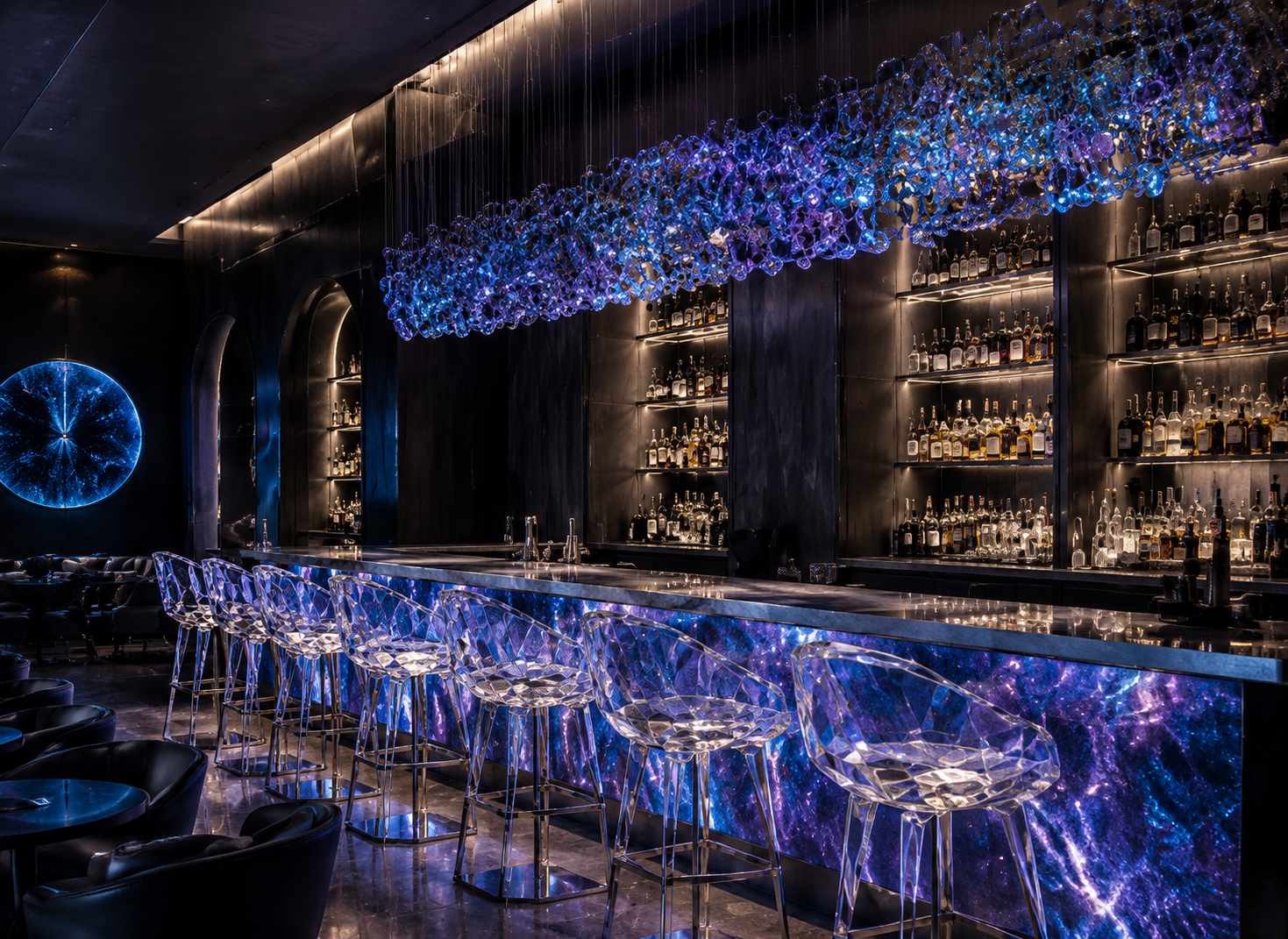
Synthetic Crystal and Standard Acrylic Are Not Always Interchangeable
Transparent furniture is sometimes grouped into one broad category, but different materials can create very different results.
Standard acrylic may be suitable for temporary displays, cost-sensitive fixtures, simple decorative elements, or projects where long-term visual depth is not the main priority. It is widely available and can be practical for many applications.
High-end synthetic crystal furniture is generally selected when the piece needs to become a focal point, communicate luxury, or provide a more substantial optical presence.
The choice should depend on the commercial objective.
If the furniture will be used for a short-term promotional event, a more economical material may be appropriate. If the piece will stand at the entrance of a luxury showroom for years, the quality of clarity, finish, thickness, structure, and lighting integration deserves greater investment.
This is an important distinction because customers often compare materials only by appearance in photographs. In person, optical depth, edge treatment, surface consistency, and overall construction become much more noticeable.
The right material is not automatically the most expensive option. It is the option that supports the brand, function, location, and expected service life.
Brand Trust Depends on Consistency
A single premium furniture piece cannot repair an entirely inconsistent space.
The strongest commercial interiors create alignment between materials, lighting, architecture, signage, product presentation, and service. Synthetic crystal furniture should feel connected to the environment rather than placed into it as an isolated decoration.
This does not mean every material needs to match.
Contrast can be powerful.
Synthetic crystal can be paired with stone to combine transparency and permanence. Metal can add structure and precision. Wood can introduce warmth. Leather and textiles can soften the environment. Matte walls can balance reflective surfaces.
The key is intentionality.
When the reception desk, product displays, lighting, and wall finishes support the same visual message, customers experience the brand as organized and confident. When every element seems to come from a different design direction, the environment can feel less trustworthy.
Premium customers are particularly sensitive to inconsistency because they are not only buying a product. They are buying confidence in the company’s judgment.
Quality Reduces the Need for Explanation
The best materials communicate before sales staff begin speaking.
A well-made synthetic crystal display can make jewelry feel more exclusive. A refined reception desk can make a corporate office feel more established. An illuminated bar front can make a hospitality space feel more distinctive. A sculptural console can turn an ordinary entrance into a recognizable brand moment.
None of these effects requires a sign explaining that the furniture is premium.
Customers understand through observation.
This is one reason material quality has such commercial value. It reduces the gap between what a brand claims and what a customer believes.
When the environment already communicates precision, customers are more prepared to trust claims about craftsmanship. When the space feels exclusive, premium pricing becomes easier to understand. When the furniture looks stable and carefully engineered, the company appears more reliable.
The physical space becomes proof.
Choosing a Manufacturer Is a Brand Decision
Selecting a synthetic crystal furniture manufacturer should involve more than comparing quotations.
A lower price may not reflect differences in material grade, polishing quality, structural design, lighting integration, packaging, or after-sales support. These factors often become visible only after production or installation.
A professional discussion should include the project environment, dimensions, intended use, finish, lighting, structure, access conditions, maintenance, and shipping destination.
The manufacturer should be able to explain how the furniture will be produced, supported, packed, delivered, and installed. They should also identify potential risks before production begins.
For example, direct overhead lighting may create unwanted reflections. Dark tinted surfaces may require more frequent cleaning. Very large sections may not fit through site access points. Concealed LED systems need maintenance access. Unsupported spans may require reinforcement.
Identifying these issues is not a sign of difficulty. It is a sign of experience.
A manufacturer who only confirms that every idea is possible may be less useful than one who explains which details should be adjusted to protect the final result.
The Most Expensive Mistakes Happen Before Production
Many quality problems begin during the decision stage.
Choosing a finish from a small sample without reviewing the lighting environment can lead to unexpected color changes. Approving dimensions without checking site access can create delivery problems. Designing a fully enclosed illuminated structure without service access can make future repairs difficult.
Other mistakes include selecting highly reflective surfaces for areas with uncontrolled spotlights, ignoring staff workflow behind reception desks, or choosing a complex structure that cannot be assembled accurately on site.
These issues can be reduced through early coordination.
Floor plans, elevations, lighting information, access measurements, and equipment requirements should be shared before production. Important visual decisions may benefit from physical material samples or lighting tests.
For custom furniture, careful preparation is usually more valuable than rushing into manufacturing.
The customer ultimately sees the finished piece, not the speed of the approval process.
Material Quality Creates Memory
Brand trust is not built only through immediate impressions. It is also built through memory.
Customers remember spaces that feel distinctive, coherent, and carefully made. They may recall the illuminated reception desk, the transparent display table, the reflective bar counter, or the sculptural furniture near the entrance.
These physical details become part of how they describe the business to others.
In highly visual industries, customers may also photograph the space. When furniture becomes a natural background for social media images, it extends the brand experience beyond the location itself.
This effect should not be forced.
Furniture designed only to attract attention can quickly feel temporary or theatrical. The strongest pieces are visually memorable because they belong to the brand and serve a real function.
A well-designed synthetic crystal piece can be dramatic without becoming distracting. It can create recognition while still supporting the products, services, and people around it.
Quality Is What Remains After the First Impression
A first impression may be created in seconds, but trust develops through continued experience.
The reception desk must still feel stable when used. The lighting must remain even. The surface must be maintainable. The structure must continue to perform. Staff must be able to work comfortably. Customers must continue to see the piece as intentional rather than worn or outdated.
This is the difference between visual novelty and lasting quality.
Novelty attracts attention once.
Quality continues to communicate value every day.
For premium brands, that distinction matters. A commercial interior is not a temporary marketing image. It is a working environment that repeatedly introduces the company to customers, partners, employees, and visitors.
Every material decision becomes part of that introduction.
Let the Space Speak First
Before customers hear a sales presentation, read a product description, or speak with a member of staff, they have already received a message from the space.
The materials tell them whether the brand values detail.
The furniture tells them whether the company invests in quality.
The finishing tells them whether precision matters.
The lighting tells them whether the experience has been carefully considered.
High-end synthetic crystal furniture can bring these signals together through clarity, depth, structure, craftsmanship, and controlled interaction with light. When designed around real commercial use and manufactured with attention to every visible and hidden detail, it becomes more than furniture. It becomes part of the evidence customers use to decide whether a brand deserves their trust.
Your team may have only a few seconds to shape that decision, so what will your space say before anyone speaks?
READ MORE:
- A New Approach to Building a High-End Furniture Brand: From Design Differentiation to Material Differentiation
- Why Is Synthetic Crystal Acrylic Becoming a New Symbol of High-End Furniture?
- Synthetic Crystal Acrylic Furniture: Giving Ordinary Furniture a High-End Design Language
- From Transparent Aesthetics to Commercial Value: Where Are the Growth Opportunities for Synthetic Crystal Acrylic Furniture?
- Synthetic Crystal Acrylic Furniture: Why Are High-End Spaces Paying More Attention to Material Identity?
- The Hidden Cost of Low-Quality Furniture in Premium Commercial Projects
- How Light Interacts with Crystal Materials to Create Memorable Commercial Spaces
- Why Luxury Interiors Need Statement Pieces Instead of More Decorations
- Commercial Space Upgrades: Choosing Materials That Transform Perception Fast


