Low-quality furniture rarely looks inexpensive on the quotation.
It often appears efficient, practical, and commercially attractive. The price is lower, the lead time may seem shorter, and the supplier may promise that the final result will look almost identical to a higher-quality alternative. For project owners working under budget pressure, the decision can appear reasonable.
The real cost usually appears later.
It appears when the finish looks different under installed lighting. It appears when a reception desk feels unstable during daily use. It appears when visible joints, surface marks, uneven polishing, or poorly concealed hardware weaken the intended luxury effect. It appears when a piece arrives damaged, cannot fit through the building entrance, or requires modification on site.
In premium commercial projects, furniture is not simply equipment. It is part of the customer experience, the brand image, and the architecture. When quality is compromised, the consequences extend far beyond the purchase price.
This is especially true for synthetic crystal furniture.
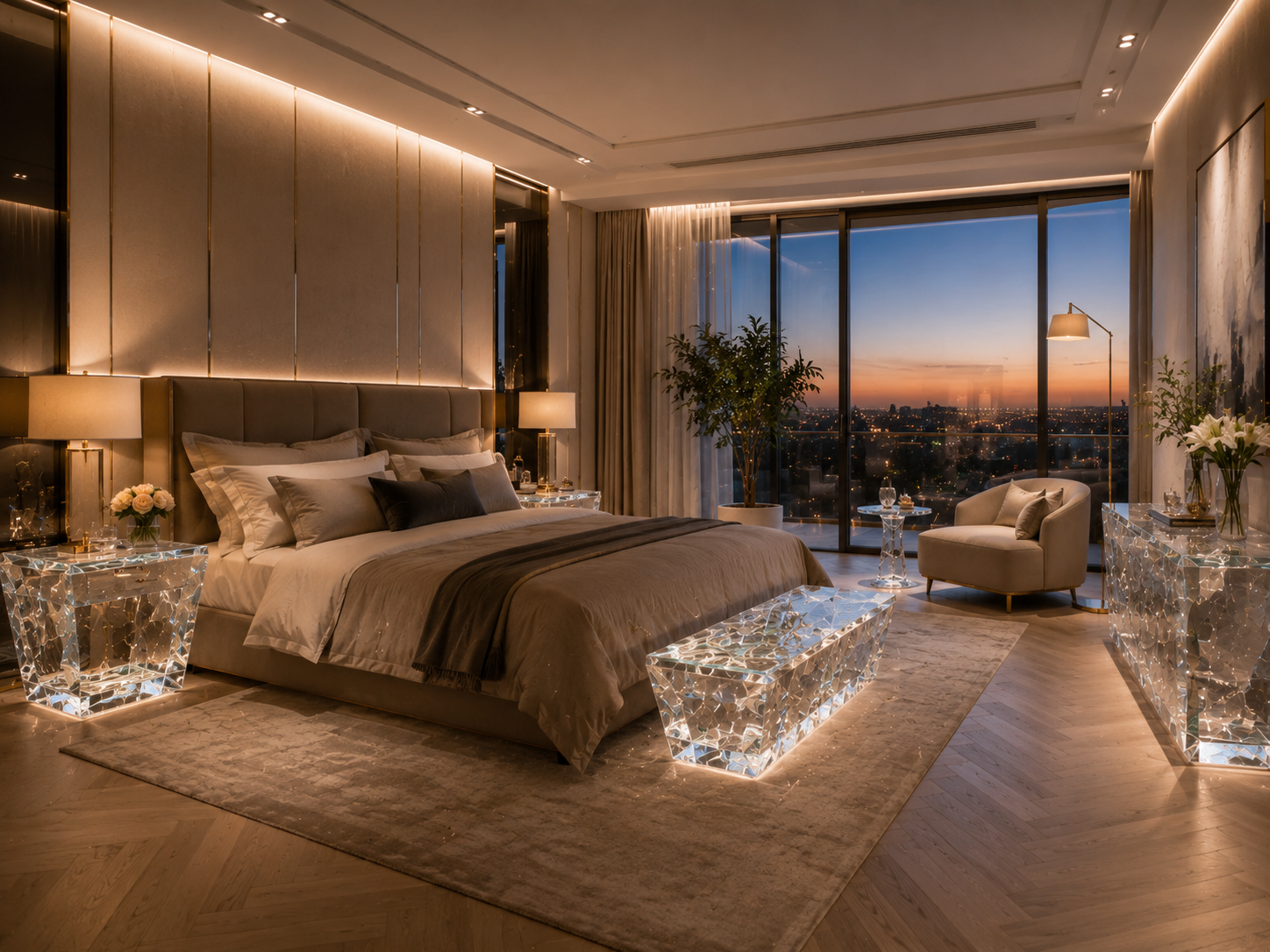
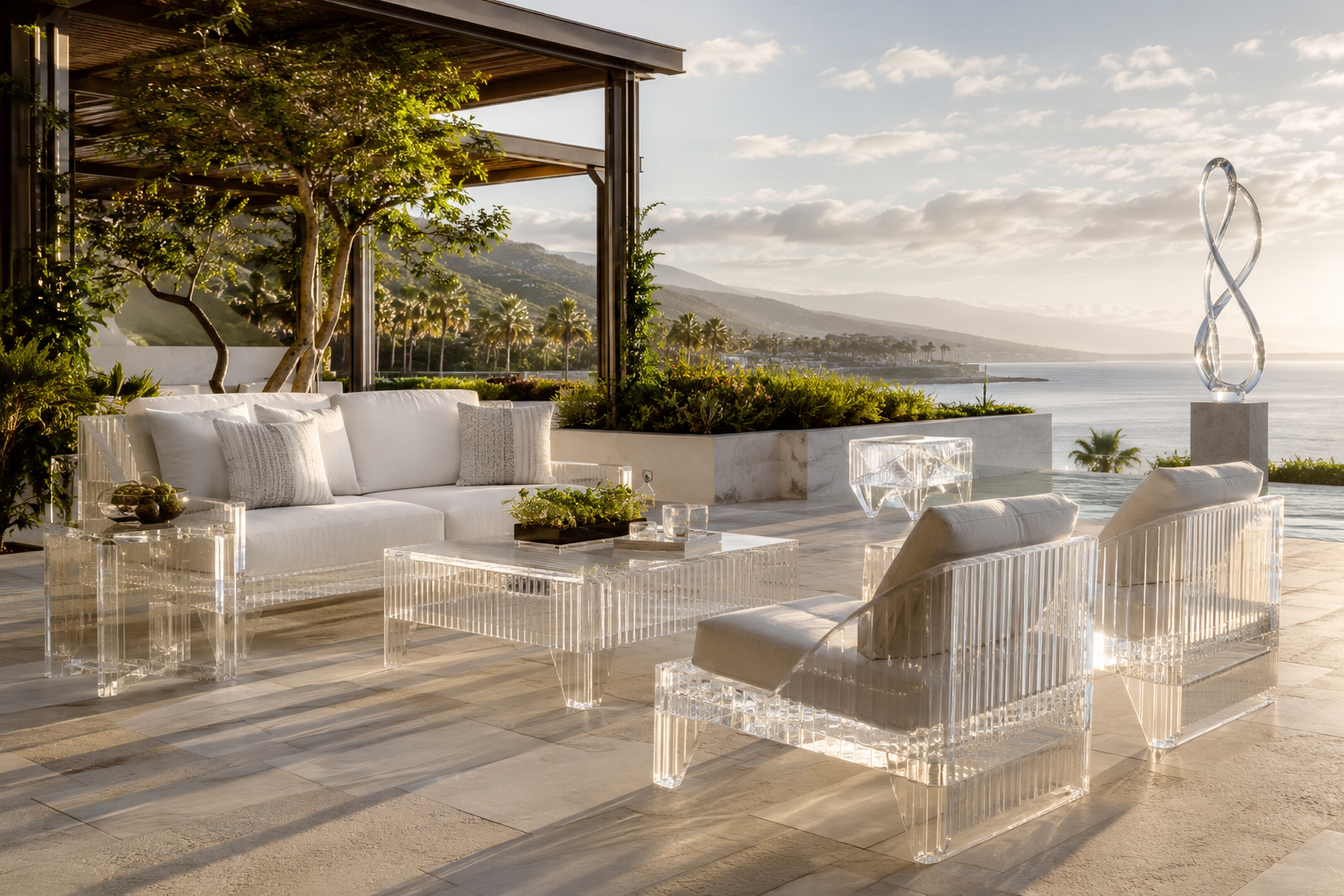
High-end synthetic crystal reception desks, display tables, bar counters, consoles, and sculptural installations are often placed in the most visible areas of a commercial interior. Their transparency, polished edges, optical depth, and interaction with light naturally attract attention.
That visibility creates opportunity, but it also creates risk.
A well-manufactured synthetic crystal piece can make a space feel precise, exclusive, and memorable. A poorly made one can expose every weakness in the design, manufacturing, lighting, packaging, and installation process.
The hidden cost of low-quality furniture is therefore not one single expense. It is the combined cost of corrections, delays, maintenance, disruption, lost confidence, and weakened brand perception.
The Lowest Quotation Is Not Always the Lowest Cost
Commercial furniture quotations can be difficult to compare because the visible product description may appear similar.
Two suppliers may both offer a custom synthetic crystal reception desk of the same approximate dimensions. Both may include lighting, metal support, polishing, packaging, and delivery. On paper, the difference may seem to be price.
In reality, the quotations may represent very different products.
The material grade may differ.
The thickness may differ.
The optical consistency may differ.
The internal support structure may differ.
The polishing process may differ.
The lighting components may differ.
The packaging method may differ.
The installation planning may differ.
One supplier may calculate the price based on a complete production and delivery process. Another may reduce the quotation by simplifying details that are not immediately visible.
Those details become visible later.
A lower-cost piece may require adjustment after delivery. Lighting components may need replacement. Surface defects may need repolishing. Structural support may need reinforcement. Incorrect dimensions may require site modification.
By the time these issues are corrected, the original saving may disappear.
The most important purchasing question is therefore not, “Which supplier offers the lowest price?”
It is, “Which quotation includes the work required to achieve and protect the intended result?”
Premium Projects Have Less Tolerance for Visible Defects
In a basic functional environment, small imperfections may not attract much attention.
In a premium commercial interior, every detail is judged more closely.
Customers expect alignment between the price positioning of the brand and the quality of the physical space. Luxury hotels, jewelry boutiques, designer showrooms, private offices, beauty clinics, fine dining venues, and high-end retail stores all depend on consistency.
If the furniture appears weak, the contradiction becomes obvious.
A slightly uneven joint may seem minor during production, but it can become highly visible under a spotlight. A cloudy polished edge can weaken the appearance of an entire synthetic crystal table. A visible adhesive line can interrupt the transparency of a reception desk.
The closer the furniture is to the customer, the greater the risk.
A customer standing at a reception counter may see details from less than one meter away. They may touch the surface, place personal items on it, or lean against it. In retail environments, they may photograph the furniture and products under bright lighting.
Premium furniture must therefore perform under close inspection.
The hidden cost of poor finishing is not only repair. It is the loss of credibility at the exact moment the brand is trying to communicate quality.
Cheap Materials Can Change the Entire Visual Result
Material substitution is one of the most common ways to reduce furniture costs.
From a distance or in a digital rendering, different transparent materials may appear similar. In the finished interior, the differences can become much more noticeable.
Optical depth, surface quality, edge clarity, color consistency, and light transmission all influence how synthetic crystal furniture is perceived.
A low-quality transparent material may appear flat, cloudy, overly plastic-like, or inconsistent in color. The effect becomes stronger when the material is thick, illuminated, or placed next to polished stone and metal.
This matters because premium interiors depend on material relationships.
If the floor, walls, lighting, and surrounding finishes are carefully selected, a weak furniture material can break the visual continuity. Instead of supporting the architecture, it begins to look like a later addition.
The cost of the material itself may be lower, but the project has already paid for the surrounding design, construction, lighting, and brand experience.
Saving on the most visible furniture element can reduce the perceived value of the entire investment.
Transparent Furniture Cannot Hide Poor Workmanship
Synthetic crystal is an unforgiving material.
Its transparency can reveal internal supports, fasteners, cable routes, bonding lines, lighting components, and small manufacturing inconsistencies. Opaque panels can conceal many of these details. Clear and translucent furniture cannot.
This means the internal design must be as controlled as the exterior.
A poorly positioned metal frame may remain visible from the customer side. Uneven adhesive can become more obvious when illuminated. Wiring that seemed hidden during assembly may create shadows inside the material.
These problems are rarely solved by surface decoration.
They require planning before production.
The manufacturer must understand how the piece will be viewed from multiple directions. The designer must determine which components should be concealed and which can become intentional visual features. The structure, lighting, and crystal elements must be coordinated.
When this coordination is missing, the furniture may look acceptable in a workshop but unfinished in the final commercial environment.
The hidden cost appears when the project team must redesign, cover, repaint, replace, or accept details that were never intended to be visible.
Poor Polishing Reduces Perceived Luxury
Polishing is one of the clearest indicators of quality in synthetic crystal furniture.
The edges and surfaces interact directly with light. When polishing is controlled, the material can appear clear, deep, and jewel-like. When polishing is inconsistent, the same form can appear cloudy or rough.
This difference may not be obvious in a low-resolution product image.
It becomes obvious under real lighting.
Reception areas and retail environments often use spotlights, decorative lighting, or strong daylight. These conditions highlight every edge. If the polishing quality varies from one section to another, brightness becomes uneven.
The piece no longer feels precise.
Repolishing after assembly can be difficult, especially when the furniture includes complex shapes, bonded joints, metal components, or integrated lighting. It may require partial disassembly or removal from the site.
The cost is not only the polishing work.
It may include transport, labor, protection of surrounding finishes, project delays, and business disruption.
A lower manufacturing cost can become a much higher correction cost.
Inaccurate Dimensions Create Expensive Site Problems
Custom furniture depends on accurate measurements.
A reception desk may need to align with floor outlets, walls, columns, signage, equipment, and circulation routes. A display unit may need to fit between architectural elements. A bar counter may require precise coordination with plumbing, electricity, refrigeration, and staff access.
Small dimensional errors can create large consequences.
A piece that is slightly too long may not fit its intended location. A base that is too wide may block a cable outlet. A counter height that is incorrect may affect staff comfort. A modular joint placed in the wrong position may become visible from the main customer angle.
Site modification is rarely ideal.
Cutting, drilling, polishing, or adjusting synthetic crystal at the project location may be difficult. The site may not have the same tools, dust control, finishing conditions, or technical support as the factory.
Any adjustment also carries the risk of surface damage.
The most expensive dimensional mistake is often one that could have been prevented through careful drawing review, site measurement, and approval before manufacturing.
Weak Structural Planning Can Damage Confidence
Transparent furniture may look visually light, but it can still be substantial in weight.
Large synthetic crystal pieces require appropriate support. The structure must account for the span, load, intended use, transportation method, and installation process.
If support is insufficient, the furniture may flex, move, or feel unstable.
Even slight movement can damage the premium impression.
A customer does not need to understand structural engineering to recognize that a reception desk feels weak. Staff may become uncomfortable placing equipment on it. Management may worry about long-term performance.
Adding reinforcement later is possible in some cases, but it can affect the design.
A new metal support may become visible. The furniture may need to be removed from the site. Existing joints may need to be opened. Lighting components may need to be relocated.
A quality manufacturer considers structure from the beginning and balances strength with visual clarity.
Low-quality production often treats support as a problem to solve with the minimum possible material. Premium production treats it as part of the design.
Poor Lighting Integration Makes Expensive Furniture Look Cheap
Lighting can increase the value of synthetic crystal furniture, but only when it is integrated correctly.
A common low-quality approach is to design the furniture first and add LED strips later. This may reduce production complexity, but it often creates a weaker result.
The light source may be visible.
Individual LED points may appear through the crystal.
Brightness may be uneven.
Wires may be difficult to conceal.
Power supplies may be inaccessible.
The color temperature may not match the interior.
The furniture may technically be illuminated, but the effect does not feel luxurious.
Correct lighting integration requires early coordination. The material thickness, finish, internal structure, diffusion method, LED position, heat management, and maintenance access all affect the final appearance.
These decisions take time and technical attention.
When they are removed to reduce cost, the project may eventually pay for replacement lighting, additional diffusers, new wiring, or complete reconstruction of illuminated sections.
The furniture may also remain in an unsatisfactory condition because correction is too disruptive.
Difficult Maintenance Creates Ongoing Costs
Low-quality furniture often creates operational problems that are not visible on installation day.
A lighting component may fail but remain impossible to access.
Dust may collect inside an enclosed section.
Cables may become disorganized because no route was planned.
Staff may struggle to clean narrow joints.
The surface may show fingerprints more strongly than expected.
A panel may need to be removed, but the design provides no safe removal method.
Each problem may seem small, but commercial interiors are used every day.
If staff spend extra time cleaning, adjusting, or protecting the furniture, the cost continues over the life of the project. If maintenance requires specialist labor, the business may face repeated service expenses.
Poor maintenance planning can also affect appearance.
When a piece is difficult to clean, it may not be cleaned as often as necessary. When lighting is difficult to repair, failed sections may remain dark. When surface damage cannot be corrected easily, it becomes part of the customer experience.
High-quality furniture is not only designed to look impressive. It is designed to remain impressive under real operating conditions.
Packaging Is Part of the Product
Furniture quality can be lost during transportation.
This risk is especially important for synthetic crystal because polished surfaces, edges, corners, and illuminated components require careful protection.
Low-cost packaging may reduce the initial quotation, but it increases the chance of movement, scratching, pressure damage, chipped edges, and electrical problems.
The outer crate alone is not enough.
The furniture must be supported internally. Sensitive surfaces need suitable protective material. Corners require reinforcement. Heavy sections must be prevented from shifting. Lifting points should be clear.
For international projects, packaging must also account for multiple stages of handling.
The crate may be moved by forklift, truck, warehouse equipment, port operators, and local delivery teams. Each transfer adds risk.
If damage occurs, the cost may include repair, replacement, customs complications, additional shipping, and project delay.
The client may also need to open the space without the intended furniture, weakening the launch or customer experience.
Packaging is not a separate logistics expense. It is the final stage of manufacturing protection.
Poor Site Access Planning Can Stop Installation
A piece of furniture can be manufactured perfectly and still fail at delivery.
Large reception desks, counters, tables, and sculptural installations may not fit through the available entrances. Elevators, staircases, corridors, loading areas, ceiling heights, and turning angles all affect access.
Low-quality planning often assumes that site installation can solve the problem later.
That assumption is expensive.
A large piece may need to be returned to the factory. It may need to be cut or reconstructed. Doors or architectural finishes may require temporary removal. Additional lifting equipment may be necessary.
In some cases, the furniture must be assembled from modules.
Modular construction is not a weakness when it is planned correctly. Joints can be positioned in less visible areas, lighting can remain continuous, and the final alignment can be controlled.
The problem is unplanned modularization.
When a piece has to be divided after production, the new joint may interrupt the design and create visible compromises.
Reviewing site access before manufacturing is a simple step compared with the cost of correcting the problem later.
Installation Errors Can Destroy Factory Precision
Manufacturing quality and installation quality are inseparable.
A precisely produced synthetic crystal piece can still look poor if it is installed incorrectly.
Uneven floors can create gaps.
Misaligned modules can interrupt reflection lines.
Incorrect electrical connections can create lighting problems.
Exposed cables can weaken the appearance.
Premature removal of protective film can lead to scratches during construction.
Low-quality furniture suppliers may treat delivery as the end of their responsibility. Premium projects require a more complete approach.
Installation drawings, assembly instructions, connection details, power requirements, and handling guidance should be clear. The site team should understand which surfaces are sensitive and where the piece can be safely lifted.
For complex installations, coordination may be needed between the furniture manufacturer, electrician, interior contractor, project manager, and building management.
Without this coordination, small decisions made on site can permanently affect the result.
Replacement Costs Are Higher Than Purchase Costs
Replacing commercial furniture is not the same as replacing an item in a private home.
The original piece may be connected to the floor, wall, electrical system, lighting controls, signage, or surrounding joinery. Removing it may damage nearby finishes.
The business may need to close part of the space.
Products may need to be moved.
Staff workflow may be disrupted.
Contractors may need to work outside normal operating hours.
New furniture must then be manufactured, shipped, delivered, and installed.
The business may also need to manage disposal of the original piece.
These indirect costs can exceed the price of the furniture itself.
This is why durability, maintainability, and manufacturing quality should be evaluated before purchase. A piece that lasts and remains visually consistent can provide better commercial value even when its initial cost is higher.
The most expensive furniture is often the furniture that needs to be bought twice.
Delays Can Affect the Entire Commercial Opening
Furniture is frequently installed near the end of a commercial project.
At that stage, the opening date may already be scheduled. Staff may be hired. Marketing may be active. Events may be planned. Products may be ready for display.
A furniture delay can affect all of these activities.
If the reception desk is not ready, the entrance may feel incomplete. If display furniture is delayed, products cannot be presented correctly. If a bar counter requires correction, the venue may not operate as intended.
The direct furniture cost remains the same, but the project begins losing value.
Opening delays can lead to additional rent, contractor costs, storage fees, staff expenses, and lost revenue. Even when the business opens on time, unfinished furniture can weaken the first customer impression.
Premium projects often receive the greatest attention during launch.
Photographs, press coverage, influencer visits, customer reviews, and social media content may all appear during the first days. Furniture defects visible during this period can remain online long after the problem is corrected.
Low-Quality Furniture Can Reduce Staff Efficiency
Customers are not the only users of commercial furniture.
Receptionists, sales teams, hospitality staff, consultants, and managers may use the same furniture for many hours each day.
Poor planning can make their work more difficult.
A reception desk may have inadequate storage.
Monitor positions may be uncomfortable.
Cables may occupy working space.
Lighting may create screen glare.
Counter heights may be unsuitable.
Maintenance access may interrupt daily operations.
These problems reduce efficiency and increase frustration.
Over time, staff may adapt by placing temporary storage boxes, cable covers, protective mats, or additional equipment around the furniture. These practical solutions can damage the visual effect.
A high-end customer-facing design begins to look disorganized from daily use.
Quality furniture should support both the brand image and the people who operate the space.
A Weak Focal Point Lowers the Value of Surrounding Materials
In many premium interiors, one furniture piece serves as the visual anchor.
It may be the reception desk in a hotel lobby, the central table in a boutique, the display pedestal in a jewelry store, or the illuminated bar in a restaurant.
The surrounding architecture is often designed to support this element.
Lighting points are directed toward it.
Floor patterns may lead to it.
Signage may align with it.
Circulation may organize around it.
If the focal piece appears weak, the entire composition loses impact.
The project may have invested heavily in stone, metal, wall finishes, lighting, and construction, but the customer’s eye is drawn to the lowest-quality element.
This is one of the most damaging hidden costs.
The furniture does not only fail to add value. It reduces the perceived value of everything around it.
Brand Damage Is Difficult to Calculate
Some costs appear on invoices.
Brand damage does not.
Customers rarely complain that a polished edge looks cloudy or that a joint appears poorly aligned. They simply experience the space as less refined.
That impression may affect how they judge the products, services, pricing, and professionalism of the business.
A premium customer may become less confident.
A potential partner may question the company’s attention to detail.
A guest may take fewer photographs.
A client may compare the environment unfavorably with a competitor.
These reactions are difficult to measure, but they influence commercial results.
Luxury brands spend significant resources building trust through marketing, packaging, service, and product quality. Furniture is part of the same system.
When the physical environment contradicts the brand promise, trust weakens before staff have the opportunity to explain anything.
Photographs Make Defects More Permanent
Commercial interiors are experienced both physically and digitally.
Customers photograph reception areas, displays, restaurants, bars, hotel lobbies, salons, and showrooms. Businesses also use interior images in websites, advertisements, social media, press releases, and booking platforms.
Furniture quality therefore affects more than the visitors inside the space.
A visible defect can appear in hundreds of images.
Poor lighting may create unattractive hotspots.
Misaligned sections may become obvious from the camera angle.
Scratches and fingerprints may reflect strongly.
Low-quality materials may look flatter in photographs than expected.
Once these images are published, they may remain online for years.
A high-quality synthetic crystal statement piece can become a valuable brand asset in photography. A weak piece can become a repeated visual reminder of compromised quality.
Short Product Lifecycles Create Sustainability Costs
Furniture that fails early creates material waste.
It may need to be repaired, refinished, replaced, repackaged, and transported again. The original piece may be discarded even if only one section has failed.
This increases the environmental cost of the project.
Premium commercial design should consider longevity.
A piece that can be maintained, repaired, or updated provides better long-term value. Replaceable lighting components, accessible power supplies, durable finishes, and modular sections can extend service life.
Designing for longevity does not mean the furniture must remain unchanged forever.
A high-quality base structure may allow lighting, graphics, or decorative details to be updated without replacing the complete piece.
Low-quality furniture is often treated as disposable. In a premium project, that approach is both financially and environmentally inefficient.
How to Identify Quality Before Ordering
Quality should be evaluated before the purchase order is confirmed.
Buyers can begin by examining material samples and edge samples under different lighting conditions. Clear product photographs should show close details, not only distant beauty images.
Technical drawings should identify dimensions, material thicknesses, structural elements, joints, lighting positions, cable routes, and access panels.
The supplier should be able to explain how the piece will be produced.
They should discuss polishing, bonding, support, lighting integration, packaging, transport, and installation. They should also identify risks rather than approving every idea without analysis.
Questions about site access, floor conditions, electrical supply, daily use, cleaning, equipment, and customer traffic are signs that the manufacturer is considering the full project.
A supplier focused only on appearance may overlook the factors that determine long-term performance.
The Right Supplier Prevents Problems Before They Become Costs
A high-quality furniture manufacturer does more than follow drawings.
They review the design from a production and installation perspective.
They may recommend changing the position of a joint so it is less visible. They may suggest reinforcement for a long unsupported span. They may adjust the lighting channel to create a more even glow.
They may recommend a lighter finish for a high-contact area or a modular structure for difficult site access.
These recommendations may not reduce the quotation.
They reduce risk.
Experience is often visible in the questions a supplier asks and the problems they identify before manufacturing begins.
The goal is not to make the project more complicated. It is to solve complexity before it reaches the site.
Paying for Quality Means Paying for Control
The value of high-quality furniture is not defined only by the material.
It is the result of control across the entire process.
Control of dimensions.
Control of optical quality.
Control of polishing.
Control of structure.
Control of lighting.
Control of packaging.
Control of installation.
Control of maintenance access.
Each stage protects the next one.
When control is removed to save cost, uncertainty increases. The final result becomes more dependent on luck, correction, and compromise.
Premium projects cannot rely on luck.
They require furniture that arrives as expected, fits as expected, performs as expected, and continues supporting the brand after the opening day.
The Real Price Is Revealed Over Time
A low purchase price is immediate and easy to measure.
The hidden costs appear gradually.
They appear in additional labor, repairs, replacement components, maintenance time, delayed openings, site disruption, customer impressions, staff frustration, and lost visual impact.
These costs may be divided across different departments and budgets, making them difficult to connect to the original furniture decision.
Yet they share the same cause.
The project selected a product based on initial price without fully evaluating quality, manufacturing, installation, and long-term use.
High-end synthetic crystal furniture should be viewed as a long-term commercial asset. It occupies important space, shapes customer perception, supports daily operations, and often becomes part of the brand’s visual identity.
Its value should therefore be measured across its full service life.
Quality Protects More Than the Furniture
In premium commercial projects, furniture protects the larger investment.
It protects the architecture by fitting correctly.
It protects the schedule by arriving ready for installation.
It protects the staff experience by supporting real work.
It protects the customer experience by maintaining visual consistency.
It protects the brand by communicating attention to detail.
It protects future budgets by reducing repair and replacement.
A high-quality synthetic crystal reception desk, display table, bar counter, or statement installation may cost more at the beginning because more thought, skill, testing, and protection are built into the process.
That additional value is not always visible in a quotation.
It becomes visible when the project opens smoothly, the furniture performs reliably, and the material continues to look appropriate in a premium environment.
The Most Expensive Choice May Be the One That Looks Cheapest
Commercial buyers are responsible for controlling cost, but cost control should not be confused with choosing the lowest price.
The correct goal is to prevent unnecessary expense while protecting the design, schedule, operation, and brand.
For highly visible furniture, quality is not an optional upgrade.
It is part of the commercial strategy.
Synthetic crystal furniture attracts attention because of its clarity, depth, scale, and interaction with light. Every strength of the material also increases the visibility of poor workmanship. This makes supplier selection, technical planning, production control, packaging, and installation especially important.
A low-quality piece may save money before production begins.
A high-quality piece can save money every day after installation.
When your furniture is responsible for carrying the visual promise of your brand, can you really afford to discover its true cost only after your customers do?
READ MORE:
- A New Approach to Building a High-End Furniture Brand: From Design Differentiation to Material Differentiation
- Why Is Synthetic Crystal Acrylic Becoming a New Symbol of High-End Furniture?
- Synthetic Crystal Acrylic Furniture: Giving Ordinary Furniture a High-End Design Language
- From Transparent Aesthetics to Commercial Value: Where Are the Growth Opportunities for Synthetic Crystal Acrylic Furniture?
- Synthetic Crystal Acrylic Furniture: Why Are High-End Spaces Paying More Attention to Material Identity?
- How Light Interacts with Crystal Materials to Create Memorable Commercial Spaces
- Why Luxury Interiors Need Statement Pieces Instead of More Decorations
- How Material Quality Shapes Brand Trust Before a Customer Speaks to You
- Commercial Space Upgrades: Choosing Materials That Transform Perception Fast


