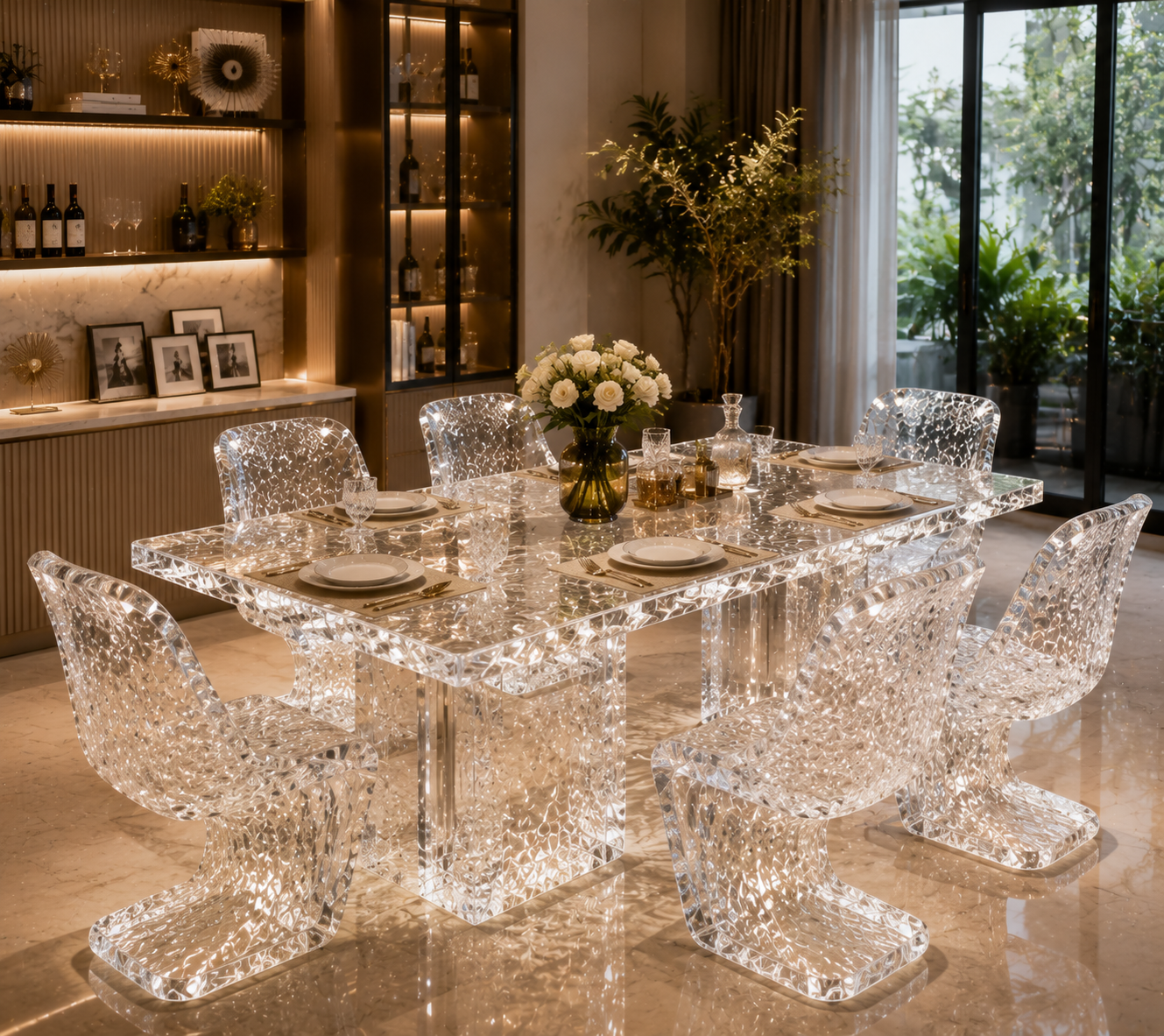
When designers and homeowners start a high-end furniture project, the first question is usually not “What furniture should we make?” but rather:
“What material can truly achieve the visual effect we want?”
This question becomes especially important when creating statement furniture pieces such as crystal dining tables, luxury side tables, reception counters, display furniture, and custom interior installations.
Over the years, we have worked with designers, architects, and private clients who were searching for something different from traditional materials. Many of them liked the transparency of glass but wanted more visual depth. Others appreciated the luxury feeling of marble but wanted a lighter, more artistic appearance.
This is where synthetic crystal furniture provides a different possibility.
However, choosing synthetic crystal is not simply about selecting a beautiful transparent material. In real projects, many details determine the final result:
Will the thickness create the right visual effect?
Will the edges remain clear after processing?
How will the furniture be transported safely?
Will the design remain stable after installation?
These are the questions we focus on when helping clients develop a suitable material solution.
Why Many Designers Are Exploring Synthetic Crystal Furniture
Traditional materials have their own advantages.
Glass provides excellent transparency and a modern feeling, but when designers need thicker visual volume, complex curves, or special structures, limitations can appear.
Natural stone provides a strong luxury impression, but it can sometimes make a space feel heavier and offers fewer possibilities for transparent or light-reflective designs.
Synthetic crystal creates another design direction.
It allows designers to create furniture pieces that have:
A deeper transparent appearance
More freedom in shape customization
A stronger interaction with lighting
A more artistic visual expression
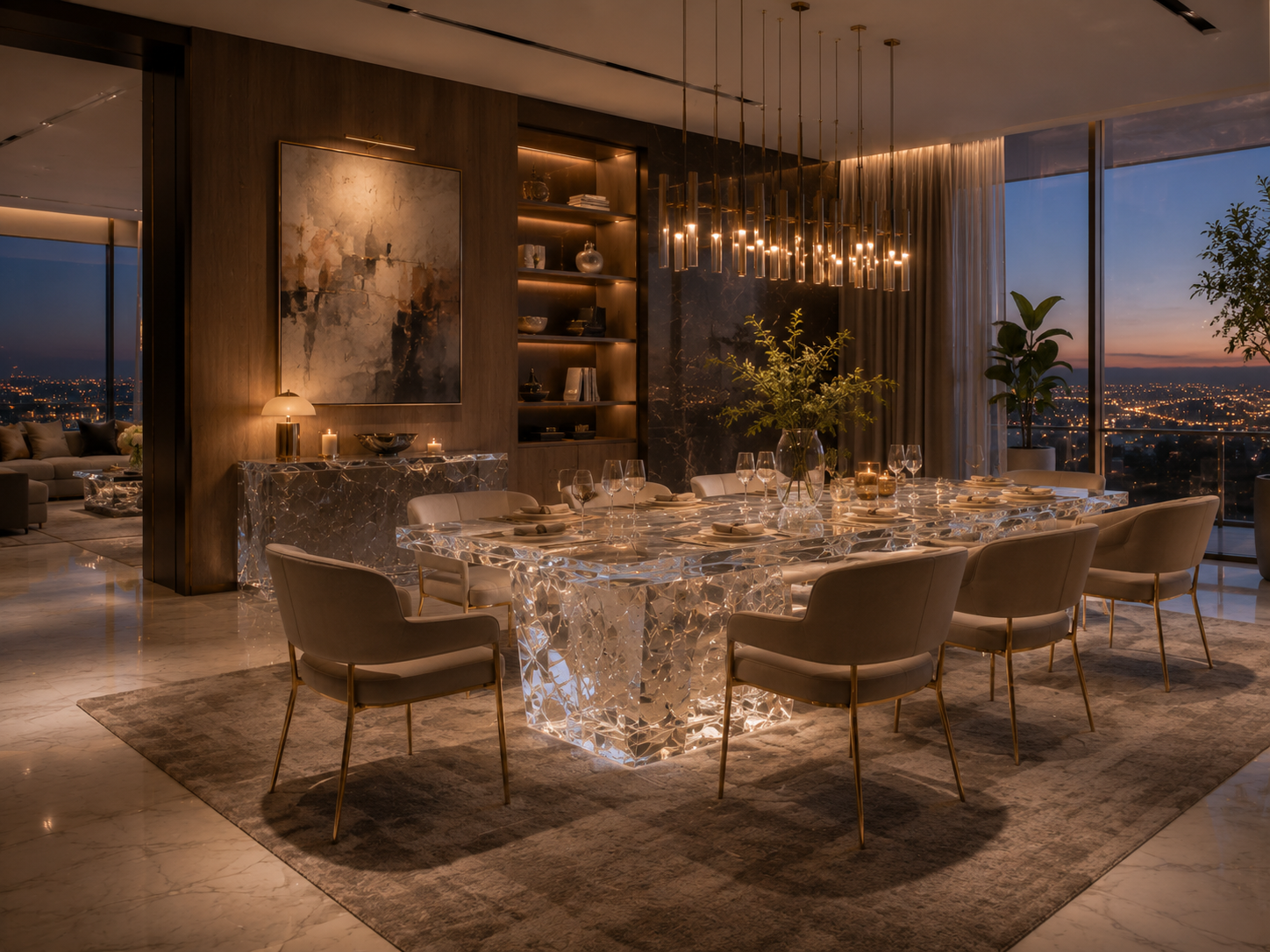
For example, a transparent crystal dining table does not simply function as a dining surface. Under natural sunlight, it can create a clean and open feeling. Under chandelier lighting, the edges and surfaces can create different reflections, changing the atmosphere of the entire room.
This is why synthetic crystal has become an interesting option for luxury residences, boutique hotels, private clubs, and designer interiors.
Our Experience: Turning Design Concepts Into Manufacturable Furniture
One challenge we often see is that designers usually begin with a visual idea rather than a manufacturing solution.
A designer may show us a concept drawing:
“I want the table to look like it is floating.”
“I want the edge to disappear completely.”
“I want the crystal effect to be stronger than glass.”
These ideas are inspiring, but they require careful engineering before production.
In actual manufacturing, we need to consider:
The overall size of the furniture
The required thickness
The internal support structure
The transportation conditions
The installation environment
For large synthetic crystal furniture pieces, appearance and structure must work together.
A table may look simple from the outside, but achieving a clean transparent effect requires experience in material selection, cutting, polishing, and assembly.
Our process usually begins with understanding the designer’s goal. We review drawings, discuss the expected visual effect, and recommend suitable material solutions before production begins.
Sometimes the original design needs small adjustments.
For example, a client may request an extremely thin crystal tabletop because they want a lightweight appearance. However, after considering transportation safety and long-term stability, we may suggest modifying the internal support while maintaining the same visual impression.
This type of communication helps avoid expensive changes during the final installation stage.
The Manufacturing Details Behind High-End Synthetic Crystal Furniture
Many people see the final furniture piece but do not see the work behind it.
Creating a high-quality synthetic crystal product involves multiple stages.
The first stage is design evaluation.
Before production, we analyze:
The furniture dimensions
The expected usage environment
Lighting conditions
Surface requirements
Installation requirements
A dining table for a private villa has different requirements from a hotel reception counter. A decorative piece inside a showroom has different priorities compared with furniture used every day.
After confirming the design, the manufacturing process begins.
Precision cutting and CNC machining are used to achieve the required shape. However, machining transparent materials requires careful control because small imperfections become more noticeable when light passes through the surface.
Edge processing is another important step.
For luxury transparent furniture, the edge is often one of the most visible areas. A poorly finished edge can reduce the overall quality of the entire piece.
Through multiple polishing processes, we aim to create smooth and visually clean surfaces that match the original design intention.
Before shipment, each piece requires careful inspection.
We check:
Surface quality
Edge clarity
Structural stability
Packaging protection
The goal is not only to create a beautiful product but also to ensure that the furniture arrives at the project site safely.
Common Problems We Help Clients Solve
Many customers contact us after experiencing difficulties with other materials.
One common situation is:
“The design looks good in the drawing, but the material cannot achieve the same effect in reality.”
This happens because different materials react differently to light, thickness, and shape.
Another common challenge is transportation.
Large transparent furniture requires careful packaging planning. During earlier projects, we learned that protecting the surface alone is not enough. Large pieces also need support to reduce vibration and movement during international transportation.
Based on this experience, we pay special attention to customized packaging solutions for each project.
Another issue is maintenance.
Some clients worry that transparent furniture will be difficult to maintain.
In reality, the correct cleaning method and usage environment are important factors. We provide clients with guidance on daily care to help maintain the original appearance of the furniture.
Synthetic Crystal vs Glass vs Acrylic: How Should You Choose?
When customers first consider transparent furniture, they often compare synthetic crystal with glass and acrylic.
There is no material that is perfect for every project. The right choice depends on the design goal, usage environment, and expected visual effect.
Synthetic Crystal vs Glass
Glass has been widely used in modern furniture because of its transparency and clean appearance. It works well for many standard applications.
However, for high-end custom furniture, designers often need more than transparency.
They may need:
A thicker visual appearance
More complex shapes
Special curved structures
A stronger interaction with lighting
In these situations, synthetic crystal can provide more creative possibilities.
For example, when designing a large statement dining table, a designer may want the tabletop to have a solid transparent appearance rather than a thin glass feeling. The additional visual depth of synthetic crystal can create a stronger luxury effect.
For projects where the furniture itself becomes an artistic centerpiece, synthetic crystal is often considered because it offers more flexibility in design expression.
Synthetic Crystal vs Acrylic
Acrylic is another transparent material commonly used in furniture and decoration.
It has advantages such as lightweight properties and easy processing. However, for luxury furniture applications where optical quality and premium appearance are important, synthetic crystal is usually selected for its more refined visual characteristics.
When a customer invests in a signature furniture piece, the expectation is not only functionality but also emotional value.
The material should create a feeling that people remember.
This is especially important in:
Luxury villas
Five-star hospitality spaces
Private collections
Designer showrooms
Premium commercial interiors
The final decision should always be based on the project requirements rather than simply comparing materials by price.
Where Synthetic Crystal Furniture Creates the Biggest Impact
Not every space needs a statement material.
The best results usually come from projects where furniture plays an important visual role.
Luxury Residential Projects
In private homes, furniture often reflects the owner's personality and lifestyle.
Many villa owners and interior designers want furniture that cannot be easily found in regular stores.
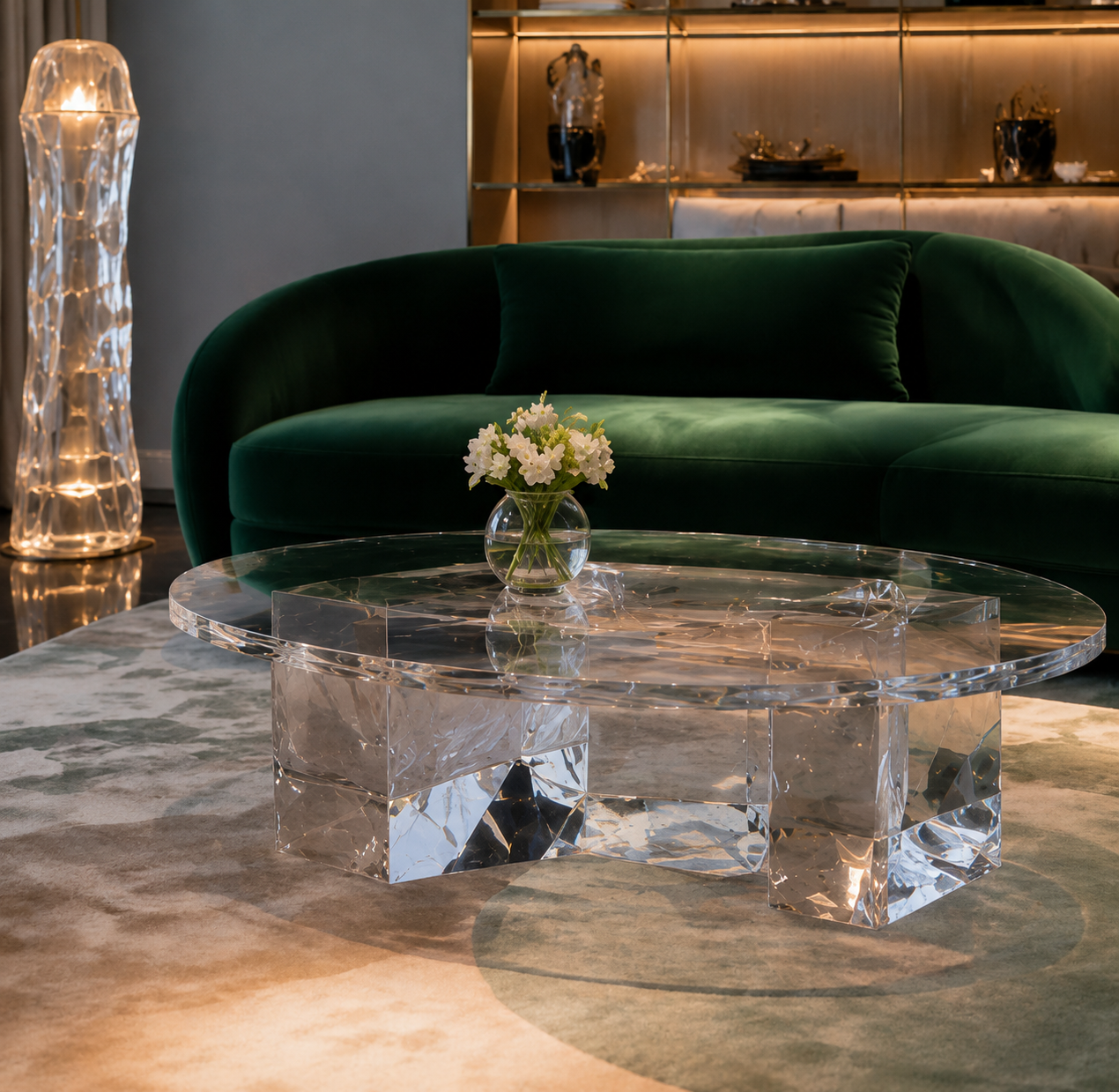
A custom synthetic crystal dining table, coffee table, or side table can become the visual focus of a living space.
One design challenge we often see in luxury residences is balancing size and atmosphere.
Large furniture pieces can create a strong presence, but traditional solid materials may make the room feel heavier.
Synthetic crystal can help maintain an open feeling because light can pass through the structure.
This makes it suitable for:
Modern villas
Penthouse apartments
Luxury apartments
Designer homes
Hotel and Hospitality Projects
Hospitality spaces have a different requirement.
Furniture is not only used by guests; it represents the identity of the entire property.
A reception desk, lobby table, or decorative crystal installation may become one of the first things visitors notice.
For these projects, we pay special attention to:
Visual impact
Durability
Daily usage
Cleaning requirements
Installation conditions
A beautiful design must also work in a real commercial environment.
For example, a hotel lobby piece needs to maintain its appearance despite frequent customer contact. The design, surface treatment, and structure all need to be considered before production.
Luxury Retail and Exhibition Spaces
Retail environments often use furniture and displays to create emotional connections with customers.
A unique transparent furniture piece can make products appear more premium and create a memorable brand experience.
For luxury brands, the environment is part of the product.
The furniture material becomes part of the storytelling.
What Clients Should Consider Before Ordering Synthetic Crystal Furniture
Before starting a custom project, we usually recommend clients consider several practical questions.
1. What Is the Main Visual Goal?
Different designs require different approaches.
Do you want:
A completely transparent appearance?
A crystal-like artistic effect?
A strong lighting reflection?
A minimal modern style?
Understanding the visual goal helps determine the suitable material solution.
2. How Will the Furniture Be Used?
A decorative piece and a frequently used dining table have different requirements.
For daily-use furniture, we consider:
Structural support
Surface protection
Maintenance requirements
Long-term appearance
A professional solution should balance beauty and practicality.
3. What Are the Installation Conditions?
Large custom furniture requires early planning.
Important factors include:
Door size
Elevator limitations
Installation location
Transportation route
On-site assembly requirements
Many problems can be avoided when these details are discussed before production.
From Concept to Installation: Our Working Process
A successful synthetic crystal furniture project is usually the result of close cooperation between designers, clients, and manufacturers.
Our typical workflow includes:
Design Discussion
We first understand the project background, including the space, design concept, and expected result.
Material Recommendation
Based on the design requirements, we suggest suitable thickness, structure, and finishing options.
Sample Testing
For projects with special lighting requirements, samples can help confirm the final visual effect before full production.
Precision Manufacturing
The furniture goes through professional processing, shaping, polishing, and quality inspection.
Packaging and Delivery
Large transparent furniture requires customized protection during transportation, especially for international projects.
Installation Support
We provide necessary technical information to help ensure smooth installation at the project location.
This process reduces uncertainty and helps transform creative ideas into finished furniture pieces.
Questions We Often Receive From Customers
Can synthetic crystal furniture be customized?
Yes. Customization is one of the main advantages of synthetic crystal furniture. Size, shape, thickness, edge style, and design details can be adjusted according to project requirements.
Is synthetic crystal suitable for large dining tables?
Yes, but large furniture requires careful consideration of structure and transportation. We evaluate the design before production to ensure both appearance and stability.
How should synthetic crystal furniture be cleaned?
Daily maintenance is relatively simple. We recommend using soft cleaning materials and avoiding harsh chemicals or abrasive tools that may affect the surface.
Can synthetic crystal furniture be used in hotels?
Yes. Many hospitality projects choose transparent furniture because it creates a strong visual impression while supporting modern luxury design concepts.
How early should we contact the manufacturer?
For custom projects, earlier communication is always better. Reviewing the design before construction helps avoid changes later and allows more possibilities for customization.
Helping You Choose the Right Material Solution
A successful luxury furniture project is not created by choosing the most expensive material.
It is created by choosing the material that best matches the design vision, usage requirements, and long-term expectations.
Synthetic crystal is not simply a transparent material. When properly designed and manufactured, it becomes a tool that allows architects, designers, and homeowners to create furniture with personality and emotional value.
Our role is not only to produce furniture. It is to help clients solve design challenges, evaluate practical possibilities, and create a finished product that performs beautifully in a real environment.
Whether you are developing a luxury villa, a hospitality project, or a unique furniture collection, we welcome you to share your concept, drawings, or ideas with us. Our team can help evaluate the material solution, production possibilities, and design details before you make your final decision.
Because the right material does not just complete a project — it can become the unforgettable element that makes people stop, look, and remember the space long after they leave.
READ MORE:
- How Custom Furniture Projects Can Reduce Delays and Improve Final Results
- Choosing Furniture Materials for Different Commercial Spaces: A Practical Guide
- How Luxury Furniture Brands Can Create More Value Through Material Storytelling
- How Design Companies Can Improve Material Selection Efficiency
- Come aumentare il valore dello spazio attraverso texture, lucentezza e trasparenza
- Guardare da vicino la texture del mobile: il vero lusso si nasconde nei dettagli visibili
- Dal "bello" al "sofisticato": i 3 fattori chiave con cui i mobili in resina elevano la qualità dello spazio
- Designer's Material-Selection Guide: How to Use Transparent Materials to Reduce Visual Heaviness
- Negli spazi di alta gamma, ciò che si trascura più facilmente non è la forma, ma la qualità materica


