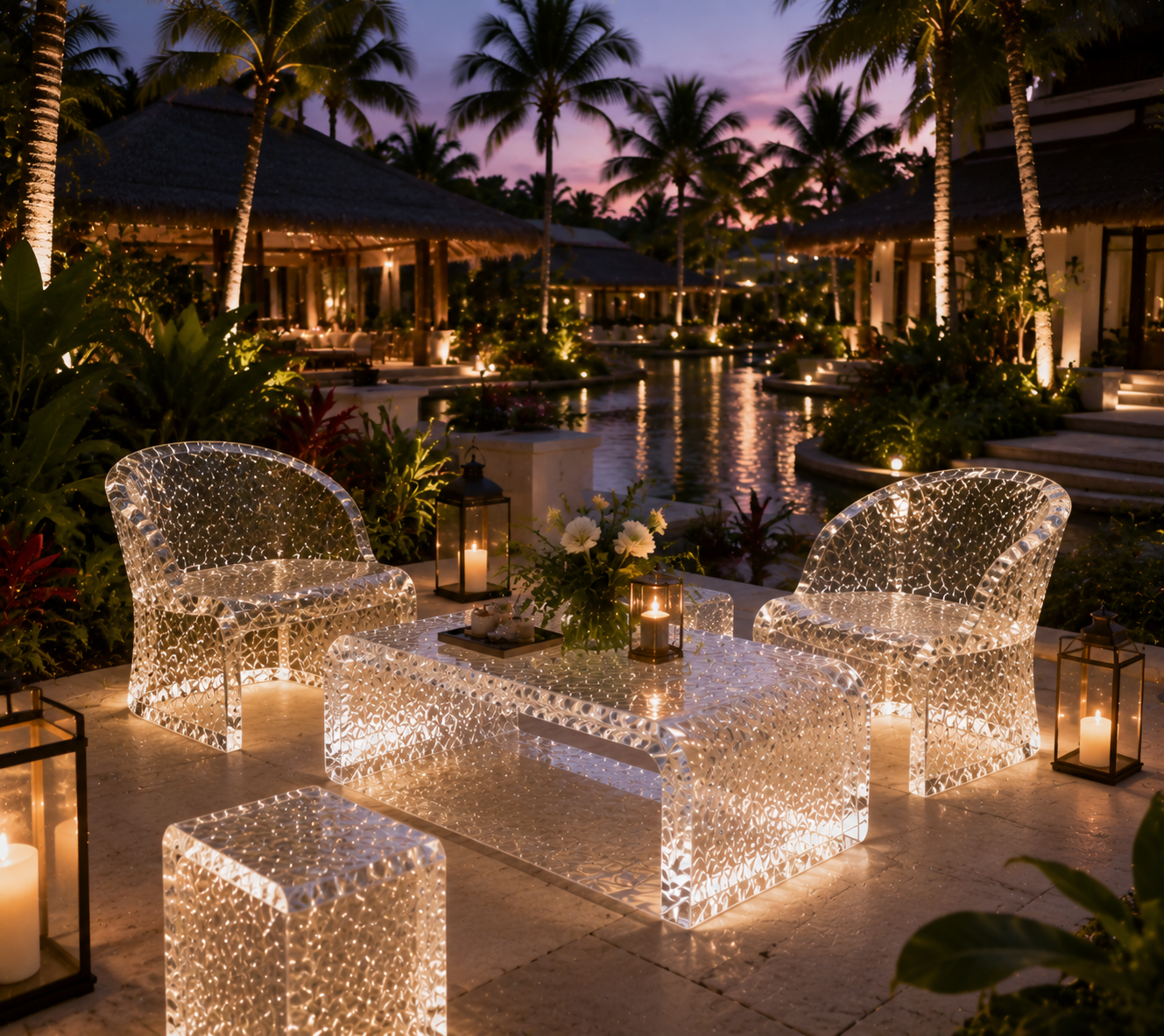
Turning Creative Concepts Into Manufacturable Luxury Furniture Solutions
For many interior design companies and architectural studios, material selection is one of the most important stages in developing a luxury furniture project.
A material choice can influence everything that follows:
The visual identity of the space.
The production feasibility.
The installation process.
The long-term performance of the furniture.
However, in many custom projects, the biggest challenge is not finding a beautiful material. The challenge is finding a material that can successfully connect the designer’s creative vision with manufacturing reality.
Through our cooperation with designers and project teams, we have seen the same situation many times:
A concept looks perfect in a 3D rendering.
The proportions are elegant.
The transparency effect is impressive.
The furniture appears lightweight and artistic.
But when the project enters the production stage, practical questions appear:
How thick should the material be?
How can the structure remain stable?
Will the edges maintain a clean visual effect after processing?
How can the finished piece be transported and installed safely?
These questions are where efficient material selection becomes critical.
As a manufacturer specializing in high-end synthetic crystal furniture solutions, we believe that the best material decisions happen before production begins.
The goal is not only to select a beautiful material.
The goal is to select a material that allows the original design idea to become a successful finished product.
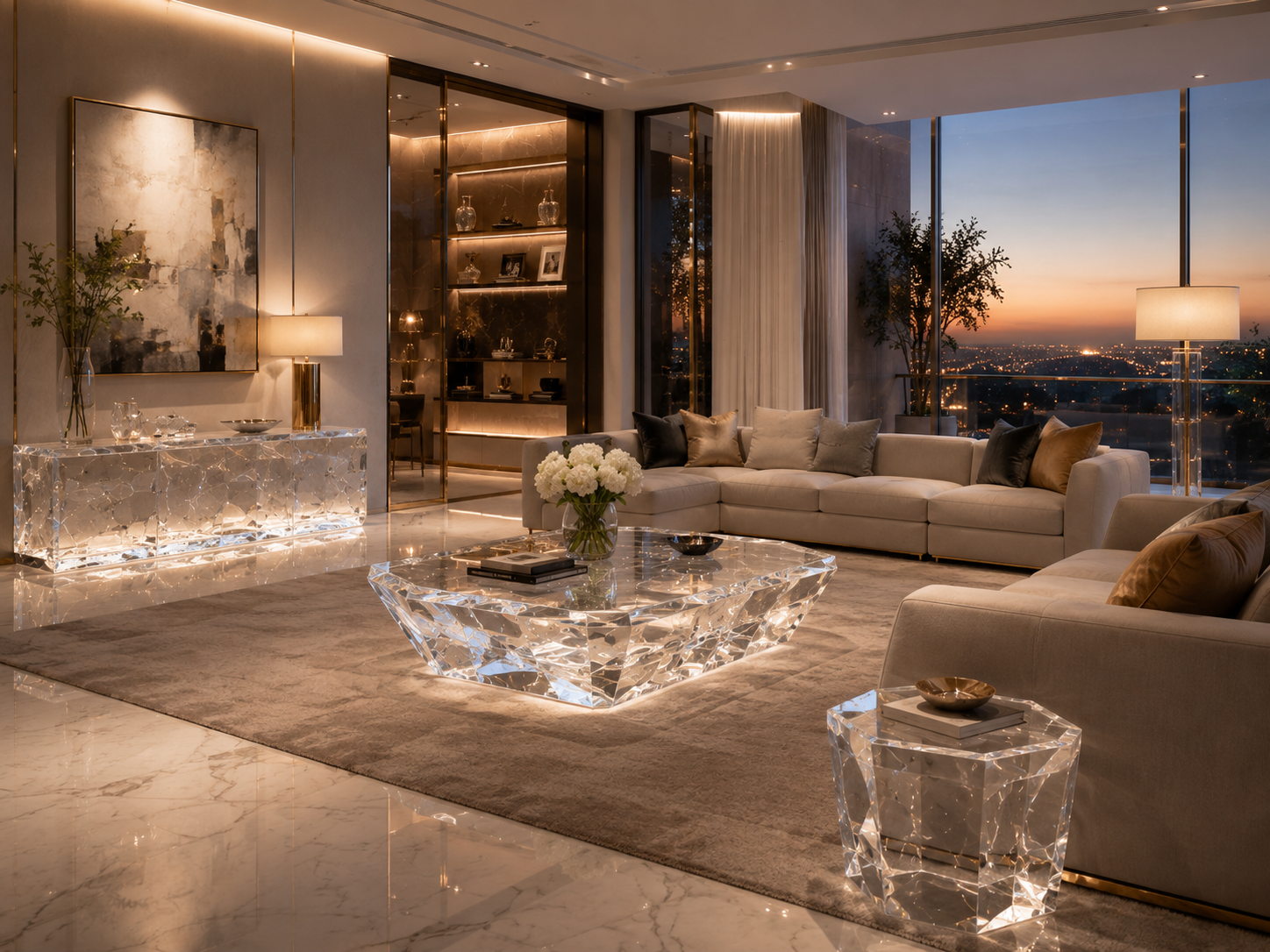
The Gap Between Design Vision and Manufacturing Reality
Design companies are experts in creating experiences.
They understand space, emotion, proportion, and aesthetics.
Manufacturers understand different challenges:
Material behavior.
Processing limitations.
Structural requirements.
Production methods.
Transportation risks.
The most successful projects happen when these two areas work together from the beginning.
One common situation we encounter is when a design team approaches us with a specific material request:
“We need crystal.”
“We need glass.”
“We need a completely transparent structure.”
Instead of immediately producing according to the initial request, we first analyze the purpose behind the choice.
What visual effect does the designer want?
Is transparency the main goal?
Is the furniture intended to become an artistic centerpiece?
Will it be used daily or mainly displayed?
What environmental conditions will affect the final product?
Sometimes the original material idea is correct.
Sometimes another solution can achieve the same design intention more effectively.
For example, some designers want the clean appearance of glass but also need more visual depth and customization possibilities. In these situations, synthetic crystal can provide an alternative approach because it allows greater flexibility in creating distinctive furniture forms.
A Practical Material Evaluation Process Before Production
Efficient material selection requires a structured evaluation process.
Based on our experience working with custom furniture projects, we recommend that design teams evaluate materials through several stages.
Understanding the Design Objective
Before discussing materials, we first understand the role of the furniture within the space.
A transparent dining table in a private residence has different requirements from a reception counter in a luxury hotel.
A decorative installation has different priorities from a daily-use furniture piece.
Important questions include:
What feeling should the furniture create?
Should it visually stand out or blend into the environment?
How will lighting interact with the material?
How frequently will the furniture be used?
These answers influence the final material recommendation.
Reviewing Technical Feasibility
After understanding the design intention, the next step is technical evaluation.
For synthetic crystal furniture, we usually review:
Overall dimensions.
Material thickness.
Structural support requirements.
Edge processing possibilities.
Surface finishing requirements.
Installation conditions.
This stage is where manufacturing experience becomes valuable.
A design drawing may show a simple transparent structure, but the manufacturing solution behind it may require careful planning.
For example, a large transparent tabletop may need adjustments to internal support or thickness to maintain both the floating visual effect and practical stability.
The best solution is not always changing the design.
Often, it is finding a technical approach that protects the original design vision.
Why Early Manufacturer Involvement Saves Design Companies Time
One of the most common causes of project delays is involving manufacturers too late.
When a supplier receives a finalized design after all decisions have already been made, any necessary adjustments may affect:
Production schedules.
Material selection.
Budget planning.
Installation arrangements.
Early collaboration creates more opportunities.
During the early concept stage, manufacturers can help evaluate:
Whether the material can achieve the expected appearance.
Whether the structure is realistic.
Whether production risks exist.
Whether installation challenges should be considered.
For custom synthetic crystal furniture, early discussion is especially valuable because transparent materials reveal more details than traditional opaque materials.
A small manufacturing issue that may not be noticeable on wood or stone can become highly visible on transparent furniture.
Real Challenges We Help Designers Solve
Challenge 1: The Difference Between Small Samples and Large Furniture Pieces
One issue many designers encounter is that a small material sample does not always represent the final result.
Transparent materials behave differently when size, thickness, and lighting conditions change.
A small sample may appear simple.
A large furniture piece may create completely different visual depth and reflection.
For this reason, we recommend evaluating materials based on the final application rather than only looking at small samples.
The surrounding environment, lighting design, and furniture scale all influence the final appearance.
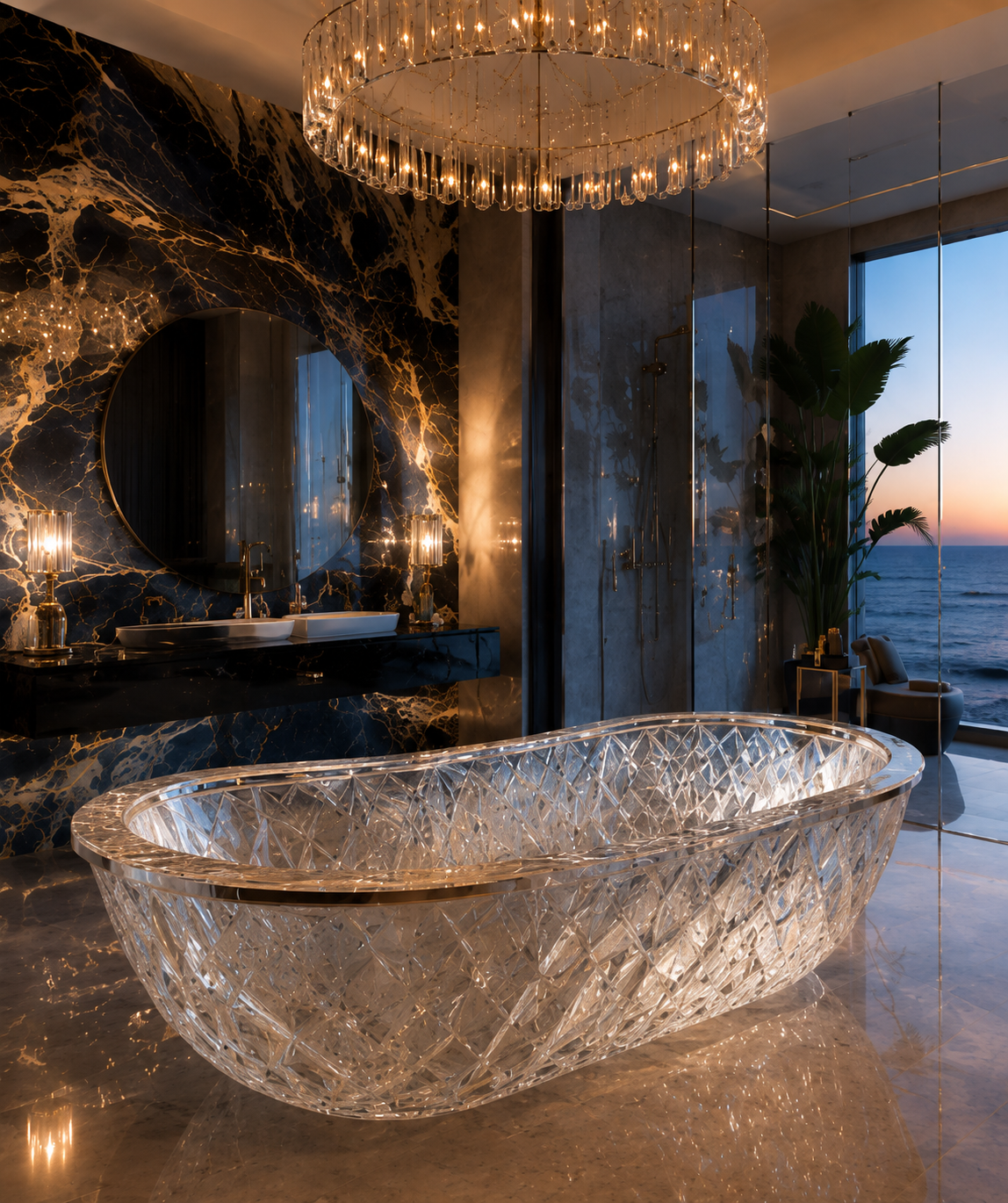
Challenge 2: Balancing Minimal Design With Structural Requirements
Many luxury designs focus on creating a lightweight visual impression.
Designers often want furniture that appears:
Floating.
Almost invisible.
Extremely thin.
However, manufacturing requires considering stability and safety.
Our role is not to remove creative ideas.
Our role is to help transform them into practical solutions.
By adjusting internal structures, material selection, or production methods, designers can often achieve the same visual effect with improved reliability.
Challenge 3: Transportation and Installation Planning
Large transparent furniture requires careful preparation.
Unlike traditional furniture, surface quality and edge conditions are highly visible.
Transportation planning should consider:
Packaging structure.
Protection methods.
Installation access.
On-site conditions.
Discussing these details before production helps reduce unexpected problems during delivery and installation.
Choosing Between Synthetic Crystal, Glass, and Other Materials
Professional material selection is not about saying one material is better than another.
Different materials serve different design goals.
When Glass May Be Suitable
Glass remains an excellent choice when the project requires:
High transparency.
Standard applications.
Cost efficiency.
Simple modern designs.
However, when designers need thicker visual presence, complex forms, or stronger artistic expression, other solutions may become more suitable.
When Synthetic Crystal Becomes an Advantage
Synthetic crystal is often considered for projects requiring:
Greater visual depth.
Custom shapes.
Luxury appearance.
Light interaction.
Unique furniture identity.
It is especially valuable when furniture itself becomes part of the architectural experience.
When Stone May Be Preferred
Stone provides natural texture, weight, and a strong connection with nature.
However, it creates a different atmosphere.
Stone anchors a space visually.
Synthetic crystal creates more openness and lightness.
The right choice depends on the story the designer wants the space to communicate.
A Better Collaboration Model Between Designers and Manufacturers
The future of luxury furniture development is moving toward closer collaboration.
Design companies no longer need suppliers who only manufacture according to drawings.
They need partners who can participate in the development process.
A valuable manufacturing partner should provide:
Material recommendations.
Production feasibility analysis.
Technical suggestions.
Quality control support.
Installation considerations.
This collaboration creates benefits for everyone.
Designers maintain creative freedom.
Manufacturers understand project expectations.
Clients receive a final product that matches both aesthetic and practical requirements.
Improving Material Decisions for Future Projects
Material selection efficiency is not achieved by choosing faster.
It is achieved by making better decisions earlier.
For design companies developing luxury interiors, the most effective approach is:
Define the design objective first.
Understand material characteristics.
Discuss manufacturing possibilities early.
Evaluate risks before production.
Choose a supplier who understands both design and engineering.
Synthetic crystal furniture represents an opportunity for designers who want to explore new expressions in luxury interiors. But its true value comes from combining creative ideas with professional manufacturing knowledge.
The most successful projects are not created when designers simply choose a material; they are created when designers and manufacturers work together to discover the right solution, and that collaboration is what turns an ambitious concept into a memorable space that clients will experience for years.
READ MORE:
- How Custom Furniture Projects Can Reduce Delays and Improve Final Results
- Choosing Furniture Materials for Different Commercial Spaces: A Practical Guide
- How Luxury Furniture Brands Can Create More Value Through Material Storytelling
- Let Us Help You Find a More Suitable Material Solution
- Come aumentare il valore dello spazio attraverso texture, lucentezza e trasparenza
- Guardare da vicino la texture del mobile: il vero lusso si nasconde nei dettagli visibili
- Dal "bello" al "sofisticato": i 3 fattori chiave con cui i mobili in resina elevano la qualità dello spazio
- Designer's Material-Selection Guide: How to Use Transparent Materials to Reduce Visual Heaviness
- Negli spazi di alta gamma, ciò che si trascura più facilmente non è la forma, ma la qualità materica


