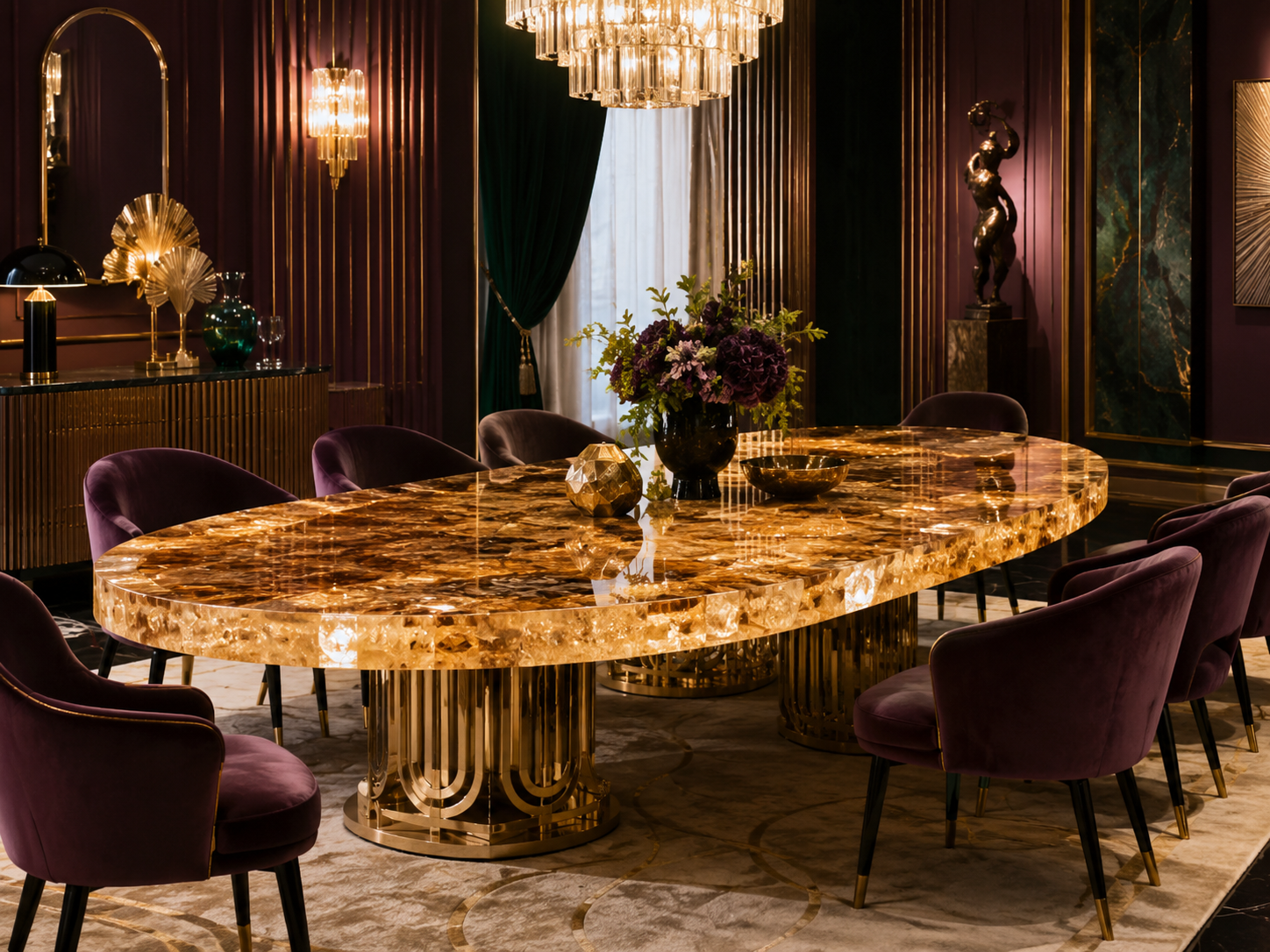
Turning Synthetic Crystal Furniture Into a Meaningful Design Experience
In today’s luxury furniture market, customers are no longer only looking for beautiful products. They are looking for meaning, craftsmanship, and a connection behind what they purchase.
A luxury furniture piece is no longer simply a functional object placed inside a room. It represents a lifestyle, an aesthetic preference, and often a personal statement. This is why successful luxury furniture brands increasingly focus on material storytelling: explaining not only what a product is made of, but why the material was chosen, how it was developed, and what experience it creates.
For furniture brands, the material itself can become part of the brand identity.
A handcrafted wood table tells a story about nature and traditional craftsmanship.
A marble piece communicates permanence and natural beauty.
A metal structure expresses precision and modern engineering.
Synthetic crystal furniture creates another type of story. It represents transparency, light, innovation, and the possibility of transforming a design concept into a unique visual experience.
However, effective material storytelling is not simply saying that a material is luxurious. Customers, designers, and project developers today are more knowledgeable. They want to understand the real reasons behind a material decision.
Why was this material selected?
What challenges were solved during development?
How does the manufacturing process influence the final product?
What makes this piece different from ordinary furniture?
As a manufacturer specializing in high-end synthetic crystal furniture solutions, we have worked with designers and brands who use material as a way to communicate their design philosophy. Through these collaborations, we have learned that the strongest product stories come from real development processes, not from marketing descriptions.
Why Material Storytelling Matters More in Luxury Furniture
Luxury furniture brands operate in a market where differentiation is becoming increasingly difficult.
Many products can have similar functions.
Many designs can appear visually attractive.
Many materials can create a premium first impression.
The question is:
Why should a customer choose this particular piece?
The answer often comes from the story behind the product.
When customers understand the journey behind a furniture piece, they develop a stronger emotional connection.
For example, a transparent synthetic crystal dining table is not only a table.
The story may include:
The designer’s original vision for creating a lighter atmosphere.
The challenge of achieving a large transparent structure.
The decisions made during material selection.
The craftsmanship involved in polishing and finishing.
The process of transforming a concept into a finished piece.
These details create value beyond the physical product.
In luxury markets, emotional value is often what separates a standard product from an iconic design piece.
Moving Beyond “Luxury Material” Descriptions
One common mistake in luxury furniture marketing is relying too heavily on general descriptions.
Words such as:
Premium
Exclusive
Elegant
Innovative
Luxury
are widely used across many industries.
They do not explain why a product is truly special.
A stronger approach is to explain the actual experience behind the material.
For example, instead of saying:
“Made with premium synthetic crystal.”
A more meaningful story would be:
“This furniture piece was developed using synthetic crystal because the designer wanted to create a transparent structure with more visual depth than traditional glass. During development, we evaluated thickness, lighting effects, and edge finishing to ensure the final piece maintained the original artistic intention.”
The second explanation creates trust because it shows a process.
Luxury customers are not only buying materials.
They are buying expertise, creativity, and confidence that the product has been thoughtfully developed.
How Synthetic Crystal Creates a Different Design Story
Every material communicates a different message.
Synthetic crystal has several unique characteristics that make it suitable for storytelling in luxury furniture.
A Story About Light and Space
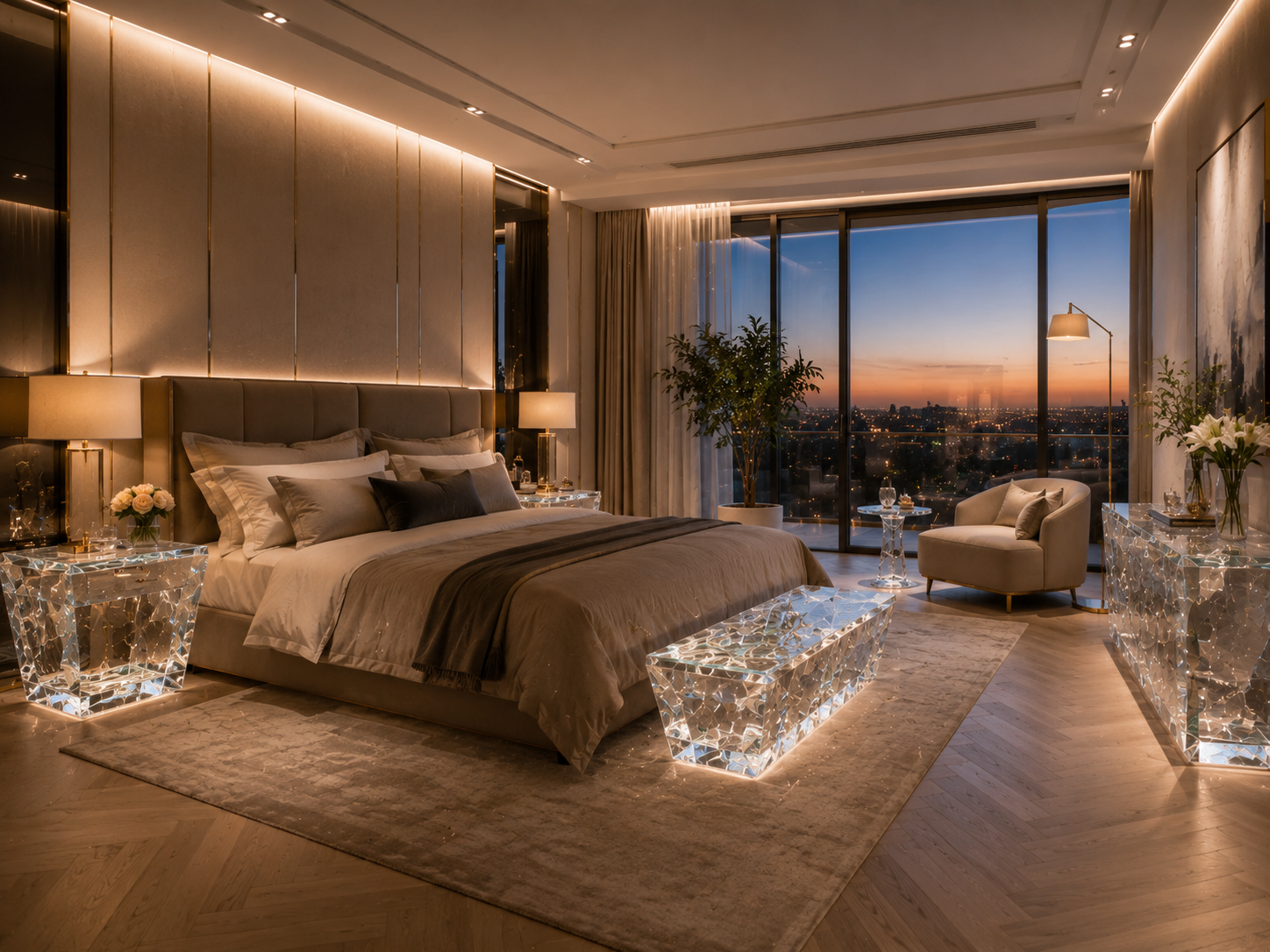
One of the most distinctive qualities of synthetic crystal furniture is the way it interacts with light.
Unlike solid materials that visually occupy space, transparent furniture creates a different relationship with its surroundings.
A crystal table placed under natural sunlight may create an open and airy feeling.
Under artificial lighting, the same piece can create reflections and depth.
This ability allows designers to use furniture as part of the overall atmosphere of a space.
For luxury residences, this can help create a sense of openness.
For hospitality projects, it can become a memorable visual feature.
For retail environments, it can enhance the perception of premium products.
The story is not simply “this is a transparent material.”
The story is:
“This material allows designers to shape how people experience light, space, and emotion.”
A Story About Design Freedom
Luxury furniture brands often need products that cannot be found in standard collections.
Customization becomes a key value.
Through our experience working on custom synthetic crystal furniture projects, we have found that many designers begin with a visual idea:
A floating effect.
A sculptural shape.
A completely transparent structure.
A unique centerpiece.
The challenge is transforming that idea into a manufacturable product.
This requires cooperation between designers and manufacturers.
We evaluate:
The intended visual effect.
The furniture dimensions.
The structural requirements.
The processing possibilities.
The installation environment.
This development process itself becomes part of the product story.
It demonstrates that the final furniture piece is not simply manufactured; it is carefully developed.
A Story About Craftsmanship Behind Modern Technology
Some people associate transparent furniture with simple industrial production.
However, high-end synthetic crystal furniture requires careful craftsmanship.
Large transparent pieces reveal details that are hidden in many traditional materials.
Surface quality.
Edge clarity.
Polishing consistency.
Structural integration.
All become visible.
During production, even small differences in processing can influence the final visual result.
For this reason, experienced manufacturers pay close attention to every stage:
Material preparation.
Precision machining.
Multi-stage polishing.
Surface inspection.
Protective packaging.
These processes are important because luxury furniture is judged not only by the design concept but also by the quality of execution.
The craftsmanship behind the product becomes part of the story.
Helping Customers Understand the Value Behind the Product
For luxury furniture brands, material storytelling is also a way to educate customers.
Many customers may appreciate a beautiful product but may not understand why one piece has greater value than another.
A strong story helps explain:
Why a certain material was selected.
Why the manufacturing process requires expertise.
Why customization creates additional value.
Why the final product represents more than decoration.
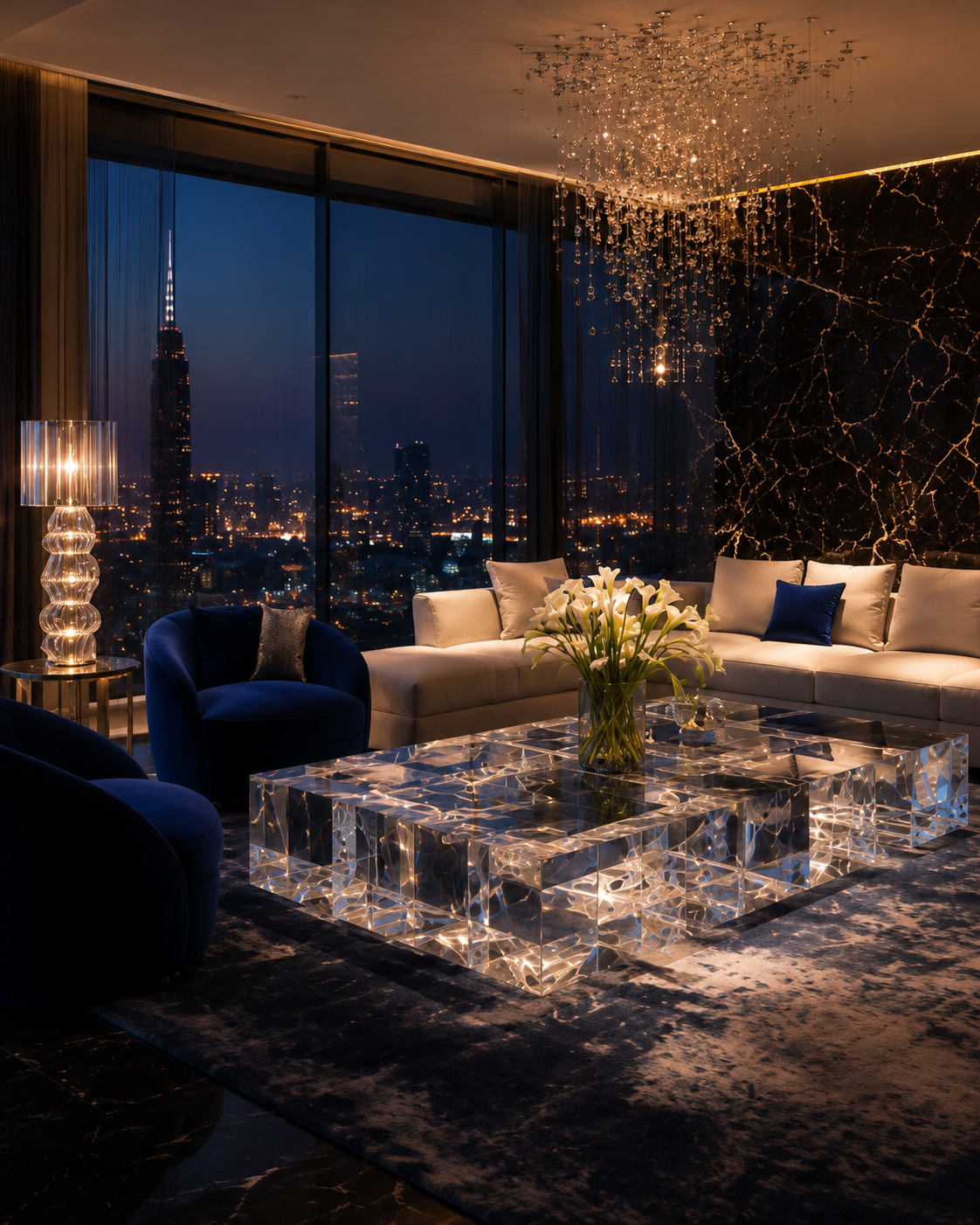
For example, when a customer understands that a crystal dining table required design evaluation, structural planning, precision processing, and careful finishing, they see the product differently.
The furniture becomes a combination of design, engineering, and craftsmanship.
Lessons We Have Learned From Working With Designers and Brands
Through our cooperation with different design teams, we have noticed several important principles.
The first is that the best material choices usually happen early.
When manufacturers are involved only after the design is completed, opportunities for improvement may be limited.
Early collaboration allows designers to explore more possibilities.
The second lesson is that appearance and practicality must develop together.
A visually impressive design still needs to consider real-world usage.
For example, a luxury hotel furniture piece may need to handle frequent guest interaction, while a private residence piece may focus more on artistic expression.
The material solution should match the environment.
The third lesson is that limitations can improve creativity.
During development, designers sometimes request extremely challenging structures. Instead of simply rejecting an idea, experienced manufacturers can help find alternative solutions.
A small structural adjustment or material change can sometimes preserve the original design vision while improving production reliability.
How Luxury Furniture Brands Can Build Stronger Product Stories
A successful material story usually includes several elements.
The Inspiration
Explain why the design was created.
What problem was the designer trying to solve?
What feeling should the furniture create?
The Material Decision
Explain why synthetic crystal was selected.
What advantages does it provide for this specific design?
The Development Process
Show how the concept became reality.
Discuss testing, refinement, craftsmanship, and collaboration.
The Final Experience
Explain how the finished piece changes the space.
Does it create openness?
Does it become a conversation piece?
Does it strengthen the brand identity?
This approach transforms product communication from simple selling into storytelling.
The Future of Luxury Furniture Is About Meaning
As the luxury furniture industry continues to evolve, customers will increasingly value authenticity.
They want products with a reason behind them.
They want to understand the decisions, craftsmanship, and creativity that created the final piece.
Synthetic crystal furniture offers brands an opportunity to tell a unique story about transparency, innovation, and modern craftsmanship.
But the true value does not come from the material alone.
It comes from how the material is selected, developed, and connected with a meaningful design vision.
For luxury furniture brands, the strongest stories are not created by adding more impressive words to a product description. They are created by showing the real journey behind the product, from the first design idea to the final installation.
If your brand is developing a signature furniture collection and looking for a material solution that can become part of the product story, sharing your concept with our team may be the first step toward creating a piece that customers do not just see, but remember.
READ MORE:
- How Custom Furniture Projects Can Reduce Delays and Improve Final Results
- Choosing Furniture Materials for Different Commercial Spaces: A Practical Guide
- How Design Companies Can Improve Material Selection Efficiency
- Let Us Help You Find a More Suitable Material Solution
- Come aumentare il valore dello spazio attraverso texture, lucentezza e trasparenza
- Guardare da vicino la texture del mobile: il vero lusso si nasconde nei dettagli visibili
- Dal "bello" al "sofisticato": i 3 fattori chiave con cui i mobili in resina elevano la qualità dello spazio
- Designer's Material-Selection Guide: How to Use Transparent Materials to Reduce Visual Heaviness
- Negli spazi di alta gamma, ciò che si trascura più facilmente non è la forma, ma la qualità materica


