How Material Decisions Influence Design Performance, User Experience, and Project Success
Choosing furniture materials for commercial spaces is not simply a design decision. It is a balance between visual impact, daily usage, maintenance requirements, manufacturing possibilities, and long-term value.
For restaurants, hotels, offices, retail stores, and luxury commercial environments, furniture plays a much larger role than decoration. It influences how customers experience a space, how a brand communicates its identity, and how efficiently the space operates.
A reception desk in a luxury hotel, for example, is not only a functional counter. It is often the first physical interaction between guests and the brand. A dining table in a high-end restaurant is not only a surface for placing food. It contributes to the atmosphere, customer perception, and overall dining experience.
Through our experience developing high-end synthetic crystal furniture solutions, we have worked with designers and project teams who face the same challenge:
How can we select a material that looks impressive in the design concept while also performing well in a real commercial environment?
The answer is not choosing the most expensive material.
The answer is choosing the material that matches the purpose of the space.
Why Commercial Furniture Material Selection Requires More Consideration
In residential projects, furniture decisions are often based on personal preference.
Commercial projects are different.
A commercial furniture piece needs to satisfy multiple requirements at the same time:
Visual identity
User experience
Durability
Maintenance efficiency
Production feasibility
Installation requirements
A material that works perfectly in a private villa may not be the best choice for a busy hotel lobby.
A material that looks beautiful in a showroom may create challenges when exposed to daily customer interaction.
This is why professional material selection should begin with understanding the environment.
Before recommending a material solution, we usually consider several questions:
How frequently will the furniture be used?
Will customers directly touch the surface?
Is the furniture a visual centerpiece or a supporting element?
What lighting conditions will affect the appearance?
How important is customization?
These questions help determine whether a material is suitable for the project.
Understanding Different Commercial Space Requirements
Different commercial environments tell different stories.
The material choice should support that story.
Luxury Hotels and Hospitality Spaces
Hotels often focus on creating memorable first impressions.
Guests may only spend a few seconds looking at a reception area, lobby furniture, or decorative installation, but these first moments influence their perception of the entire property.
For hospitality projects, designers often look for materials that provide:
A strong visual identity
A premium atmosphere
Easy maintenance
Long-term appearance stability
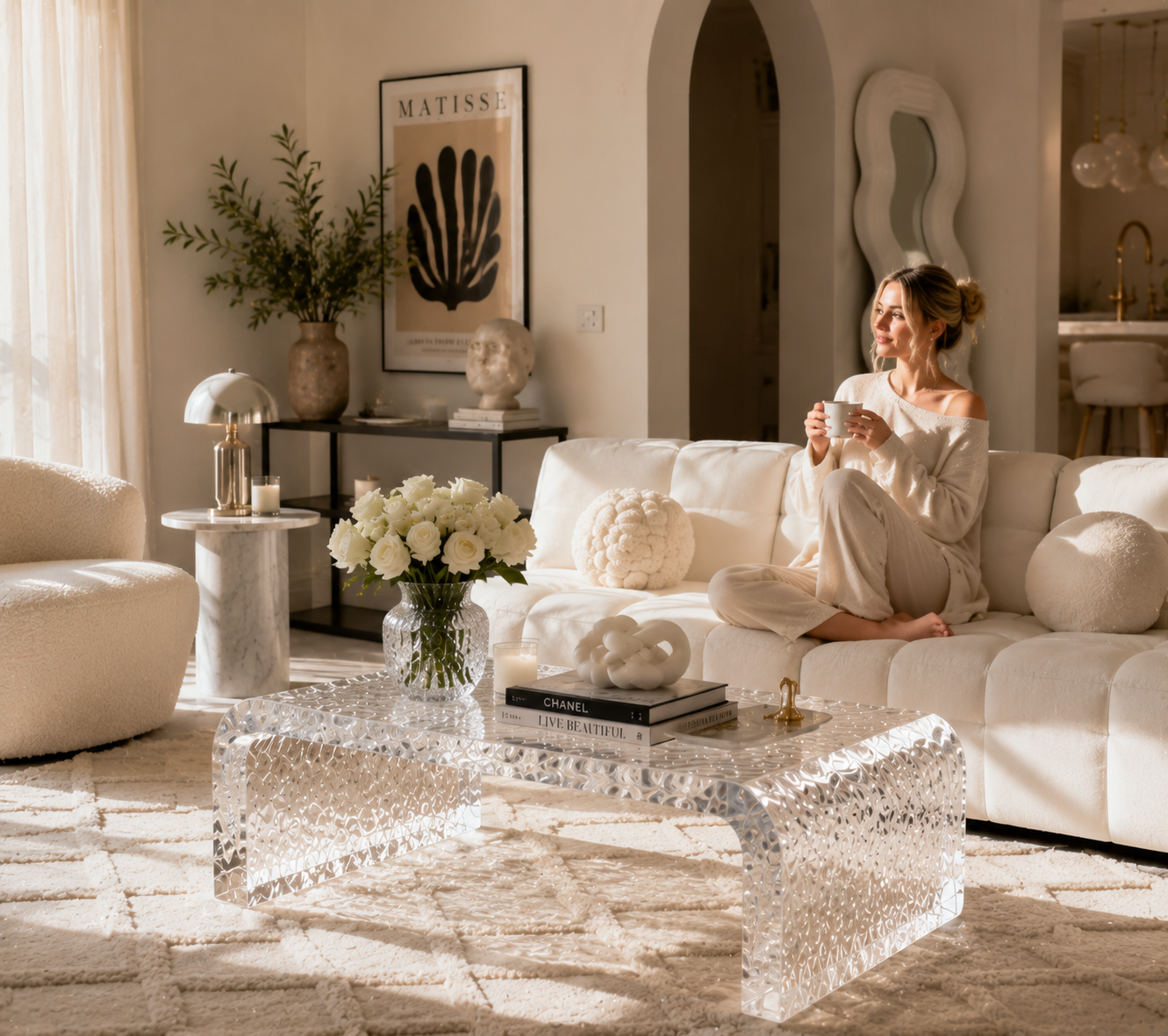
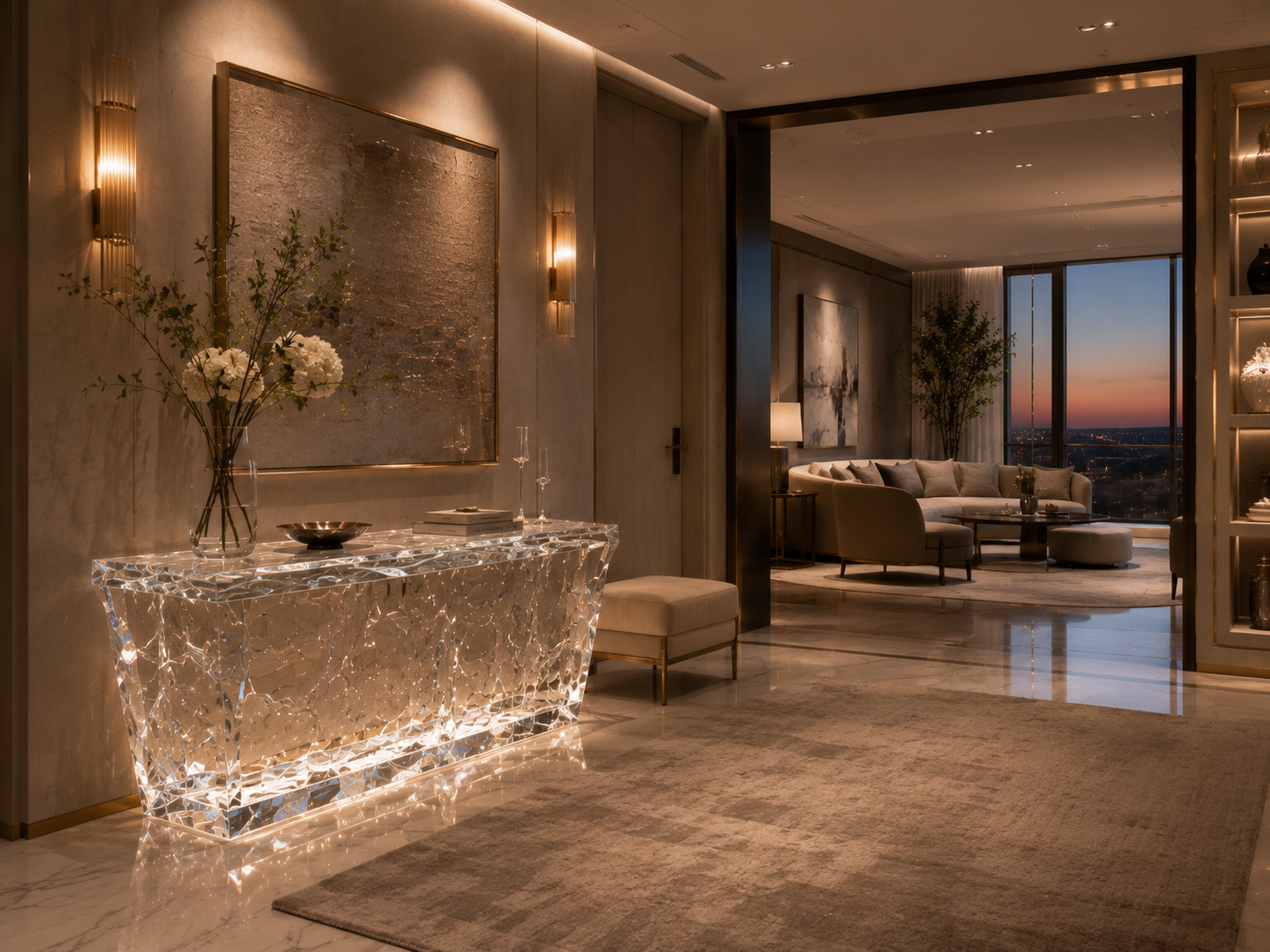
Synthetic crystal furniture can be an interesting option for hospitality environments because it creates a unique relationship with light and space.
A transparent reception counter, side table, or decorative furniture piece can make an area feel more open and visually sophisticated.
However, from a manufacturing perspective, hospitality projects require more than visual appeal.
One challenge we often discuss with designers is balancing artistic design with daily operation requirements.
A hotel lobby piece may need to handle frequent contact from guests and staff. Therefore, surface finishing, structural planning, and maintenance considerations should be discussed before production begins.
The best hospitality furniture is not only beautiful on installation day. It needs to continue representing the brand after years of use.
Restaurants and Dining Spaces
Restaurant furniture has a different focus.
The material must support the atmosphere while considering practical requirements.
A luxury restaurant may want furniture that creates an exclusive feeling.
A modern restaurant may prefer clean and minimal visual effects.
A fine dining space may use furniture as part of the overall customer experience.
For dining tables and feature furniture, designers often consider:
Visual weight
Lighting interaction
Cleaning requirements
Surface durability
Customer comfort
Synthetic crystal can create a distinctive dining environment because transparency changes the relationship between furniture and space.
A crystal dining table can appear lighter than traditional solid materials while still becoming a central design element.
However, large transparent dining tables require careful planning.
One common situation we encounter is that a designer creates a beautiful table concept based on appearance alone. During technical review, we need to evaluate:
The required thickness
The support structure
Transportation conditions
Installation access
The goal is not to change the creative direction but to ensure the final product can successfully enter the real environment.
Luxury Retail Stores and Brand Showrooms
Retail spaces use design to influence customer perception.
Furniture and display elements are part of brand communication.
Luxury brands often need materials that communicate:
Innovation
Exclusivity
Attention to detail
Modern aesthetics
Synthetic crystal furniture can support this type of environment because it allows brands to create customized pieces that are visually memorable.
For example, a transparent display table or feature furniture piece can allow products to remain the focus while adding a sophisticated background.
In retail environments, material storytelling becomes especially important.
Customers may not know the technical details of the material, but they experience the atmosphere created by it.
The feeling of openness, precision, and craftsmanship becomes part of the brand impression.
Corporate Offices and Executive Spaces
Office environments have changed significantly in recent years.
Modern companies are investing more in spaces that represent their culture and values.
Executive offices, meeting rooms, and reception areas often require furniture that communicates professionalism and creativity.
Material selection in corporate spaces should consider:
Brand image
Employee experience
Client impressions
Long-term practicality
Synthetic crystal can be suitable for areas where companies want a modern and sophisticated appearance.
A transparent conference table or customized reception element can create a sense of openness and innovation.
However, not every office environment requires a statement material.
A professional supplier should also provide honest recommendations.
If a project requires extreme heavy-duty usage or a more natural visual feeling, other materials may be more suitable.
The best material choice depends on the purpose of the space.
Synthetic Crystal vs Traditional Commercial Furniture Materials
There is no universal “best” furniture material.
Different materials create different experiences.
Synthetic Crystal and Glass
Glass is widely used in commercial furniture because of its transparency and modern appearance.
It works well for many applications.
However, when designers require:
Greater visual depth
More customized shapes
Special structural designs
Stronger artistic expression
Synthetic crystal can provide additional possibilities.
For example, a designer creating a large statement table may want the material to have a more substantial transparent appearance rather than a thin glass feeling.

Synthetic Crystal and Stone
Stone creates a sense of weight, permanence, and natural character.
It is often selected for projects that want a grounded and luxurious atmosphere.
Synthetic crystal creates a different effect.
It introduces lightness, transparency, and visual openness.
The choice depends on whether the designer wants furniture to visually anchor the space or create a feeling of openness.
Synthetic Crystal and Wood
Wood provides warmth and natural texture.
It is ideal for spaces that want comfort and organic character.
Synthetic crystal creates a more contemporary and artistic expression.
In many luxury projects, combining different materials can create stronger results.
For example, crystal elements combined with wood or metal can balance modernity with warmth.
Lessons We Have Learned From Commercial Furniture Projects
Through years of working with designers and project teams, we have learned that successful commercial furniture projects usually share several characteristics.
Material Decisions Are Made Early
Waiting until the final production stage to discuss materials often creates unnecessary limitations.
Early communication allows designers and manufacturers to evaluate possibilities before the design becomes fixed.
The Design Concept Must Be Connected With Manufacturing Reality
A 3D rendering shows the vision.
Manufacturing creates the final product.
The strongest results happen when both sides communicate during development.
Large Furniture Requires More Planning
Large commercial furniture pieces involve additional considerations:
Transportation
Packaging
Installation
Structural support
On-site conditions
Transparent furniture requires even more attention because surface quality and processing details are highly visible.
A Practical Material Selection Process for Design Teams
For commercial projects, we recommend following a structured approach:
First, define the role of the furniture.
Is it functional?
Decorative?
A brand statement?
A customer experience element?
Second, evaluate the environment.
Consider usage frequency, lighting, maintenance, and space conditions.
Third, discuss manufacturing possibilities early.
Review:
Dimensions
Structure
Material thickness
Finishing options
Installation requirements
Finally, select the material that best supports the design goal.
This process helps reduce changes and improves project efficiency.
Creating Better Commercial Spaces Through Smarter Material Choices
Commercial furniture is becoming increasingly important in shaping customer experiences.
The right material can influence how people feel when they enter a space, how they interact with the environment, and how they remember the brand.
Synthetic crystal furniture offers designers another creative option when transparency, customization, and visual impact are important.
However, successful results depend on more than selecting an attractive material.
They require understanding the relationship between design intention, manufacturing capability, and real-world application.
For commercial design companies, the most valuable material partner is not simply a supplier who provides products, but a manufacturer who can participate in solving design challenges from the beginning. If you are developing a hotel, restaurant, retail, or corporate project and want to explore whether synthetic crystal can support your design vision, sharing your concept with our team may help you discover a more practical and distinctive material solution before production begins.
READ MORE:
- How Custom Furniture Projects Can Reduce Delays and Improve Final Results
- How Luxury Furniture Brands Can Create More Value Through Material Storytelling
- How Design Companies Can Improve Material Selection Efficiency
- Let Us Help You Find a More Suitable Material Solution
- Come aumentare il valore dello spazio attraverso texture, lucentezza e trasparenza
- Guardare da vicino la texture del mobile: il vero lusso si nasconde nei dettagli visibili
- Dal "bello" al "sofisticato": i 3 fattori chiave con cui i mobili in resina elevano la qualità dello spazio
- Designer's Material-Selection Guide: How to Use Transparent Materials to Reduce Visual Heaviness
- Negli spazi di alta gamma, ciò che si trascura più facilmente non è la forma, ma la qualità materica


