
A Manufacturer’s Perspective on Better Planning, Material Decisions, and Project Collaboration
Custom furniture projects often begin with an exciting vision.
A designer creates a unique concept.
A client imagines a distinctive interior space.
A brand wants furniture that reflects its identity.
However, between the first design idea and the final installation, many projects face unexpected challenges.
Production delays.
Material changes.
Design modifications.
Transportation issues.
Installation problems.
These challenges are especially common in high-end custom furniture projects, where every detail matters and the final product must match the original design intention.
Through our experience developing high-end synthetic crystal furniture solutions, we have learned that most project delays do not happen because of one major mistake. They usually happen because small decisions are made too late.
A material choice that was not evaluated early.
A structure that was not reviewed before production.
A finishing requirement that was not clearly communicated.
A transportation plan that was considered only after manufacturing was completed.
For luxury furniture projects, improving the final result starts with improving the process.
The goal is not simply to manufacture faster.
The goal is to create a smoother connection between design, engineering, production, and installation.
Why Custom Furniture Projects Experience Delays
Unlike standard furniture production, custom furniture development involves many variables.
Each project may have different:
Dimensions
Materials
Design requirements
Production methods
Installation environments
Quality expectations
This level of customization creates opportunities for creativity, but it also creates potential risks.
One situation we often encounter is that a design looks complete from a visual perspective but requires further evaluation before manufacturing.
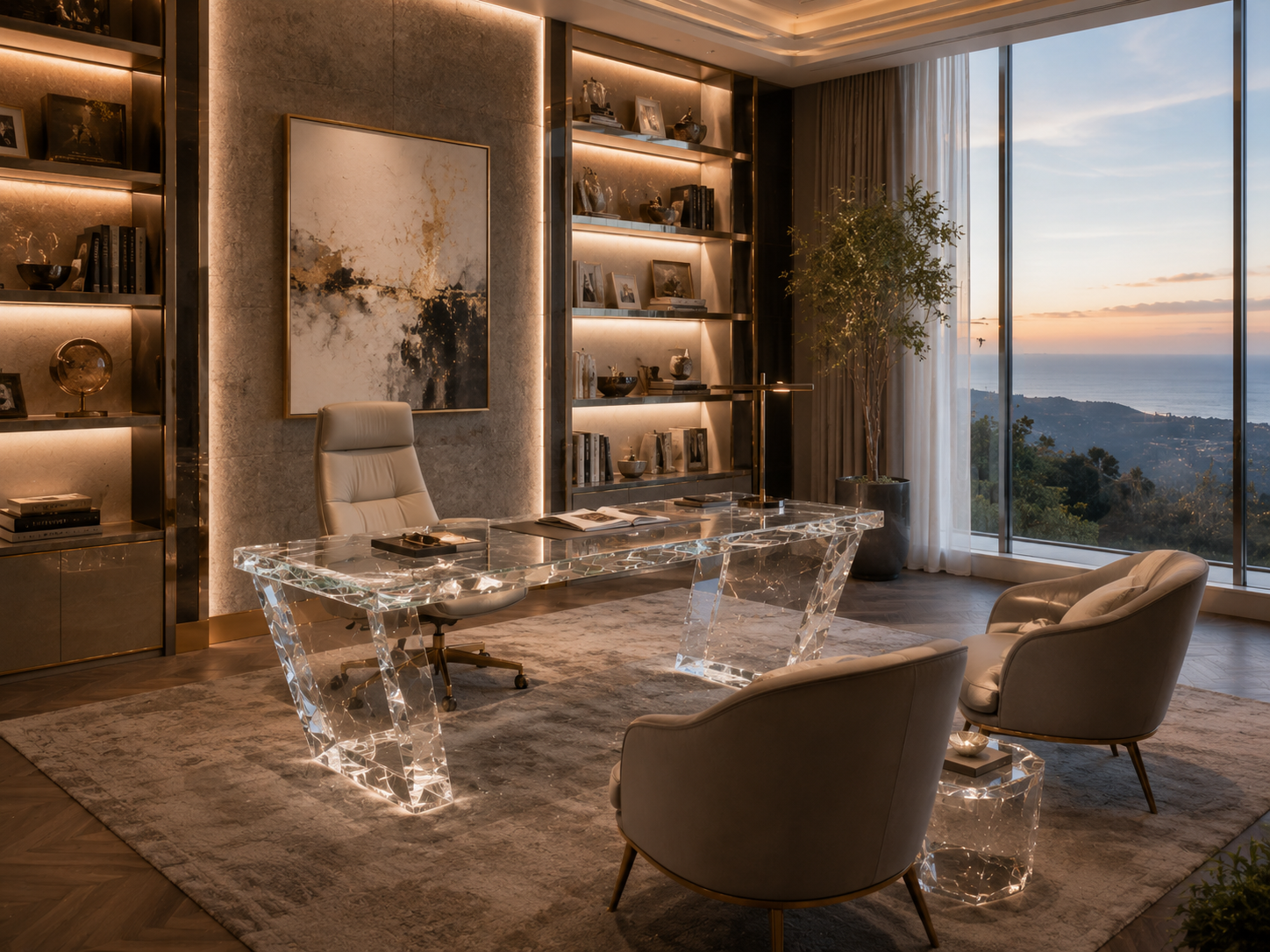
A 3D rendering may show a beautiful transparent table with a floating appearance.
The concept may be visually impressive.
But production teams need to answer additional questions:
What material thickness is suitable?
How will the structure support the weight?
How will the edges be processed?
Can the finished piece be safely transported?
How will installation be completed at the project location?
These questions are not limitations of creativity.
They are necessary steps to protect the original design.
The earlier these questions are discussed, the easier it becomes to avoid expensive changes later.
Start With Better Communication Between Designers and Manufacturers
One of the most effective ways to reduce project delays is improving communication at the beginning.
Many production issues occur because manufacturers receive information only after the design has already been finalized.
At this stage, even small adjustments may affect:
Production schedules
Material selection
Cost planning
Installation arrangements
A better approach is involving the manufacturer during the development stage.
When we receive a project concept, we usually review several aspects before production:
The design intention
The expected visual effect
The application environment
The required dimensions
The manufacturing possibilities
The installation conditions
This early discussion helps identify potential challenges while there is still flexibility to adjust the solution.
For example, in transparent synthetic crystal furniture projects, designers often focus on creating a lightweight visual impression.
They may want:
A very thin appearance
Minimal visible support
Maximum transparency
However, large transparent furniture pieces require careful structural planning.
Instead of simply reducing thickness, we evaluate how to maintain the intended visual effect while improving reliability.
This type of collaboration allows designers to protect their creative vision while making the project more practical.
The Importance of Material Selection Before Production Begins
Material selection is one of the most important decisions affecting project success.
Choosing a material only based on appearance can create problems later.
Different materials behave differently during manufacturing.
For example:
A material may look excellent in a small sample but create a different effect at a larger scale.
A surface may appear perfect under one lighting condition but require adjustment in another environment.
A structure may look simple but require additional engineering support.
For synthetic crystal furniture, these considerations are particularly important because transparency makes details more visible.
Surface quality.
Edge finishing.
Internal structure.
Light reflection.
All influence the final appearance.
Before production, we recommend evaluating:
The purpose of the furniture
The expected visual effect
The size of the final piece
The surrounding lighting environment
The installation requirements
This process helps ensure that the selected material supports both the design concept and manufacturing reality.
How Early Prototyping Helps Avoid Expensive Changes
For complex custom furniture projects, prototypes and samples can provide valuable information.
A sample is not only used to check appearance.
It helps confirm important details:
Transparency level
Surface finishing
Edge effect
Color perception
Lighting interaction
One challenge we have observed in custom transparent furniture development is that small samples cannot always represent the final product.
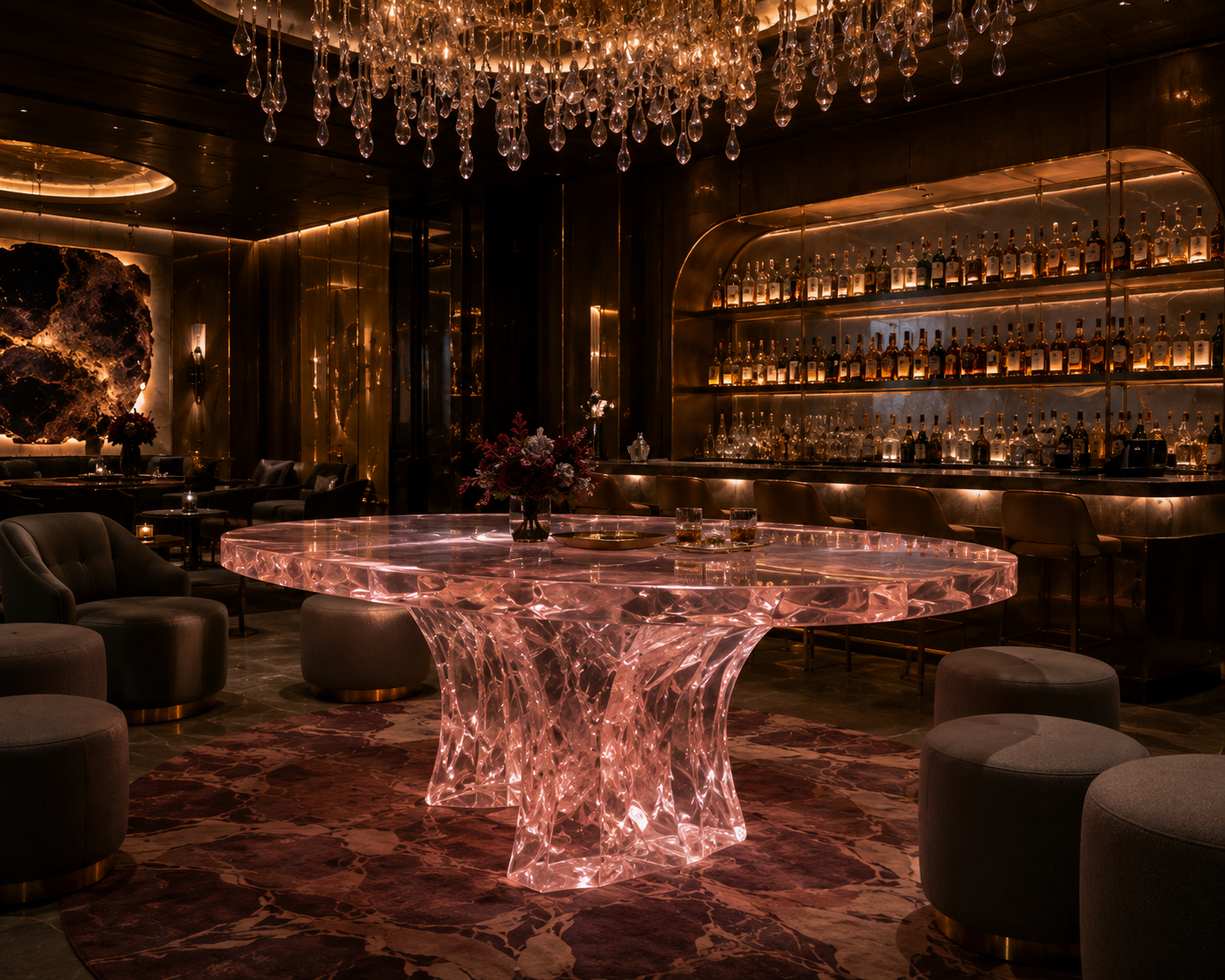
A large synthetic crystal table may create different visual effects compared with a small material piece because thickness, scale, and surrounding light influence the appearance.
By evaluating samples at the right stage, design teams can make better decisions before full production begins.
This approach reduces the possibility of major modifications after manufacturing has started.
Manufacturing Details That Influence Final Quality
A successful custom furniture project depends on many small production details.
For high-end synthetic crystal furniture, several stages require particular attention.
Precision Processing
Custom shapes often require accurate machining to achieve the original design intention.
Small differences in processing can affect:
Shape accuracy
Edge quality
Surface appearance
Edge Finishing
For transparent furniture, edges are often one of the most noticeable features.
A well-finished edge can enhance the sense of quality.
A poorly processed edge can affect the entire visual impression.
Quality Inspection
Before shipment, professional inspection helps identify issues before the furniture reaches the project site.
This includes checking:
Surface condition
Structural details
Processing quality
Packaging protection
Luxury furniture is judged by details, and manufacturing quality is what transforms a good design into a finished product.
Transportation and Installation: The Stages Often Overlooked
Many companies focus heavily on design and production but underestimate transportation and installation.
For custom furniture, especially large transparent pieces, these stages require planning from the beginning.
A finished product may need to travel internationally before reaching the final space.
Important considerations include:
Packaging structure
Protection methods
Transportation conditions
Site access
Installation requirements
During previous project developments, we found that packaging planning should not happen after production is finished.
It should be considered during the design stage.
For example, a very large furniture piece may look achievable in the factory but create challenges when entering an elevator, passing through doors, or being installed in a completed interior space.
Early planning helps avoid these problems.
Common Mistakes That Create Project Delays
Finalizing Design Without Technical Review
A beautiful concept still needs manufacturing evaluation.
Technical discussion before production can prevent major adjustments later.
Changing Materials During Production
Late material changes often affect the entire project timeline.
Material decisions should be confirmed as early as possible.
Ignoring Installation Conditions
A product can be successfully manufactured but still face challenges during installation if site conditions are not considered.
Focusing Only on Appearance
Luxury furniture requires both visual quality and practical performance.
The best projects balance creativity with engineering.
How Synthetic Crystal Furniture Projects Can Benefit From Better Planning
Synthetic crystal furniture provides unique opportunities for designers who want to create distinctive spaces.
Its transparency, visual depth, and customization possibilities make it suitable for:
Luxury residences
Hospitality interiors
Retail environments
Corporate spaces
Designer collections
However, the material creates the best results when the project process is carefully managed.
From initial concept discussion to final installation, each stage contributes to the final experience.
A successful synthetic crystal furniture project is not created only through advanced material technology.
It is created through cooperation between designers, manufacturers, and project teams.
Building a More Efficient Workflow for Future Projects
A reliable custom furniture workflow usually includes:
Early design communication
Material evaluation
Technical review
Sample confirmation
Production planning
Quality inspection
Transportation preparation
Installation support
This process allows teams to identify risks earlier and make better decisions.
For designers and brands, this means fewer unexpected changes.
For manufacturers, this means better production control.
For clients, this means receiving a final product that matches their expectations.
Creating Better Results Through Better Preparation
Custom furniture is about transforming ideas into physical experiences.
The difference between an average project and an exceptional project is often not the creativity of the original concept.
It is the ability to successfully manage every step between concept and completion.
Through our experience developing synthetic crystal furniture solutions, we have learned that the best results come from early communication, practical material decisions, and close cooperation between design and manufacturing teams.
When designers, manufacturers, and clients work together from the beginning, custom furniture projects become more predictable, efficient, and successful.
If your next project involves a complex furniture concept, unique material requirements, or a design that needs careful manufacturing evaluation, sharing your idea with our team early can help identify the right solution before challenges become delays.
READ MORE:
- Choosing Furniture Materials for Different Commercial Spaces: A Practical Guide
- How Luxury Furniture Brands Can Create More Value Through Material Storytelling
- How Design Companies Can Improve Material Selection Efficiency
- Let Us Help You Find a More Suitable Material Solution
- Come aumentare il valore dello spazio attraverso texture, lucentezza e trasparenza
- Guardare da vicino la texture del mobile: il vero lusso si nasconde nei dettagli visibili
- Dal "bello" al "sofisticato": i 3 fattori chiave con cui i mobili in resina elevano la qualità dello spazio
- Designer's Material-Selection Guide: How to Use Transparent Materials to Reduce Visual Heaviness
- Negli spazi di alta gamma, ciò che si trascura più facilmente non è la forma, ma la qualità materica


