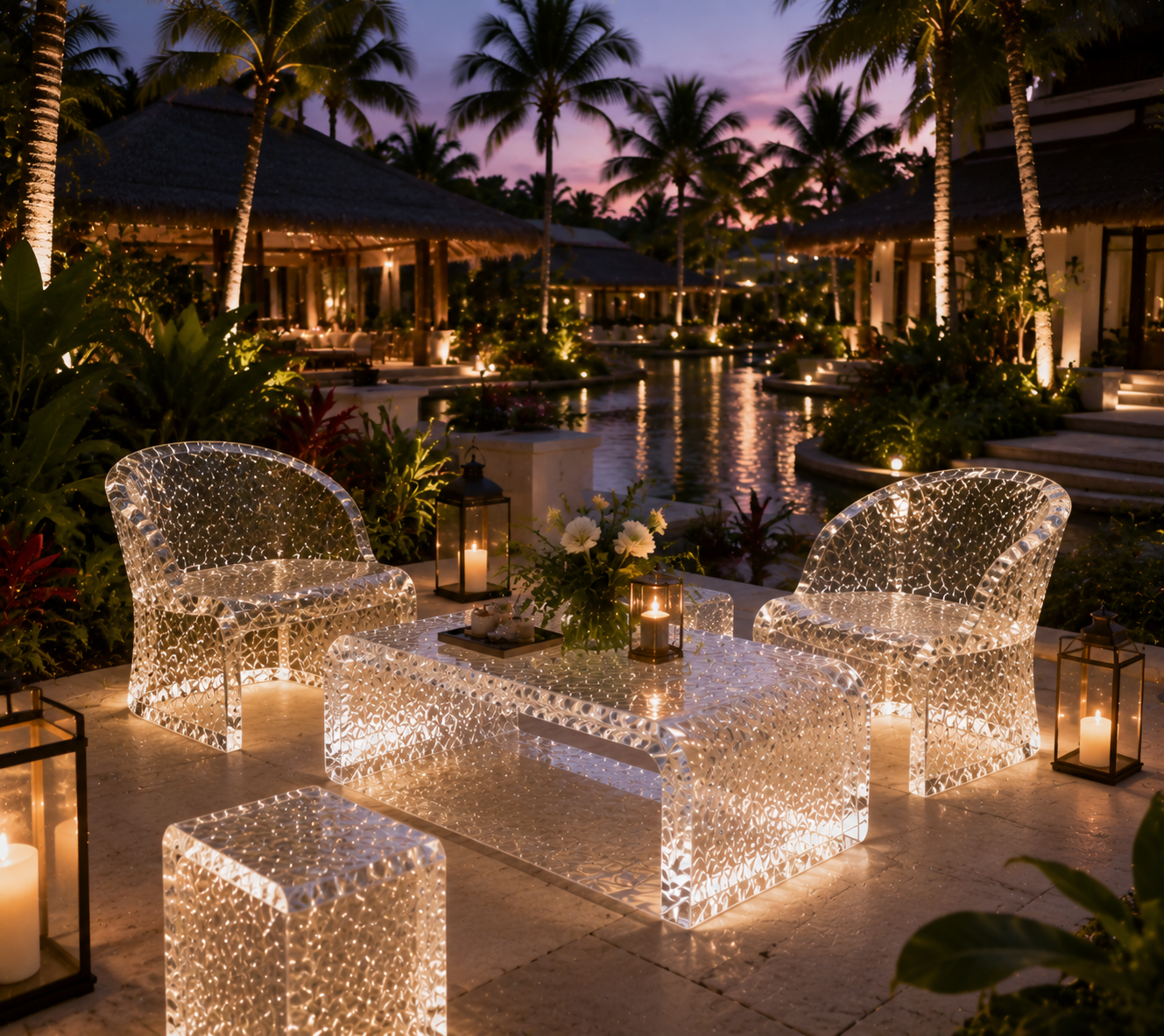
Introduction: Designers Are Looking for More Than Attractive Furniture
Interior designers no longer select furniture only according to function.
A chair must still provide comfortable seating. A table must remain stable. A cabinet must offer practical storage. However, in a well-designed project, furniture is also expected to support the architecture, influence visual balance, communicate identity, and create an emotional response.
This is especially true in high-end residential, hospitality, retail, cultural, and commercial spaces.
Clients want rooms that feel distinctive. Hotels want memorable guest experiences. Luxury brands want interiors that reinforce their image. Galleries want display solutions that support art without competing with it. Premium offices want furniture that communicates innovation and quality.
These expectations have created new opportunities for synthetic crystal acrylic furniture.
Acrylic furniture offers a combination of qualities that is difficult to achieve with traditional materials. It can appear transparent and visually light, yet still create a strong focal point. It can preserve views of walls, floors, rugs, artwork, and architectural details. It can interact with light, reflect surrounding colors, and create luminous edges.
It can also be customized in ways that allow designers to respond directly to a project concept.
Acrylic may be clear, tinted, frosted, mirrored, layered, printed, engraved, or illuminated. It can be cut into precise geometric shapes or formed into flowing sculptural curves. It can be combined with metal, wood, stone, leather, fabric, glass, lighting, and digital technology.
For designers, this flexibility is extremely valuable.
The material can be quiet or expressive. It can disappear into the composition or become the most memorable object in the room. It can support minimalist spaces, glamorous interiors, experimental environments, and highly branded commercial projects.
The growing use of synthetic crystal acrylic furniture therefore reflects more than a temporary aesthetic trend.
It reflects a change in how designers think about materials, space, customization, craftsmanship, and commercial value.
1. Transparency Helps Designers Create Visually Open Spaces
One of the main reasons designers choose acrylic furniture is its ability to reduce visual weight.
Furniture occupies both physical and visual space. A solid wood table, stone cabinet, or upholstered chair blocks part of the room from view. It creates a strong volume and may interrupt visual continuity.
Transparent acrylic behaves differently.
It still provides a physical function, but the eye can continue through the material. Flooring, rugs, walls, decorative surfaces, artwork, and surrounding furniture remain visible.
This quality is particularly useful in compact spaces.
Luxury apartments, hotel suites, dressing rooms, private lounges, boutiques, and narrow reception areas often require furniture without making the room feel crowded. A clear acrylic coffee table can provide a useful surface while allowing the floor to remain visible. Transparent chairs can create seating without adding excessive visual mass.
The same principle applies in larger interiors.
In an open-plan residence, an acrylic dining table can define a dining area without building a heavy visual barrier. In a hotel lobby, transparent furniture can preserve long sightlines. In a gallery, acrylic benches and pedestals can support visitors and artwork while maintaining spatial calm.
Designers often use this quality to protect important architectural features.
A decorative stone wall, handcrafted rug, patterned floor, sculptural staircase, or panoramic window may already be a major design element. Adding solid furniture in front of it could reduce its impact.
Acrylic furniture allows function to be introduced without hiding the feature.
This makes the material especially useful in projects where architecture, art, and furniture must coexist carefully.
Transparency can also improve the relationship between separate areas of a room.
A solid shelving unit may divide a space completely. An acrylic shelving system can organize objects and define zones while allowing light and views to pass through. A transparent console can mark an entrance without making it feel enclosed.
The furniture becomes a spatial tool rather than merely an object.
However, visually light furniture does not need to be visually unimportant.
Thick acrylic sections, polished edges, sculptural forms, and strategic lighting can create a strong presence. A table may appear light through its transparency but substantial through its thickness and scale.
This combination is highly attractive to designers.
They can create a room that feels open without making it feel empty. They can introduce statement furniture without adding visual heaviness.
Few materials offer this balance so effectively.
2. Acrylic Offers a Distinctive Balance of Luxury and Modernity
Luxury furniture has traditionally been associated with rare wood, natural stone, precious metal, leather, and handcrafted decoration.
These materials remain important, but contemporary luxury is becoming more diverse.
Today, high-end clients also value precision, innovation, material purity, customization, optical quality, and technical sophistication.
Synthetic crystal acrylic responds well to these expectations.
Premium acrylic can appear clear, luminous, refined, and highly controlled. When thick material is polished correctly, its edges can resemble cut crystal. Light travels through the material and becomes concentrated around corners, bevels, and curved surfaces.
This optical quality creates immediate perceived value.
A simple transparent table can look luxurious when its proportions are carefully designed, its surfaces are flawless, and its edges are bright and consistent.
Acrylic also communicates modernity.
Its clean appearance works well with minimalist architecture, contemporary art, polished metal, decorative stone, modern lighting, and open interiors. It can make traditional luxury materials feel fresher by creating contrast.
Beside marble, acrylic appears lighter.
Beside timber, it appears more technological.
Beside fabric, it creates visual sharpness.
Beside metal, it can soften the overall composition.
Designers use these contrasts to create balance.
A room filled entirely with stone, wood, and upholstery may feel visually heavy. Introducing a transparent acrylic piece can create breathing space. At the same time, the acrylic can reflect the surrounding materials, helping the composition feel connected rather than divided.
Tinted acrylic expands this luxury language.
Smoke grey can create a sophisticated architectural effect. Amber can feel warm and glamorous. Blue or green may create a calm, contemporary mood. Rose, violet, or orange can produce a more expressive statement.
The material can therefore support different brand identities and emotional directions.
Frosted finishes create another option. They allow light to pass through while reducing full transparency. This can produce a softer and more private effect, particularly in screens, cabinets, partitions, and illuminated furniture.
Layered acrylic can create depth and internal color.
Several transparent sheets may overlap to produce changing visual effects from different angles. A table may appear nearly clear from the front but reveal strong color from the side.
These effects make acrylic furniture highly responsive to movement and lighting.
The product does not look exactly the same from every viewpoint. This gives it a dynamic quality that designers can use to make an interior more memorable.
For contemporary luxury projects, that ability to create changing visual experiences is a major advantage.
3. Flexible Customization Supports Unique Project Concepts
Designers rarely work with completely standard spaces.
Every project has its own dimensions, architecture, lighting, circulation, functional needs, brand requirements, and visual language.
For this reason, customization has become increasingly important.
Synthetic crystal acrylic is well suited to custom production because it can be processed in many different ways.
Dimensions can be adjusted to fit a specific room. A console can be designed around a structural column. A table can match the exact proportions of a seating arrangement. A display pedestal can be created for a particular sculpture or product.
Thickness can also be customized.
Thin material can create delicacy and visual lightness. Thick acrylic can create a stronger architectural presence and brighter optical edges.
The correct thickness depends on appearance, scale, span, load, and structural requirements.
Color customization provides designers with another important tool.
Acrylic can be produced or finished in clear, tinted, fluorescent, frosted, translucent, or opaque effects. Custom colors can connect furniture with artwork, textiles, brand palettes, lighting concepts, or architectural materials.
A luxury boutique may use a signature color across tables, shelving, display stands, and counters. A hotel may repeat a particular tint in its lobby, bar, and guest rooms. A private residence may use colored acrylic to relate furniture to a painting or decorative object.
Shape is equally flexible.
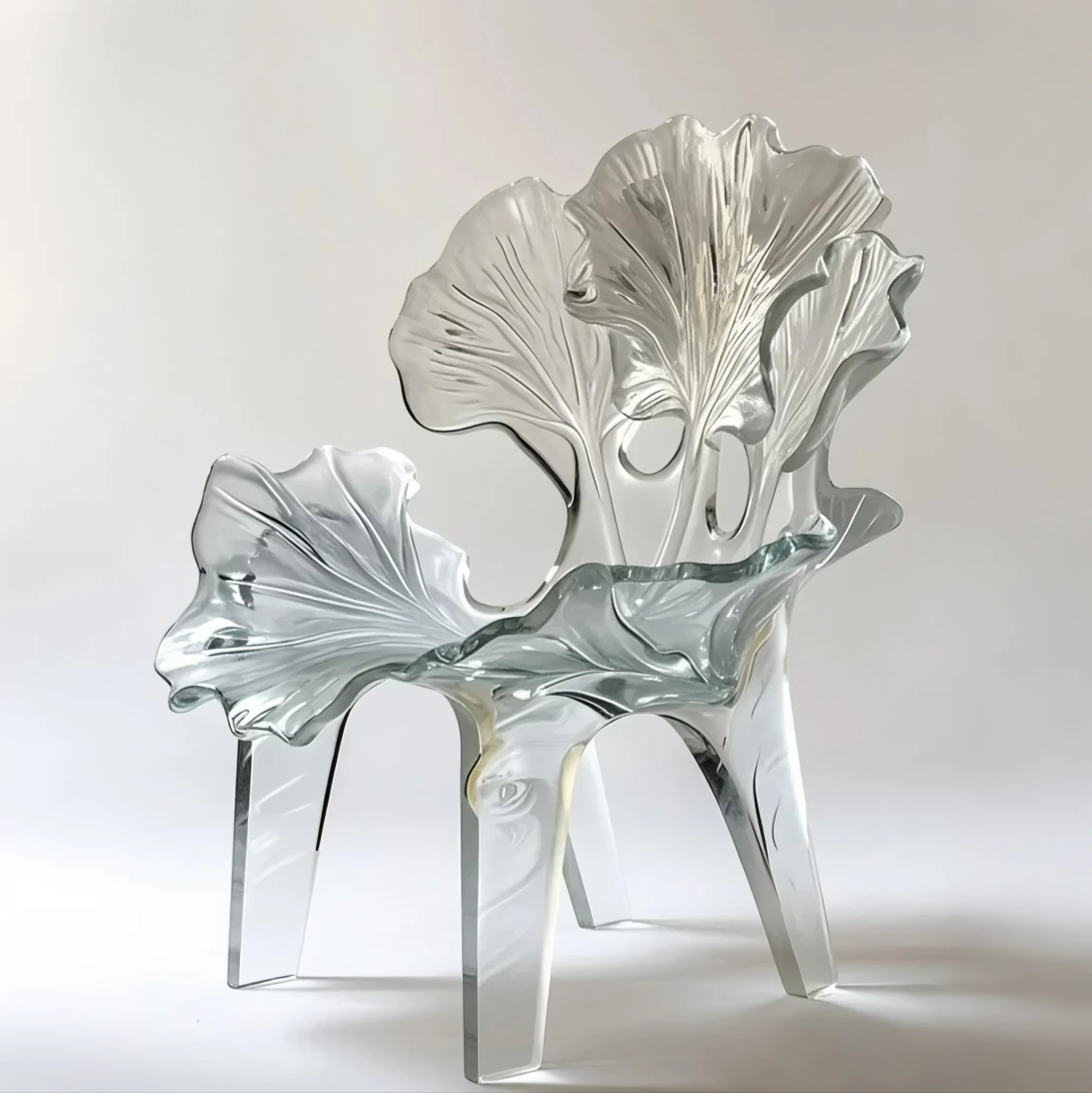
Acrylic can be cut into precise geometric profiles or formed into curves, waves, folds, and sculptural volumes. A chair may be created from one continuous bent surface. A console may resemble flowing water. A table base may appear like a block of cut crystal.
This freedom allows designers to move beyond ordinary furniture types.
The furniture can become part of the project’s artistic concept.
Surface treatments create further possibilities.
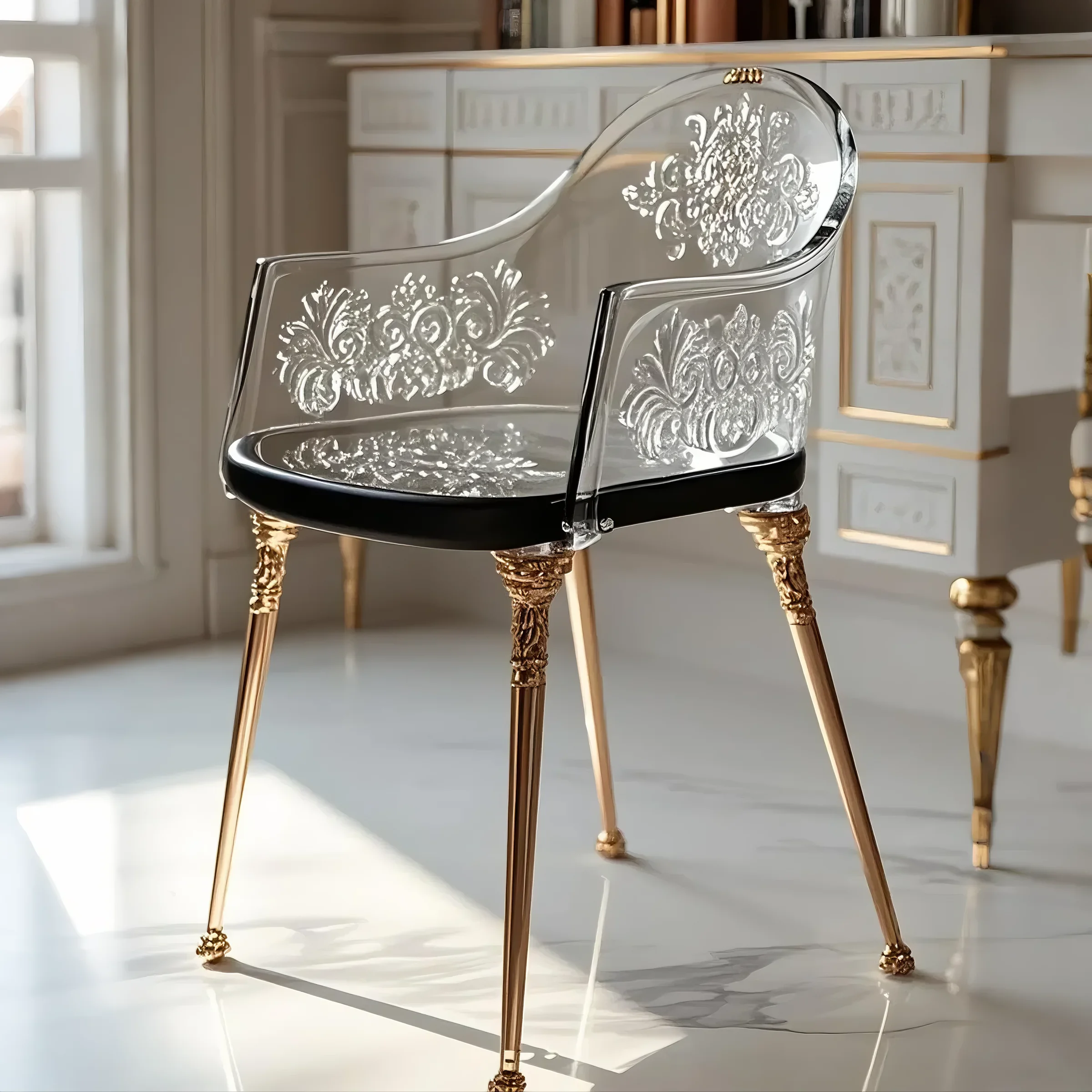
Acrylic can be engraved with patterns, logos, text, or decorative details. Areas may be polished, frosted, printed, or textured. Clear and colored sections can be combined. Objects, films, mesh, fabric, or decorative materials can be embedded between layers.
Lighting can also be integrated.
LED systems may be placed within edges, bases, shelves, engraved channels, or internal cavities. Light can reveal logos, patterns, layered colors, or polished surfaces.
For hospitality and retail projects, illuminated acrylic furniture can create different atmospheres throughout the day.
Customization also includes function.
A reception desk may require cable management, storage, lighting, equipment access, and replaceable panels. A retail fixture may need adjustable shelves, security hardware, or product-specific dimensions. A dining table may require concealed reinforcement.
The best acrylic furniture projects combine these practical needs with visual purity.
Achieving this balance requires collaboration among designers, manufacturers, engineers, lighting specialists, installers, and project managers.
Material samples, prototypes, mockups, and technical drawings help confirm the final result.
For designers, a manufacturer with strong customization experience becomes more than a supplier. The manufacturer becomes a technical partner capable of translating a concept into a reliable product.
4. Advanced Craftsmanship Turns Transparency into a Design Advantage
Transparency is attractive, but it is also demanding.
Opaque materials can hide many manufacturing details. Paint, veneer, fabric, and solid surfaces can conceal joints, internal structures, adhesive, and minor imperfections.
Acrylic reveals almost everything.
Cutting marks, bubbles, scratches, fingerprints, uneven bonding, distorted curves, inaccurate joints, and internal stress may remain visible in the finished product.
This means craftsmanship is essential.
The first stage is material selection.
High-quality acrylic should provide good optical clarity, consistent thickness, controlled color, and appropriate performance for the intended application. Inferior material may appear cloudy, uneven, or slightly discolored.
Cutting accuracy comes next.
Components must be produced to exact dimensions. Small errors can create visible gaps, unstable assemblies, or misaligned edges. Computer-controlled cutting and machining can improve consistency, but equipment alone is not enough. Files, tooling, speeds, fixtures, and operator experience all influence the result.
Edge finishing is one of the most visible indicators of quality.
Diamond polishing, machine polishing, flame polishing, and hand finishing may be used depending on the shape, thickness, and desired effect.
A premium edge should look clear, smooth, bright, and consistent.
On thick acrylic, the edge can become the most beautiful part of the furniture.
Bonding requires even greater control.
The joint must be carefully prepared and aligned. Dust, excess adhesive, trapped air, uneven flow, and inaccurate positioning can remain visible.
Clean working conditions, suitable adhesive chemistry, precise fixtures, controlled curing, and experienced technicians are necessary.
When executed well, the joint can appear almost invisible.
Heat bending and forming also require skill.
The material must be heated evenly and shaped at the correct temperature. Poor control can create bubbles, surface marks, distortion, or internal stress.
Thick and complex components may require custom molds, large ovens, long heating cycles, slow cooling, and annealing.
Structural engineering is equally important.
An acrylic table may appear delicate, but it must support real loads. A chair must tolerate repeated use. A shelf must control deflection. A large display structure must remain stable.
The design must consider span, thickness, joint construction, support position, hardware pressure, drilling points, environmental temperature, and long-term stress.
Packaging completes the craftsmanship process.
A flawless surface can be damaged during transport if it is not protected correctly. Acrylic furniture may require protective film, soft wrapping, custom foam, corner protection, rigid crates, and handling instructions.
Installation must also be controlled.
Large pieces should be handled carefully, placed on level surfaces, and protected from abrasive contact. Hardware must be tightened correctly without creating excessive pressure.
For designers, this high level of visible craftsmanship is not a disadvantage.
It is one of the reasons acrylic can become a project highlight.
When every detail is well executed, the furniture displays its quality directly. The customer can see the precision, clarity, and discipline involved in its production.
5. Acrylic Furniture Performs Across Multiple Design Environments
Synthetic crystal acrylic furniture is attractive to designers partly because it can serve many different project types.
In luxury residences, it helps create openness and individuality.
Transparent dining tables, consoles, coffee tables, side tables, shelving, and decorative seating can support the room without hiding rugs, floors, walls, or artwork.
In hotels, acrylic can create memorable arrival and social spaces.
A custom reception desk can become the visual center of the lobby. Illuminated counters can change atmosphere at night. Sculptural tables can strengthen the identity of lounges, bars, suites, and private clubs.
In restaurants, acrylic furniture can support both daytime and evening experiences.
Clear or lightly tinted furniture can feel calm during the day. Integrated lighting and stronger colors can create a more dramatic nighttime mood.
In luxury retail, acrylic is especially valuable because it supports product visibility.
Transparent display stands, shelves, cabinets, pedestals, and counters can make jewelry, watches, cosmetics, fashion accessories, collectibles, and technology products appear to float.
The fixture provides structure without visually overpowering the merchandise.
Colored acrylic can define different zones, while illuminated acrylic can draw attention to priority products.
Galleries and museums use acrylic for its visual neutrality and protective potential.
Clear cases, pedestals, benches, labels, and display structures can preserve views of art and architecture. In more expressive exhibitions, colored or sculptural acrylic may become part of the curatorial concept.
Premium offices use the material to communicate innovation and openness.
Transparent conference tables, reception desks, partitions, display shelves, and product stands can create a modern professional image.
Showrooms can use acrylic furniture to balance product presentation with spatial clarity.
Automotive, lighting, fashion, furniture, and technology brands may use transparent structures to support models, samples, components, or interactive displays.
Temporary installations and events also benefit from acrylic.
The material can create visually strong structures that photograph well and support branding. Pop-up stores, product launches, exhibitions, and fashion events may use customized acrylic furniture to produce a memorable but controlled visual environment.
Across these applications, acrylic adapts to different design roles.
It may become a background support, a visual connector, a product display, a lighting feature, a room divider, or a central sculpture.
This adaptability makes it highly attractive to designers who work across multiple market sectors.
6. Its Value Extends Beyond Appearance to Branding and Commercial Results
The value of furniture in a designer project is not limited to its physical function.
A distinctive piece can influence how people perceive the entire environment.
In hospitality, a memorable acrylic installation may become part of the guest experience. Visitors may photograph it, share it online, and associate it with the hotel.
In retail, transparent fixtures may improve product visibility and perceived value. A well-presented product often appears more desirable.
In corporate spaces, a precise acrylic reception desk or conference table can communicate innovation, clarity, and attention to detail.
In residential interiors, a sculptural acrylic table may become the defining image of the project.
These effects create commercial value.
A visually recognizable interior is easier to market. It produces stronger photography. It supports brand storytelling. It can increase social-media visibility and strengthen customer memory.
Designers understand that clients are not purchasing furniture alone.
They are investing in how the space will look, feel, photograph, function, and represent them.
Acrylic furniture can support these goals because it has a distinctive visual identity.
However, long-term value requires more than a dramatic first impression.
The furniture must remain stable, maintainable, and appropriate for daily use. Clients need clear guidance on cleaning, scratch prevention, surface care, and restoration.
Acrylic should be cleaned with suitable materials. Abrasive cloths and aggressive chemicals may damage the finish. Minor surface marks may sometimes be reduced through professional polishing.
Repairability and replaceable components can extend product life, especially in high-use commercial environments.
Sustainability is also becoming part of purchasing decisions.
Acrylic is a synthetic material, so responsible value claims should focus on measurable practices. These may include efficient sheet cutting, waste reduction, durable construction, professional packaging, repair, component replacement, and suitable recycling systems where available.
Product longevity is particularly important.
A well-designed acrylic piece can remain visually relevant because transparency adapts to changing surroundings. Clear furniture may continue to work even when nearby colors, fabrics, artwork, and decoration change.
Emotional longevity also matters.
A custom piece developed specifically for a residence, hotel, brand, or gallery is less likely to be treated as disposable. It becomes connected to the identity and story of the project.
This connection between visual impact, function, brand identity, and long-term use explains why acrylic furniture is becoming a highlight choice.
It is not simply attractive.
It can produce results that extend beyond the object itself.
Conclusion: Acrylic Is Becoming a Strategic Design Material
Synthetic crystal acrylic furniture is gaining attention in designer projects because it responds to several modern design needs at once.
It creates visual openness without removing function.
It communicates luxury without relying on traditional ornament.
It supports customized dimensions, colors, forms, surfaces, lighting, and technical features.
It works across residential, hospitality, retail, cultural, corporate, and event environments.
Most importantly, it helps designers create interiors that are recognizable and memorable.
The material’s transparency allows it to interact directly with architecture, light, color, artwork, and surrounding furniture. It can quietly support these elements or become the central focal point.
This flexibility gives designers greater control over visual hierarchy.
However, the success of acrylic furniture depends on material quality and manufacturing discipline.
Precision cutting, edge polishing, bonding, forming, engineering, inspection, packaging, installation, and maintenance all influence the finished result.
Because the material is transparent, quality cannot easily be hidden.
This is precisely why premium acrylic furniture can be so effective.
A flawless edge demonstrates craftsmanship. A clean joint communicates precision. A stable transparent structure reveals technical confidence. A custom form shows the connection between design imagination and manufacturing expertise.
For clients, the result is more than a piece of furniture.
It becomes part of the spatial experience, the brand identity, the commercial presentation, and the emotional memory of the project.
That is why synthetic crystal acrylic furniture is increasingly becoming one of the highlight choices in designer-led interiors.
It gives designers a material that can be seen through, but should never be overlooked.
READ MORE:
- Future Furniture Design Trends: How Synthetic Crystal Acrylic Connects Aesthetics with Commercial Value
- Synthetic Crystal Acrylic Furniture: Creating High-End Market Differentiation Through Unique Transparency
- From Spatial Decoration to Visual Focal Point: The Changing Role of Synthetic Crystal Acrylic Furniture
- Synthetic Crystal Acrylic Furniture: Why Are High-End Clients Increasingly Focused on Material Value?
- Elevare il valore percepito di un mobile senza accumulare materiali costosi: la vera chiave è la combinazione materica
- Dal render alla realtà: i 5 errori più comuni nella scelta dei materiali per mobili di alta gamma
- COME PUÒ UN PROGETTO DI ARREDAMENTO DI ALTA GAMMA CONCILIARE TRASPARENZA, DURATA E QUALITÀ DEL RISULTATO FINALE?
- Natural Stone, Glass, or Synthetic Crystal? How to Choose the Right Material for Every Space
- Arredamento di alta gamma: estetica e durata devono davvero escludersi?


