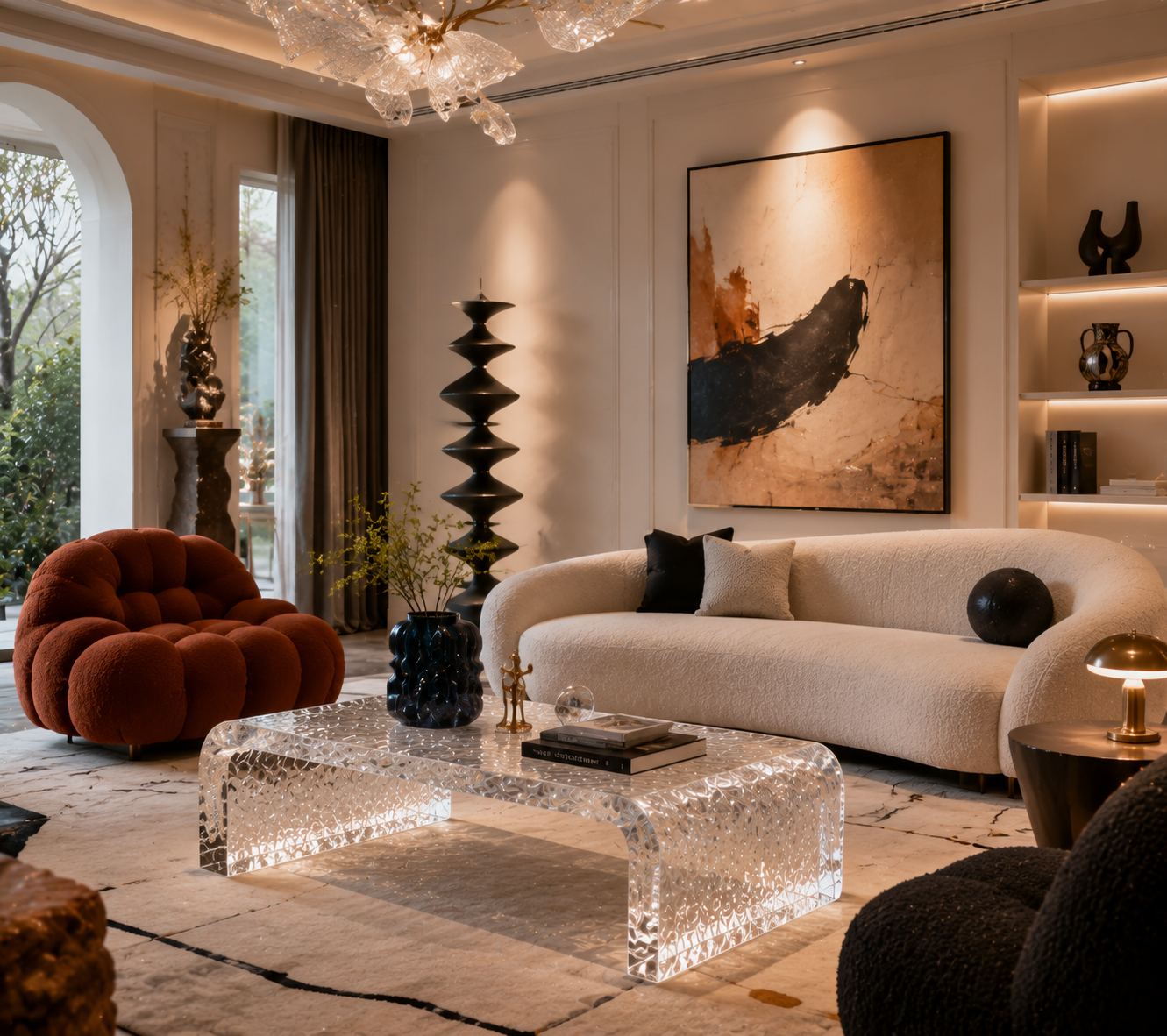
Introduction: The Future of Furniture Is More Than Form
Furniture has always reflected the values of its time.
Traditional furniture often expressed status through rare wood, carved decoration, precious metal, complex upholstery, and labor-intensive craftsmanship. Modernist furniture placed greater emphasis on structure, efficiency, industrial production, and functional clarity. Contemporary furniture has expanded again, combining technology, emotion, personalization, sustainability, and visual storytelling.
The next stage of furniture design will not be defined by one style.
It will be defined by the ability to connect multiple expectations in a single product.
Future furniture must be visually distinctive but adaptable. It must feel innovative without becoming impractical. It must support personalization while remaining manufacturable. It must contribute to the atmosphere of a space while meeting requirements for durability, maintenance, transportation, and cost.
This is where synthetic crystal acrylic furniture becomes especially relevant.
Acrylic can appear transparent, luminous, colorful, soft, architectural, minimal, or sculptural. It can visually disappear into a room or become its strongest focal point. It can preserve views of flooring, artwork, walls, and products while still providing real physical function.
Its design potential extends far beyond clear tables and chairs.
Acrylic can be cut, polished, bent, bonded, engraved, printed, layered, frosted, tinted, mirrored, illuminated, and combined with other materials. Thick sections can produce crystal-like depth. Curved forms can bend reflections. Integrated lighting can transform furniture from a daytime object into a nighttime atmosphere.
These properties allow acrylic to connect aesthetics with commercial value.
A visually memorable acrylic installation can strengthen the identity of a hotel. A transparent retail fixture can improve product visibility. A custom reception desk can communicate innovation. A sculptural table can become the defining image of a luxury residential project.
The material can therefore create value at several levels: functional, spatial, emotional, marketing, and commercial.
However, future success will depend on more than visual novelty. Premium clients are becoming increasingly informed. They want evidence of material quality, structural stability, production control, responsible manufacturing, maintenance support, and long-term performance.
The future of synthetic crystal acrylic furniture will be determined by how effectively designers and manufacturers respond to all these expectations together.
1. Furniture Is Evolving from a Functional Object into a Spatial Experience
Furniture was once evaluated primarily by what it did.
A chair provided seating. A table provided a working or dining surface. A cabinet provided storage. A display stand supported merchandise or artwork.
These functions remain essential, but future furniture will be judged by a wider set of effects.
Clients will ask how a product changes the atmosphere of a room, how it interacts with light, how it affects visual openness, how it supports movement, and how it contributes to the identity of the space.
Furniture is becoming experiential.
This transition is especially visible in luxury hotels, flagship stores, restaurants, galleries, branded offices, and high-end residential projects. In these environments, furniture is not selected only for practical use. It helps shape how people remember the space.
A hotel lobby may use a sculptural reception desk to create a sense of arrival. A boutique may use transparent display structures to make products appear more valuable. A restaurant may use illuminated furniture to shift the mood between daytime and evening service. A private residence may use one dramatic table as the visual center of an open-plan living area.
Synthetic crystal acrylic is particularly suitable for this experiential role because its appearance changes with context.
In natural daylight, clear acrylic may seem quiet and almost weightless. Under focused lighting, polished edges can become bright and reflective. Against dark stone, the material can appear luminous. Against a colored wall, it can absorb and repeat the surrounding color.
This responsiveness creates a dynamic relationship between furniture and architecture.
Acrylic furniture is not experienced as an isolated surface. It is experienced through the surrounding environment visible within and behind it.
A transparent console placed in front of textured stone allows the stone to remain part of the visual composition. A clear coffee table reveals the rug beneath it. A tinted chair projects colored shadows. A thick acrylic base magnifies and distorts nearby materials.
The furniture changes how the room is perceived.
This is an important future trend because interior design is becoming more focused on emotional and sensory impact. Customers increasingly want spaces that feel memorable, photograph well, and create a recognizable mood.
Acrylic furniture can help achieve these goals without requiring excessive ornament.
Its effect can come from clarity, proportion, reflection, refraction, thickness, and placement. Even a simple form can create a sophisticated visual experience when the material is carefully selected and finished.
Future furniture design will therefore place greater value on the relationship between object and environment.
The successful product will not merely occupy the space. It will activate it.
2. Synthetic Crystal Acrylic Bridges Visual Lightness and Physical Performance
One of the central challenges in future furniture design will be balancing visual lightness with practical performance.
Clients want interiors that feel open, elegant, and uncluttered. At the same time, furniture must remain stable, safe, durable, and suitable for repeated use.
Synthetic crystal acrylic offers an unusual combination of these qualities.
Because it is transparent, acrylic reduces visual obstruction. A large table can occupy substantial physical space without appearing as heavy as a solid wood or stone table. A shelving system can divide a room while allowing light and sightlines to continue through it.
This visual lightness is valuable in both small and large spaces.
In compact apartments, hotel suites, dressing rooms, and boutiques, acrylic furniture can provide function without making the space feel crowded. In large lobbies, showrooms, and residences, oversized acrylic pieces can create scale without building solid visual barriers.
However, visual lightness should not be confused with structural weakness.
Premium acrylic furniture can be engineered for demanding applications, but the design must consider material thickness, span, load distribution, joint construction, hardware placement, bending radius, temperature, and long-term stress.
A beautiful transparent table still needs to support real weight. A chair must tolerate repeated use. A shelf must resist excessive deflection. A large display case must remain stable and secure.
Future designers will therefore work more closely with engineers and manufacturers from the beginning of the design process.
Instead of creating a visual concept first and addressing structure later, design teams will increasingly develop aesthetics and performance together.
This approach is especially important with acrylic because transparency exposes technical decisions. Hardware, joints, support structures, and bonding lines cannot easily be hidden.
Good engineering becomes part of the appearance.
A carefully positioned support can strengthen the visual rhythm of the piece. A precise joint can reinforce the sense of purity. A well-designed connection can make a large structure appear effortless.
Poor engineering creates the opposite effect.
Excessive bending, visible stress marks, cloudy joints, cracking around holes, unstable bases, and uncontrolled hardware pressure can quickly destroy the premium appearance of the furniture.
The future market will therefore reward manufacturers that understand both design and material behavior.
Acrylic will not be valued simply because it is transparent. It will be valued because it can deliver transparency without sacrificing credible performance.
This balance connects aesthetics directly to commercial value.
When furniture looks light but feels stable, customers gain confidence. When a transparent product remains reliable during daily use, hotels, retailers, offices, and residential clients are more willing to invest in it.
Material performance becomes part of the luxury experience.
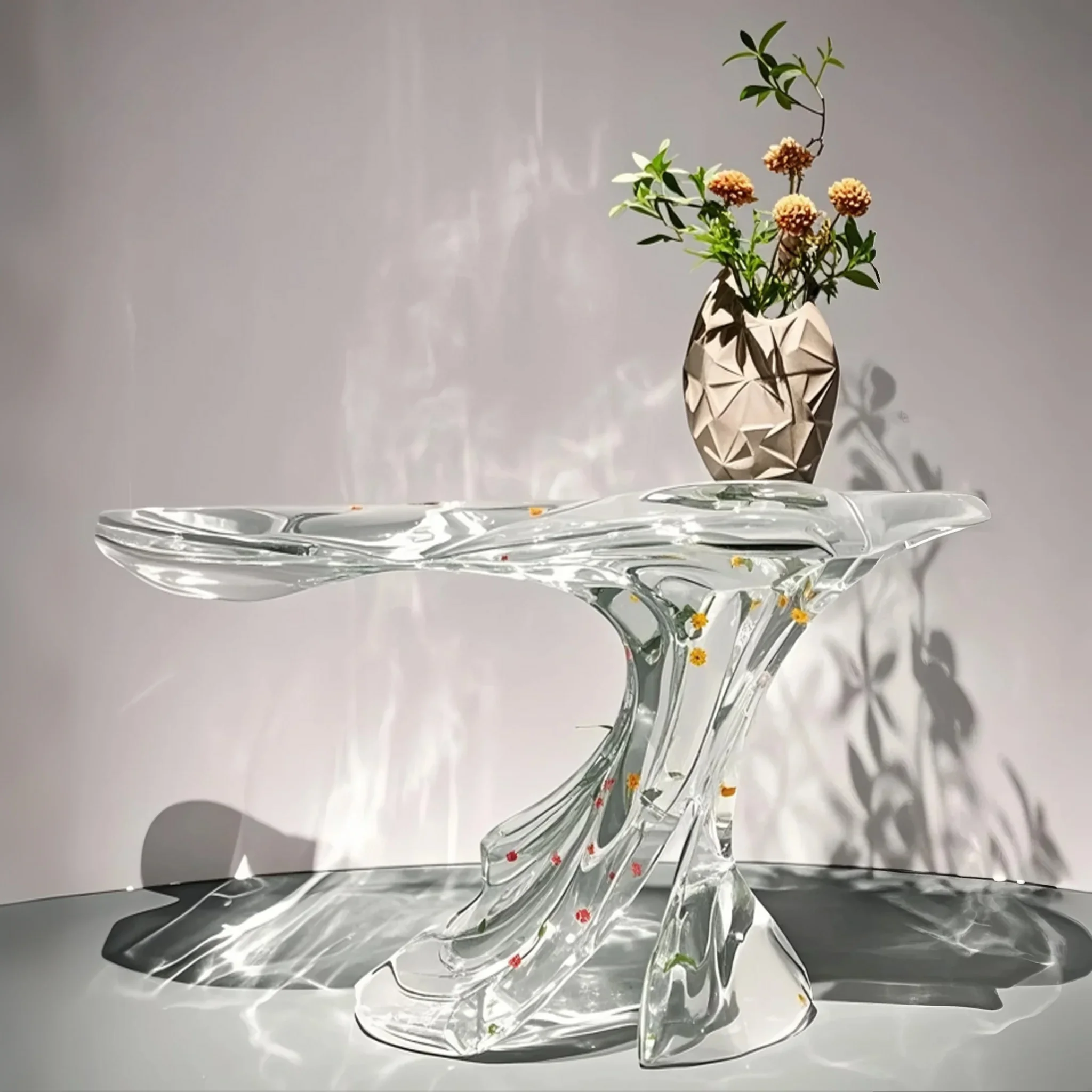
3. Digital Manufacturing and Customization Are Expanding Design Possibilities
The future of acrylic furniture is closely connected to advances in digital design and manufacturing.
Traditional furniture production often relies on standardized dimensions, repeatable components, and familiar material processes. These methods remain important, but high-end clients increasingly demand customized solutions.
They may need furniture that fits an unusual architectural space, matches a specific brand color, integrates lighting, supports technology, displays a particular product, or responds to a unique design concept.
Digital tools are making these requirements more achievable.
Three-dimensional modeling allows designers to evaluate proportion, transparency, curvature, joint placement, and spatial relationships before production. Renderings can help clients understand the overall concept, while engineering software can identify potential structural risks.
Computer-controlled cutting improves dimensional accuracy and enables more complex geometries. CNC machining can produce detailed profiles, channels, holes, and connection points. Digital templates and fixtures improve repeatability across multiple units.
Thermal forming technologies allow acrylic sheets to become curved, folded, twisted, or molded into sculptural volumes. When heating and cooling are carefully controlled, the material can take on shapes that would be difficult to produce in glass or traditional furniture materials.
Precision polishing transforms the cut material into a premium surface. Diamond polishing, machine polishing, hand finishing, and other specialized processes can create clear, luminous edges.
Bonding technology is equally important.
The quality of a transparent joint depends on surface preparation, adhesive selection, component accuracy, fixture design, application control, curing time, and environmental cleanliness. Future manufacturing systems will continue to improve these processes through better tools, monitoring, and quality control.
Customization will also become more visual.
Designers will use custom tinting, gradient color, frosted sections, printed graphics, embedded films, decorative mesh, layered sheets, and internal objects to create stronger identities.
Integrated lighting will become increasingly common.
LED systems can be placed within bases, channels, shelves, edges, and engraved patterns. Lighting can respond to brand colors, events, time of day, or interactive controls.
A hotel reception desk may change atmosphere from morning to evening. A retail fixture may highlight a product launch. A restaurant bar may shift color during different service periods.
Furniture can therefore become part of a responsive interior system.
Hybrid construction will further expand possibilities.
Acrylic can be combined with metal, stone, wood, glass, leather, fabric, resin, and electronic components. These combinations allow designers to balance transparency with warmth, texture, strength, and functionality.
For manufacturers, the commercial opportunity lies in converting customization into an efficient process.
The most successful companies will not treat every custom project as a completely unpredictable experiment. They will develop repeatable engineering principles, modular details, material libraries, color systems, prototyping methods, and quality standards.
This will allow them to offer originality without losing control of cost and delivery.
Future commercial value will come from scalable customization: products that feel unique to the client but are supported by disciplined manufacturing knowledge.
4. Acrylic Furniture Creates Measurable Value Across Luxury Markets
The connection between aesthetics and commercial value becomes most visible when acrylic furniture is applied to real market environments.
In luxury residential projects, acrylic furniture helps designers create openness and individuality.
A transparent dining table can preserve views of a decorative floor or rug. A sculptural console can provide a focal point without hiding a wall finish. Colored side tables can introduce visual energy without adding heavy mass.
For the homeowner, this creates emotional and practical value. The space feels more distinctive, while the furniture remains compatible with future changes in artwork, textiles, and decoration.
In hospitality, furniture is part of the guest experience.
Hotels compete not only through service and location, but through atmosphere and memorability. A custom acrylic reception desk, illuminated bar, sculptural lobby table, or transparent display installation can become an identifiable feature of the property.
These elements may appear in marketing photographs, social media posts, event materials, and guest-generated content.
Furniture therefore contributes to brand visibility.
In luxury retail, acrylic has a direct relationship with product presentation.
Transparent display fixtures reduce visual competition and allow merchandise to remain the focus. Jewelry, watches, cosmetics, fashion accessories, collectibles, and technology products can appear to float within the space.
Tinted or illuminated acrylic can create product zones, guide circulation, and reinforce brand color.
The commercial value is not limited to the fixture itself. The fixture can influence how valuable the displayed product appears.
In galleries and museums, acrylic furniture and display systems can support art while preserving visual neutrality. Clear pedestals, protective cases, benches, and interpretive structures can minimize obstruction.
More expressive acrylic elements can also become part of exhibition design, creating visual dialogue between the display architecture and the artwork.
Premium offices use acrylic to communicate innovation, clarity, and openness.
A transparent conference table can reduce the heaviness of a meeting room. A custom reception desk can create a modern first impression. Acrylic shelving and presentation structures can display awards, prototypes, or products without overwhelming the interior.
In restaurants and entertainment spaces, acrylic can support changing atmospheres.
Illuminated counters, transparent partitions, colored seating, and sculptural tables can create a distinctive nighttime identity. Because the material responds strongly to lighting, the same furniture can feel different throughout the day.
These applications demonstrate an important commercial principle.
Furniture creates value not only through its direct function, but through the reactions it produces.
It can improve first impressions, strengthen memory, encourage photography, support marketing, increase perceived quality, and differentiate one environment from another.
Acrylic is particularly effective because its effects are both visual and spatial.
It can make a product more visible, a room more open, a brand more recognizable, and an experience more memorable.
For commercial buyers, these benefits can justify investment beyond the basic cost of the furniture.
5. Lifecycle Thinking Will Influence the Next Stage of Acrylic Design
Future furniture design will be evaluated over a longer period.
Clients will continue to care about appearance, but they will also ask how long the product will remain useful, how it should be maintained, whether it can be repaired, how efficiently it was made, and what happens at the end of its service life.
This lifecycle perspective will influence acrylic furniture significantly.
Durability will remain fundamental.
High-quality material, appropriate thickness, correct engineering, controlled processing, and professional installation can extend product life. Inferior material or poor workmanship may lead to premature scratching, deformation, cracking, joint failure, or discoloration.
Future buyers will increasingly distinguish between short-term visual novelty and long-term material credibility.
Maintenance will also become part of design planning.
Acrylic surfaces require suitable cleaning methods. Abrasive cloths, aggressive chemicals, and improper handling can damage the finish. Manufacturers should provide clear instructions for routine cleaning, stain removal, scratch prevention, and professional restoration.
Certain minor surface marks may be reduced through polishing. Replaceable hardware or modular components can also extend service life.
Designing for repairability creates commercial value, especially in hotels, stores, restaurants, and public interiors where furniture experiences frequent use.
Material efficiency will become more important during production.
Digital cutting plans can improve sheet utilization and reduce waste. Offcuts may be used for smaller components, samples, prototypes, or other products. Better quality control can reduce remanufacturing and rejected pieces.
Packaging will also receive greater attention.
Acrylic surfaces can be damaged during transport, so professional protection is necessary. At the same time, excessive disposable packaging creates environmental and commercial costs.
Future packaging systems will need to balance surface protection, shipping efficiency, material reduction, and possible reuse.
Recycling and material recovery will remain complex but important topics.
Acrylic is a synthetic material, and its environmental value should not be communicated through vague claims. Credible sustainability strategies should focus on measurable practices: longer product life, responsible material selection, efficient manufacturing, repair, reduced damage, recoverable components, and appropriate recycling systems where available.
Emotional longevity is equally important.
Furniture is more likely to remain in use when customers continue to value its appearance and meaning. A generic product may be replaced when trends change. A distinctive custom piece connected to a project, brand, or personal story may be preserved for much longer.
This is another reason why aesthetics and sustainability cannot be completely separated.
A product that remains desirable has a better chance of remaining useful.
The future of sustainable luxury furniture will therefore involve both technical durability and lasting emotional relevance.
.png)
6. The Strongest Commercial Advantage Will Come from Design Systems, Not Isolated Products
A single beautiful product can attract attention, but long-term commercial success requires a broader system.
Future acrylic furniture brands will need to combine material expertise, design development, engineering, manufacturing, quality control, logistics, installation, maintenance, and storytelling.
The companies that offer only transparent products will face strong price competition.
The companies that offer complete solutions will create greater value.
A design system may include a recognizable approach to proportion, edge treatment, color, curvature, hardware, lighting, and mixed materials. These elements can be repeated across tables, chairs, consoles, displays, shelving, reception desks, counters, and decorative installations.
This creates a coherent identity.
For a hotel group, the same acrylic design language may appear in lobbies, bars, guest rooms, restaurants, and retail areas. For a luxury brand, it may connect flagship stores, temporary exhibitions, window displays, and product-launch events.
Consistency strengthens recognition.
At the same time, the system must remain flexible enough to adapt to different locations, dimensions, and functions.
Service will become a major source of differentiation.
High-end clients value accurate communication, material samples, color confirmation, technical drawings, prototypes, production updates, quality inspection, professional packaging, installation guidance, and after-sales support.
These services reduce risk.
A designer is more likely to specify a manufacturer who can interpret complex drawings and identify problems early. A hotel developer is more likely to trust a supplier who can deliver consistent quality across multiple locations. A retailer is more likely to continue a relationship with a manufacturer who can respond quickly to new campaigns.
Storytelling helps communicate this hidden value.
Customers may see only the finished transparent object. They may not understand the precision required to polish a thick edge, create a clean bond, control a large curve, or integrate lighting without visible technical clutter.
Brands that explain these processes can increase perceived value.
The story should not rely on empty luxury language. It should show the relationship between design intention and manufacturing discipline.
Why was a particular thickness selected? How was the color developed? How was the structure tested? How were the joints minimized? How can the surface be maintained?
These details transform the product from a generic transparent object into a credible design achievement.
The strongest commercial advantage will therefore come from combining several forms of value:
Visual value attracts attention.
Functional value supports use.
Technical value creates confidence.
Service value reduces risk.
Brand value creates recognition.
Emotional value encourages long-term attachment.
When these elements work together, synthetic crystal acrylic furniture becomes more than a product category.
It becomes a platform for high-end design and commercial differentiation.
Conclusion: The Future Belongs to Materials That Connect Multiple Forms of Value
The future of furniture design will not be shaped by appearance alone.
Successful products will need to connect aesthetics, performance, customization, technology, sustainability, customer experience, and business strategy.
Synthetic crystal acrylic is well positioned within this future because it can perform multiple roles at once.
It can reduce visual weight and preserve openness. It can create a strong focal point through thickness, color, reflection, and light. It can support sculptural forms, customized dimensions, embedded materials, digital manufacturing, and integrated technology.
In luxury homes, it can create individuality.
In hotels, it can define memorable guest experiences.
In retail, it can improve product presentation and brand recognition.
In galleries, it can support art without excessive visual obstruction.
In offices, it can communicate clarity and innovation.
The commercial value of acrylic furniture therefore extends beyond the furniture itself.
It influences how people perceive the space, the brand, and the objects around it.
However, this opportunity brings higher expectations.
As acrylic furniture becomes more visually and commercially important, material quality and craftsmanship become impossible to ignore. Optical clarity, structural stability, edge finish, bonding, forming, packaging, installation, and maintenance all affect the final result.
Future success will belong to designers and manufacturers who understand this complete relationship.
They will not treat acrylic as a simple transparent substitute for glass or plastic.
They will treat it as a strategic design material capable of connecting visual experience with practical and economic value.
The future question will not be whether acrylic furniture looks beautiful.
The more important question will be what that beauty can achieve.
When beauty improves spatial openness, strengthens identity, supports customer experience, increases product visibility, creates emotional memory, and remains credible over time, aesthetics becomes commercial value.
That connection is where the future of synthetic crystal acrylic furniture will be built.
READ MORE:
- Synthetic Crystal Acrylic Furniture: Why Is It Becoming a Highlight Choice in Designer Projects?
- Synthetic Crystal Acrylic Furniture: Creating High-End Market Differentiation Through Unique Transparency
- From Spatial Decoration to Visual Focal Point: The Changing Role of Synthetic Crystal Acrylic Furniture
- Synthetic Crystal Acrylic Furniture: Why Are High-End Clients Increasingly Focused on Material Value?
- Elevare il valore percepito di un mobile senza accumulare materiali costosi: la vera chiave è la combinazione materica
- Dal render alla realtà: i 5 errori più comuni nella scelta dei materiali per mobili di alta gamma
- COME PUÒ UN PROGETTO DI ARREDAMENTO DI ALTA GAMMA CONCILIARE TRASPARENZA, DURATA E QUALITÀ DEL RISULTATO FINALE?
- Natural Stone, Glass, or Synthetic Crystal? How to Choose the Right Material for Every Space
- Arredamento di alta gamma: estetica e durata devono davvero escludersi?


