
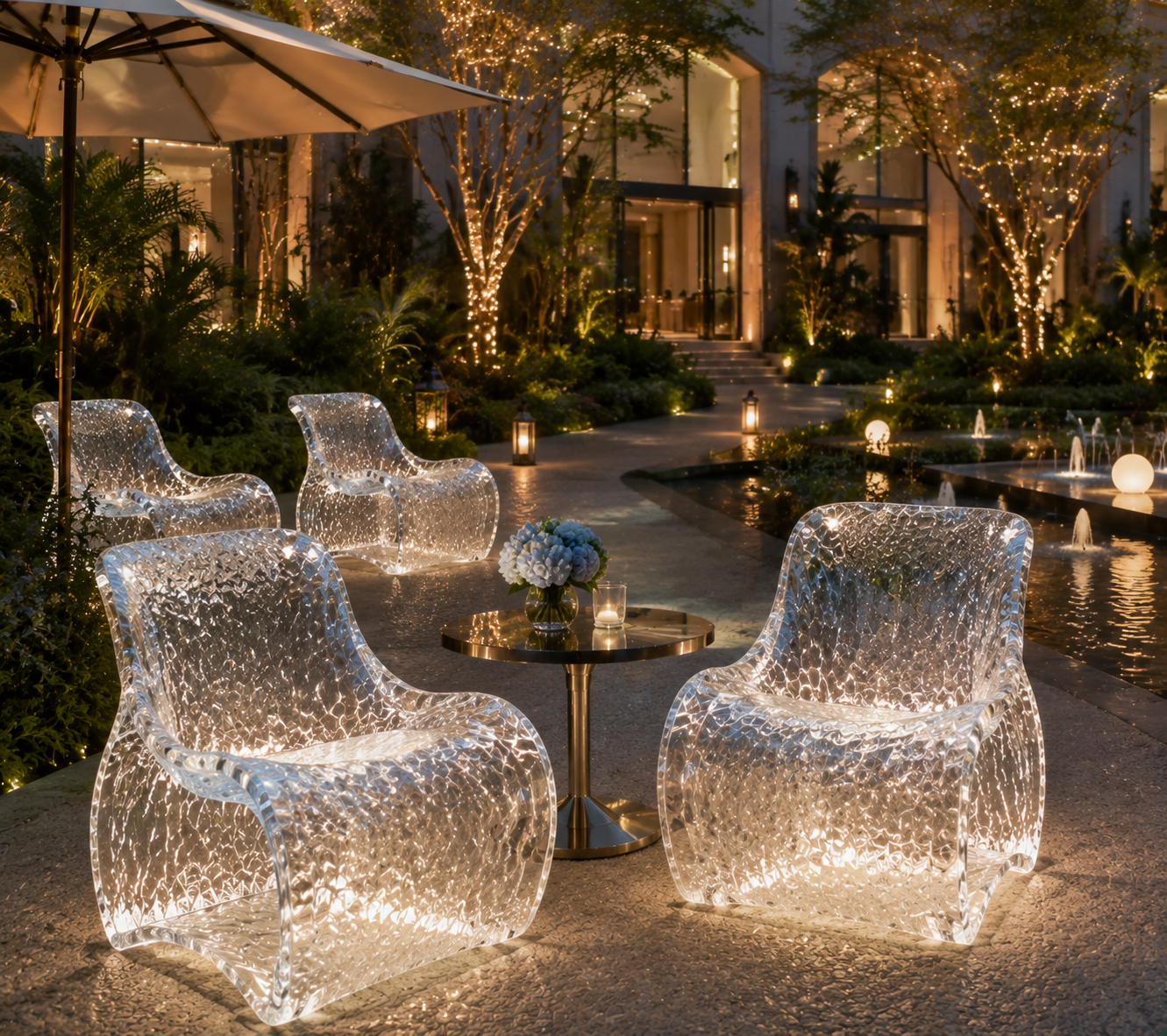
In commercial interiors, increasing average transaction value is often treated as a marketing or pricing challenge. Operators introduce premium packages, redesign menus, train sales teams, or adjust product displays. These measures are important, but they overlook a factor that customers evaluate before speaking to an employee or reading a price tag: the physical quality of the space.
Materials communicate positioning immediately. A lightweight table that scratches easily, a cloudy transparent panel, or a visibly mass-produced reception counter may contradict a brand’s premium pricing. By contrast, furniture made from synthetic crystal, high-end casting resin, or premium platinum acrylic can create depth, clarity, visual weight, and a stronger sense of exclusivity.
Material upgrades do not automatically increase spending. Their commercial value comes from making premium prices feel credible, improving the customer experience, encouraging longer engagement, and creating physical evidence of the brand promise. For restaurants, hotels, salons, retail stores, clubs, showrooms, and other experience-led businesses, furniture is often the most effective place to begin.
1. Use Material Quality to Make Premium Pricing Feel Credible
Customers rarely calculate the manufacturing cost of a table, chair, display plinth, or reception desk. They make a faster judgment: does this environment feel worth the price being charged?
This is why materials function as pricing signals. Surface depth, transparency, weight, edge finishing, color consistency, joint quality, and tactile temperature all help customers form an impression of the business. A premium restaurant may offer excellent food, but if its tables appear disposable or poorly finished, customers can subconsciously question the price of the menu. A beauty clinic may invest heavily in equipment, yet a low-grade reception counter can weaken its message of precision and professionalism.
The relationship between environment and spending is increasingly important because customers are allocating more money to experiences. Gensler’s 2024 U.S. Consumer Experience Report, based on a survey of 2,038 consumers, found that people were twice as likely to spend extra money on experiences as on material goods. The report also identified product or service quality, customer service, and a welcoming atmosphere as the three most memorable elements of a positive consumer experience.
JLL’s 2025 global consumer research covered 12,000 respondents across 19 markets and 64 cities. JLL reported that more than two-thirds of consumers would pay a premium for high-quality environments, while 74 percent expected cities to provide new experiences.
The practical lesson is not that every interior must look expensive. It is that material quality must support the intended price position. A casual café needs warmth, durability, and authenticity rather than unnecessary luxury. A high-end restaurant, jewelry showroom, private club, or luxury salon needs more distinctive materials because customers expect stronger visual and physical evidence of exclusivity.
Premium furniture closes the gap between what a brand says and what customers experience. When the space looks carefully designed, the higher-priced menu item, treatment package, membership plan, or product collection feels more consistent with the environment.
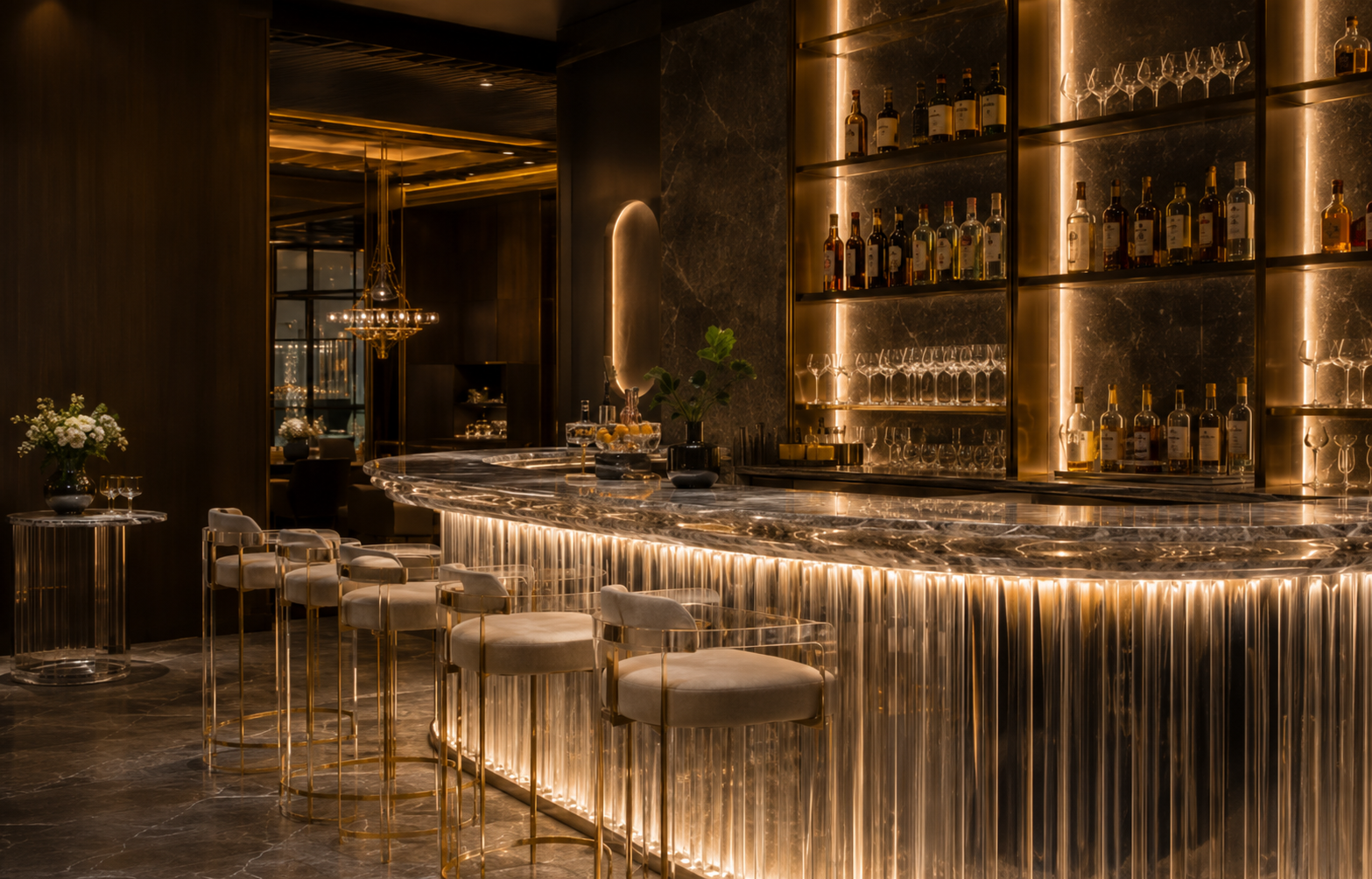
2. Begin with Furniture Because Customers Experience It at Close Range
Architectural finishes create the background of a commercial space, but furniture is where the customer directly encounters material quality. People sit on it, place their belongings on it, photograph it, move around it, and examine it from a short distance. Small imperfections that are invisible on a ceiling or distant wall become obvious on a tabletop.
Cornell hospitality research has shown why this close-range experience matters. In a pilot study that used guest photography to evaluate hotel design, guests noticed elements that suggested the hotel had considered their needs and provided a functional, high-quality environment. The researchers concluded that conventional surveys may fail to capture the full impact of physical design because customers respond visually and emotionally to specific details.
Furniture therefore offers a practical starting point for material upgrades. Replacing an entire floor or wall system may require closing a venue, coordinating multiple contractors, and making a large capital investment. A carefully selected group of statement tables, consoles, display units, screens, or reception pieces can change the perceived level of the space with less disruption.
Consider a premium restaurant with standard wooden tables throughout the dining room. Replacing every table may not be necessary. A more commercially focused approach could introduce synthetic crystal or high-end resin tables in the private dining room, premium window seats, and celebration area. These locations are associated with higher-margin bookings, special occasions, and social-media content, so the upgraded material supports both higher pricing and stronger visibility.
In a beauty salon or clinic, a platinum acrylic reception desk, transparent consultation table, or sculptural resin side table can create a cleaner and more precise first impression. In a luxury retail store, acrylic display plinths can allow light to travel through the fixture, reducing visual obstruction and keeping attention on the merchandise. In a hotel lobby, translucent resin tables or decorative partitions can define different zones without making the space feel smaller.
The objective is to place upgraded furniture where customers make value judgments: the entrance, waiting area, consultation zone, premium seating section, product display area, payment point, and other moments directly connected to purchasing decisions.
3. Use Synthetic Crystal, High-End Resin, and Platinum Acrylic for Different Commercial Effects
Transparent and translucent materials are not interchangeable. Their commercial value depends on how they are specified, processed, finished, illuminated, and integrated into the brand environment.
Synthetic crystal furniture is particularly effective when a space needs a jewel-like focal point. Its visual depth can create the impression that color, light, metallic elements, or decorative objects are suspended inside the furniture. In a hotel, luxury residence showroom, club, or jewelry boutique, this effect can turn a console or table into a recognizable brand object rather than a generic furnishing.
High-end resin offers greater freedom in color, texture, and artistic expression. Depending on the formulation and production method, resin furniture can incorporate gradients, mineral-like patterns, organic forms, embedded objects, or custom pigments. This makes it useful for businesses that want their furniture to tell a story. A coastal hotel could use blue-green translucent resin to reference water. A fashion boutique could develop a seasonal color series. A restaurant could embed materials connected to its ingredients, location, or cultural identity, provided that hygiene and safety requirements are addressed.
Platinum acrylic is most valuable when clarity, precision, and a modern appearance are priorities. The term “platinum acrylic” may be used commercially to describe a premium acrylic category, but it should be supported by measurable specifications rather than the name alone. Buyers should ask about material grade, light transmission, thickness tolerance, color consistency, UV stability, edge polishing, bonding quality, load capacity, and resistance to expected cleaning chemicals.
Technical information from ACRYLITE states that clear cell-cast acrylic can provide light transmission of approximately 92 percent. The same manufacturer identifies retail displays, decorative paneling, lighting, glazing, and related applications as appropriate uses, while also warning that incompatible cleaners, adhesives, or sealants can cause crazing, cracking, or discoloration.
This combination of clarity and fabricability is why premium acrylic works well for illuminated tables, edge-lit counters, display cases, floating shelves, sculptural bases, and furniture that must preserve open sightlines. However, transparency also exposes poor workmanship. Visible bubbles, uneven bonding, cloudy edges, excessive adhesive, and fine scratches can immediately reduce perceived quality.
Lighting should therefore be designed together with the furniture. Edge lighting can emphasize the geometry of an acrylic piece, while diffused light can reveal the depth of resin or synthetic crystal. Direct spotlights may create unwanted glare or expose fingerprints. Material samples should be evaluated under the actual color temperature and lighting direction of the project, not only in a factory or showroom.
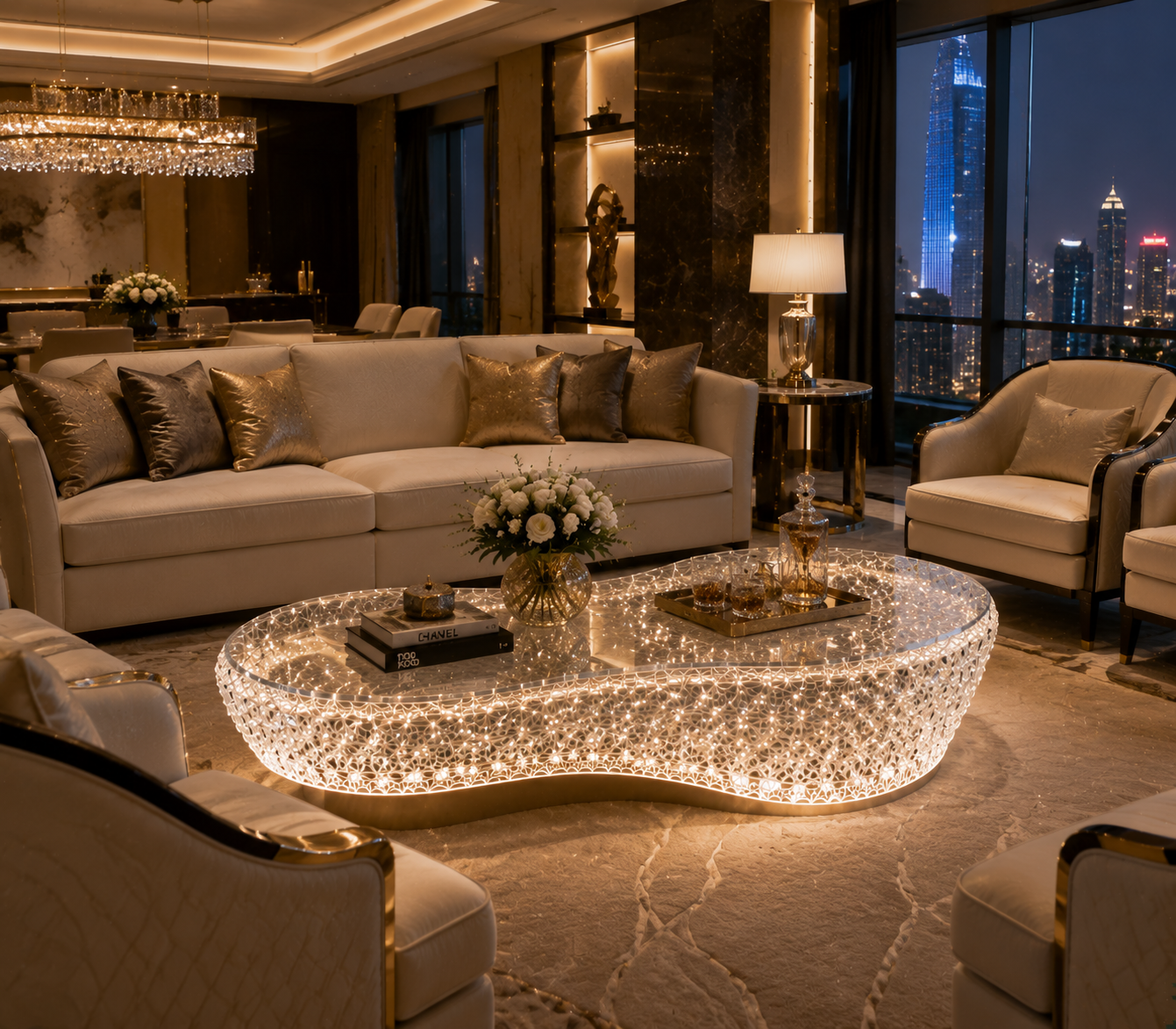
4. Concentrate Investment on Revenue-Generating Touchpoints
A successful material upgrade is not determined by how many premium objects are installed. It is determined by whether those objects influence the customer journey.
Businesses should first identify where customers enter, pause, compare options, ask questions, take photographs, make decisions, and complete transactions. These locations deserve a higher share of the material budget because they have the closest relationship with perceived value and spending behavior.
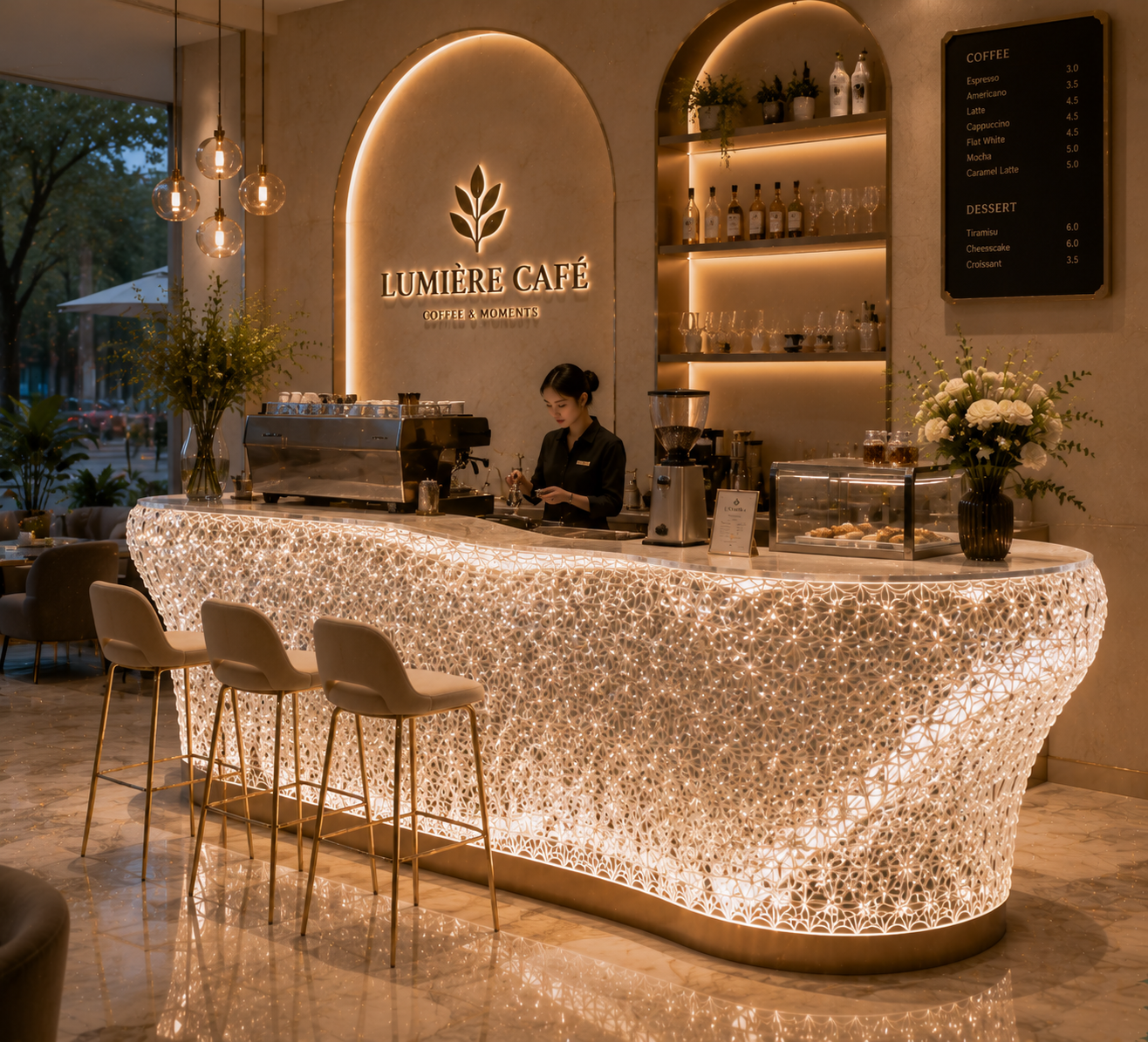
In a restaurant, the most important touchpoints may include the host desk, bar counter, premium dining tables, private room, and dessert or wine presentation area. In a hotel, they may include the reception desk, lobby lounge, concierge table, VIP check-in area, and suite furniture. In a retail store, they may include the window display, new-product table, fitting-room lounge, consultation counter, and checkout zone.
This strategy is especially relevant as physical stores become more focused on engagement rather than simple product distribution. CBRE’s 2024 European Retail Occupier Survey covered more than 60 major retailers with a combined global portfolio of over 130,000 stores. Ninety-seven percent of respondents agreed that physical retail would remain a key part of their strategy, and 79 percent believed that physical stores increased online sales within the surrounding area. Retailers also rated physical stores particularly highly for customer engagement and cross-selling.
Distinctive furniture can support this engagement. A sculptural resin table can become the central location for a limited collection. A clear platinum acrylic display can give a small product greater visual importance. A synthetic crystal consultation table can separate a VIP service zone from the standard sales floor without building a solid wall.
The strongest projects create a hierarchy. Standard materials support everyday functions, while premium materials identify premium experiences. This helps customers understand the commercial structure of the space. They can see where the exclusive products, services, or seating options are located before an employee explains them.
Selective investment also prevents visual overload. When every object is designed to attract attention, nothing appears special. One memorable reception desk or signature table can create more brand value than a room filled with competing decorative elements.
5. Protect the Premium Impression Through Durability, Safety, and Maintenance
A material that looks impressive on opening day but deteriorates quickly will eventually reduce average transaction value rather than increase it. Scratches, yellowing, loose joints, chipped edges, stains, and cloudy surfaces communicate neglect. In a premium environment, visible deterioration is especially damaging because it conflicts with customer expectations.
Material selection should therefore be based on total ownership cost, not purchase price alone. The U.S. General Services Administration explains that life-cycle costing includes the initial investment as well as future maintenance, repair, replacement, removal, and disposal costs. Its guidance recommends comparing alternatives according to overall ownership cost rather than focusing only on the lowest initial quotation.
For commercial furniture, the specification should reflect real operating conditions. A restaurant table must tolerate frequent cleaning, spills, heat exposure, and continuous contact. A hotel lobby table may face luggage impact and high daily traffic. A retail display may need regular product changes and lighting integration. A nightclub or bar may require different fire, impact, and chemical-resistance performance from a residential furniture product.
Cleaning procedures are particularly important for transparent materials. The wrong solvent or polish can create surface haze or stress cracking. Suppliers should provide approved cleaning products, maintenance instructions, repair methods, and replacement procedures. Staff training should be completed before the furniture enters service.
Premium positioning increasingly includes material health and documentation. UL Solutions states that its GREENGUARD program establishes chemical-emission testing requirements for categories including furniture, building materials, flooring, and interior products. UL also notes that GREENGUARD criteria have supported LEED requirements for low-emitting furniture.
The International WELL Building Institute similarly emphasizes transparency regarding the composition and emissions of furnishing materials. WELL guidance addresses VOC emissions, material disclosure, cleanability, and the potential contribution of furniture to indoor environmental quality.
Manufacturers of synthetic crystal, resin, and acrylic furniture can strengthen their premium proposition by supplying test reports, material declarations, structural information, fire-performance documentation, recommended maintenance procedures, and clear warranty terms. In a commercial project, reliable documentation is part of the product’s value.
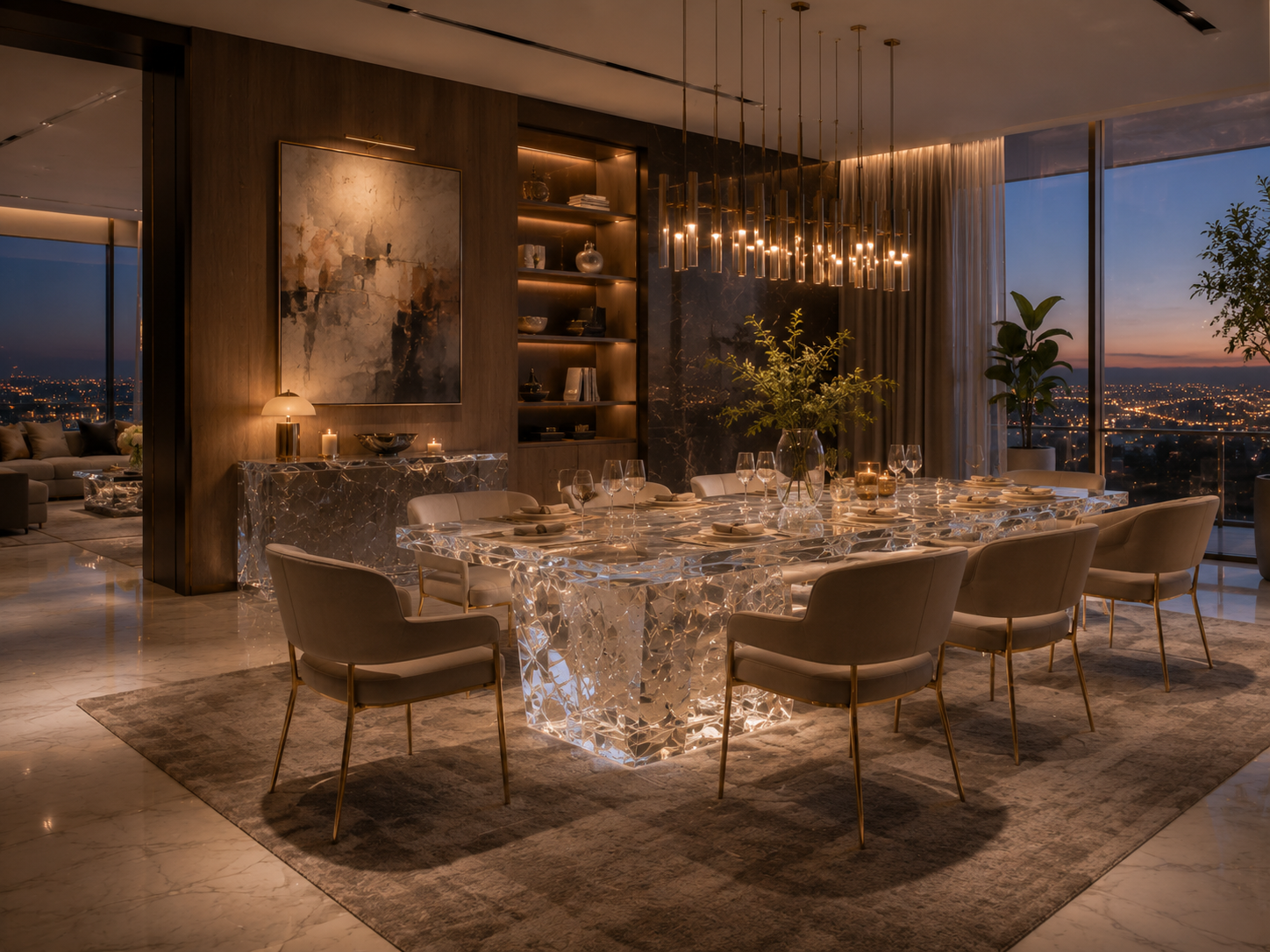
6. Measure Material Upgrades as a Commercial Investment
The final step is to connect the design decision with business performance. A material upgrade should not be evaluated only through compliments, photographs, or the personal preferences of the owner. It should be assessed through changes in customer behavior.
Before installation, the operator should establish baseline figures for average transaction value, premium-product conversion, dwell time, private-room bookings, repeat visits, social-media mentions, and customer feedback about the environment. After installation, the same indicators should be monitored over a meaningful period.
The comparison should be as controlled as possible. For example, a restaurant could introduce premium resin tables in one bookable area while keeping the menu and service format consistent. A retailer could use platinum acrylic displays for one product category and compare interaction and conversion against a conventional display. A hotel could place synthetic crystal furniture in a VIP check-in area and monitor guest satisfaction, photography, and upgrades.
The results must be interpreted carefully because furniture rarely acts alone. Service, product quality, pricing, lighting, scent, music, layout, and employee behavior all influence spending. Gensler’s Experience Index research warns that design works best when it aligns with the brand and the visitor’s purpose. Beauty, authenticity, uniqueness, and overall design can strengthen an experience, but excessive design may feel inappropriate when it conflicts with customer expectations.
This is why the goal is not to make a space look expensive. The goal is to create material evidence of the value customers are being asked to purchase.
For a luxury business, that evidence may be optical clarity, sculptural form, custom color, precise finishing, or limited-production furniture. For a wellness brand, it may be cleanability, material transparency, soft translucency, and calm visual continuity. For a fashion or hospitality brand, it may be a signature resin or synthetic crystal piece that customers recognize and photograph.
Commercial spaces increase average transaction value when the environment makes customers more comfortable choosing the premium option. Furniture is the most direct starting point because it combines visual identity, physical interaction, operational function, and brand storytelling. Used selectively and specified responsibly, synthetic crystal, high-end resin, and platinum acrylic furniture can transform material quality from a decorative expense into a measurable commercial asset.
READ MORE:
- Beyond the Purchase Price: How to Evaluate the Real Value of a High-End Synthetic Crystal Furniture Piece
- How to Use Transparent Furniture Without Making an Interior Feel Cold, Empty, or Overly Modern
- Will It Scratch, Yellow, or Lose Its Clarity? A Practical Guide to the Long-Term Performance of Synthetic Crystal Furniture
- What Designers, Retailers, and Hospitality Buyers Should Verify Before Specifying Synthetic Crystal Furniture
- Why Some Crystal-Clear Furniture Looks Luxurious—and Some Simply Looks Like Plastic
- How Premium Resin and Platinum Acrylic Elevate Brand Perception in High-End Furniture
- Synthetic Crystal, Resin, or Acrylic Furniture: Which Material Is Right for Each Commercial Space?
- Lighting and Transparent Furniture: How to Make an Interior Feel Brighter, Deeper, and More Refined
- Does Spatial Quality Really Affect How Long Customers Stay?


