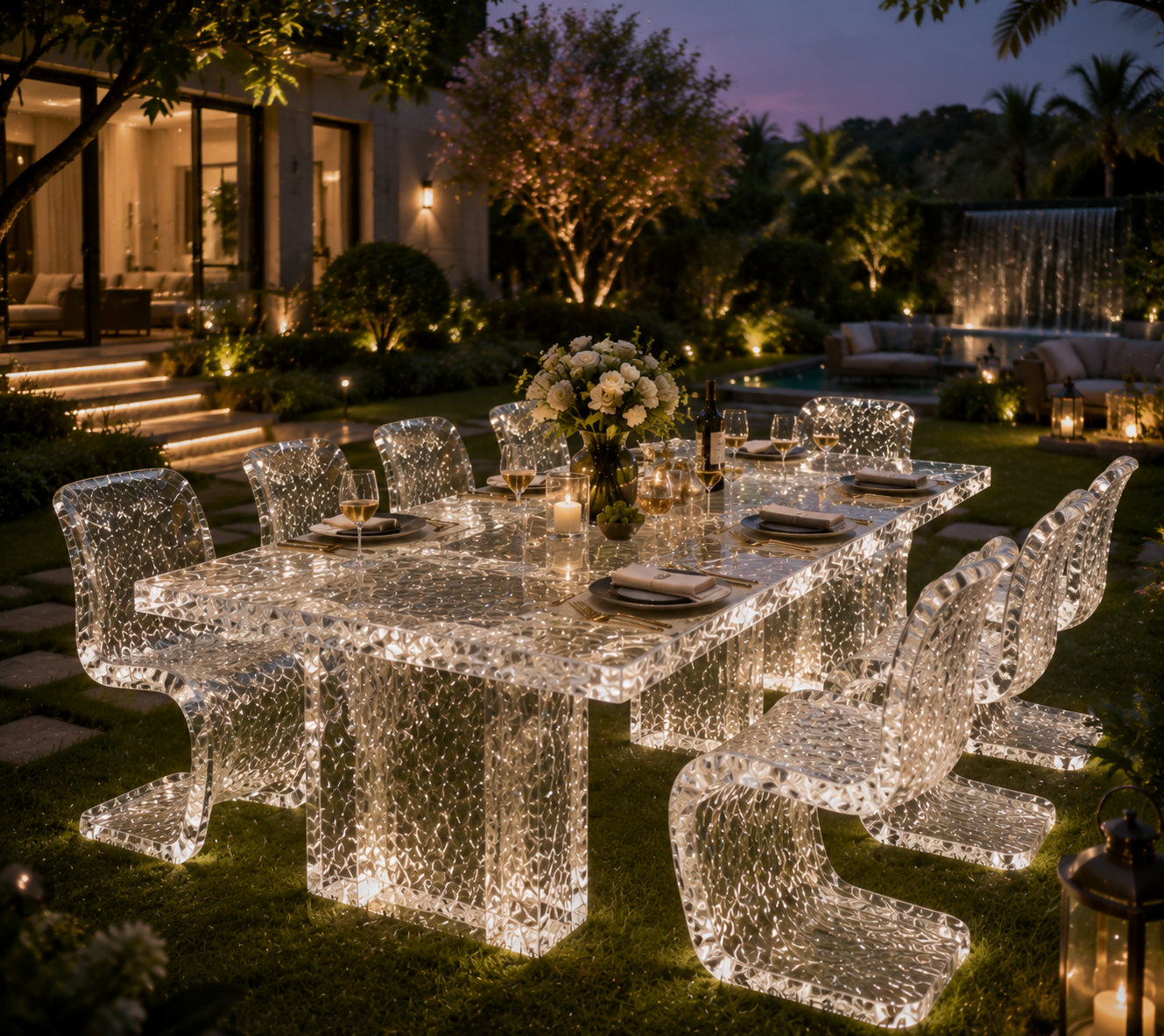
Transparent furniture has a remarkable ability to change the way an interior feels.
A synthetic crystal console can make a narrow hallway appear more open. A transparent coffee table can preserve the beauty of a rug beneath it. A clear dining table can create visual lightness in a room filled with substantial architecture, rich finishes, or large furniture. In luxury residential, hospitality, retail, and commercial interiors, transparent pieces are often used to introduce elegance without adding visual weight.
Yet there is a concern that appears again and again.
Will transparent furniture make the room feel cold?
Will it look empty, impersonal, or excessively modern?
Will the space begin to resemble a showroom rather than a home, hotel, restaurant, or welcoming social environment?
These concerns are understandable because transparency is often associated with minimalism, polished surfaces, sharp geometry, and futuristic design. When clear furniture is placed in a room without enough texture, warmth, contrast, or visual balance, it can make the interior feel incomplete.
But the problem is rarely the transparent furniture itself.
The real issue is how the piece is combined with the rest of the environment.
High-end synthetic crystal furniture does not have to create a cold atmosphere. In fact, when used thoughtfully, it can make warm materials feel richer, allow decorative elements to breathe, and bring a sense of sophistication to traditional, transitional, contemporary, and even romantic interiors.
The key is to treat transparency as a balancing material rather than a complete design language.
Transparent Furniture Should Create Contrast, Not Isolation
A transparent table placed in a room filled with polished metal, white walls, pale flooring, sharp lighting, and minimal decoration may feel cold because every element is communicating the same visual message.
The room lacks contrast.
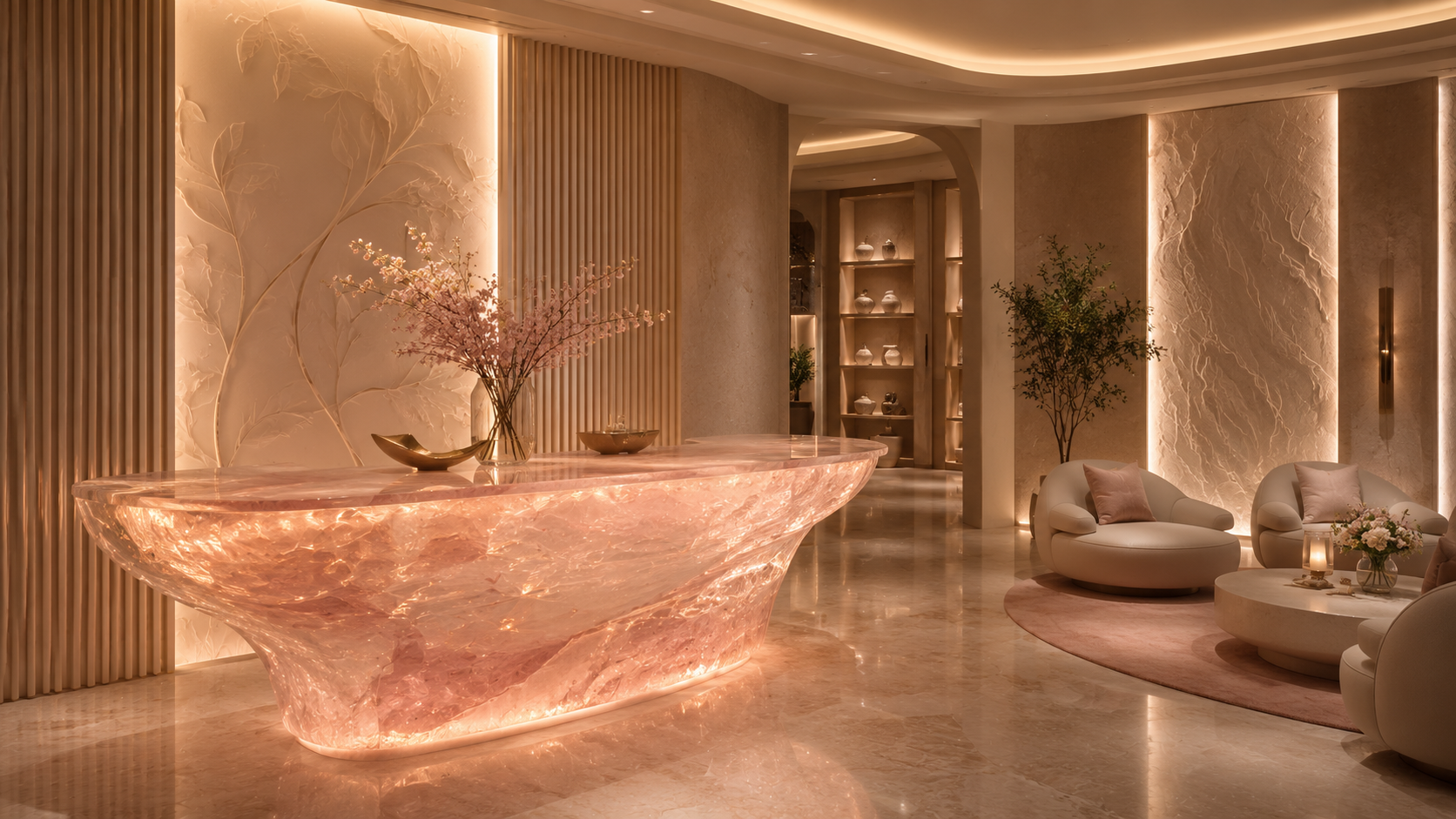
By contrast, the same table placed beside a deep velvet sofa, above a textured wool rug, near warm timber paneling, or beneath a soft fabric pendant can feel elegant and inviting.
This is because transparent furniture becomes more expressive when it interacts with materials that have visible texture, color, warmth, or weight.
Synthetic crystal furniture should not exist in isolation. It should reveal, reflect, and frame what surrounds it.
A clear console against handmade plaster shows the subtle variation of the wall. A transparent dining table allows the grain of a timber floor to remain visible. A synthetic crystal side table beside boucle upholstery creates an immediate contrast between smoothness and softness.
The clearer the furniture, the more important the surrounding materials become.
Instead of asking whether transparent furniture is warm or cold, designers should ask what it is being asked to amplify.
Pair Synthetic Crystal With Natural Materials
One of the most effective ways to prevent transparent furniture from feeling cold is to combine it with natural materials.
Wood is particularly valuable because it introduces grain, color variation, and a sense of human touch. A synthetic crystal coffee table can look striking in front of a walnut, oak, or ash media cabinet. A transparent console can soften the visual weight of dark timber wall panels. A clear dining table with timber chairs creates a refined balance between lightness and warmth.
Stone can also work beautifully, especially when it has visible movement or a honed finish.
Travertine, limestone, marble, and onyx bring depth and natural variation. When paired with synthetic crystal, they create a contrast between geological weight and optical lightness.
The result feels luxurious because neither material competes with the other.
Natural fibers are equally important. Linen, wool, cotton, rattan, leather, and woven textiles help prevent clear furniture from feeling overly polished. A synthetic crystal side table beside a linen armchair looks more relaxed than the same piece beside a glossy synthetic sofa.
The goal is not to hide the modern quality of transparent furniture. It is to surround it with materials that make the modernity feel human.
Use Texture to Build Emotional Warmth
Warmth in an interior is not created by color alone.
Texture plays a major role in how a space feels.
Transparent furniture has a smooth, controlled, and precise appearance. To balance it, the surrounding room should include tactile materials that invite touch and create visual softness.
A thick rug beneath a clear coffee table can transform the entire composition. The table allows the rug to remain visible, while the rug gives the transparent object a sense of place.
Boucle, velvet, brushed wool, suede, boucle, woven leather, and textured wall coverings can all soften the effect of synthetic crystal.
Even subtle texture is effective.
A plaster wall with gentle movement, a handwoven cushion, a ceramic vessel with an imperfect surface, or curtains with visible weave can make transparent furniture feel less sterile.
This is especially important in hospitality interiors.
A hotel lounge should not only look impressive in photographs. It should feel comfortable when guests sit down, place a drink on the table, and remain in the space for an extended period.
Transparent furniture can support that experience, but it must be balanced with sensory richness.
Choose Warm Lighting Instead of Harsh Illumination
Lighting has a powerful effect on transparent furniture.
Under cold, bright, directional light, clear surfaces may appear sharper, more technical, and more commercial. Under warm, layered lighting, the same material can glow, reflect softly, and create a more intimate atmosphere.
Designers should avoid relying on a single overhead light source.
Instead, combine ambient, task, and accent lighting.
Table lamps, floor lamps, wall sconces, concealed lighting, pendants, and candles can create reflections at different heights. These reflections give synthetic crystal furniture more depth and prevent it from looking flat.
Warm light temperatures are especially effective in residential, hotel, restaurant, and lounge environments.
The objective is not to make the furniture sparkle excessively. Too many sharp reflections can make the piece feel theatrical or visually busy.
The most luxurious effect is often subtle.
A soft pool of light passing through a transparent base, a gentle reflection from a nearby lamp, or a warm glow along a polished edge can make the furniture feel almost luminous.
Transparent furniture responds to lighting more actively than opaque furniture, so the lighting scheme should be treated as part of the specification.
Avoid Making Every Surface Reflective
One of the fastest ways to make an interior feel cold is to combine transparent furniture with too many glossy surfaces.
Polished floors, mirrored walls, chrome hardware, glass partitions, lacquered cabinetry, and synthetic crystal furniture can all be beautiful individually. When used together without restraint, they may create a room that feels hard, bright, and impersonal.
Luxury interiors depend on balance.
If a synthetic crystal table is already providing clarity and reflection, the surrounding finishes may need to be quieter.
Matte paint, honed stone, brushed metal, natural wood, textured plaster, and woven fabrics can reduce visual hardness.
This does not mean reflective materials should be avoided completely.
A small amount of brass, bronze, or polished metal can add warmth and definition. Mirrored details may enhance depth. Glossy lacquer can create drama.
The important point is hierarchy.
Not every material should demand attention in the same way.
Synthetic crystal should be allowed to act as the room’s primary transparent element rather than becoming one reflective surface among many.
Introduce Color With Confidence
Transparent furniture does not require a neutral room.
In fact, clear pieces often work exceptionally well with strong color because they allow the color to remain dominant.
A synthetic crystal coffee table in front of a deep green sofa creates visual lightness without weakening the richness of the upholstery. A transparent console against a terracotta wall allows the color to remain visible through the form. A clear dining table surrounded by burgundy, blue, or ochre chairs can feel expressive and sophisticated.
Color prevents transparent furniture from becoming visually detached.
Warm neutrals are especially effective.
Camel, cream, taupe, caramel, rust, tobacco, and warm gray create a calm background that softens the precision of synthetic crystal.
However, darker colors can be equally successful.
Charcoal walls, walnut furniture, dark stone, or saturated textiles create contrast and make clear furniture appear more luminous.
The key is to use color intentionally.
Transparent furniture does not need to be matched with white, beige, or silver. It can belong in a colorful interior as long as the palette is coherent.
Use Rounded Forms to Soften the Mood
Shape influences emotional response.
Sharp corners, straight lines, and thin profiles tend to feel more architectural and contemporary. Curved forms, rounded edges, and generous proportions often feel softer and more approachable.
When an interior already includes strong modern geometry, choosing synthetic crystal furniture with rounded details can prevent the room from feeling severe.
A circular coffee table, curved console, oval dining table, or base with softened corners can introduce movement and ease.
Even a rectangular piece can feel warmer when its edges are gently radiused.
The relationship between the clear material and the surrounding furniture also matters.
A transparent side table beside a curved sofa will feel different from the same piece beside a rigid modular seat. A clear dining table surrounded by upholstered chairs will feel more inviting than one paired only with hard metal seating.
The objective is not to make every form round.
It is to balance sharp and soft geometry so the room feels composed rather than rigid.
Select Substantial Pieces, Not Fragile-Looking Ones
Visual lightness does not have to mean physical delicacy.
Transparent furniture can feel cold or inexpensive when it appears too thin, temporary, or visually weak. High-end synthetic crystal furniture should communicate substance even while preserving openness.
Thicker tops, sculptural bases, and well-proportioned supports can give the furniture a sense of permanence.
A substantial transparent table creates a powerful contrast: it occupies real space, yet it does not block the room visually.
This tension is one of the qualities that makes synthetic crystal furniture feel luxurious.
Buyers should be cautious about pieces that look almost weightless in every sense. If the material is too thin, the design may feel more like an accessory than a lasting piece of furniture.
The right thickness depends on scale and function.
A delicate side table may be appropriate beside a lounge chair, while a large hotel lobby table or dining table may require greater visual and structural presence.
Substance creates confidence, and confidence creates warmth in a different way.
A room feels more comfortable when its furniture appears stable, intentional, and well made.
Anchor Clear Furniture With a Rug
A rug is one of the most useful tools for integrating transparent furniture into an interior.
Because synthetic crystal allows the floor beneath it to remain visible, the rug becomes part of the furniture composition.
This creates an opportunity to add pattern, color, texture, and softness without making the room feel crowded.
A hand-knotted rug beneath a clear coffee table can provide visual depth. A subtle wool rug beneath a transparent dining table can define the dining zone. A patterned rug can remain fully visible rather than being hidden beneath an opaque tabletop.
The scale of the rug matters.
A rug that is too small may make the furniture appear disconnected. A rug that extends generously beyond the table helps anchor the entire seating or dining arrangement.
The pattern should also be considered carefully.
If the synthetic crystal piece has complex geometry, a quieter rug may create balance. If the furniture is simple and minimal, a more expressive pattern can add personality.
The transparency of the furniture allows the rug to contribute more strongly to the design, which is one reason the combination works so well.
Combine Transparent Furniture With Upholstered Seating
Hard surfaces need soft companions.
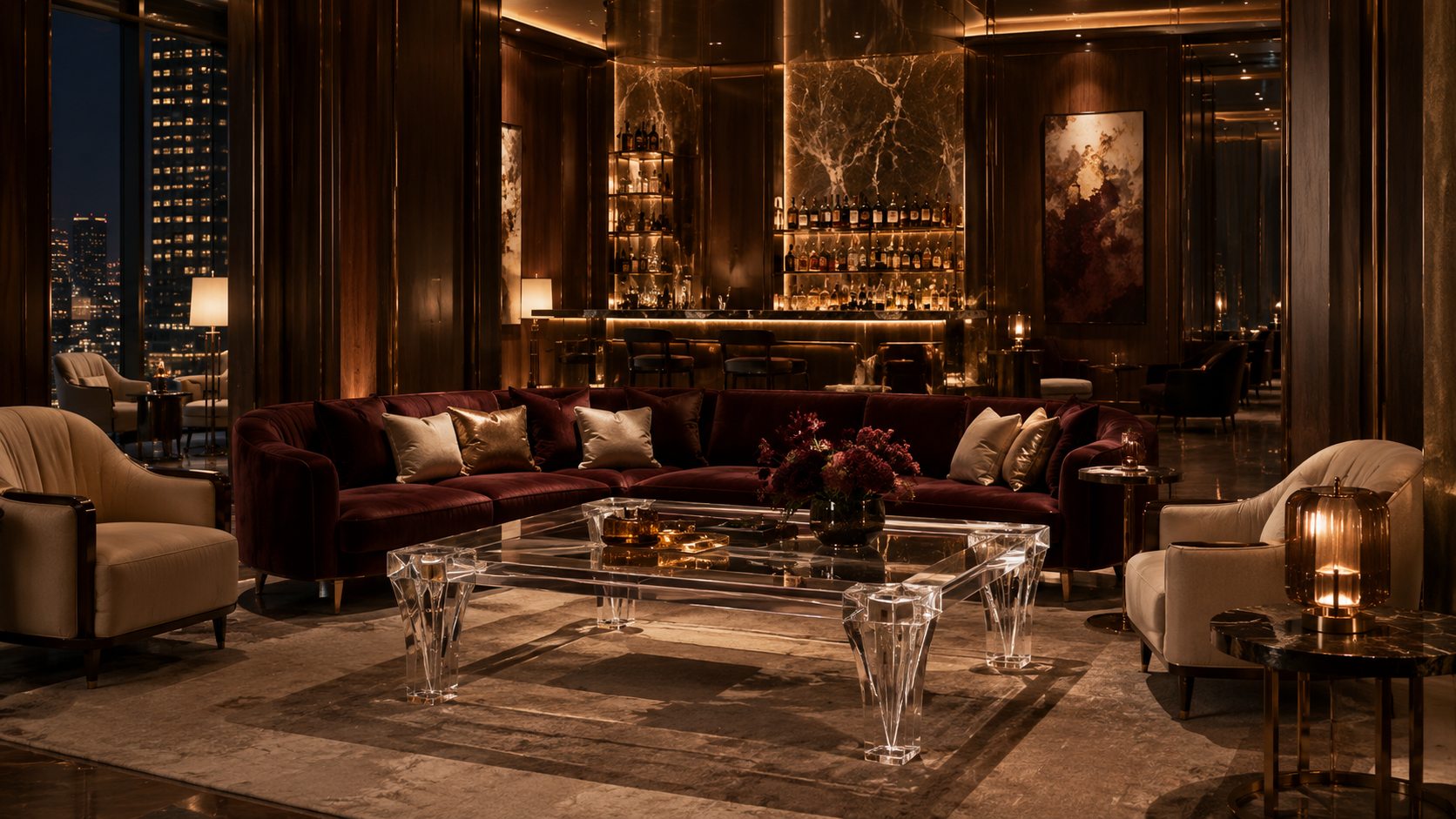
A synthetic crystal dining table can look elegant with upholstered dining chairs in leather, velvet, linen, or textured fabric. A clear coffee table becomes more inviting when surrounded by deep sofas, ottomans, or lounge chairs.
Upholstery introduces comfort, sound absorption, color, and physical softness.
This is especially important in large interiors with stone floors, high ceilings, or extensive glazing. Transparent furniture preserves openness, but upholstery prevents the room from feeling empty or acoustically harsh.
The seating does not have to be traditional.
Contemporary upholstered chairs can still create warmth if the proportions are generous and the materials are tactile.
In hospitality spaces, the relationship between transparent furniture and seating should be designed around use.
Guests should be able to reach the table comfortably. The furniture should not appear too precious to touch. The height, spacing, and edge profiles should support natural movement.
Luxury is not only visual. It is also the feeling that a space is easy to use.
Add Objects With History, Craft, or Imperfection
Transparent furniture works beautifully with objects that feel handmade, collected, or culturally specific.
A ceramic bowl, carved wooden sculpture, stack of art books, antique box, handblown vessel, or natural stone object can create a sense of narrative.
These objects prevent the furniture from feeling anonymous.
Because synthetic crystal is visually precise, it provides an ideal platform for pieces with texture and irregularity. The contrast makes both elements more interesting.
However, styling should remain controlled.
Too many accessories can reduce the clarity and elegance of the transparent piece. A few carefully chosen objects usually create a stronger effect than a crowded arrangement.
The base of each object should be considered.
Stone, ceramic, and metal accessories may scratch a polished surface if moved carelessly. Protective pads should be used, and objects should be lifted rather than dragged.
The most successful styling feels personal without becoming cluttered.
A transparent table should not look empty, but it also should not disappear beneath decoration.
Use Transparency to Reveal, Not Erase
Transparent furniture is sometimes chosen because designers want it to “disappear.”
This can be useful in a compact room, but complete disappearance is not always the most desirable goal.
High-end synthetic crystal furniture should still contribute to the composition.
Its edges, thickness, geometry, reflections, and shadows can create visual presence without blocking the architecture.
Instead of trying to erase the piece, use it to reveal something valuable.
A clear console can reveal a decorative wall behind it. A transparent dining table can reveal the flooring. A coffee table can reveal a rug. A display plinth can reveal the object it supports. A bench can preserve sightlines through a lobby.
This approach gives transparency a purpose.
When clear furniture is used only because the room needs “less furniture,” the result may feel empty. When it is used to preserve or highlight another design element, the result feels intentional.
Transparency should be active, not passive.
Do Not Overuse Transparent Furniture
One well-chosen transparent piece can transform a room.
Several transparent pieces can also work, but only when carefully coordinated.
If every table, chair, shelf, console, and accessory is clear, the room may lose visual grounding. The interior can begin to feel like a concept display rather than a lived environment.
Transparent furniture is most effective when used selectively.
A synthetic crystal dining table may be the main feature in one room. In another, a pair of side tables may be enough. A hotel lobby might use one sculptural console to create a memorable focal point.
The surrounding furniture can then provide contrast through wood, upholstery, metal, stone, or lacquer.
Selective use also makes the transparent piece feel more valuable.
When it is repeated everywhere, it becomes a theme. When it appears in the right place, it becomes a statement.
Designers should ask what role the furniture is meant to play.
Is it reducing visual weight? Preserving a view? Creating a focal point? Supporting merchandise? Reflecting light? Balancing heavy architecture?
Once the purpose is clear, the correct quantity becomes easier to determine.
Mix Synthetic Crystal With Traditional Elements
Transparent furniture is often associated with contemporary design, but it can work beautifully in traditional and transitional interiors.
The contrast between old and new can create depth.
A synthetic crystal console beneath an antique mirror allows the mirror to remain the focus while introducing a subtle modern layer. A clear coffee table in a room with classic moldings, traditional rugs, and upholstered furniture can prevent the space from feeling overly formal.
A transparent dining table paired with traditional chairs can create a sophisticated tension between familiar form and modern material.
The key is proportion.
The synthetic crystal piece should be substantial enough to hold its own beside architectural detail and traditional furniture.
Small, thin, overly minimal clear pieces may look accidental in a richly layered room. Sculptural or well-proportioned forms tend to integrate more successfully.
Metal details can also help create a bridge.
Warm brass, bronze, or aged finishes connect synthetic crystal with traditional interiors more naturally than highly polished chrome.
Transparent furniture does not need to match the age of the room. It needs to respect its visual weight.
Let Architecture Guide the Choice
The architecture of the room should influence the design of the transparent furniture.
In a minimalist apartment with clean lines and large windows, a softly curved synthetic crystal table may introduce warmth. In a historic interior with decorative molding, a more geometric transparent piece may create a refined contrast.
In a hotel lobby with monumental stone walls, a large synthetic crystal console can provide function without interrupting the architecture.
In a small urban apartment, a clear table can preserve sightlines and help the room feel larger.
The scale of the space is crucial.
A piece that looks elegant in a showroom may feel too small in a large lobby or too heavy in a compact residence. Transparent furniture can visually recede, so it sometimes needs more physical scale than an opaque piece to feel properly grounded.
Designers should consider ceiling height, circulation, natural light, surrounding furniture, and viewing distance.
The furniture should respond to the room rather than simply occupy it.
Use Warm Metals for Definition
Transparent furniture can sometimes lack visual definition when placed in a very pale or open room.
Warm metal details can provide structure.
Brass, bronze, champagne finishes, and warm-toned stainless steel can outline a form, emphasize a connection, or create contrast at the base.
These metals add warmth without compromising the clarity of the piece.
The metal should be used with restraint.
A small connector, foot, trim detail, or inset element may be enough. Too much metal can reduce the visual purity of synthetic crystal and make the furniture feel more decorative than architectural.
The finish should also relate to the wider interior.
If the room already includes bronze lighting, brass hardware, or warm metallic accessories, repeating the tone in the furniture can create cohesion.
Blackened metal can also work well, particularly in interiors that need stronger graphic contrast.
The objective is to give the transparent form a visual anchor.
Pay Attention to Negative Space
Transparent furniture does not eliminate volume. It changes the way volume is perceived.
The empty areas around and within the piece are part of the design.
A sculptural base with carefully considered openings can create rhythm. The gap between clear supports can frame the floor or wall behind it. The space beneath a console can contribute to the room’s sense of openness.
When transparent furniture is crowded by other objects, these effects are lost.
Allow enough space around the piece for its geometry to be understood.
This is especially important for large synthetic crystal dining tables, consoles, benches, and display plinths.
Negative space also helps prevent the room from feeling cold because it gives each material room to express itself.
A warm timber chair, textured wall, or colorful rug becomes more visible when the transparent furniture does not visually compete with it.
The room feels layered rather than empty.
Create a Focal Point Nearby
Transparent furniture can sometimes appear disconnected if there is no visual anchor in the surrounding composition.
A strong focal point helps integrate it.
This could be a piece of artwork, a fireplace, a pendant light, a sculptural vase, a dramatic wall finish, or a view through a window.
The transparent furniture can then support or frame that focal point.
For example, a synthetic crystal console beneath a large artwork provides function without creating a heavy visual barrier. A clear dining table beneath a sculptural pendant allows the lighting to remain dominant. A transparent coffee table in front of a fireplace preserves the view of the hearth.
This relationship gives the furniture a clear role.
It is no longer simply “the clear object in the room.” It becomes part of a visual sequence.
Make the Room Feel Lived In
Cold interiors often feel cold because they appear untouched.
Everything is perfectly aligned. Surfaces are empty. Lighting is uniform. There are no books, textiles, plants, personal objects, or signs of use.
Transparent furniture can intensify this effect if the styling is too controlled.
To create warmth, allow the room to feel inhabited.
A book left open on a side table, a folded throw, a tray with carefully arranged objects, fresh flowers, or a ceramic cup can make the interior feel more natural.
This does not mean creating disorder.
Luxury interiors can remain highly refined while still showing evidence of life.
Plants are especially effective with synthetic crystal furniture.
Green foliage introduces organic form and color, while the transparent material keeps the composition visually light. A plant beside a clear console or behind a transparent side table creates depth and movement.
The furniture becomes part of a living environment rather than a static display.
Consider How the Space Will Feel at Night
Many interiors are designed primarily for daylight photographs, but the atmosphere after sunset may be more important.
Restaurants, hotels, lounges, and residential living rooms often reach their emotional peak at night.
Transparent furniture can become especially beautiful under evening lighting.
Its edges may glow. Reflections may become deeper. Candlelight may pass through the material. Darker backgrounds may increase the sense of depth.
To avoid a cold nighttime atmosphere, use multiple low-level light sources.
Lamps, sconces, concealed lighting, and candles can create pockets of warmth. Avoid flooding the entire room with uniform bright light.
The transparent furniture should catch selected reflections rather than becoming fully illuminated from every direction.
This creates mystery and richness.
A piece that appears almost invisible during the day can become a quiet focal point at night.
Match the Piece to the Emotional Goal
Every interior has an emotional objective.
A private residence may need to feel calm, personal, and comfortable. A luxury boutique may need to feel precise and exclusive. A hotel lobby may need to feel memorable yet welcoming. A restaurant may need to feel intimate and energetic.
Synthetic crystal furniture should support that objective.
For a softer residential environment, choose rounded forms, warm lighting, natural fabrics, and layered accessories.
For a luxury retail setting, use clean geometry, controlled lighting, and carefully spaced merchandise.
For hospitality, combine transparent furniture with generous upholstery, durable finishes, and practical circulation.
The material can express many moods.
It becomes cold only when the design around it fails to provide emotional context.
Final Thoughts
Transparent furniture does not automatically make an interior cold, empty, or overly modern.
Those effects usually result from imbalance.
When a room contains too many glossy surfaces, too little texture, harsh lighting, weak proportions, or insufficient color, synthetic crystal may amplify the problem. But when it is paired with natural materials, warm lighting, tactile fabrics, strong architecture, thoughtful objects, and comfortable seating, it can make the entire interior feel more layered and luxurious.
The most successful spaces use transparent furniture to create contrast.
They combine optical clarity with physical warmth, visual lightness with material substance, and modern precision with human comfort.
Synthetic crystal should not remove personality from a room. It should reveal it.
It should allow the rug, wall, artwork, upholstery, and architecture to remain visible while adding a sculptural layer of its own.
Used thoughtfully, a transparent table can feel warmer than an opaque one because it gives every surrounding material more room to speak.
And once you discover how beautifully synthetic crystal can frame the soul of an interior, the next question is not whether it belongs in the room, but what unforgettable story you want it to reveal.
READ MORE:
- Beyond the Purchase Price: How to Evaluate the Real Value of a High-End Synthetic Crystal Furniture Piece
- Will It Scratch, Yellow, or Lose Its Clarity? A Practical Guide to the Long-Term Performance of Synthetic Crystal Furniture
- What Designers, Retailers, and Hospitality Buyers Should Verify Before Specifying Synthetic Crystal Furniture
- Why Some Crystal-Clear Furniture Looks Luxurious—and Some Simply Looks Like Plastic
- How Premium Resin and Platinum Acrylic Elevate Brand Perception in High-End Furniture
- Synthetic Crystal, Resin, or Acrylic Furniture: Which Material Is Right for Each Commercial Space?
- Lighting and Transparent Furniture: How to Make an Interior Feel Brighter, Deeper, and More Refined
- Does Spatial Quality Really Affect How Long Customers Stay?
- How Can Commercial Spaces Increase Average Transaction Value Through Material Upgrades? Start with the Quality of the Furniture


