1. Turn Material Selection into Visible Proof of Brand Value
In the high-end furniture market, customers are not simply buying a table, chair, console, or cabinet. They are buying confidence in a brand’s taste, manufacturing standards, originality, and long-term value. Materials therefore perform a strategic role: they make an otherwise abstract brand promise visible and tangible.
This is particularly important as luxury consumers become more selective. Deloitte’s Global Powers of Luxury 2026 report, based on insights from 420 senior executives across ten countries, found that luxury companies are increasingly prioritizing brand desirability, customer experience, emotional connection, and value over volume. The same research identified innovation in materials and production as one of the forces expected to transform the luxury industry over the next five years. Bain & Company has similarly described the current luxury market as entering a period of quality-driven growth in which ethics, innovation, emotional value, and renewed consumer trust matter more than indiscriminate expansion.
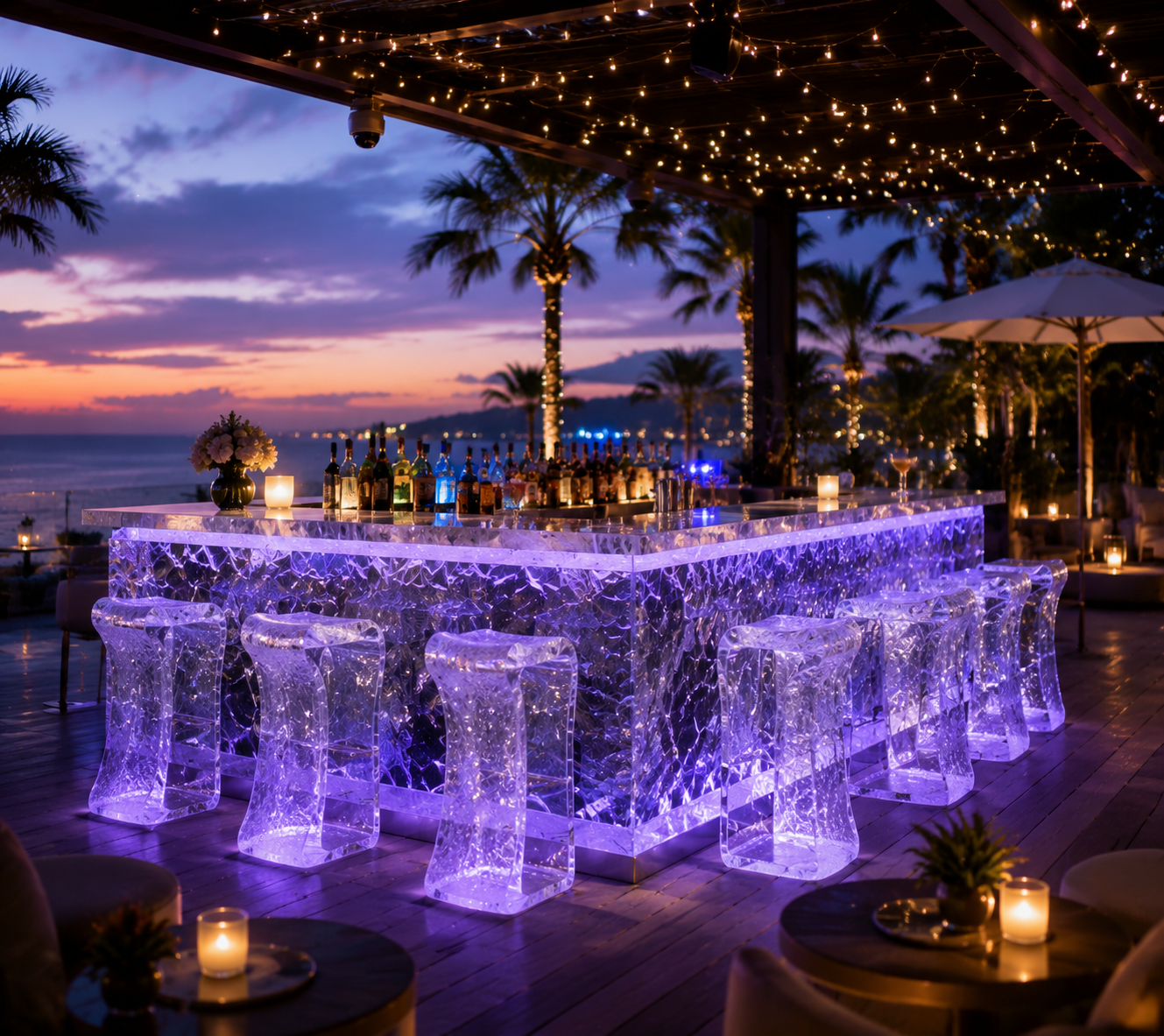
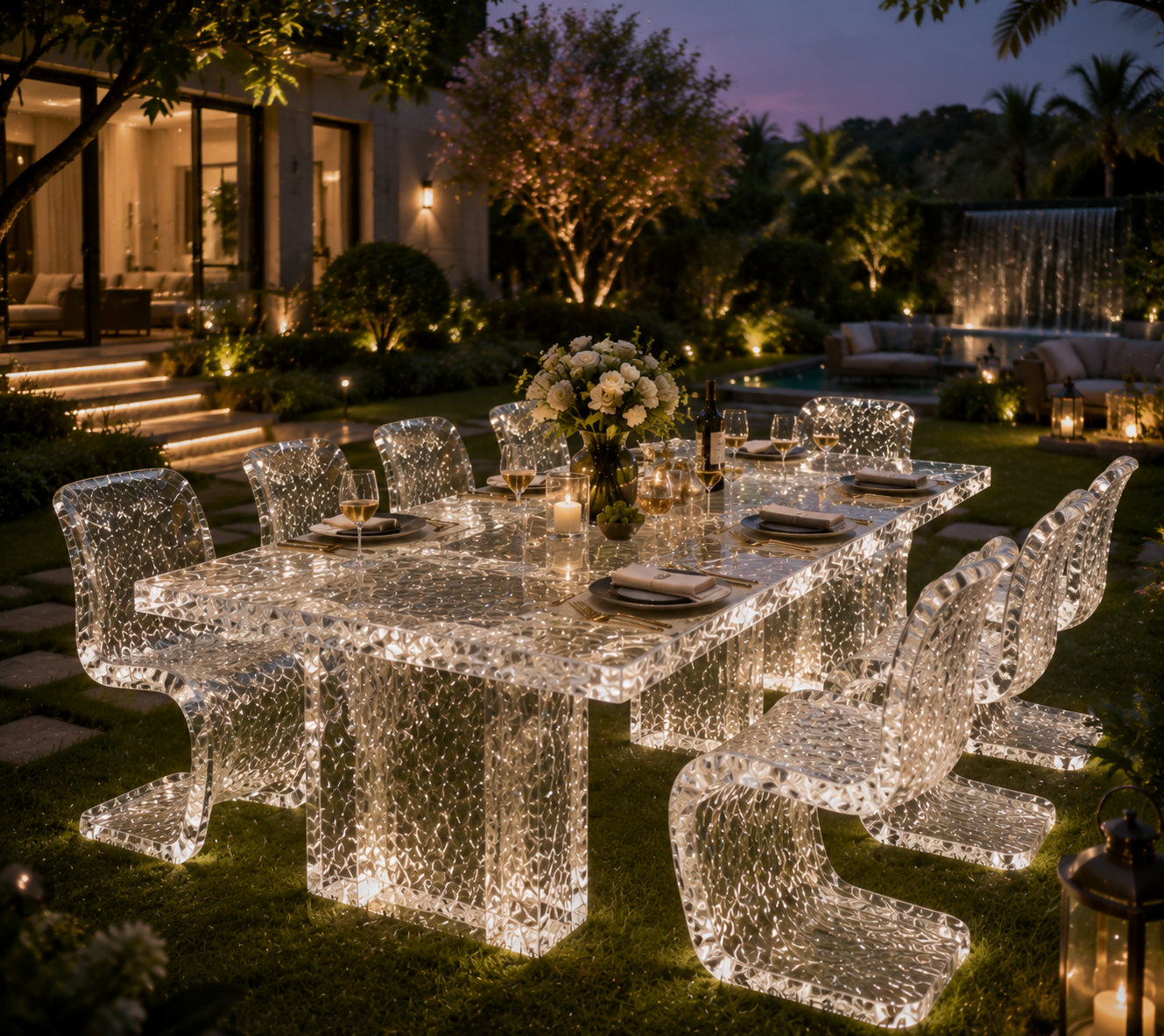
Premium resin and platinum acrylic respond directly to this change. They can make furniture look lighter, more precise, more artistic, and more technically advanced than products made with conventional transparent plastic or low-grade decorative resin. They also allow manufacturers to create visual effects that cannot be achieved easily with timber, glass, stone, or metal alone.
“Platinum acrylic” should be used carefully in professional communication. It is not generally recognized as a separate polymer chemistry or international material grade. In premium furniture, the term is better positioned as a commercial description for high-quality cast polymethyl methacrylate, or PMMA, manufactured with superior optical clarity, controlled thickness, precision-polished edges, and refined finishes such as platinum grey, metallic silver, smoke, frost, mirror, or subtle champagne tones. Technical documents should still identify the base material as PMMA and provide measurable specifications.
This distinction strengthens rather than weakens the brand. Instead of depending on an undefined luxury adjective, the company can connect “platinum acrylic” to visible and measurable characteristics: low haze, consistent colour, clean casting, polished edges, controlled joints, stable dimensions, and carefully selected finishes. Premium positioning becomes credible when the customer can see the difference and the specification can prove it.
The objective is not to claim that every resin or acrylic product is luxurious. The objective is to develop a recognizable material standard that belongs to the brand. When a customer sees a luminous synthetic-crystal console, a smoke-grey acrylic dining table, or a resin cabinet containing suspended natural elements, the customer should recognize the design language before seeing the logo.
2. Use Transparency, Light, and Depth to Create a Signature Aesthetic
Premium resin and platinum acrylic are especially valuable because they interact with light. Traditional furniture is normally perceived through its external surface, but transparent and translucent materials allow the eye to enter the object. Colour, inclusions, reflections, internal layers, and polished edges can create a sense of depth that makes a functional product feel closer to collectible design.
High-quality PMMA can provide light transmission of up to approximately 92 percent, depending on grade, thickness, colour, and product configuration. PLEXIGLAS technical documentation also states that selected products can retain strong light-transmission performance over long periods when correctly specified, processed, installed, and maintained. This optical performance helps explain why premium acrylic can appear clearer and more luminous than ordinary transparent plastics.
Optical quality should not, however, be judged by appearance alone. ASTM D1003 provides an established method for evaluating haze and luminous transmittance in transparent plastics. The standard notes that scattered light can create a smoky field or veiling glare and that haze and transmittance data are valuable for quality-control and specification purposes. A high-end furniture brand can use this principle to establish internal acceptance standards for clear, tinted, frosted, and synthetic-crystal components.
Resin introduces a different type of optical value. It can capture pigment, metallic powder, mineral fragments, wood, fabric, artificial flowers, recycled material, or sculptural objects within a solid form. Instead of applying decoration to the surface, the designer can place the story inside the furniture. A coffee table can appear to contain a frozen landscape. A console can reveal suspended fragments of timber. A side table can move from transparent to smoky colour as the viewer changes position. A cabinet handle can resemble a cut crystal without the weight and fragility associated with natural crystal.
Synthetic crystal is particularly effective for furniture legs, bases, decorative panels, handles, lighting components, display plinths, and sculptural accessories. Its value comes from disciplined control of transparency, refraction, colour, thickness, and edge treatment. Excessive sparkle or uncontrolled ornamentation can make the product look inexpensive. Carefully controlled optical depth creates a quieter and more convincing form of luxury.
A brand should therefore develop a limited, recognizable material palette rather than offering every possible colour and effect. For example, a signature collection could combine clear synthetic crystal, platinum-smoke acrylic, warm amber resin, and brushed stainless steel. Repetition across dining tables, consoles, benches, shelving, cabinets, and lighting gives the brand visual consistency while leaving room for customized dimensions and embedded details.
3. Combine Advanced Materials with Familiar Furniture Forms
Premium materials become commercially successful when customers can understand how they fit into real interiors. A dramatic resin block may attract attention at an exhibition, but furniture must also meet practical expectations relating to scale, comfort, circulation, cleaning, storage, and compatibility with other materials.
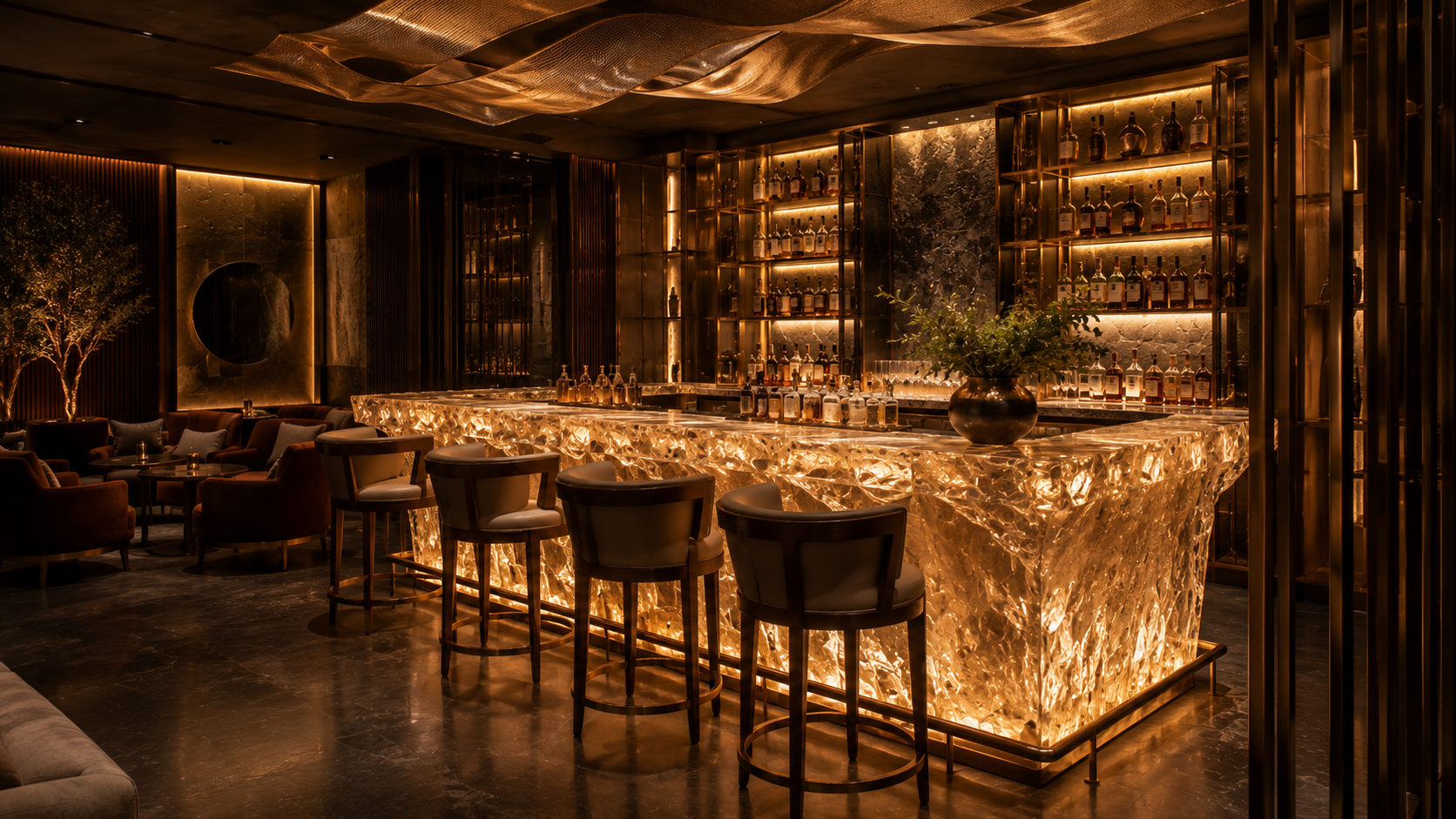
The most effective approach is to combine advanced transparent materials with familiar furniture forms. A waterfall acrylic console can maintain the proportions of a traditional entry table while removing visual weight. A dining table can use a platinum acrylic base with a wood, stone, or glass top. A resin cabinet can combine translucent doors with solid timber framing. A synthetic-crystal bench can include an upholstered seat, while acrylic shelving can be integrated into a metal or timber architectural structure.
This combination creates both novelty and reassurance. Wood contributes warmth and natural variation. Metal provides structural precision. Stone communicates permanence. Leather and textiles introduce comfort. Resin and acrylic provide lightness, depth, colour, and a contemporary identity. The contrast between these materials is often more luxurious than using a single premium material everywhere.
Design history demonstrates that transparent resin can move furniture beyond utility. The Museum of Modern Art describes Shiro Kuramata’s 1988 Miss Blanche Chair as an icon of postmodern design. The chair uses acrylic resin, aluminum, and artificial roses that appear to float inside the transparent body. Its impact comes not merely from the resin itself, but from the relationship between material, cultural reference, craftsmanship, and visual illusion.
Architectural Digest has also reported on the Italian design collective Nucleo, which created furniture by enclosing historic wooden objects and sections of a 200-year-old Italian oak tree within pigmented resin. The work demonstrated how resin can preserve, reinterpret, and visually transform natural material rather than simply imitate it.
These examples offer a practical lesson for contemporary furniture manufacturers: the material must support an idea. Embedded timber can communicate memory and preservation. Suspended metal fragments can suggest industrial heritage. Layered colour can represent a landscape or local culture. Clear synthetic crystal can emphasize architectural simplicity. Platinum-toned acrylic can express a more technological and urban identity.
Restraint is essential. An interior filled entirely with transparent furniture can feel cold, temporary, or visually confusing. A stronger strategy is to establish material hierarchy. One hero object, such as a resin dining table or sculptural console, can lead the space. Smaller acrylic side tables, shelves, handles, or lighting elements can repeat the visual language. This creates a controlled brand environment rather than a showroom dominated by material effects.
4. Make Craftsmanship and Quality Measurable
Premium resin and acrylic do not automatically produce premium furniture. In fact, transparent materials expose manufacturing defects more clearly than opaque materials. Bubbles, dust, uneven pigment, internal stress, adhesive marks, distorted joints, scratches, poor polishing, inconsistent thickness, and rough edges can immediately reduce perceived value.
For this reason, craftsmanship must become part of the material specification. Resin production requires control of formulation, mixing, mould preparation, pouring temperature, curing conditions, bubble release, colour dispersion, sanding, polishing, and final coating. Acrylic furniture requires careful cutting, machining, thermal forming, bonding, annealing where necessary, edge finishing, hardware design, and protective packaging.
Brands should define what an acceptable transparent surface looks like under controlled lighting and viewing distances. They should also specify tolerances for thickness, colour variation, flatness, edge radius, joint visibility, embedded-object position, and permitted internal inclusions. A small bubble may be acceptable in an intentionally organic artistic casting but unacceptable in an optical-clear table leg. Quality standards should follow the intended design rather than applying one vague definition of perfection to every product.
Recognized testing methods can support these standards. ASTM D638 is used to generate tensile-property data for plastic materials, while ASTM D790 addresses flexural properties that are useful for quality control and specification. ASTM D256 evaluates standardized impact resistance, although ASTM cautions that test results depend on specimen preparation, failure type, and testing conditions and should not be treated as universal predictions of real-world performance. UV and weathering claims should also be supported by appropriate testing. ASTM G154 provides procedures for exposing non-metallic materials to controlled ultraviolet light, moisture, and heat, while emphasizing that the exact test conditions must be reported.
Not every furniture product requires every laboratory test. However, premium brands should know which properties are critical for each application. A dining-table base requires structural and joint validation. A sunlit hotel console requires colour and UV stability. A retail display needs scratch resistance and easy maintenance. A chair must be evaluated differently from a decorative plinth.
Customers should receive practical care information as part of the premium experience. This includes recommended cleaning products, prohibited solvents, methods for removing fingerprints, instructions for protecting polished surfaces, and guidance on heat or concentrated loads. Protective gloves, branded cleaning cloths, repair services, spare hardware, and professional refinishing options can turn after-sales support into evidence of quality.

5. Transform Material Innovation into a Brand Story
A premium material creates commercial value only when the customer understands why it matters. Technical language such as PMMA, curing cycle, haze value, or edge polishing may be useful for architects and procurement teams, but consumers also need an emotional and visual narrative.
The strongest stories connect material, process, and purpose. Instead of saying that a console is “made from high-end resin,” a brand can explain that the piece is cast in several controlled stages to create internal depth, hand-finished through progressively finer polishing, and paired with locally sourced wood selected for its grain. Instead of describing a table as “clear acrylic,” the brand can present it as an optically refined platinum acrylic structure designed to reduce visual weight while reflecting natural and architectural light.
Manufacturing content is particularly effective for these products because the transformation is visually dramatic. Videos can show liquid resin entering the mould, pigments moving through the material, inclusions being positioned, acrylic edges being polished, joints becoming transparent, and the final furniture interacting with daylight. This provides evidence of complexity that cannot be communicated through a finished product image alone.
Showrooms should also be designed around material experience. Transparent furniture requires controlled backgrounds, directional lighting, shadow, and sufficient space around each product. Clear acrylic displayed against a bright white wall may almost disappear, while the same piece against warm timber, textured stone, or a dark architectural surface can reveal its edges and depth. Resin containing metallic or mineral elements may require side lighting to make its internal structure visible.
Customization can deepen this connection. Hospitality groups may embed colours associated with their interiors. Luxury retailers may commission resin display tables containing brand-related objects or recycled production remnants. Residential clients may select timber, textiles, flowers, or meaningful items to be preserved in a console or side table. Such customization should remain curated; unlimited choice can weaken brand identity and create production inconsistency.
Each product can be accompanied by a material passport containing the material description, finish, production date, artisan or workshop, care requirements, repair options, and relevant test information. This turns an unfamiliar modern material into a documented object with provenance. It also helps architects, interior designers, dealers, and overseas buyers explain the product to their own clients.
The brand story should remain honest. Resin should not be presented as natural crystal, and acrylic should not be described as unbreakable or maintenance-free. Trust grows when the company explains both performance and appropriate use. In the premium market, accurate communication is itself a form of craftsmanship.
6. Connect Premium Appearance with Longevity and Responsible Design
Modern luxury is increasingly judged by how long a product remains valuable, not only by how impressive it looks when new. Premium resin and platinum acrylic should therefore be designed as durable furniture materials rather than short-term visual effects.
The Ellen MacArthur Foundation emphasizes that material selection should consider safety, durability, repair, disassembly, reuse, and the recovery of material value after a product’s use phase. It also notes that technical materials such as plastics can remain in circulation when products and systems are designed to enable recovery and reuse. This is relevant to resin and acrylic furniture because complex permanent combinations can be difficult to separate, while modular construction can preserve high-value components.
A platinum acrylic table base, for example, can be mechanically connected to a replaceable stone or timber top rather than permanently bonded. Cabinet doors, shelves, feet, lighting modules, and hardware can be designed for removal. Resin panels can be used as replaceable architectural inserts rather than making the complete cabinet inseparable. Protective finishes can be renewed, and scratched acrylic surfaces may be professionally refinished when the product design and material thickness allow it.
Deloitte’s 2026 luxury research reported that 68.3 percent of surveyed companies offered repair or refurbishment services, while 53.8 percent operated certified pre-owned or trade-in programs. It also found that 25.7 percent of executives considered research and innovation their leading sustainability priority, reflecting increased attention to new materials, traceability, and lifecycle management. Although these figures cover the wider luxury sector, they illustrate an important direction for premium furniture brands: product care, repairability, and documented longevity are becoming part of the value proposition.
The commercial strategy should begin with a focused collection. A manufacturer might launch one hero resin dining or coffee table, one platinum acrylic console, one synthetic-crystal side table, one cabinet combining resin with timber, and one lighting or decorative object. Together, these pieces demonstrate structural ability, optical quality, customization, mixed-material expertise, and brand consistency.
Every product should answer four questions clearly: why this material was chosen, what visual or functional result it creates, how its quality is verified, and how the product will be maintained over time. When these answers are convincing, premium resin and platinum acrylic stop being decorative alternatives to glass or plastic. They become strategic brand assets.
The ultimate advantage is not transparency alone. It is the ability to combine technology with hand-finishing, visual lightness with physical presence, repeatable production with individual expression, and contemporary aesthetics with long-term value. Used with technical discipline and a coherent design language, high-end resin, synthetic crystal, and platinum acrylic can give furniture a recognizable identity that supports higher perceived value, stronger customer trust, and meaningful differentiation in the global premium market.
READ MORE:
- Beyond the Purchase Price: How to Evaluate the Real Value of a High-End Synthetic Crystal Furniture Piece
- How to Use Transparent Furniture Without Making an Interior Feel Cold, Empty, or Overly Modern
- Will It Scratch, Yellow, or Lose Its Clarity? A Practical Guide to the Long-Term Performance of Synthetic Crystal Furniture
- What Designers, Retailers, and Hospitality Buyers Should Verify Before Specifying Synthetic Crystal Furniture
- Why Some Crystal-Clear Furniture Looks Luxurious—and Some Simply Looks Like Plastic
- Synthetic Crystal, Resin, or Acrylic Furniture: Which Material Is Right for Each Commercial Space?
- Lighting and Transparent Furniture: How to Make an Interior Feel Brighter, Deeper, and More Refined
- Does Spatial Quality Really Affect How Long Customers Stay?
- How Can Commercial Spaces Increase Average Transaction Value Through Material Upgrades? Start with the Quality of the Furniture


