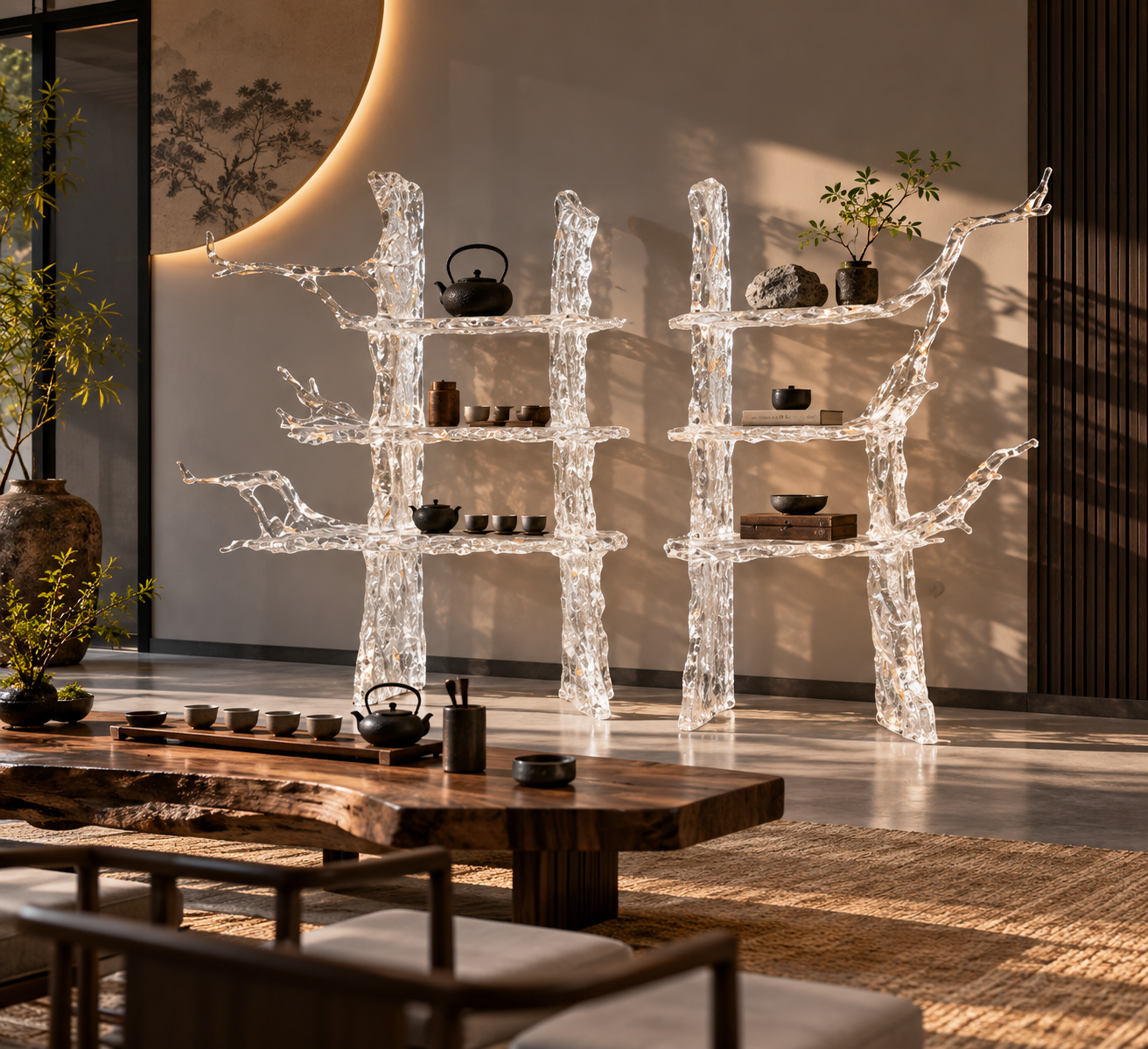
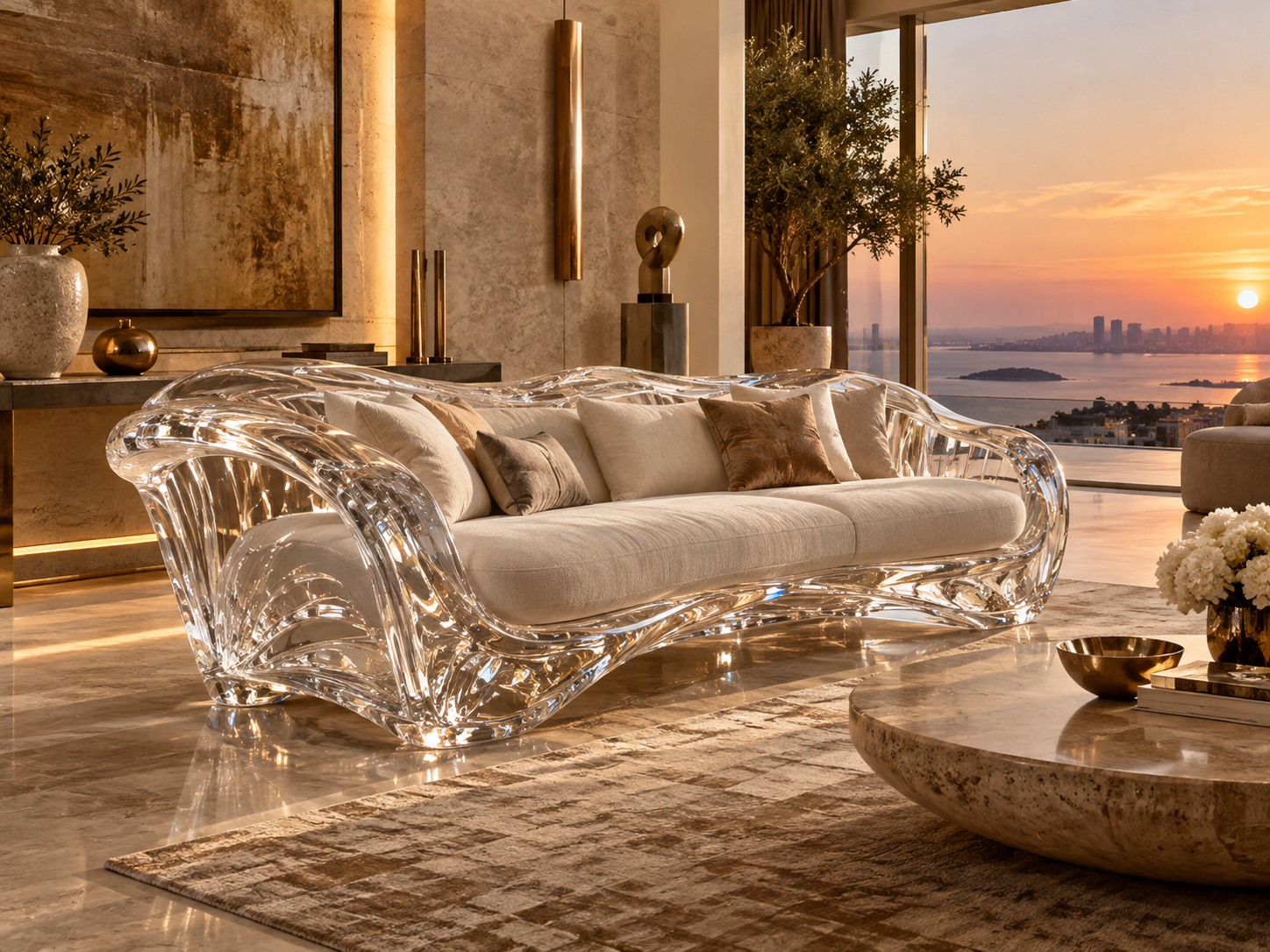
Marble and metal have long been shorthand for luxury in interior design. A dramatic marble reception desk, a brushed-brass console, or a stainless-steel installation can immediately communicate quality and permanence. Yet as these materials become increasingly familiar across luxury hotels, residences, restaurants, and retail spaces, designers face a new challenge: how do you create a memorable focal point without repeating the same visual vocabulary?
The answer increasingly lies in materials that interact with light, transparency, color, texture, and perception rather than relying on weight or price alone.
Material selection is also becoming a broader architectural consideration. The World Green Building Council has estimated that buildings account for 39% of global energy-related carbon emissions, with approximately 11% associated with materials and construction. That makes material strategy relevant not only to aesthetics, but also to sourcing, longevity, adaptability, and lifecycle thinking.
For interior designers, this creates an opportunity. Statement furniture and architectural features no longer need to depend exclusively on stone slabs and metal fabrication. Premium acrylic, cast resin, synthetic crystal, architectural glass, responsibly sourced timber, and recycled composite materials can produce equally sophisticated—and sometimes more distinctive—results.
The important question is not simply, “What material looks expensive?” It is: what material creates the experience the space requires?
1. Premium Acrylic: Creating Visual Impact Without Visual Weight
One of the most powerful alternatives to conventional luxury materials is premium acrylic, particularly highly transparent cast PMMA used for sculptural furniture and architectural features.
Its greatest design advantage is not merely that it is clear. It is the way it changes the perception of mass.
A thick marble console visually occupies space even when its geometry is simple. A transparent acrylic console of similar dimensions behaves differently: the eye reads its edges, reflections, shadows, and refractions while still seeing the architecture behind it. This makes acrylic particularly effective in interiors where the designer wants a statement piece without making the room feel crowded.
Optical performance contributes to that effect. According to PLEXIGLAS technical information, clear transparent PMMA products can achieve visible-light transmission of up to 92%. This high transparency allows designers to work with unusually substantial furniture volumes while maintaining an impression of lightness.
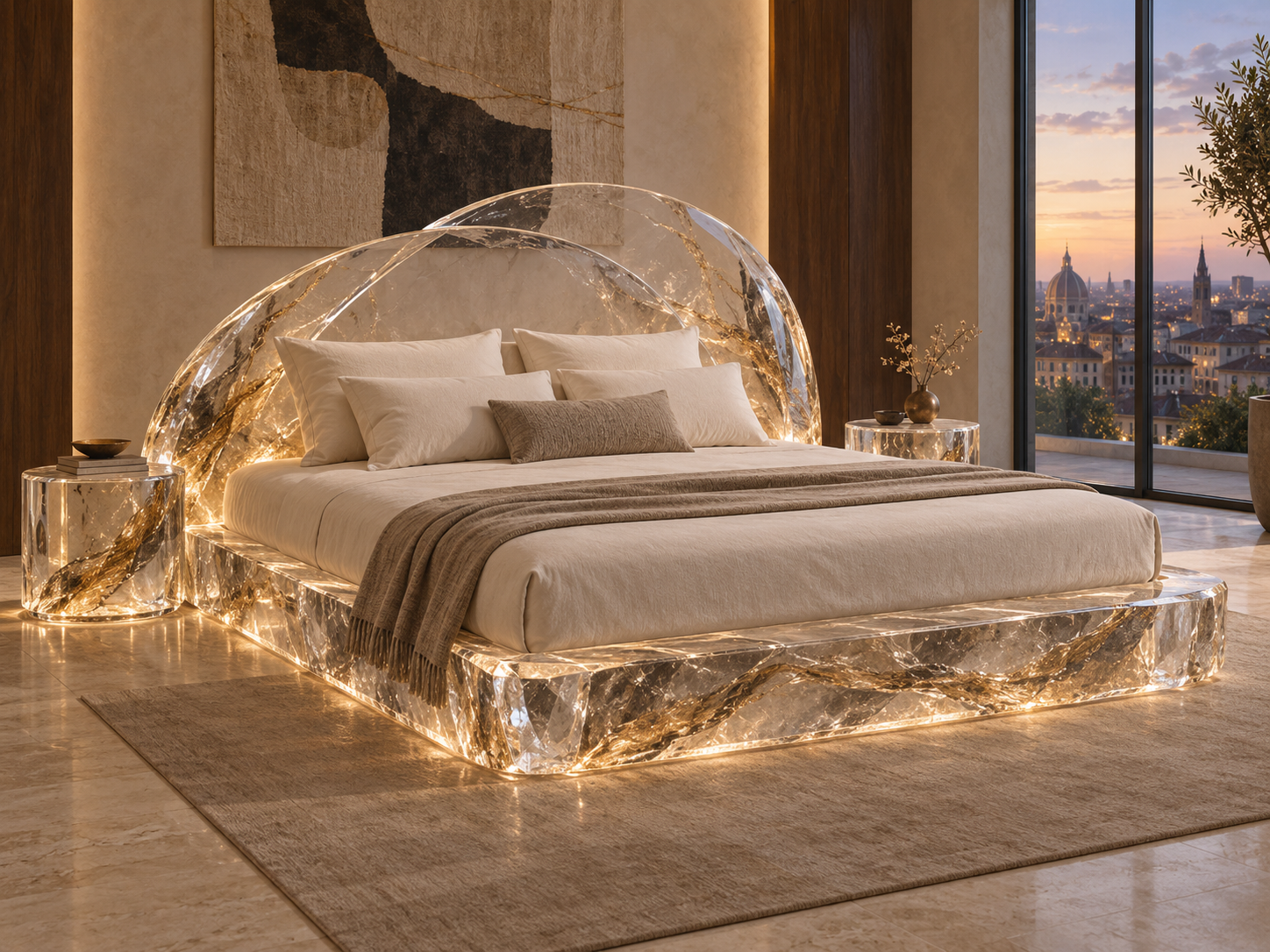
The design potential extends far beyond completely transparent furniture. Premium or so-called platinum acrylic furniture can be produced with polished edges, tinted bodies, frosted surfaces, gradient colors, internal textures, embedded decorative elements, or lighting. A thick acrylic table base can appear almost like frozen water in daylight and become a glowing architectural object when illuminated at night.
There is also considerable historical credibility behind transparent polymer furniture. Shiro Kuramata's celebrated Miss Blanche Chair of 1988, now represented in MoMA's collection, used acrylic resin to suspend artificial roses inside a transparent chair body. MoMA describes the work as an icon of postmodern design, demonstrating how transparency can turn an ordinary furniture typology into something closer to visual poetry.
In contemporary hospitality or residential projects, designers can apply the same principle more subtly through transparent dining-table bases, acrylic consoles, stools, side tables, display plinths, reception furniture, and sculptural pedestals.
The key is specification. High-end acrylic should be treated as an architectural material rather than inexpensive clear plastic. Edge finishing, optical clarity, thickness consistency, joint quality, UV performance, structural loading, scratch resistance, and fabrication precision determine whether the finished piece feels luxurious or ordinary.
When those details are resolved properly, acrylic offers something marble cannot: presence without heaviness.
2. High-End Cast Resin: When Color Becomes Part of the Furniture
If acrylic excels at transparency and precision, resin excels at atmosphere.
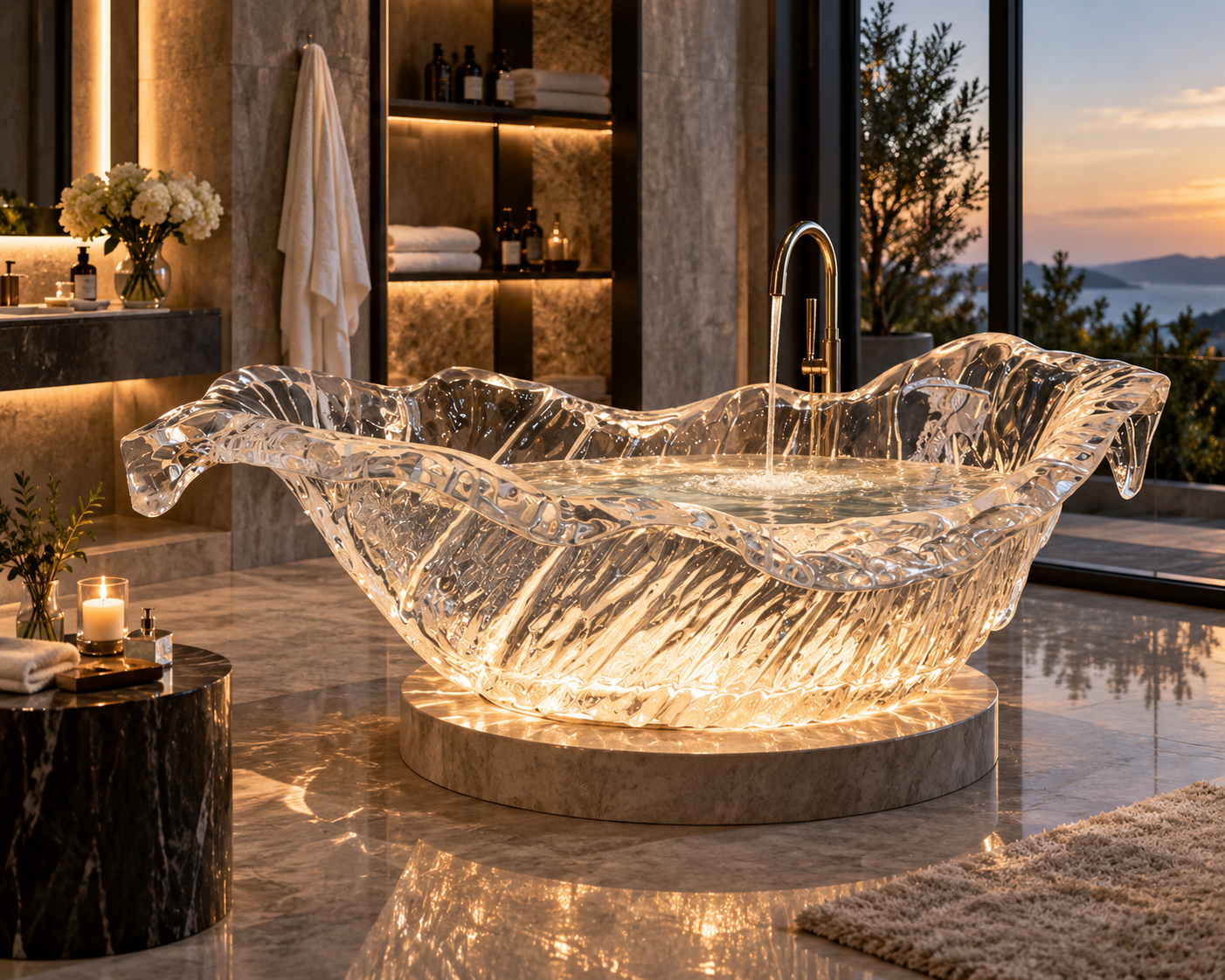
High-end cast resin gives designers the ability to treat color, translucency, depth, inclusions, and irregularity as three-dimensional design elements. Instead of applying color to the surface of furniture, the color can exist throughout the material itself.
This distinction becomes especially powerful in spaces where furniture needs to function simultaneously as an object and a piece of art.
Sabine Marcelis's Candy Cube provides an important example. MoMA's collection identifies the 2014 piece simply as “Resin,” but its effect is anything but simple. The translucent cast cube appears darker toward its center and lighter along its glowing edges, allowing light to change the perception of the object throughout the day. MoMA notes that the piece can operate as a podium, side table, or prop while maintaining an intentionally ambiguous sculptural identity.
That principle is highly relevant to luxury interiors.
A translucent amber resin console can add warmth to a minimalist stone lobby. A deep burgundy side table can introduce color into an otherwise neutral hotel suite. A smoky resin dining-table base can provide visual density without the conventional appearance of bronze or blackened steel. In retail, resin display plinths can even be color-matched to a brand palette, turning merchandising furniture into part of the identity of the space.
Resin also offers freedom of form. Curves, monolithic volumes, softened corners, irregular geometry, embedded textures, layered colors, and controlled bubbles or inclusions can become intentional characteristics rather than defects.
Design history shows how important experimentation with resin has been. MoMA's collection of Gaetano Pesce's Pratt Chair No. 3, made from urethane resin in 1984, documents how Pesce experimented with different resin densities to explore the relationship between manufacturing, form, and structural behavior.
For commercial projects, however, artistic freedom has to be balanced with technical discipline. Designers and buyers should verify the exact resin system, UV stability, expected color change, load capacity, heat resistance, surface repairability, fire-performance requirements where applicable, and suitability for the intended environment.
Luxury resin furniture succeeds when craftsmanship controls the material without eliminating its personality.
3. Synthetic Crystal: Turning Furniture Into a Light-Responsive Object
Crystal has traditionally appeared in chandeliers, decorative accessories, and jewelry-inspired interiors. But designers can think more broadly about synthetic crystal and engineered crystal-effect materials as components of furniture itself.
Their value comes from interaction with light.
While marble creates impact primarily through veining and mass, crystal-effect materials attract attention through reflection, refraction, sparkle, optical depth, and changing highlights. The object may appear completely different as the viewer moves through the room.
This makes synthetic crystal particularly suitable for hospitality entrances, luxury retail stores, private clubs, high-end residences, beauty spaces, jewelry boutiques, and entertainment interiors where creating an emotional first impression is important.
The architectural use of crystal demonstrates how powerful this strategy can be. In a residence in Pakse, Laos, documented by ArchDaily, Makoto Yamaguchi Design created an entrance artwork from Swarovski crystal glass inspired by the region's waterfalls. Instead of treating crystal as superficial decoration, the designers used it to connect architecture, local landscape, and light.
Another example is the El Sol installation commissioned for Design Miami, which used 2,880 Swarovski crystals arranged around an illuminated geodesic structure. ArchDaily reported that the project required more than 350 hours of engineering work and three months of design and technical development. The significance is not simply the number of crystals—it demonstrates that light-responsive materials can be engineered as architectural experiences rather than added as decorative afterthoughts.
Furniture offers a more intimate version of the same idea.
Synthetic-crystal side tables, console bases, table legs, decorative screens, illuminated pedestals, and sculptural coffee tables can create jewelry-like accents within an interior. When combined with premium resin or optical acrylic, designers can also produce layered effects: a transparent structural body, for example, can support crystal-like elements that capture light while allowing the furniture itself to remain visually light.
The most successful applications usually exercise restraint. Filling an entire room with reflective crystal surfaces can quickly become visually exhausting. A single crystal-effect console beneath soft wall lighting, or one sculptural coffee table surrounded by quieter upholstery and timber, often creates a stronger sense of luxury.
In other words, crystal works best when the designer treats light itself as a material.
4. Architectural Glass: Transparency With a Different Sense of Permanence
Glass shares some visual characteristics with acrylic, but its architectural character is different. Where acrylic can feel seamless, fluid, and almost futuristic, glass tends to communicate precision, hardness, and permanence.
That difference gives designers another valuable alternative to marble and metal.
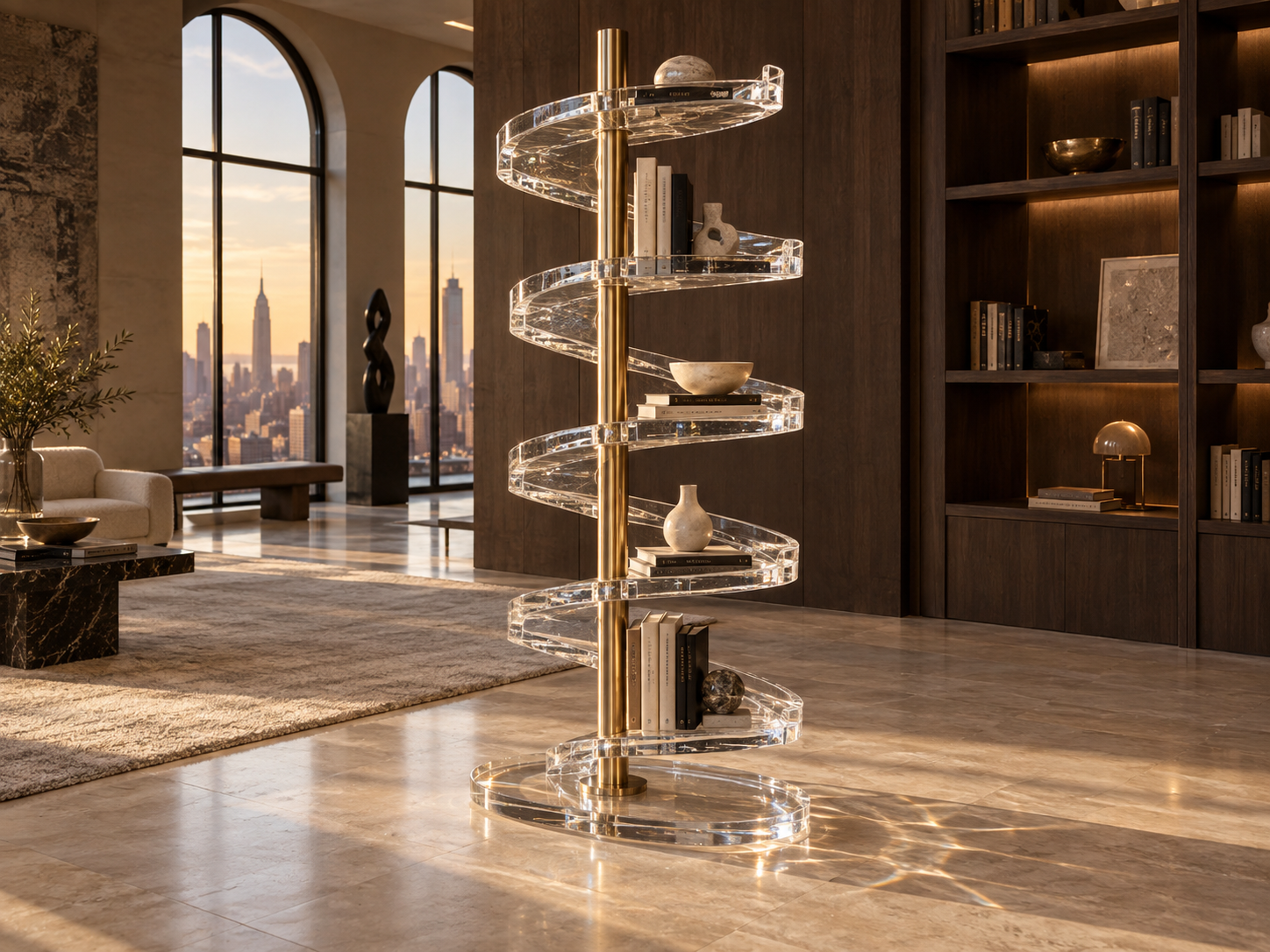
Cast glass, laminated glass, textured glass, fluted glass, kiln-formed glass, colored glass, and thick transparent panels can be used for furniture, partitions, counters, shelves, table bases, screens, and sculptural installations.
Shiro Kuramata explored this idea decades ago. His 1976 Armchair, now in MoMA's collection, was constructed from laminated glass. MoMA places it alongside Miss Blanche as part of Kuramata's exploration of transparency through different materials.
Today, designers can use glass strategically to manipulate boundaries. A translucent cast-glass bar front can hide structure while transmitting light. Fluted glass can provide privacy without creating an opaque wall. A thick glass table base can distort the architecture behind it, turning an otherwise functional piece of furniture into an optical event.
Glass also has an indoor-air-quality advantage when properly specified. The U.S. Green Building Council lists glass among materials considered inherently non-emitting when they do not incorporate organic-based coatings, binders, or sealants. USGBC emphasizes low-emitting material selection as an important strategy for reducing indoor exposure to volatile organic compounds.
That does not mean glass is automatically the right solution everywhere. Weight, edge protection, breakage behavior, installation complexity, fingerprints, structural calculations, and replacement logistics all need to be considered.
For this reason, many sophisticated interiors do not choose between glass and acrylic universally. They use each where its properties make sense. Glass may suit a permanent architectural partition, while platinum acrylic may be better suited to a large transparent console or movable statement table where lower visual and physical weight is desirable.
Material intelligence comes from choosing according to function, not hierarchy.
5. Timber and Cork: Luxury Through Warmth Rather Than Shine
A spatial focal point does not always need to sparkle.
As highly reflective interiors have become common in luxury development, natural texture can provide an equally powerful form of contrast. Timber, veneer, cork, and other responsibly sourced plant-based materials introduce grain, softness, warmth, tactility, and natural variation that stone and polished metal cannot easily reproduce.
Their effectiveness is particularly noticeable when they are placed beside transparent materials.
Imagine a dark oak dining table supported by crystal-clear acrylic legs. A resin console containing amber tones against a ribbed walnut wall. A transparent synthetic-crystal side table beside a deeply textured lounge chair. In these compositions, the natural material prevents transparency from feeling cold, while the transparent component prevents timber from feeling visually heavy.
Responsible sourcing also matters increasingly in international specifications. FSC UK reported on September 1, 2026 that more than 173 million hectares of forest were FSC certified globally, alongside more than 70,000 Chain of Custody certificates. These certification systems allow designers and procurement teams to evaluate sourcing credentials rather than relying only on broad sustainability claims.
For designers, the lesson is that “luxury material” should not be confused with “glossy material.”
A beautifully crafted timber cabinet, sculpted cork wall, or carefully veneered reception desk can become a focal point through craftsmanship and tactile richness. Natural variations can actually strengthen the perception of exclusivity because each surface reads slightly differently.
There is also an opportunity to use timber together with contemporary transparent furniture rather than positioning the materials as competitors. In a luxury residence, for example, a walnut or oak interior can be visually refreshed by a transparent premium acrylic coffee table. In boutique hospitality, resin side tables in muted jewel tones can sit naturally beside oak, ash, or walnut furniture.
Contrast creates hierarchy. When every material is reflective, nothing feels particularly special. A controlled mixture of transparent, matte, natural, and luminous surfaces gives the eye somewhere to rest—and somewhere to focus.
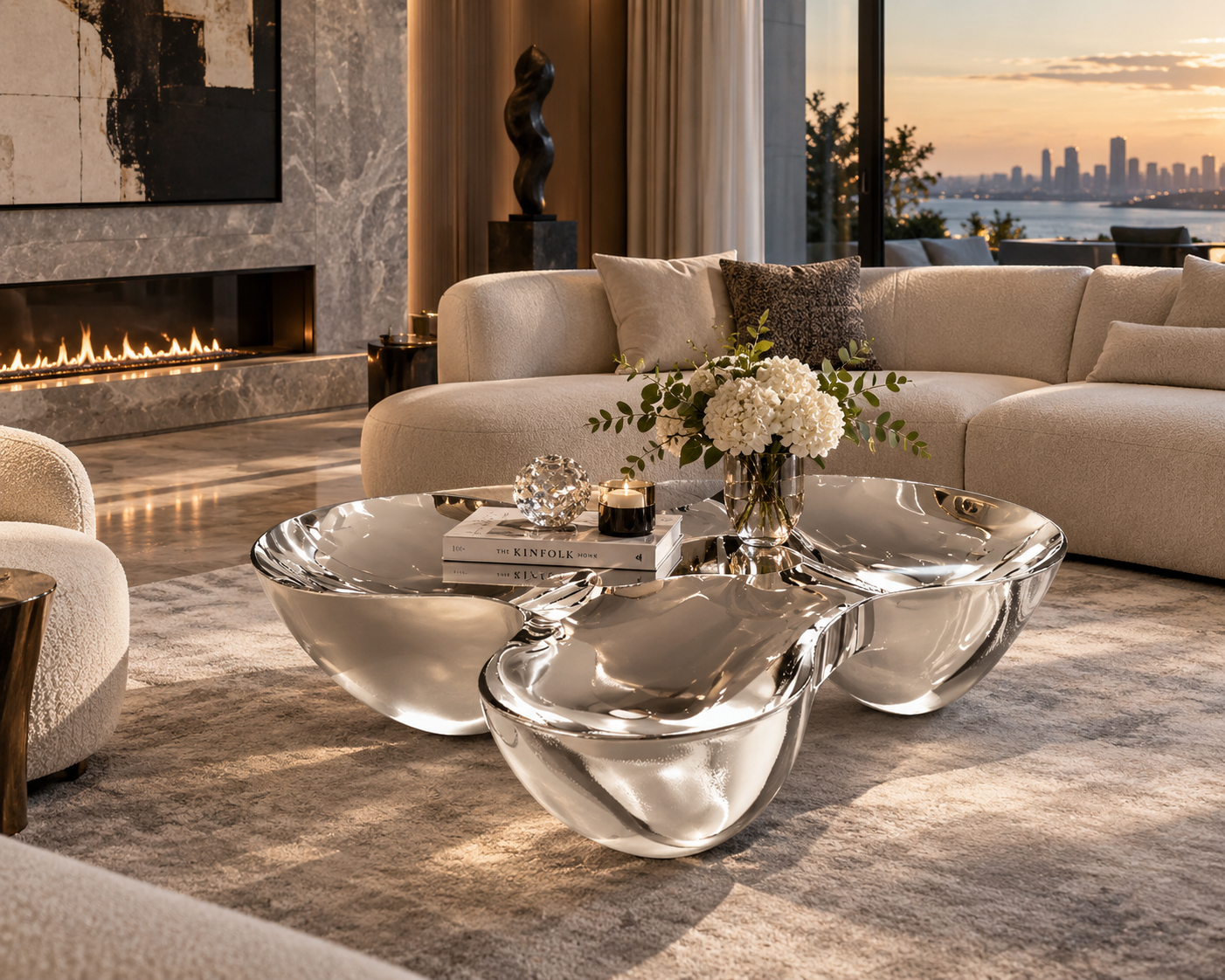
6. Recycled Composites and Terrazzo: Making Sustainability Visually Desirable
The next generation of statement materials will not be defined only by appearance. Designers are increasingly expected to understand what materials contain, where they come from, how long they will last, and what happens when an interior is renovated.
The scale of material waste explains why. The U.S. Environmental Protection Agency estimated that approximately 600 million tons of construction and demolition debris were generated in the United States in 2018—more than twice the amount of municipal solid waste generated that year. More than 90% of that construction and demolition debris came from demolition rather than new construction activity.
This creates a strong argument for materials and furniture designed around longevity, reuse, recycled content, repairability, and eventual disassembly.
Terrazzo and recycled composites are especially interesting because sustainability does not need to result in a “recycled” aesthetic. Aggregates can include recycled glass, stone fragments, mineral particles, or carefully selected production remnants. Color, particle size, binder tone, polishing level, and pattern density allow these materials to range from restrained architectural surfaces to highly expressive statement pieces.
They can also work particularly well in furniture. A recycled composite tabletop on transparent acrylic legs creates a deliberate contrast between visual mass and invisibility. A terrazzo reception desk can incorporate resin details that echo the project's branding. A synthetic-crystal accent can be inserted into a predominantly mineral composition to introduce controlled sparkle.
The broader principle is hybridization.
Rather than asking which single material should replace marble, designers can combine materials according to what each does best. Acrylic can provide transparency. Resin can provide saturated color and freedom of form. Synthetic crystal can manipulate light. Timber can provide warmth. Glass can create architectural clarity. Recycled composites can add texture and a circular-material narrative.
The U.S. Green Building Council explicitly notes that interior designers influence sustainability through their choices of materials, furniture, lighting, texture, color, layouts, and custom casework. Those decisions can affect waste, indoor environmental quality, efficiency, and occupants' experience of a space.
This is ultimately why designers should look beyond marble and metal.
The goal is not to eliminate traditional luxury materials. Marble remains extraordinary when its veining, geology, and permanence are integral to the concept. Metal remains indispensable for structure, detailing, durability, and precision.
But memorable interiors are rarely created by price-per-square-meter alone.
A transparent platinum acrylic table can make a compact living room feel more open. A cast-resin console can introduce a concentrated field of color into a neutral hotel lobby. A synthetic-crystal table or installation can capture changing daylight and become the visual signature of a luxury boutique. Timber can give those materials warmth, while glass and recycled composites can expand the designer's vocabulary even further.
The most compelling contemporary interiors therefore ask a more sophisticated question than, “What looks luxurious?”
They ask:
What should people feel when they see, touch, and move around this material?
Once material selection begins with that question, marble and metal become two possibilities among many—and furniture becomes one of the most powerful tools for turning material innovation into a memorable spatial experience.
READ MORE:
- Perché sempre più designer scelgono i mobili trasparenti negli interni contemporanei?
- Il cliente dice che il progetto “non è abbastanza speciale”? Parti dai materiali e dalla luce
- Oltre rattan e metallo: quali materiali scegliere per creare spazi outdoor davvero distintivi?
- Tavolini trasparenti, side table e mobili decorativi: come abbinarli senza far sembrare l’ambiente “economico”?
- Vuoi dare agli interni un aspetto più sofisticato? 5 idee di abbinamento con mobili in materiali trasparenti
- 2026 Spatial Material Trends: Why Designers Are Turning to Materials That Play With Light and Shadow
- Courtyards, Pools, and Landscape Walls: Creative Applications of Synthetic Crystal in Outdoor Spaces
- How to Make an Entire Space Look More Expensive with Small-Area Decorative Materials
- Lighting + Synthetic Crystal: Why This Combination Is Increasingly Suited to Hotels, Villas, and Commercial Spaces


