In luxury interiors, lighting is no longer treated simply as a technical system that makes a room bright enough to use. It has become part of the architecture, part of the atmosphere, and increasingly, part of a property's visual identity.
This shift helps explain why the combination of lighting and synthetic crystal is becoming especially relevant to hotels, villas, restaurants, luxury retail stores, clubs, and other high-end commercial interiors.
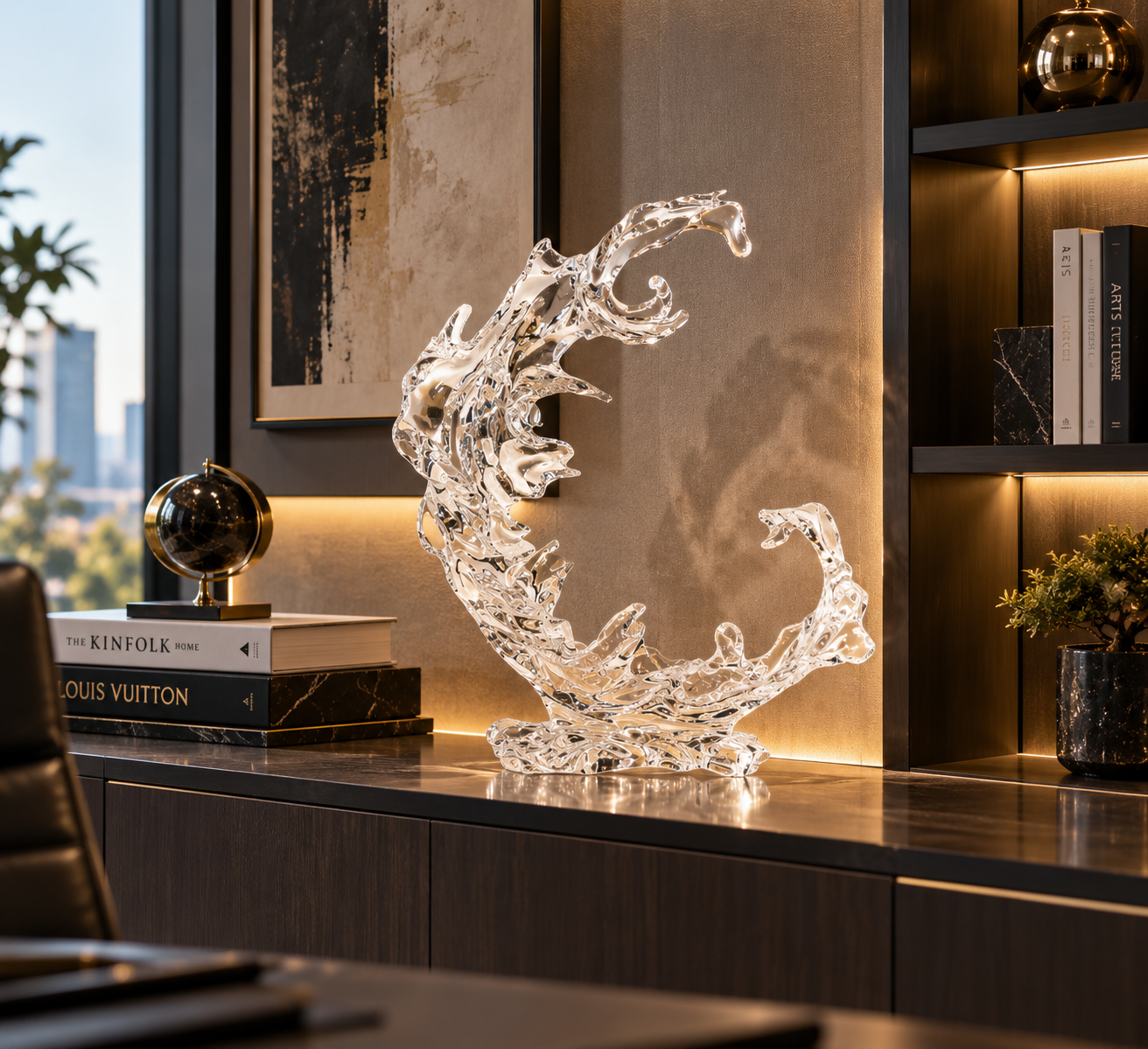
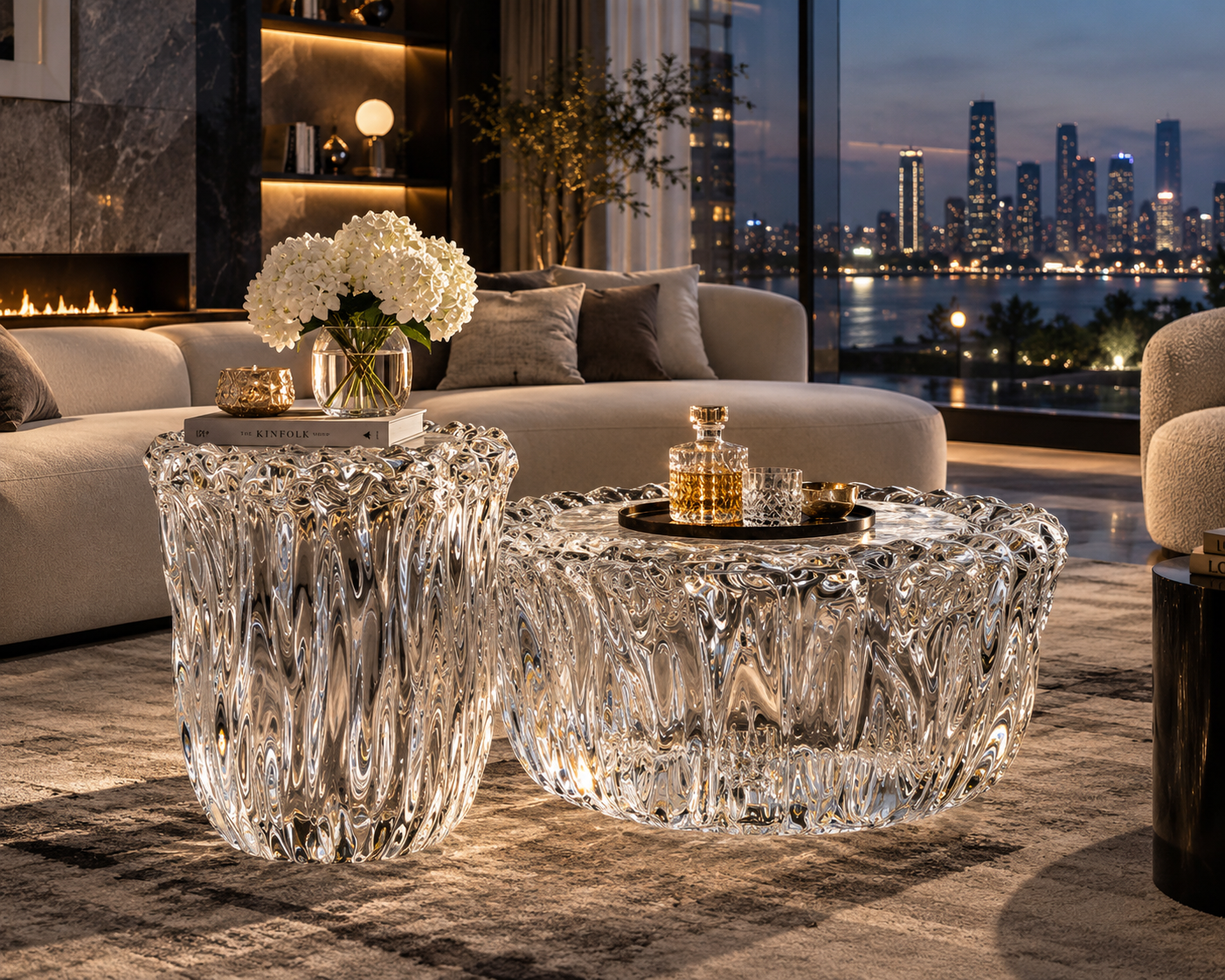
Synthetic crystal is unusual because its visual character cannot be separated from light. When unlit, a crystal element may appear transparent, lightly tinted, or sculptural. Once illuminated, its facets, edges, internal textures, and optical depth begin to redirect light into reflections, highlights, shadows, and flashes of color. The material changes as the lighting changes.
This allows designers to create focal points without depending entirely on traditional luxury materials such as marble, brass, stainless steel, or decorative stone.
The approach also fits the way professional lighting design is evolving. The Illuminating Engineering Society currently publishes dedicated recommended practices for hospitality and retail environments, including ANSI/IES RP-9-23 for Hospitality Spaces and ANSI/IES RP-2-20 for Retail Spaces. This reflects a broader understanding that lighting quality has to respond to the function, experience, visual hierarchy, and atmosphere of a space—not just deliver a specified number of lux.
For designers, therefore, the real opportunity is not simply to place crystal under a spotlight. It is to use light-responsive materials as part of an integrated spatial strategy.
1. Light Turns Synthetic Crystal From a Decorative Material Into a Spatial Experience
The first reason lighting and synthetic crystal work so effectively together is fundamental: light activates the material.
A marble table remains recognizably marble under almost any lighting condition. A brushed-metal wall changes somewhat as highlights move across it. Crystal behaves more dramatically. Depending on its geometry and optical quality, illumination can create reflected highlights, refraction, internal brightness, colored dispersion, or patterns on nearby surfaces.
That means a relatively concentrated volume of material can generate a much larger visual effect.
This principle has already been demonstrated in hospitality interiors. At the InterContinental Beijing Sanlitun, a project documented by ArchDaily, custom entrance screens incorporated numerous crystal pieces. Linear lighting from above and below illuminated the crystal elements, giving the screens greater depth and sparkle while reinforcing the hotel's sophisticated entrance experience.
The important design lesson is that the crystal and the lighting were conceived as a relationship. Without controlled illumination, the crystal would simply be another transparent decorative surface. With light, it became part of the arrival sequence.
The same strategy can be translated into furniture.
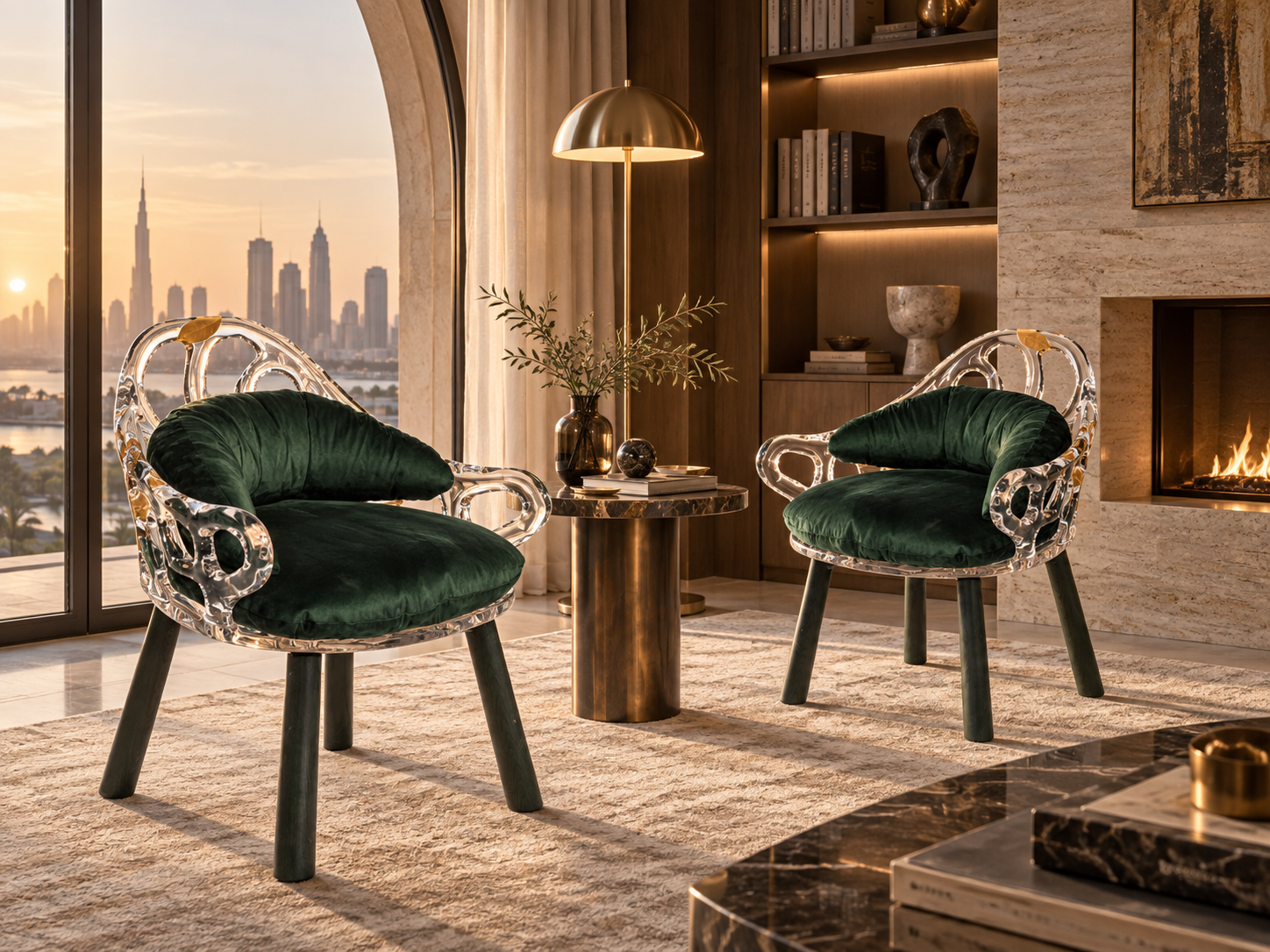
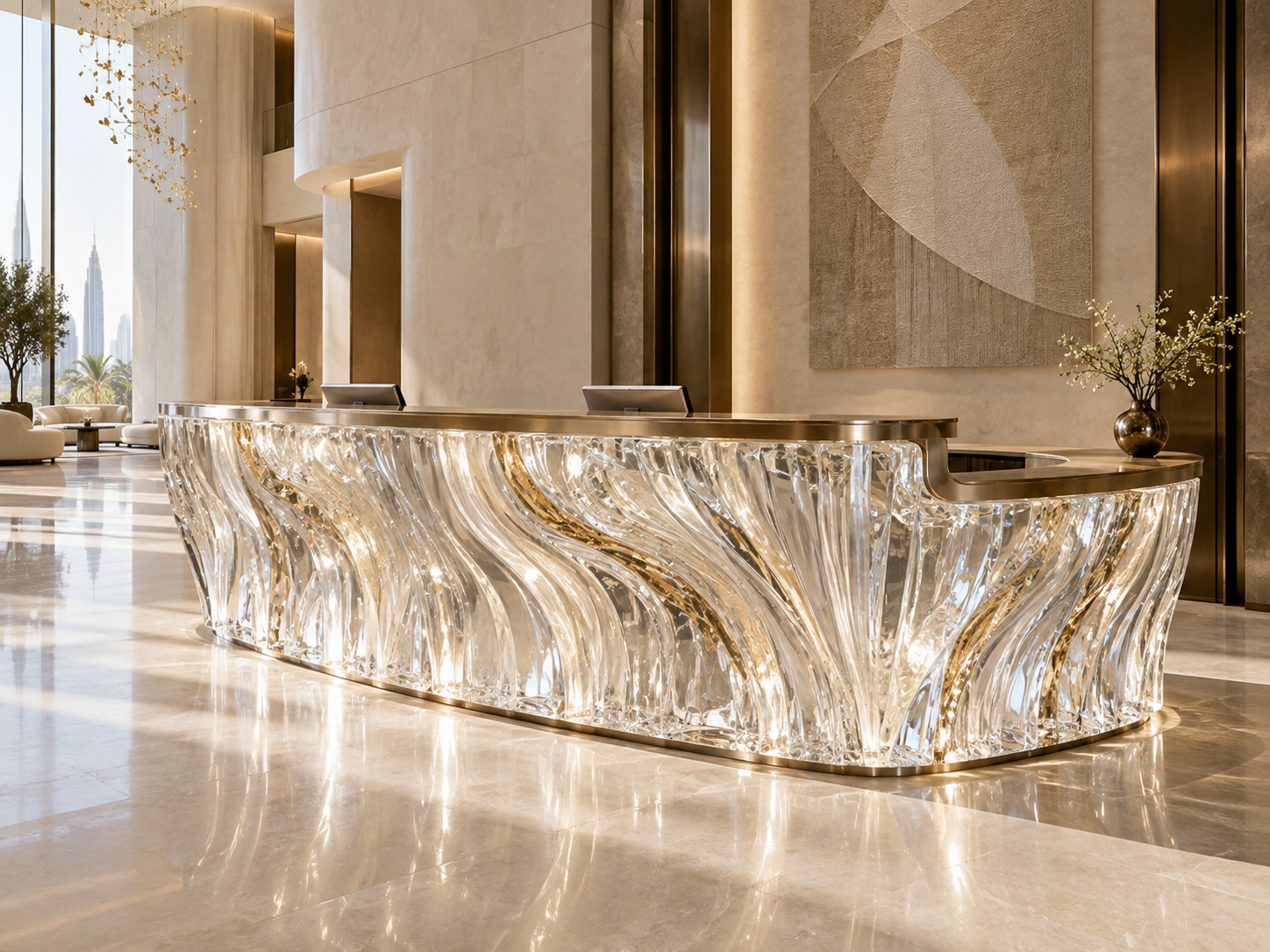
A synthetic-crystal console table can be designed so concealed LEDs illuminate selected edges rather than exposing the light source directly. A crystal coffee-table base can capture light from an adjacent floor lamp. A reception desk can integrate synthetic crystal with translucent high-end resin so that the resin diffuses the light while the crystal produces sharper highlights.
Platinum acrylic—meaning premium, high-clarity acrylic used for luxury furniture—can add another optical layer. High-quality clear PMMA can transmit extremely high levels of visible light. PLEXIGLAS, for example, reports visible-light transmission of up to 92% for its clear transparent PMMA products.
This makes premium acrylic particularly useful for transparent table legs, pedestals, display furniture, illuminated consoles, and structural elements where designers want light to travel through the object rather than stop at its surface.
Instead of treating furniture and lighting as two separate specification packages, designers can therefore begin treating the furniture itself as part of the lighting composition.
2. The Combination Creates Stronger Visual Identity in Hotels and Commercial Spaces
A successful hotel lobby has only a short time to establish an impression.
Guests enter, look around, orient themselves, and almost immediately form an opinion about the character of the property. The same applies to luxury boutiques, restaurants, beauty spaces, jewelry stores, flagship retail environments, and private clubs.
For these spaces, functional lighting alone is rarely enough. They need something memorable.
Synthetic crystal can provide that focal point because it responds to movement. When people walk past a crystal installation or crystal furniture piece, the viewing angle changes. Reflections move. Highlights appear and disappear. The object is visually dynamic even though it is physically stationary.
Large hospitality projects demonstrate the commercial value of this type of spectacle.
At the Sheraton Huzhou Hot Spring Resort, Interior Design reported that the interiors included a major light installation incorporating more than 20,000 Swarovski crystals. The dramatic use of light inside corresponded with the illuminated architecture outside, reinforcing the property's broader identity as what architect Ma Yansong described as an “artwork of light.”
The Post Oak hotel in Houston offers another example. A custom Lasvit lobby installation incorporates 15,719 handblown glass components, 1,428 LED lights, and 738 Swarovski crystal balls. Gensler Interior Design Director Gail McCleese described the way the components capture light as helping to enliven the lobby and establish the atmosphere for the luxury hotel experience.
Not every project needs a monumental chandelier, however.
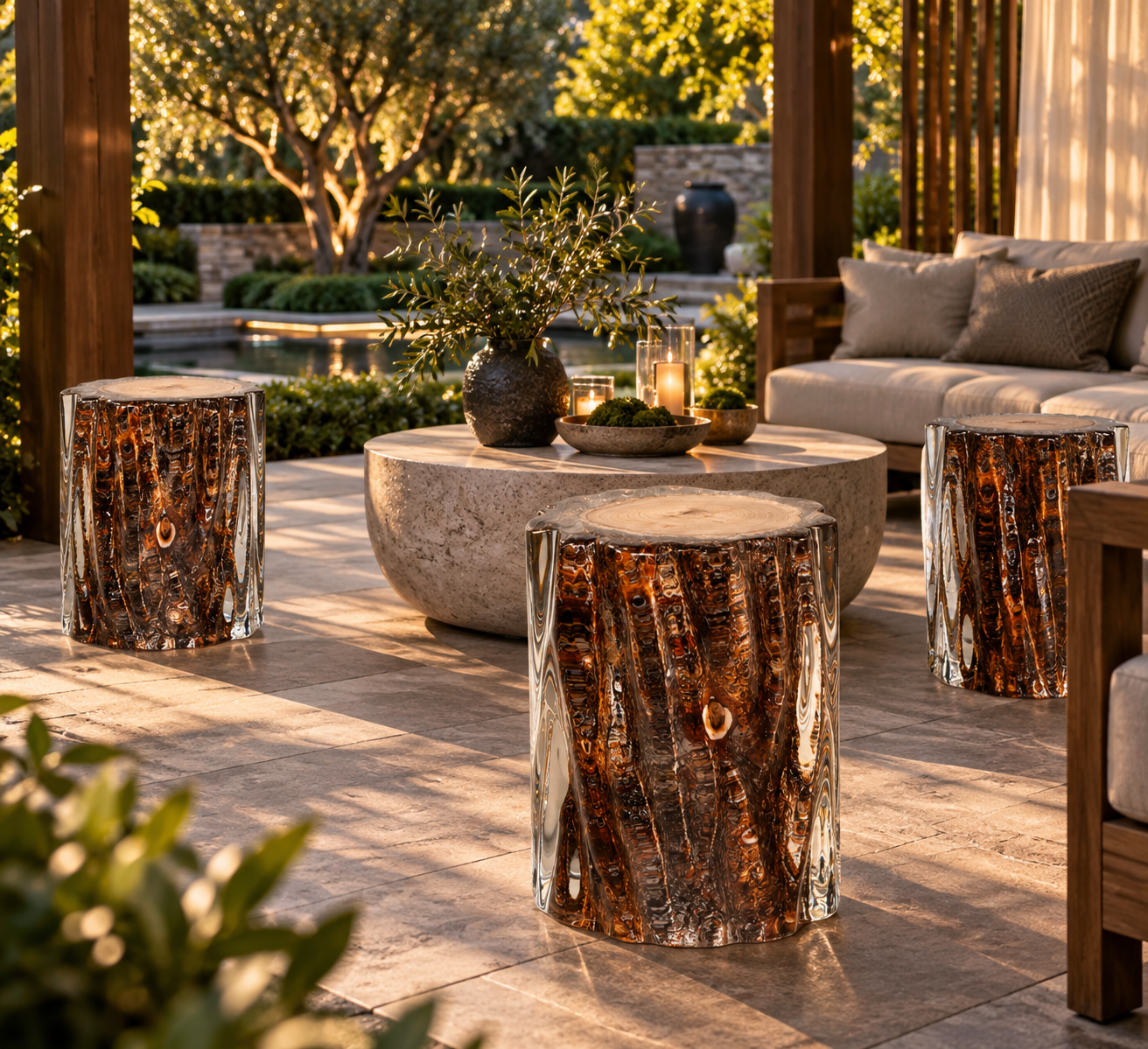
The same principle can be scaled down into custom furniture. A synthetic-crystal side table positioned in a hotel lounge can become an identifiable signature. A luminous high-end resin bar table can introduce brand colors. A platinum acrylic console with integrated crystal details can create an entrance focal point while occupying much less visual space than a solid stone console.
For commercial clients, this matters because statement furniture can also be replaced, repositioned, or customized more easily than permanent architectural construction.
The strongest projects consequently do not ask, “How much crystal can we use?” They ask, “Where will one crystal-based element create the greatest visual memory?”
That is a much more sophisticated—and commercially effective—way to use the material.
3. Lighting Allows the Same Crystal Furniture to Create Different Atmospheres From Day to Night
Hotels, villas, restaurants, and clubs do not operate with a single atmosphere throughout the day.
A hotel lobby may need to feel bright and welcoming at 10 a.m., sophisticated during afternoon meetings, warm at dinner, and intimate after midnight. A villa may move from daylight-driven living during the afternoon to a much quieter mood in the evening.
Static decorative materials cannot create all of those changes by themselves. Lighting can.
The Dolder Grand Hotel in Zurich demonstrates this approach particularly well. Lighting designers Speirs Major developed a scheme that shifts the hotel's artificial illumination from a cooler daylight character toward warmer, candle-like light as dusk arrives. In the bar, more than 80 custom Swarovski “floating candles” sparkle against a dark backdrop, using contrast rather than simply high brightness to create drama.
This is important because good luxury lighting is not necessarily about making crystal as bright as possible.
In fact, excessive illumination can destroy the effect. When everything is equally bright, there is little visual hierarchy.
The WELL Building Standard emphasizes this issue from a human-comfort perspective. Its guidance on electric-light glare notes that excessive brightness and excessive brightness contrast can cause visual discomfort and fatigue. WELL therefore includes limits and shielding approaches intended to reduce direct glare.
For crystal furniture, that means LED placement needs careful consideration. The goal should usually be to illuminate the material while keeping the source itself discreet.
In a villa, for example, a synthetic-crystal console could receive indirect warm illumination in the evening while depending primarily on daylight during the afternoon. A resin-and-crystal coffee table could become subtly luminous after sunset. In a hotel bar, a row of crystal side tables might receive carefully focused light so that they sparkle against a darker surrounding environment.
Color quality matters as well. WELL's lighting guidance recommends a CRI of at least 80 for general electric lighting covered by its color-quality feature, because accurate color rendering influences the visual appearance of objects, finishes, food, plants, and skin tones.
This is particularly relevant when synthetic crystal is paired with colored resin, tinted acrylic, upholstery, artwork, or richly finished timber.
The better the lighting reproduces those colors, the more convincing the entire material composition becomes.
4. Synthetic Crystal, Resin, and Platinum Acrylic Create Luxury Without Making a Space Feel Heavy
Many luxury interiors face a contradiction.
Clients want dramatic furniture and expensive-looking materials, but they also want spaces to feel open, contemporary, and visually calm.
Traditional materials can make that difficult. A large marble console, stone dining table, or bronze sculpture has considerable visual mass. In a large hotel lobby, that may be appropriate. In a villa, boutique hotel, penthouse, restaurant, or compact luxury retail environment, too much opaque material can quickly make the space feel crowded.
Transparent and translucent materials offer another solution.
Synthetic crystal, premium acrylic, and high-end resin allow designers to create substantial objects while still allowing light and sightlines to move through or around them.
Platinum acrylic is particularly useful in this context. Premium clear acrylic can be fabricated into thick table legs, sculptural bases, consoles, display plinths, or furniture frames that appear visually lighter than an equivalent form in stone or timber. Specialty PMMA products are also specifically engineered for edge lighting, backlighting, and light diffusion, demonstrating how closely the material can be integrated with LED technology.
High-end resin adds something different: controlled translucency and color.
Instead of complete transparency, a designer can specify smoky gray, champagne, amber, emerald, burgundy, or custom brand colors. Resin can diffuse an integrated light source so that the furniture appears to glow from within, while synthetic crystal elements introduce sharper points of reflection.
This creates a useful material hierarchy.
A transparent platinum acrylic body can provide structure. Resin can introduce color and softness. Synthetic crystal can provide sparkle and optical detail. Metal may still be used internally for reinforcement, but it no longer has to dominate the visual language.
Imagine a luxury hotel reception area with a translucent amber resin desk, a crystal detail running through its front surface, and concealed LEDs creating a gentle internal glow. Or consider a villa dining table with a clear acrylic base containing crystal-inspired sculptural elements beneath a restrained stone tabletop.
These combinations allow designers to retain the sense of craftsmanship associated with luxury furniture while moving away from the conventional formula of “more marble equals more luxury.”
Increasingly, luxury is communicated through material intelligence, customization, precision, and light, not simply weight.
5. Modern LED Technology Makes Crystal-Based Features More Practical to Operate
One reason illuminated decorative furniture is more practical today than it was several decades ago is the development of efficient LED lighting.
Traditional decorative lighting often produced substantial heat, consumed more energy, and required relatively frequent lamp replacement. Those limitations were particularly significant in hotels and commercial interiors, where lighting can operate for long periods every day.
The U.S. Department of Energy has reported that LED lamps consume roughly 75% less energy than incandescent lamps and can last many times longer. For hospitality and commercial operators, this can reduce both electricity consumption and the maintenance associated with repeated lamp replacement.
This makes it more realistic to incorporate controlled illumination into furniture and architectural features.
A synthetic-crystal reception desk can use low-profile LED modules. A resin side table can incorporate serviceable lighting channels. An acrylic pedestal can use edge lighting to produce a luminous outline. Commercial display furniture can be integrated into a programmable lighting system that changes intensity according to time of day or merchandising requirements.
The important word, however, is serviceable.
Lighting should not be permanently buried inside expensive custom furniture without considering what happens when a driver, LED strip, connector, controller, or power supply eventually requires attention.
For hotel and retail projects, access panels, replaceable LED modules, ventilation where needed, cable management, dimming compatibility, and maintenance procedures should be discussed during furniture engineering—not after installation.
Material choice also needs the same level of technical attention.
Synthetic crystal suppliers should be able to explain optical characteristics, fixing methods, dimensional tolerances, and cleaning requirements. Resin furniture specifications should consider UV stability, heat resistance, surface repair, fire requirements where applicable, and expected color behavior. Acrylic specifications should address grade, thickness, load requirements, joint quality, scratching, polishing, and long-term transparency.
The result is a useful shift in thinking: illuminated crystal furniture should not be treated as decoration with electricity added later.
It should be treated as an integrated product combining furniture engineering, material engineering, and lighting design.
That is what makes the final object suitable for serious hospitality and commercial projects rather than temporary visual merchandising alone.
6. The Future Is Not “More Crystal”—It Is Better Integration of Light, Material, and Furniture
The most interesting opportunity for synthetic crystal is not to recreate the traditional crystal chandelier in different forms.
It is to develop a new category of furniture and interior elements in which light-responsive materials become part of the architecture of the room.
Designers can already see this principle in retail environments. The Illuminating Engineering Society's recommended practice for retail lighting addresses horizontal and vertical illuminance, uniformity, merchandising spaces, and the broader goals of store lighting. In other words, commercial lighting has to help people understand products, circulation, hierarchy, and atmosphere simultaneously.
Synthetic crystal furniture can participate in that hierarchy.
In a jewelry boutique, a crystal-and-acrylic consultation table can visually relate to the products being sold. In a cosmetics flagship store, translucent resin display furniture can reproduce brand colors while integrated crystal details create highlights. In a luxury hotel, illuminated crystal consoles can guide guests toward reception or elevators without behaving like conventional signage.
In villas, the opportunity is more personal. Rather than installing a monumental light feature simply to demonstrate wealth, a designer can commission one custom synthetic-crystal dining table, bar cabinet, console, or coffee table whose appearance changes naturally between daylight and evening illumination.
This is where combining materials becomes particularly valuable.
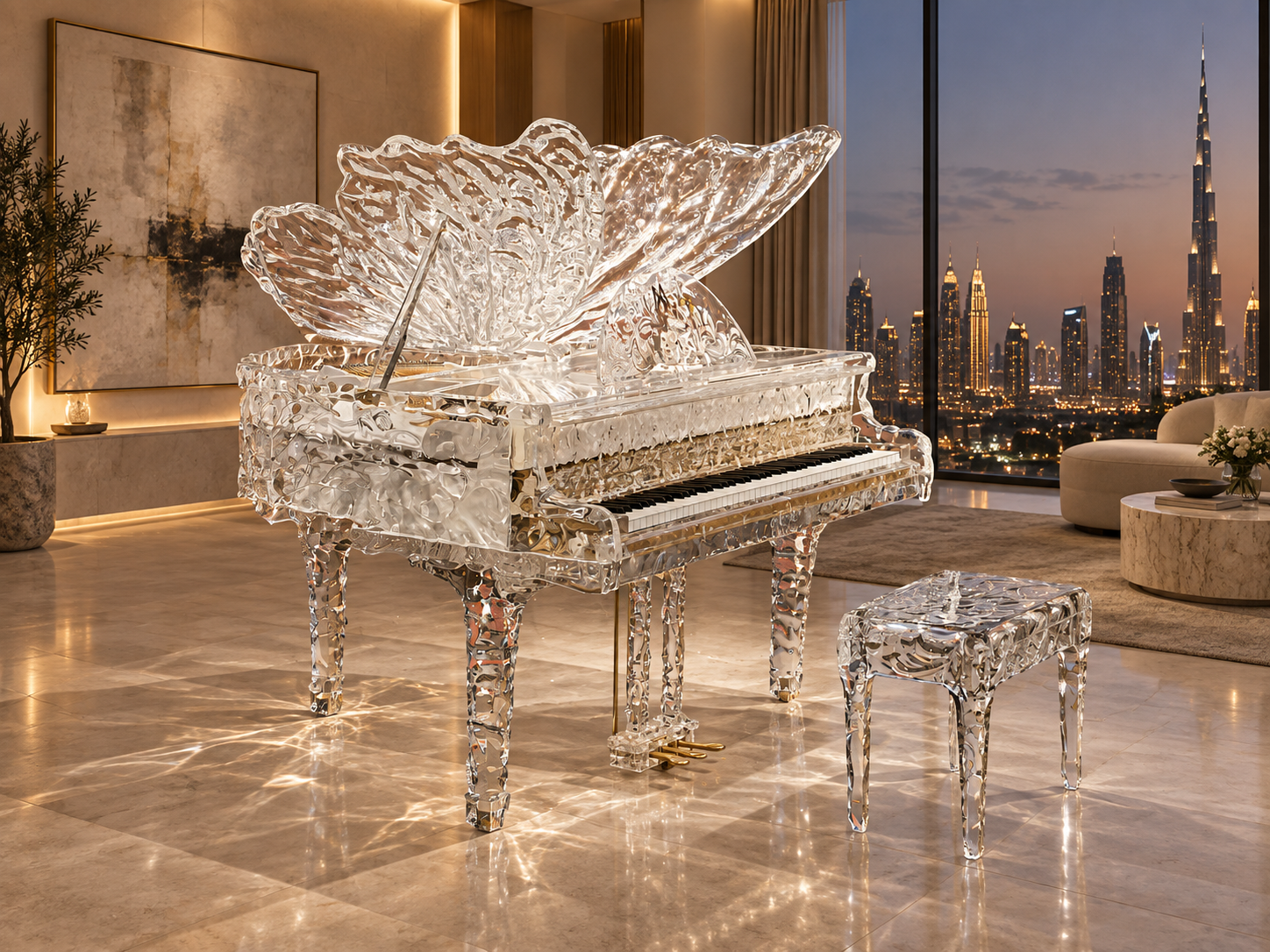
Synthetic crystal provides optical brilliance. High-end resin offers color, translucency, and sculptural freedom. Platinum acrylic provides clarity, structural visual lightness, and the ability to conduct or transmit light. Timber, stone, metal, and textiles can then provide contrast.
The outcome is richer precisely because no single material is asked to do everything.
The biggest mistake would be to treat synthetic crystal as an automatic symbol of luxury and simply add LEDs until it sparkles.
Good design requires restraint.
Light direction, glare, color rendering, reflection, material thickness, surrounding finishes, sightlines, maintenance, and even where guests are likely to photograph the space should all influence the final design.
When those factors are considered together, lighting and synthetic crystal can achieve something that traditional decorative furniture often cannot: the same object can function as furniture, sculpture, lighting feature, and brand signature at the same time.
That is why the combination is particularly well suited to hotels, villas, and commercial interiors.
It does not require designers to abandon marble, timber, glass, or metal. Instead, it expands the material vocabulary available to them.
A synthetic-crystal table can become a point of light in a dark hotel lounge. A translucent resin reception desk can glow quietly rather than dominate through size. A platinum acrylic console can remain almost invisible during the day and reveal illuminated edges at night.
The future of luxury interiors is therefore unlikely to be defined by the most expensive material in the room.
It will increasingly be defined by how intelligently material, light, craftsmanship, and experience are brought together.
READ MORE:
- Perché sempre più designer scelgono i mobili trasparenti negli interni contemporanei?
- Il cliente dice che il progetto “non è abbastanza speciale”? Parti dai materiali e dalla luce
- Oltre rattan e metallo: quali materiali scegliere per creare spazi outdoor davvero distintivi?
- Tavolini trasparenti, side table e mobili decorativi: come abbinarli senza far sembrare l’ambiente “economico”?
- Vuoi dare agli interni un aspetto più sofisticato? 5 idee di abbinamento con mobili in materiali trasparenti
- 2026 Spatial Material Trends: Why Designers Are Turning to Materials That Play With Light and Shadow
- Courtyards, Pools, and Landscape Walls: Creative Applications of Synthetic Crystal in Outdoor Spaces
- How to Make an Entire Space Look More Expensive with Small-Area Decorative Materials
- Beyond Marble and Metal: What Other Materials Can Designers Use to Create a Striking Interior Focal Point?


