.png)
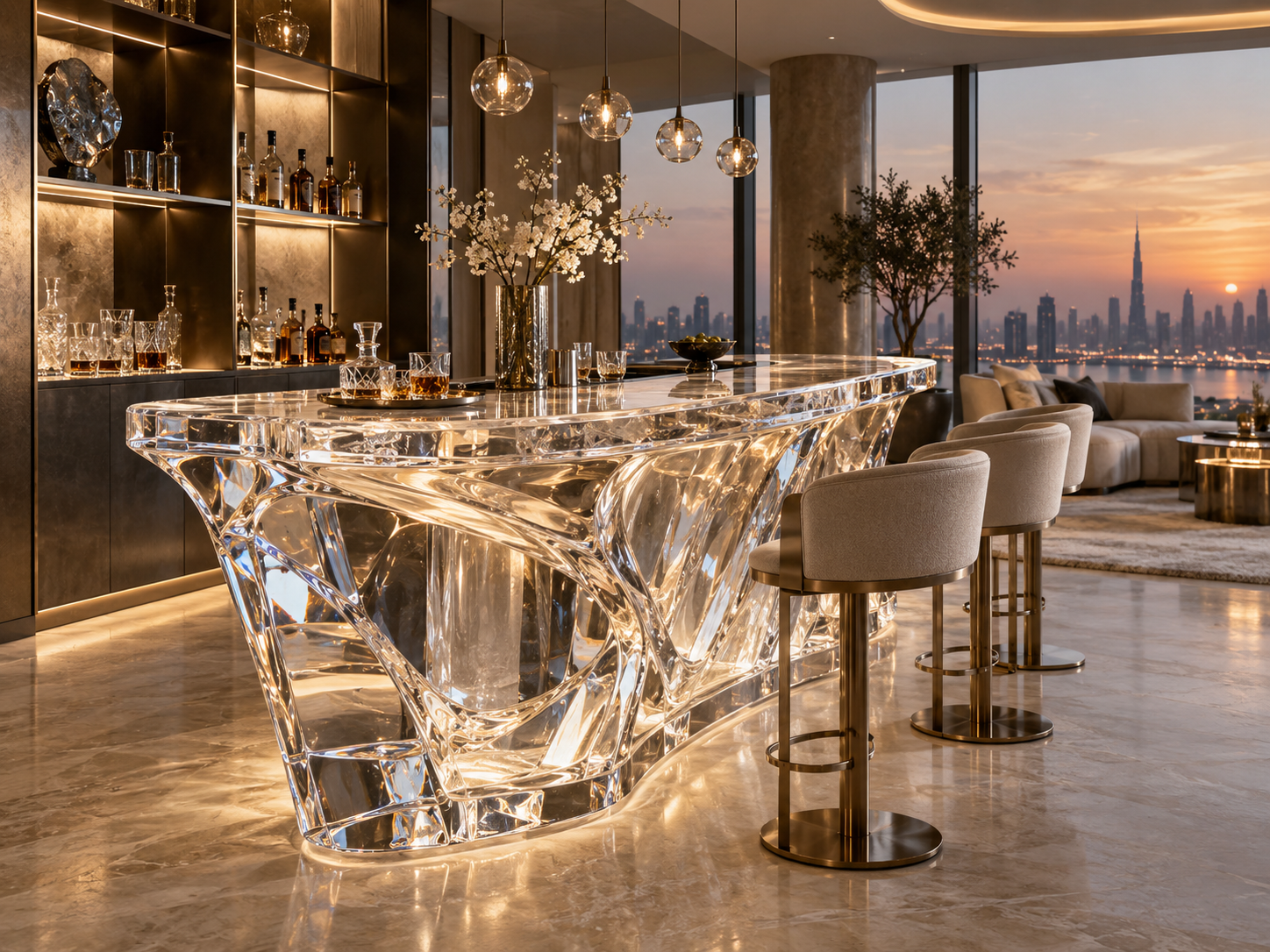
For decades, the visual language of luxury outdoor spaces has been dominated by a familiar group of materials: natural stone, timber, metal, glass, and concrete. They remain essential, but as hotels, private villas, resorts, restaurants, and commercial developments compete to create more distinctive outdoor experiences, designers are increasingly interested in materials that do more than simply form a surface.
Synthetic crystal belongs to this emerging category.
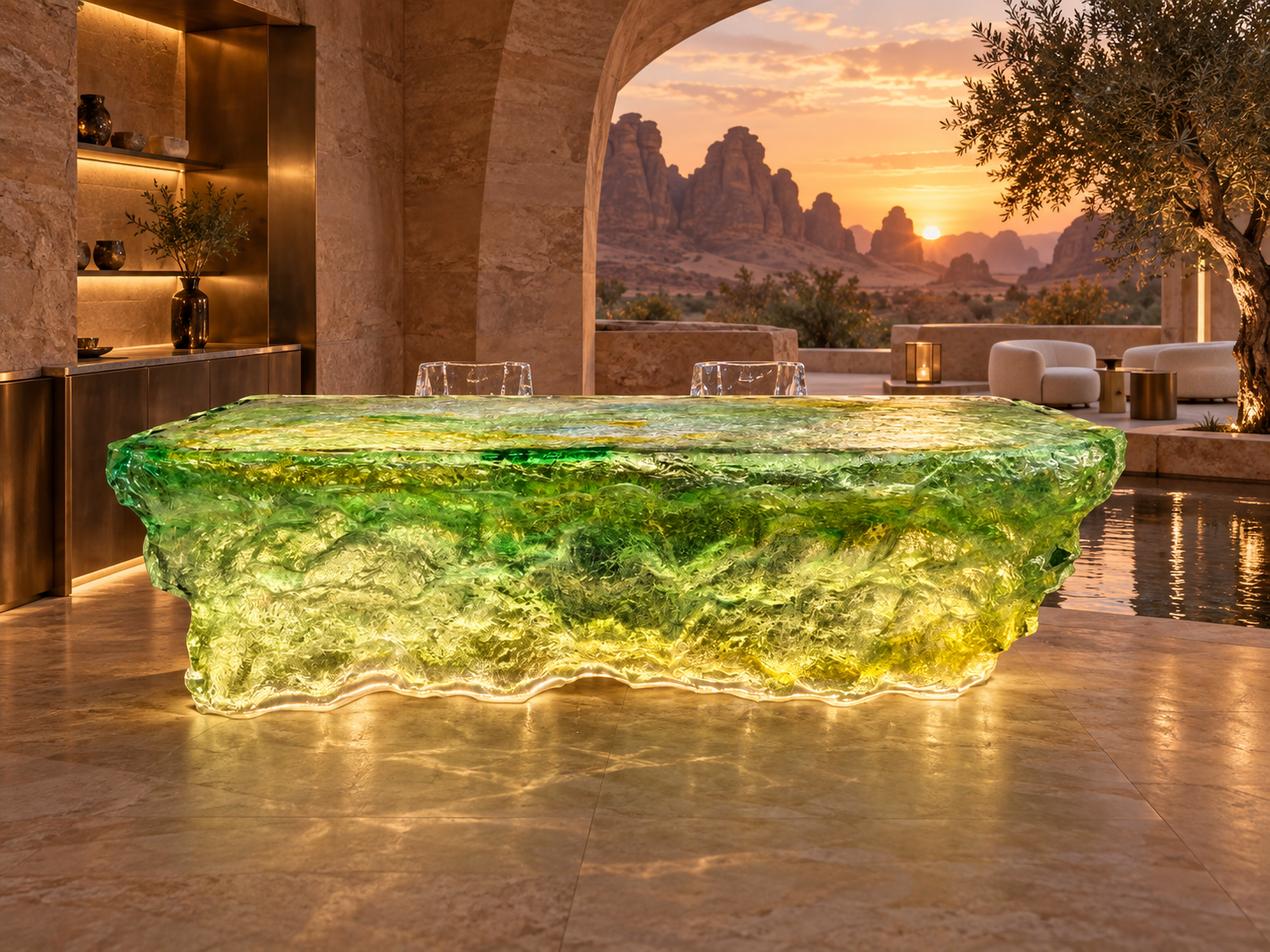
Its strongest quality is not that it resembles traditional crystal. It is its ability to interact with sunlight, artificial light, water, color, transparency, and movement. A synthetic-crystal element that appears quiet in the morning can sparkle intensely under afternoon sun and become an illuminated focal point after dark. Combined with high-end resin or premium platinum acrylic, it can also be transformed into furniture, landscape screens, sculptural tables, poolside features, illuminated walls, or custom installations.
Water makes the opportunity particularly interesting. ArchDaily has noted that water in architecture and landscape contributes movement, reflection, and sound to outdoor environments, creating sensory experiences frequently associated with tranquility. When transparent or light-responsive materials are introduced alongside water, those effects can become even more pronounced.
The opportunity, however, comes with an important qualification: outdoor applications are technically more demanding than indoor ones. UV radiation, rain, heat, freeze-thaw cycles, pool chemicals, surface contamination, wind loads, thermal movement, and maintenance all have to be considered.
The best outdoor synthetic-crystal projects therefore combine visual imagination with serious material engineering.
1. Courtyards Can Use Synthetic Crystal to Create a Focal Point Without Adding Visual Weight
A well-designed courtyard needs a visual anchor.
In traditional luxury projects, designers frequently achieve this with a stone sculpture, a large tree, a fountain, or an oversized metal installation. Synthetic crystal offers another possibility because it can establish a strong focal point without creating the visual heaviness associated with opaque materials.
Consider the courtyard of a boutique hotel.
Instead of placing another marble sculpture in the center, the designer could specify a transparent or lightly tinted synthetic-crystal installation surrounded by planting. During the day, vegetation would remain visible through the object. Sunlight passing through polished or faceted surfaces would produce changing reflections rather than a fixed appearance.
At night, carefully positioned warm lighting could reveal a completely different character.
This day-to-night transformation is valuable for hospitality projects because courtyards rarely serve one purpose. In the morning, they may function as breakfast terraces. During the afternoon they become informal meeting or relaxation areas. In the evening they may operate as cocktail lounges, restaurant extensions, or event spaces.
Furniture can participate in the same concept.
Synthetic-crystal side tables, sculptural coffee tables, outdoor consoles, decorative stools, or custom table bases can introduce small concentrations of brilliance without turning the entire courtyard into a highly reflective environment. Premium platinum acrylic can be used where designers want greater transparency and cleaner architectural geometry, while high-end resin can introduce amber, smoke, champagne, emerald, or customized brand colors.
The most effective combinations are often restrained. A clear platinum acrylic table with embedded synthetic-crystal details beside natural stone seating, for example, creates contrast between solidity and transparency. A translucent resin table positioned among dark foliage can appear almost jewel-like at night.
There is a large-scale precedent for treating crystal as part of a landscape experience rather than merely an indoor decorative material. Swarovski Crystal Worlds in Wattens, Austria, integrates crystal installations throughout its extensive garden. One of the best-known outdoor pieces is Jaime Hayon's Carousel, whose roof and wall surfaces incorporate approximately 15 million Swarovski crystals. The crystal is deliberately contrasted against the surrounding green landscape, demonstrating how reflective material can become part of outdoor placemaking.
For designers, the lesson is not to reproduce that scale. It is that transparent and reflective materials can create powerful relationships with planting, daylight, shadow, and movement.
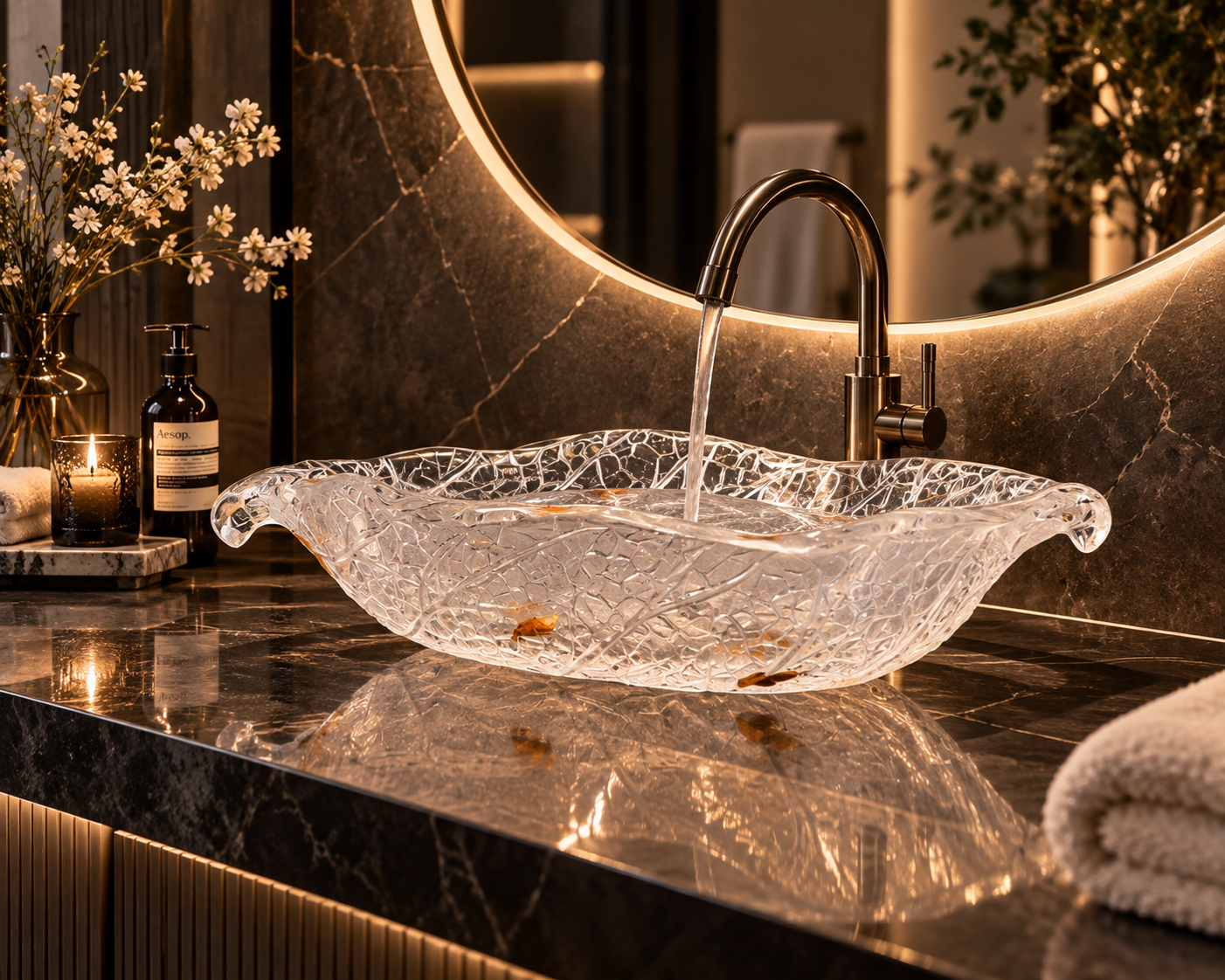
2. Around Swimming Pools, Transparent Materials Strengthen the Relationship Between Water and Architecture
Swimming pools are one of the most natural locations for transparent and light-responsive materials because water itself is already an optical design element.
It reflects the sky, refracts light, produces moving highlights, and changes color according to depth, finish, weather, and illumination. Synthetic crystal can extend those effects beyond the water.
Imagine a resort pool surrounded by conventional beige stone. Adding more stone furniture may maintain consistency, but it rarely creates surprise. Instead, a collection of transparent platinum acrylic side tables or synthetic-crystal accent tables can visually connect the furniture with the water.
The objects appear lighter because the pool, paving, and landscape remain visible through them.
At night, underwater lighting can create reflected highlights in nearby transparent furniture without necessarily placing LEDs inside every piece. A synthetic-crystal console positioned behind a pool bar might capture those moving reflections, while translucent resin tables can introduce controlled color.
The potential of acrylic around water is already demonstrated at architectural scale.
London's Sky Pool at Embassy Gardens is an extreme but instructive example. Structural engineer Eckersley O'Callaghan describes the project as the world's first fully transparent swimming pool spanning between two buildings. The acrylic pool bridges approximately 15 meters between towers ten stories above ground. Its side walls are around 180 mm thick, its base approximately 360 mm thick, and the acrylic structure itself weighs about 50 tonnes while holding a total of roughly 150 tonnes of water.
The project is clearly far removed from ordinary furniture, but it demonstrates an important principle: transparent polymers can move beyond decorative accessories and become serious components of sophisticated water environments when properly engineered.
For furniture manufacturers, this opens opportunities in poolside consoles, drinks tables, cabanas, outdoor dining tables, display furniture, transparent screens, and bespoke sculptural pieces.
But proximity to a pool also changes the specification process.
The CDC recommends maintaining swimming pools within defined chlorine and pH ranges, meaning furniture and decorative elements close to the water may experience repeated contact with chemically treated splash water. ASTM D543 specifically provides practices for assessing how plastic materials—including cast and resinous products—respond to chemical reagents and notes that testing conditions should reflect the actual chemicals, concentrations, temperature, stress, and duration expected in service.
A beautiful poolside table therefore needs more than visual clarity. Its material system, joints, coatings, hardware, and finishes should be selected for the real environment in which it will operate.
3. Landscape Walls Can Become Luminous Art Rather Than Simple Boundaries
Landscape walls are often treated as background architecture.
They hide service zones, create privacy, define property boundaries, retain soil, or separate functional areas. Yet in hotels, villas, restaurants, and commercial projects, these walls often occupy large visual areas. That makes them valuable opportunities for design.
Synthetic crystal can transform a conventional wall into a light-responsive surface.
One approach is to integrate individual crystal elements into stone, concrete, metal, or high-end resin panels. During daylight, the crystal introduces small points of reflection. In the evening, concealed linear lighting can reveal those elements selectively.
Another possibility is a translucent resin landscape wall containing embedded synthetic-crystal fragments or sculptural inclusions. Rather than illuminating the viewer directly, concealed LEDs behind the resin can create a soft background glow while the crystal produces sharper highlights.
Premium platinum acrylic can be used to create transparent fins, layered screens, or structural frames that hold the composition together without visually interrupting it.
This hybrid approach is particularly suitable for hotel entrances and commercial projects because the wall can communicate brand identity without relying on conventional signage.
A hospitality brand associated with water might use clear and blue-toned elements arranged like waves. A jewelry boutique might use faceted crystal forms. A spa could use softly illuminated amber resin combined with smaller transparent inclusions. A private villa might employ a much quieter composition in which only a few crystal elements become visible after sunset.
Scale is important.
If every square meter sparkles equally, the effect can quickly become decorative rather than architectural. Creating areas of visual silence makes the reflective areas more powerful.
Swarovski Crystal Worlds again provides an interesting precedent for this relationship between landscape and crystal. Its official information describes the garden as a carefully composed landscape incorporating art installations, planting, architecture, and crystal experiences. The attraction reports that more than 16 million people have visited Crystal Worlds since it opened. That visitor number cannot be attributed to one installation, of course, but the project demonstrates how crystal can form part of an entire destination identity rather than functioning only as a product displayed indoors.
For hotels and commercial developments, that distinction matters. A landscape wall can stop being infrastructure and become something guests remember.
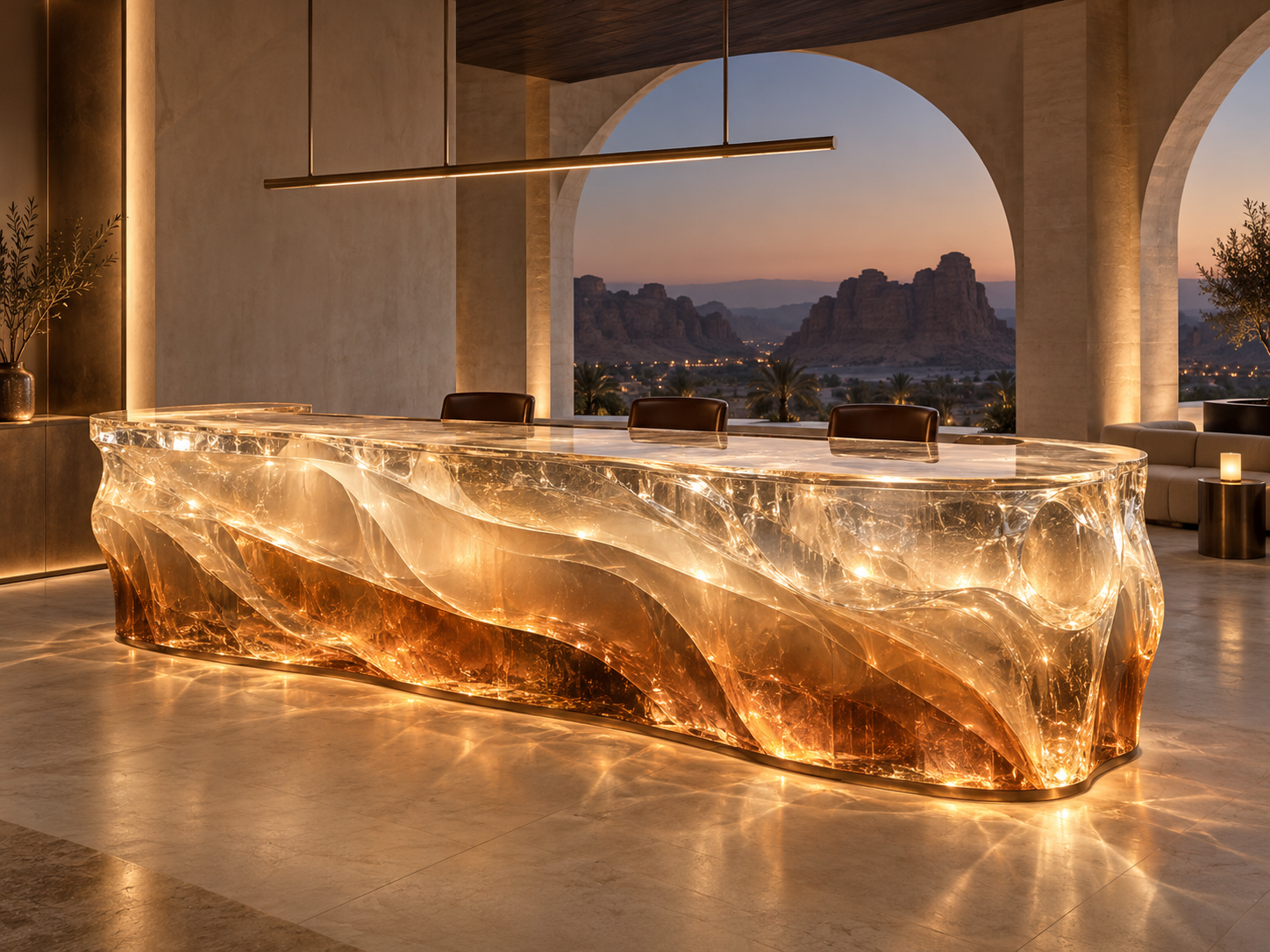
4. Combining Synthetic Crystal With High-End Resin and Platinum Acrylic Creates More Design Freedom Than Using One Material Alone
Synthetic crystal is most compelling outdoors when designers do not expect it to solve every requirement by itself.
Each transparent material has different visual strengths.
Synthetic crystal provides brilliance, faceting, refraction, and concentrated highlights. High-end resin offers color, translucency, casting freedom, embedded objects, and sculptural form. Platinum acrylic provides high optical clarity, cleaner geometry, structural visual lightness, and excellent potential for fabrication.
Used together, the three materials can produce furniture that conventional stone or metal construction would struggle to achieve.
A garden dining table might use transparent premium acrylic legs supporting a more traditional stone top, with synthetic-crystal elements suspended inside the base. A resort lounge could use translucent resin cocktail tables with crystal details concentrated near their edges. An illuminated exterior console could combine an acrylic structure with resin diffusion panels so the light source remains concealed.
The optical potential of quality acrylic is significant. Technical information from PLEXIGLAS states that clear transparent PMMA products can reach visible-light transmission of up to 92%. The manufacturer also states that almost all of its clear-transparent sheet grades are designed with intrinsic UV stability, with selected products covered by a 30-year guarantee against visible yellowing and loss of specified transparency. These figures relate specifically to the PLEXIGLAS product family rather than every acrylic on the market, but they demonstrate what properly specified outdoor-grade PMMA can achieve.
For luxury furniture, this distinction between generic plastic and correctly specified premium acrylic is critical.
A transparent table may look convincing when it leaves the factory. The real test is how it looks after several summers of sunlight, cleaning, rain, dust, and daily use.
The same principle applies to resin. An indoor decorative resin formulation should not automatically be transferred to a pool terrace simply because it looks similar to an outdoor-grade material.
When a project requires high-end resin furniture outdoors, designers should ask about resin chemistry, UV stabilization, color-change expectations, temperature range, surface coatings, drainage details, cleaning methods, and documented weathering data.
In luxury outdoor design, material specification is part of the aesthetics because long-term appearance is part of the product.
5. Outdoor Success Depends on UV Resistance, Weathering, Chemical Resistance, and Engineering
The greatest difference between indoor and outdoor transparent furniture is that the exterior environment exposes weaknesses quickly.
UV radiation can affect color and transparency. Repeated heating and cooling create dimensional movement. Rainwater finds poorly designed joints. Wind introduces loads that rarely matter indoors. Dust and mineral deposits reveal themselves immediately on highly polished transparent surfaces.
International testing standards illustrate how complex outdoor durability actually is.
ASTM D1435, the standard practice for outdoor weathering of plastics, states that the relative outdoor durability of plastics can vary significantly with UV exposure, wetness, temperature, pollutants, and location. It specifically warns against assuming that results from one climate automatically predict performance in another.
ASTM G154 provides procedures using fluorescent ultraviolet lamps and moisture to reproduce certain weathering effects associated with sunlight, rain, and dew. ISO 4892-1:2024 likewise provides guidance for exposing plastics to laboratory light sources and interpreting accelerated-weathering data.
These standards point to an important procurement question.
Instead of asking a furniture supplier, “Is this resin outdoor quality?” an architect or designer should ask, “What evidence supports its expected performance in the climate and application we are specifying?”
The distinction becomes even more important for commercial furniture.
ASTM's performance requirements for outdoor plastic chairs include factors such as outdoor weathering, impact resistance, static loading, and structural testing. In other words, exterior furniture performance is not defined by UV resistance alone.
Good product engineering should therefore address the entire assembly.
Metal inserts and fixings need corrosion consideration. Transparent joints should accommodate loads and thermal movement. Large horizontal surfaces should not collect rainwater. Exposed corners should be appropriate for public environments. Heavy sculptural pieces may require concealed anchoring in windy locations. Poolside pieces need materials and finishes compatible with cleaning products and treated water.
For synthetic-crystal furniture manufacturers, this is actually an opportunity.
A supplier capable of discussing engineering, weathering, material formulation, installation, and maintenance becomes far more valuable to an architect than a factory selling only an attractive photograph.
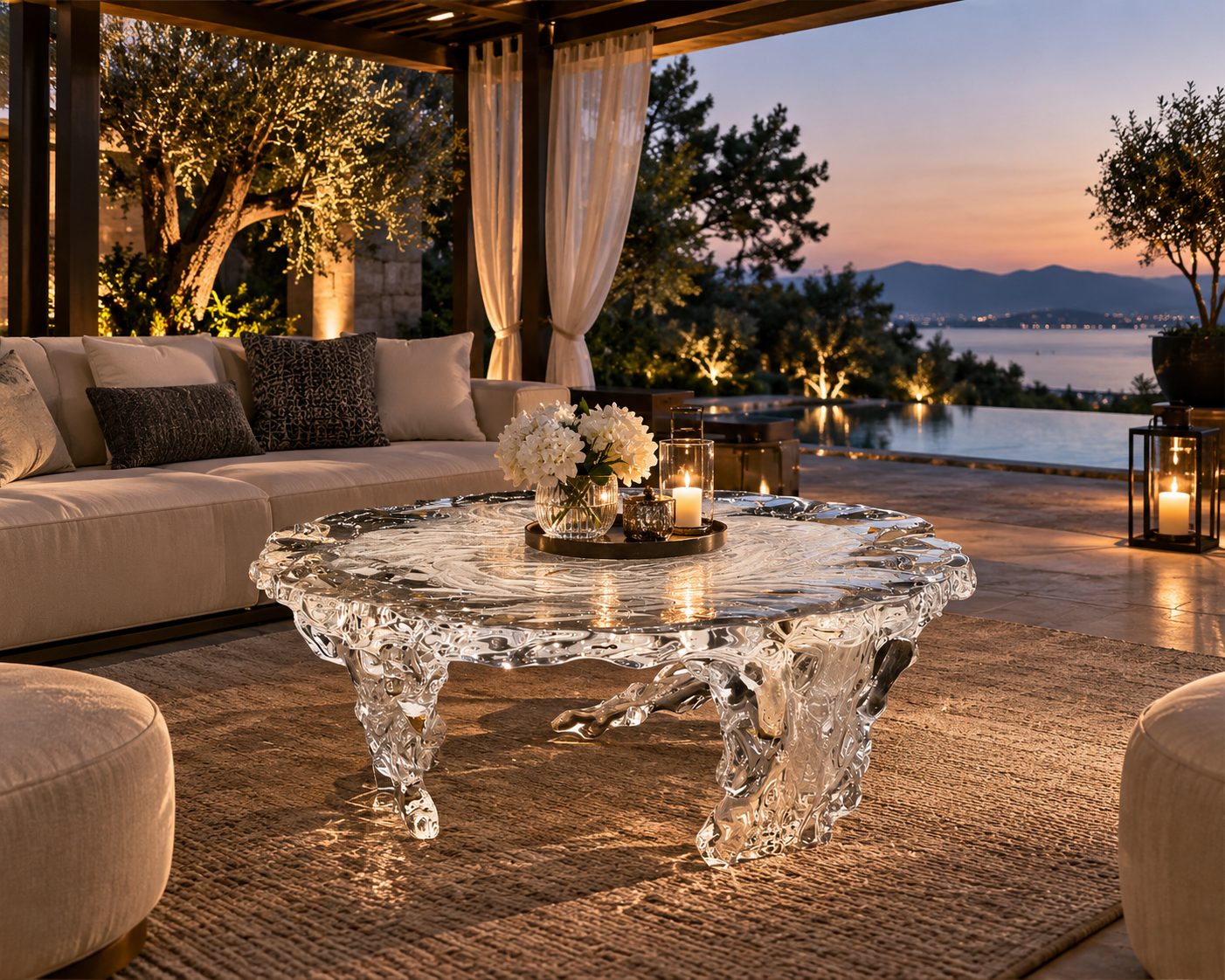
6. The Best Outdoor Applications Balance Spectacle With Light, Landscape, Maintenance, and Restraint
Synthetic crystal is naturally attention-grabbing, which means the designer's greatest challenge is often knowing when to stop.
An outdoor environment should not become brighter simply because reflective materials are available.
Responsible exterior lighting guidance from DarkSky International and the Illuminating Engineering Society recommends five basic principles: outdoor lighting should be useful, targeted only where required, no brighter than necessary, controlled according to need, and warmer in color where possible. The organizations also specifically warn designers to consider reflective surfaces because they can redirect more light than expected.
This is highly relevant to synthetic crystal and premium acrylic.
A landscape wall covered with reflective elements does not necessarily need powerful floodlighting. A low-level concealed light may create a stronger result. A poolside crystal table may already receive sufficient moving light from the swimming pool. A courtyard installation could remain almost invisible during part of the evening and become brighter only for events.
Restraint also reduces maintenance.
Outdoor transparent furniture inevitably encounters dust, fingerprints, rain marks, calcium deposits, pollen, sunscreen, food, and environmental pollution. Extremely complicated surfaces may look spectacular in renderings but become difficult for hotel housekeeping or facility-management teams.
That is why the best custom outdoor furniture considers cleaning access from the first drawing.
A synthetic-crystal coffee table can use removable or accessible decorative components. A resin-and-crystal landscape screen can include drainage paths. An illuminated platinum acrylic console can incorporate replaceable LED components instead of permanently sealing electronics inside the structure.
These details are not glamorous, but they are what separate a successful hospitality installation from a short-lived decorative experiment.
Ultimately, the creative potential of synthetic crystal outdoors does not come from replacing stone, timber, glass, or metal.
It comes from adding another layer to the designer's material vocabulary.
In a courtyard, synthetic crystal can make sunlight part of the furniture.
Beside a swimming pool, it can extend the optical qualities of water into tables, screens, bars, and sculptural elements.
On a landscape wall, it can transform a necessary boundary into a memorable nighttime feature.
High-end resin can introduce color and translucency. Platinum acrylic can provide exceptional visual clarity and seemingly weightless structure. Synthetic crystal can add the concentrated reflections that make the composition feel alive.
When these materials are engineered for the actual climate, combined intelligently with lighting and landscape, and used with enough restraint, outdoor furniture can become much more than something people sit beside.
It can become part of the identity of the property itself.
For luxury hotels, villas, resorts, restaurants, clubs, and commercial destinations, that may be the most valuable application of all.
READ MORE:
- Perché sempre più designer scelgono i mobili trasparenti negli interni contemporanei?
- Il cliente dice che il progetto “non è abbastanza speciale”? Parti dai materiali e dalla luce
- Oltre rattan e metallo: quali materiali scegliere per creare spazi outdoor davvero distintivi?
- Tavolini trasparenti, side table e mobili decorativi: come abbinarli senza far sembrare l’ambiente “economico”?
- Vuoi dare agli interni un aspetto più sofisticato? 5 idee di abbinamento con mobili in materiali trasparenti
- 2026 Spatial Material Trends: Why Designers Are Turning to Materials That Play With Light and Shadow
- How to Make an Entire Space Look More Expensive with Small-Area Decorative Materials
- Lighting + Synthetic Crystal: Why This Combination Is Increasingly Suited to Hotels, Villas, and Commercial Spaces
- Beyond Marble and Metal: What Other Materials Can Designers Use to Create a Striking Interior Focal Point?


