Small-space design is no longer a niche concern. Apartments are becoming more compact in many urban markets, while buyers still expect interiors to feel sophisticated, comfortable, flexible, and visually generous. In the United States, the National Association of Home Builders reported that the median size of new homes fell from 2,200 square feet in 2023 to approximately 2,150 square feet in 2024, the lowest level in 15 years. U.S. Census Bureau data show that the median size of a completed single-family home remained around 2,142 square feet in 2025. In other words, designers are increasingly being asked to create a greater sense of space without actually receiving more physical space.
This is where transparent furniture becomes far more interesting than a decorative trend.
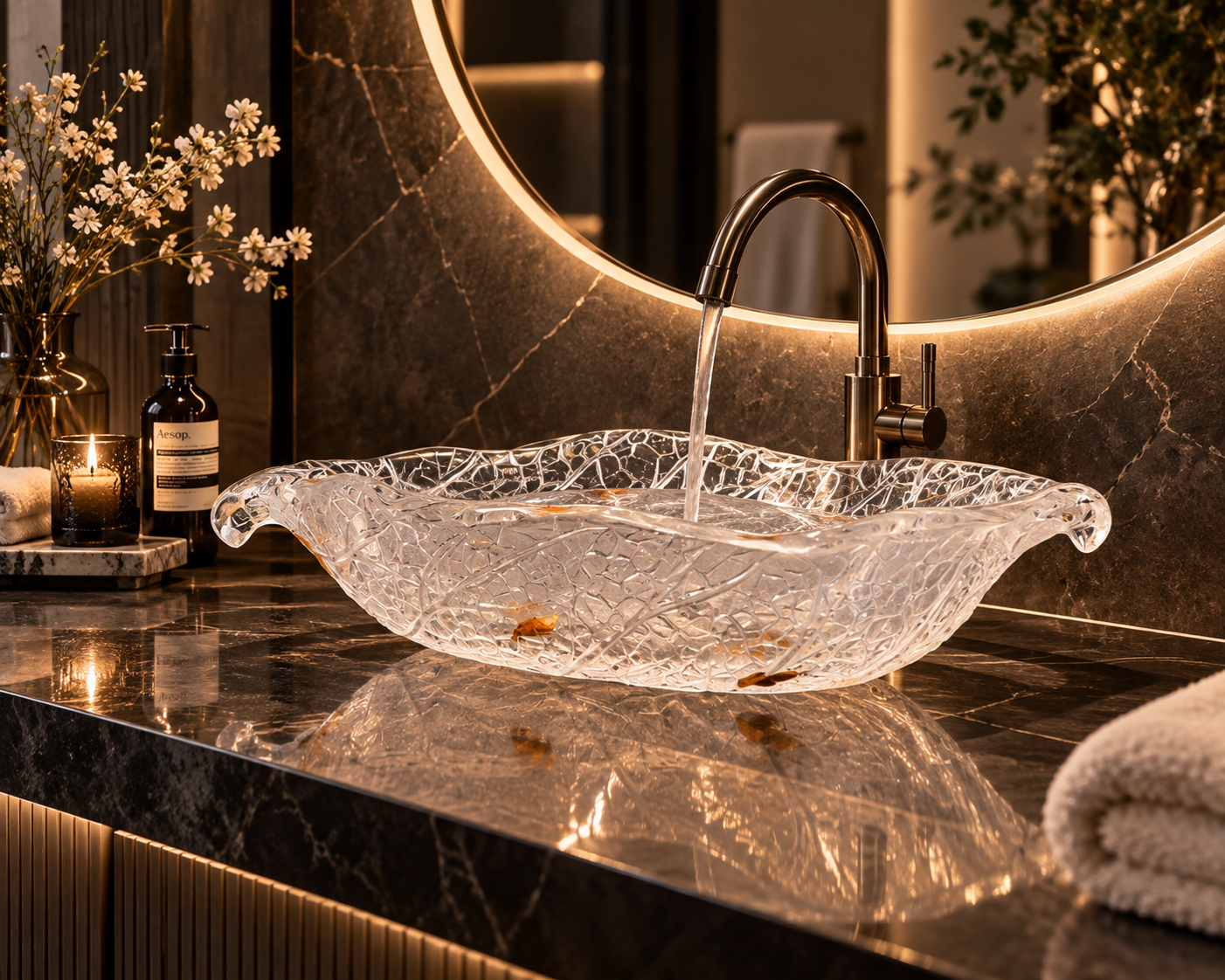
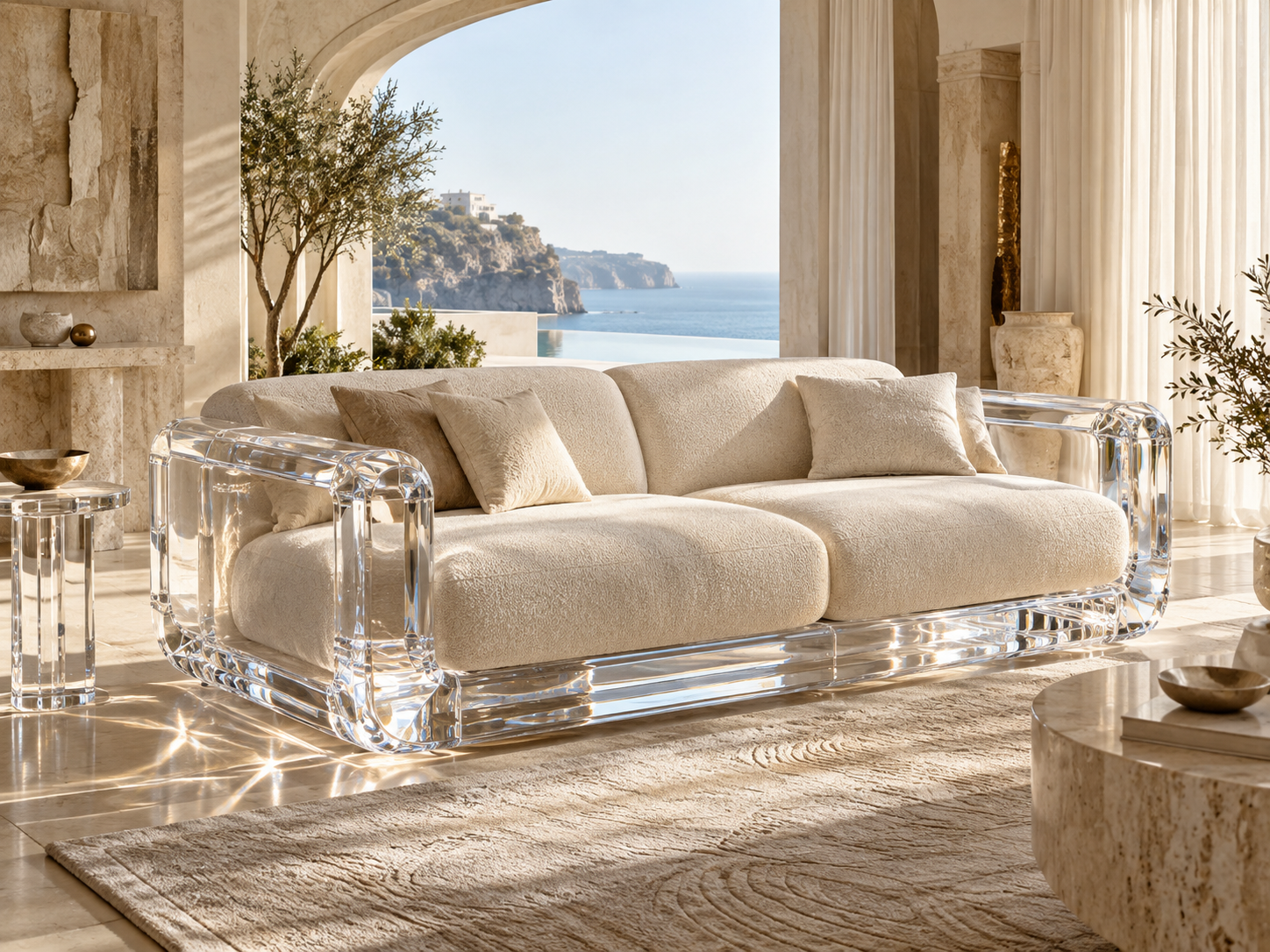
A synthetic-crystal dining table, premium resin console, transparent side table, or platinum-acrylic shelving system can perform the same practical role as conventional furniture while introducing considerably less visual obstruction. Rather than stopping the eye at an opaque surface, transparent furniture allows flooring, walls, daylight, artwork, and architectural details to remain visible through or around the object.
Scientific research supports the basic design principle behind this effect. A study published in Human Factors found that participants perceived rooms as more spacious when they were brighter, had larger windows, and contained less furniture. Transparent furniture does not physically remove an object from the room, but used correctly, it can reduce the amount of visual information that the eye interprets as solid obstruction.
For designers, therefore, the question is not simply whether clear furniture looks elegant. The more useful question is: how can transparency be used strategically to make limited square footage feel lighter, calmer, and larger?
1. Reduce Visual Weight Before Trying to Reduce Furniture
One of the most common mistakes in small interiors is assuming that every piece of furniture must simply become smaller. Scale certainly matters, but perceived spaciousness is influenced by more than dimensions alone. What the eye reads as “mass” is equally important.
Imagine two coffee tables with exactly the same footprint. One is made from dark timber with a thick top, enclosed sides, and a solid base. The other is made from clear synthetic crystal or high-quality acrylic with a transparent top and polished supports. Both occupy roughly the same number of square centimeters on the floor, but they do not occupy the same amount of visual space.
With the opaque table, the eye encounters a visual stop. Part of the rug disappears, the flooring pattern is interrupted, and a new block is introduced between the sofa and the opposite side of the room. With the transparent table, many of those visual references continue through the object. The furniture still exists physically, but its perceived mass is reduced.
This principle is closely aligned with research into perceived spaciousness. The Human Factors experiment involving virtual interior environments found that rooms containing less furniture were perceived as more spacious. Designers using transparent furniture are effectively working with a related idea: they may not be able to remove a necessary coffee table, console, dining table, or storage element, but they can reduce the visual dominance of that object.
This makes transparency especially useful for furniture positioned at eye-catching locations. A platinum-acrylic console behind a sofa, for example, can provide a surface for lighting and accessories without creating another heavy horizontal block. A synthetic-crystal side table beside an upholstered chair can provide functionality without competing with the chair. A clear resin dining-table base can support a substantial top while keeping the space beneath the table visually open.
For compact luxury apartments, this distinction is important. The objective is rarely to make the home look empty. The objective is to retain the comfort and sophistication of a fully furnished interior without allowing every object to announce its physical volume.
Transparent furniture helps designers furnish without visually overfurnishing.
2. Protect Sightlines and Allow Light to Travel Through the Room
In a small space, a long sightline is valuable. Being able to see from one side of the room to another, toward a window, through an adjacent zone, or across an uninterrupted floor surface can make the interior feel more continuous.
Opaque furniture can unintentionally shorten those sightlines.
A dark console placed in front of glazing, for instance, creates a horizontal visual barrier. A solid dining-table base can interrupt the floor plane. Tall shelving can divide a room even when it is not intended to function as a partition.
Transparent materials allow designers to introduce furniture while preserving more of the background.
That becomes particularly useful around daylight. The WELL Building Standard emphasizes access to daylight and exterior views as important aspects of indoor environmental quality and encourages regularly occupied spaces to remain reasonably close to windows and views. While transparent furniture cannot replace proper architectural daylighting, it can prevent furniture itself from unnecessarily blocking visual access to windows or interrupting the movement of light through an interior.
Research from Chalmers University of Technology and Jönköping University also demonstrates that light distribution influences perceived spaciousness. Their study found that illuminated walls can increase the sense of spaciousness and that the position and distribution of bright and dark areas can influence perceived width, depth, and height.
This has practical implications.
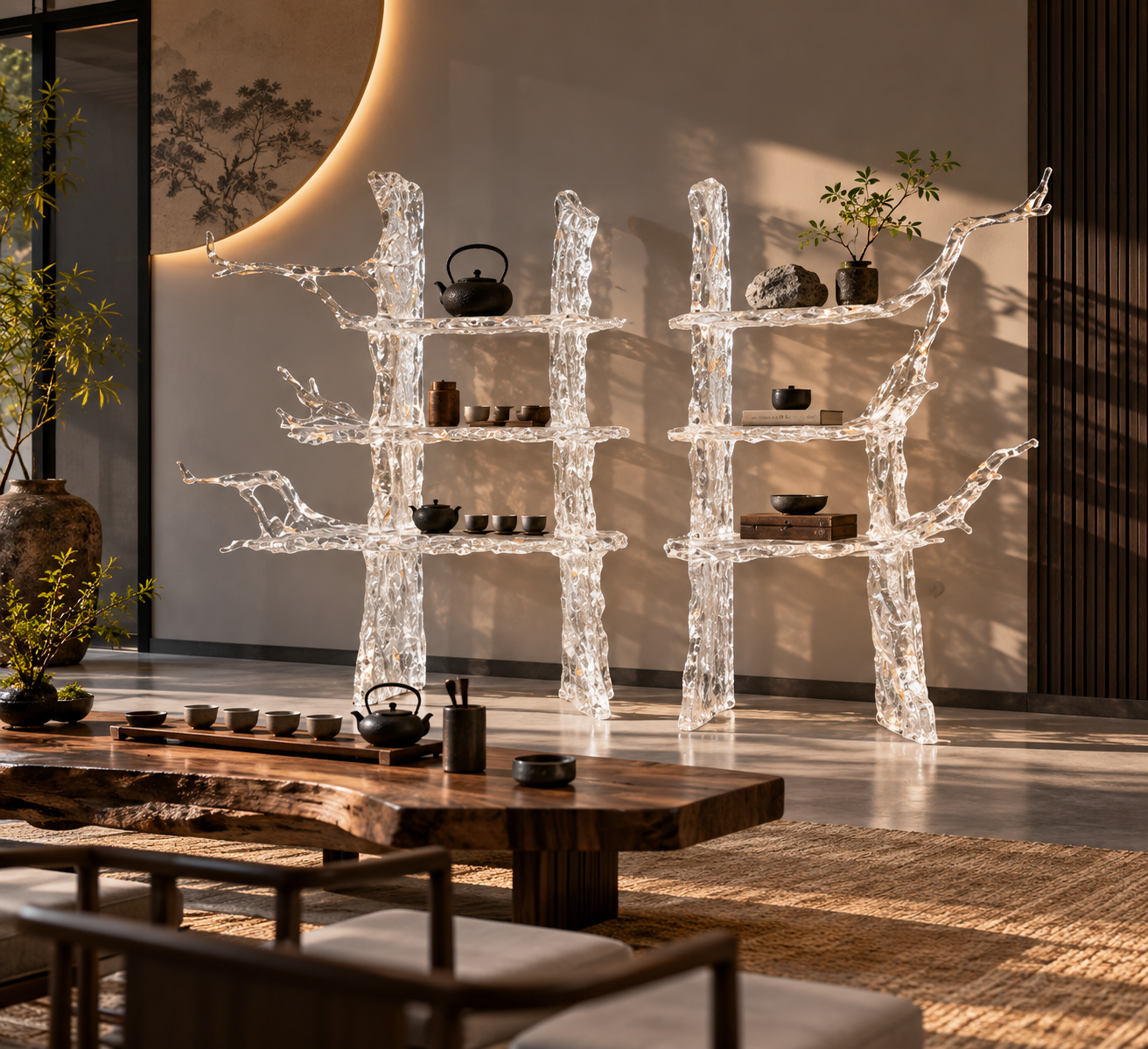
If a designer places a bulky opaque cabinet near the only window in a studio apartment, the problem is not merely the footprint of the cabinet. Its mass can create shadow, interrupt brightness, and visually shorten the room. Replacing it with lower transparent shelving, a platinum-acrylic display unit, or a clear resin console can allow more light and background surfaces to remain visible.
The result can be especially effective when transparent furniture is placed near pale walls, stone flooring, textured plaster, rugs, or large-format tiles. Instead of covering those surfaces, the furniture allows them to remain part of the visual field.
For a designer, that means every visible square meter can work harder.
3. Use Optical Clarity to Create Depth, Not Simply “Invisible Furniture”
Not all transparent furniture produces the same effect. Material quality becomes particularly important when a designer is trying to create a premium interior.
High-quality PMMA, commonly known as acrylic, demonstrates why. Röhm reports that clear PLEXIGLAS can achieve visible-light transmission of up to 92 percent. The company also describes the material as approximately half the weight of comparable glass while providing high optical clarity. Exact performance varies by grade, thickness, fabrication process, and manufacturer, but the figures illustrate why premium acrylic can be particularly useful where designers want transparency without the visual heaviness associated with conventional solid materials.
For furniture, however, good transparency is not simply about seeing through a sheet.
Thickness creates another opportunity.
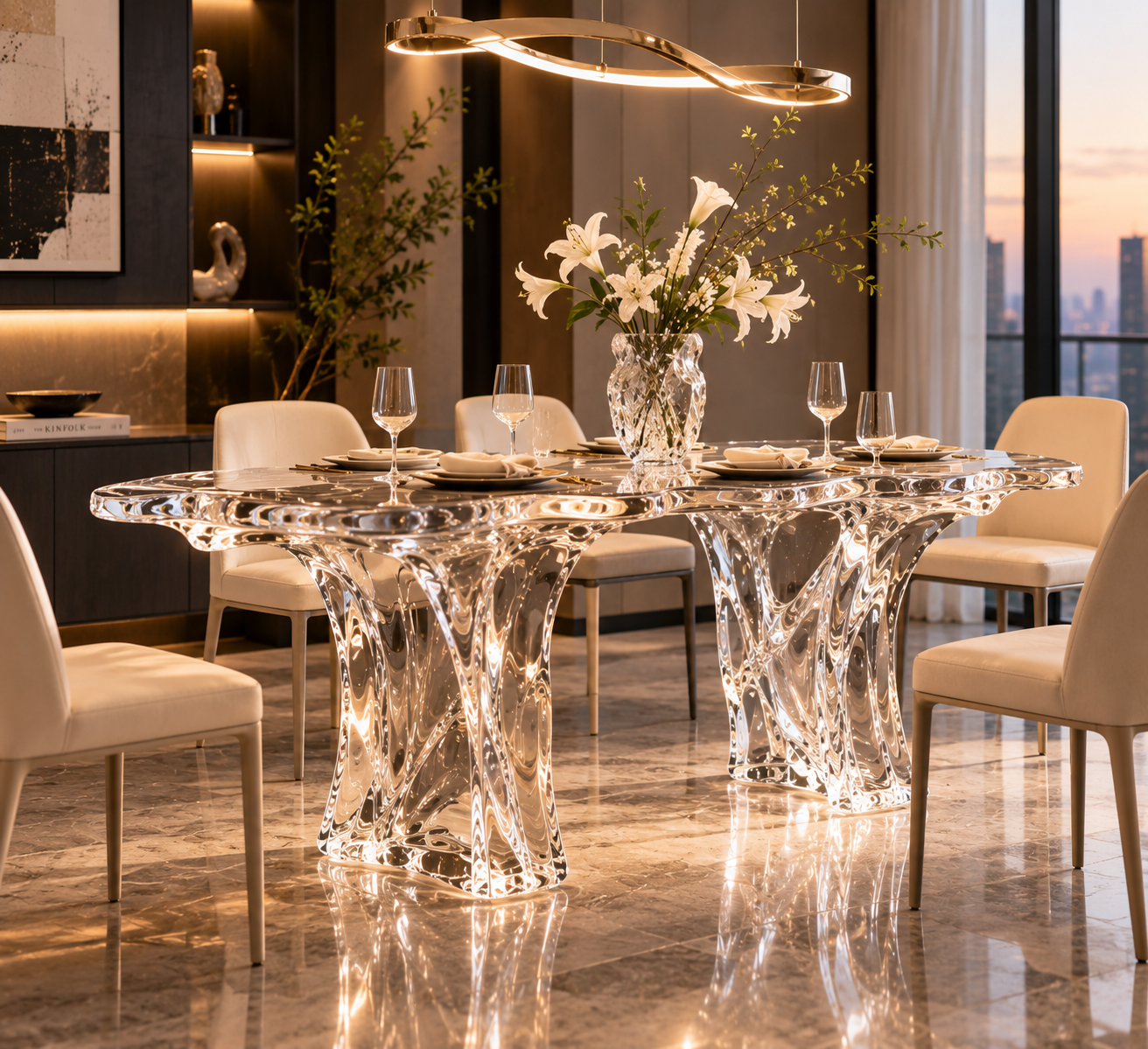
A thin acrylic side panel can almost disappear. A thick synthetic-crystal table leg or high-end cast-resin pedestal behaves differently: light enters the material, interacts with polished edges, creates internal reflection, and produces visible depth. Viewed from one direction it may appear almost invisible; viewed from another, the edges can become bright architectural lines.
This allows transparent furniture to be both visually light and visually luxurious.
A compact living room, for example, does not necessarily need a tiny coffee table. A substantial synthetic-crystal table with highly polished surfaces may create a stronger luxury statement than a small conventional table while still allowing the rug and flooring to remain visible. Similarly, platinum acrylic can be used to create sharply defined table legs, console supports, transparent plinths, shelving, or geometric side tables that provide structure without making the room feel visually blocked.
The key is quality. Poor polishing, cloudy material, visible bonding marks, uncontrolled bubbles, scratches, or optical distortion can quickly destroy the sense of visual lightness.
For premium furniture manufacturers, therefore, transparency is not a color.
It is a craftsmanship standard involving material selection, casting quality, machining, bonding, polishing, edge treatment, optical control, and precise assembly.
4. Keep the Floor Plane and Circulation Visually Open
Transparency alone cannot rescue badly scaled furniture.
A transparent table that is too large for the room is still too large. A clear chair positioned in the middle of an important circulation path is still an obstacle. Successful small-space design therefore combines low visual weight with careful planning.
One useful strategy is to preserve as much readable floor area as possible.
When people can see flooring extending beneath and through furniture, the brain receives stronger information about the real dimensions of the room. Clear legs, open bases, cantilevered structures, raised consoles, and transparent tabletops can help maintain that continuity.
A real-world commercial example demonstrates the principle. In the 70-square-meter Jetlag Books project in Beijing, +C Architects used transparent acrylic and steel-framed bookshelves specifically to reduce the perceived heaviness of shelving within what ArchDaily described as a small, confined space. Because the acrylic remained visually permeable, the books could become the dominant visual material rather than the shelving structure itself.
The same approach transfers naturally to residential interiors.
In a compact dining area, a solid pedestal table can make the center of the room feel occupied even when nobody is seated there. Transparent synthetic-crystal legs or an acrylic base expose more of the floor and chair silhouettes, making the composition visually lighter.
In an entryway, a narrow platinum-acrylic console can provide a useful drop zone without producing the visual barrier of a dark cabinet. In a studio apartment, transparent nesting tables can provide multiple surfaces when required and overlap visually when stored together. In a luxury bedroom, a clear bench or resin side table can add function without competing with the bed, flooring, or wall finishes.
The design objective is not to make every object disappear. It is to prevent furniture from breaking the room into too many visually disconnected fragments.
When the floor, walls, and main sightlines remain legible, a small interior often feels more coherent—and coherence is one of the strongest allies of perceived spaciousness.
5. Combine Transparent Materials with Stronger Materials Instead of Making Everything Clear
One transparent object can make a room feel lighter. A room filled entirely with transparent objects can become visually confusing, cold, reflective, or gimmicky.
The strongest small-space interiors usually depend on contrast.
Transparent furniture works particularly well when combined with materials that provide warmth and visual stability: walnut, oak, marble, travertine, leather, boucle, brushed stainless steel, bronze, textured plaster, or natural fabrics. The transparent element creates breathing room while the opaque materials establish hierarchy.
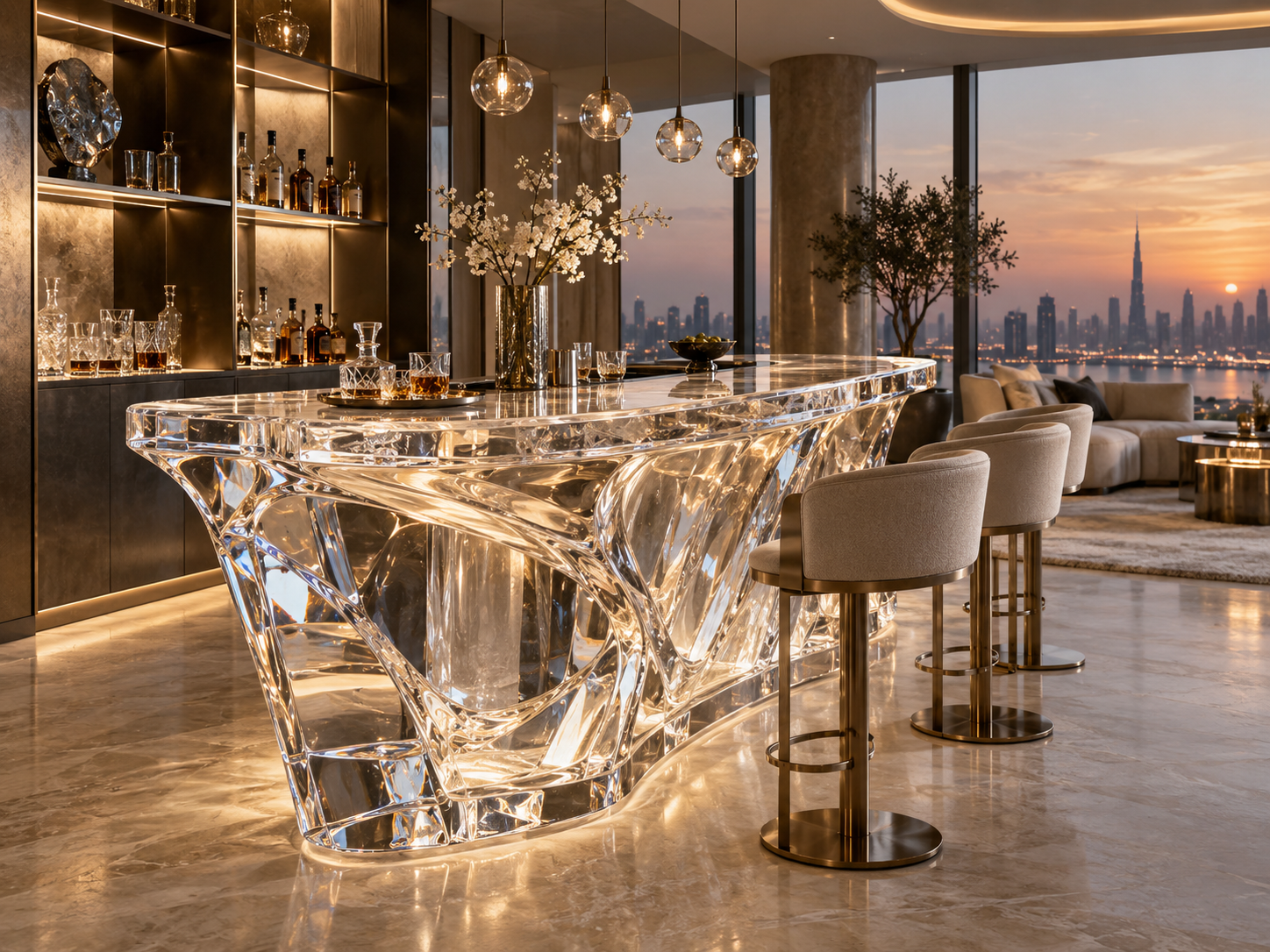
For example, a high-end resin dining table may combine a translucent or crystal-clear sculptural base with a stone top. A platinum-acrylic console might incorporate metal details. A synthetic-crystal coffee table can sit beside a deeply upholstered sofa. Clear resin stools can be used beneath a richly veined stone counter.
This type of contrast also prevents transparent furniture from being interpreted as inexpensive plastic.
Design history provides an important reminder that clear polymers can carry substantial cultural and artistic value. MoMA's collection includes Gilbert Rohde's circa-1938 stainless-steel and Plexiglas chair, one of the early experiments with transparent structural polymers in modern furniture. The museum also holds Shiro Kuramata's famous 1988 Miss Blanche Chair, constructed from acrylic resin containing artificial roses. In Kuramata's work, transparency was not used to make the chair disappear; it became a medium for depth, suspended imagery, and visual poetry.
That lesson is valuable in small spaces today.
Transparent furniture should not be treated merely as “furniture you cannot see.” Premium synthetic crystal and resin can contain controlled color, subtle gradients, inclusions, textures, bubbles, metallic elements, or embedded artistic details. The designer simply needs to control their intensity.
In a compact interior, restraint matters. One expressive resin console can become the focal point while surrounding furniture remains quieter. One tinted synthetic-crystal side table can introduce color without the mass of a painted cabinet.
Transparency creates space; selective detail gives that space character.
6. Treat Transparent Furniture as a Spatial Tool, Not a Styling Trick
The most successful designers choose transparent furniture for a reason.
They identify the specific source of visual congestion first. Is a coffee table interrupting the view of a statement rug? Is the dining table making the center of the room feel too heavy? Is a console blocking an important line toward a window? Does a retail display structure compete with the products it is supposed to showcase? Is a hotel suite heavily furnished even though the individual pieces are relatively small?
Once the problem is clear, the appropriate transparent material can be selected.
Platinum acrylic is particularly useful when the design calls for crisp geometry, clean surfaces, precision fabrication, and strong optical clarity. High-end resin becomes more compelling when the designer wants sculptural casting, thicker sections, color effects, inclusions, organic forms, or a sense of material depth. Synthetic crystal can work exceptionally well for statement coffee tables, dining-table bases, consoles, benches, side tables, decorative columns, and custom installations where transparency itself needs to feel substantial and luxurious.
Specification still matters. Designers should consider load requirements, UV exposure, scratch resistance, cleaning chemicals, edge treatment, joint quality, stability, fire requirements, maintenance, repair possibilities, and the intended level of daily use before deciding on a material. A residential side table and a hotel lobby console may look similar in photographs but face very different performance demands.
When those technical decisions are handled correctly, transparent furniture offers something particularly valuable in small-space design: functionality without equivalent visual weight.
The physical room does not become larger. The walls do not move. The floor area does not increase.
What changes is the amount of the room that remains visually available.
The flooring continues beneath the table. Daylight passes around and through the furniture. The eye can travel toward the window. Decorative finishes remain visible instead of being hidden behind opaque objects. Necessary furniture stops competing so aggressively with architecture.
That is why transparent furniture can be particularly effective in contemporary apartments, luxury residences, hotel rooms, boutiques, restaurants, galleries, and compact commercial spaces.
Synthetic crystal, premium resin, and platinum acrylic are therefore not simply alternatives to wood, stone, metal, or glass. They give designers another way to manage one of the most limited resources in an interior: visual space.
In a large room, transparent furniture can be beautiful.
In a small room, it can be strategic.
And when every square meter matters, the furniture that visually occupies the least space can sometimes make the strongest design statement.