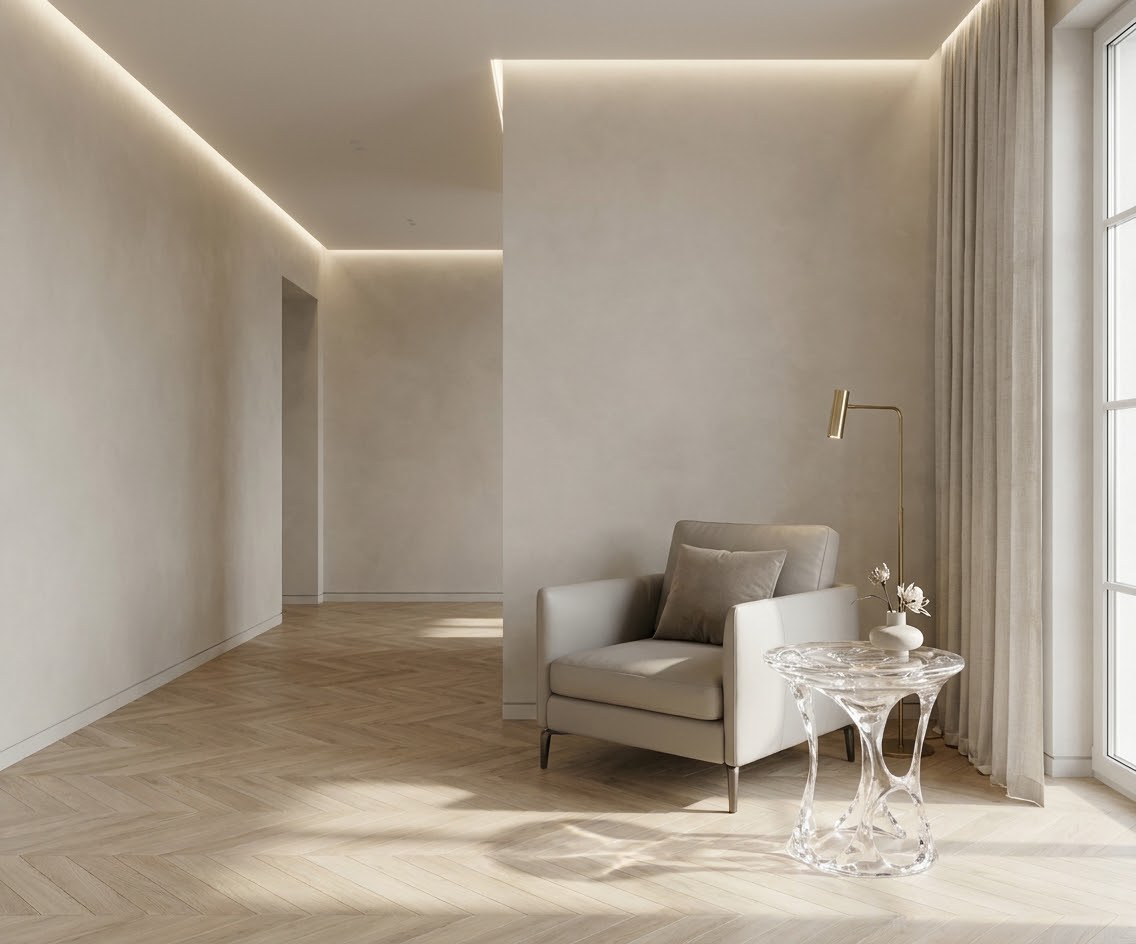
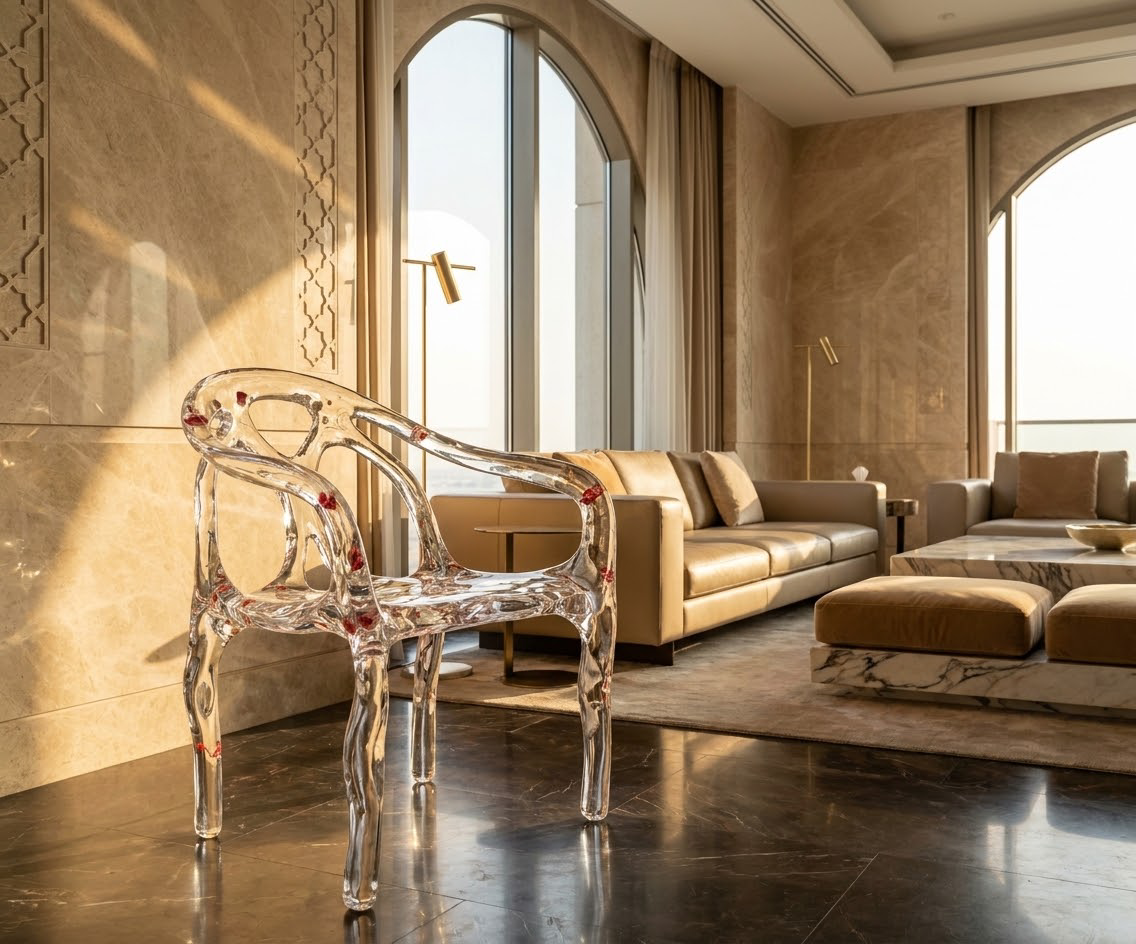
Synthetic crystal furniture has emerged as a transformative material in high-end interior design, redefining how light, form, and texture interact in residential and commercial spaces. For interior designers seeking to balance visual drama with functional durability, these pieces offer a unique blend of optical brilliance and structural resilience. This article explores how edge detailing and material precision in synthetic crystal furniture shape the overall sensory quality of interior environments.
The Material Foundation of Synthetic Crystal Furniture
Core Composition and High-Purity Optical-Grade Materials
At the heart of premium synthetic crystal furniture lies high-purity optical-grade materials, engineered to achieve 99.9% light transmittance—comparable to natural rock crystal but with far greater structural consistency. Unlike glass, which contains trace impurities that cause subtle green or blue tints, these materials are formulated with purified silica and specialized polymers to eliminate color distortion.
Manufacturers use a controlled cooling process that can take up to 28 days for large slabs, ensuring uniform crystal structure throughout the material. This precision eliminates internal stress lines, a common flaw in lower-quality artificial crystal furniture that can lead to cracking under temperature changes.
Key material properties include:
92-95% light transmittance across the visible spectrum
Refractive index of 1.54, matching natural crystal for brilliant light dispersion
UV stability that prevents yellowing even after 10+ years of sun exposure
Non-porous surface that resists staining from coffee, wine, and cosmetics
High Surface Hardness and Functional Durability
A defining technical feature of synthetic crystal furniture is its high surface hardness, measuring 6.5-7 on the Mohs scale—significantly harder than acrylic (2-3 Mohs) and standard soda-lime glass (5.5 Mohs). This durability makes pieces suitable for high-traffic areas where natural stone or glass would show wear.
The hardness is achieved through a combination of dense crystal structure and surface polishing techniques that create a micro-smooth finish. For interior designers specifying pieces for luxury hotels or corporate lobbies, this resistance to scratching and abrasion is a critical practical benefit.
Performance metrics for high surface hardness variants:
Resists scratching from everyday items like keys, utensils, and vases
Can be polished to remove minor surface marks without specialized equipment
Maintains optical clarity after 10,000+ cleaning cycles with standard glass cleaners
Withstands impact from 1kg objects dropped from 1.5m height without shattering
Edge Design: The Defining Element of Crystal Furniture Aesthetics
Edge Profiles and Visual Lightness
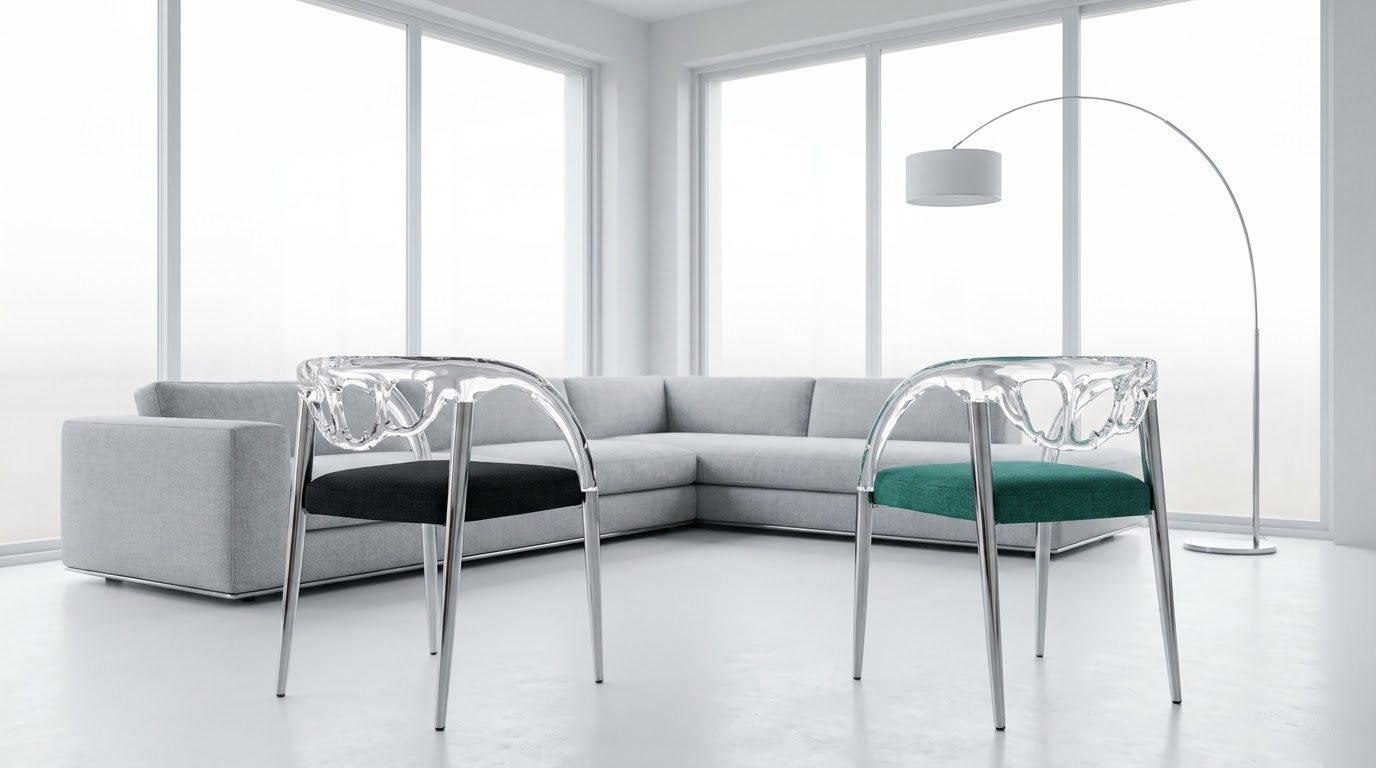
Edge detailing is where synthetic crystal furniture truly distinguishes itself from glass or acrylic alternatives. The material’s structural stability allows for ultra-thin edge profiles—as narrow as 8mm for table tops up to 2m in length—that create an almost floating visual effect.
Interior designers often select edge profiles based on the desired spatial impact:
Beveled edges: 45-degree angled edges that catch light and create prismatic color effects, ideal for dining tables in formal dining rooms
Flat polished edges: Clean, straight edges that emphasize material thickness and modern minimalism, popular for conference room tables
Bullnose edges: Rounded edges that soften the material’s inherent sharpness, perfect for family homes with children
Ogee edges: Decorative curved profiles that add classical elegance, often used in luxury residential projects
The precision of edge polishing directly affects how light interacts with the piece. Poorly polished edges can appear cloudy or uneven, while high-quality finishes create a continuous line of light that traces the furniture’s silhouette.
Edge Thickness and Spatial Perception
The thickness of crystal furniture edges directly influences how a space feels. Thinner edges (8-12mm) create a sense of lightness and airiness, making rooms appear larger and more open. Thicker edges (30-50mm) convey solidity and luxury, anchoring a space and serving as a focal point.
For synthetic crystal tables, designers often use graduated thickness—thicker at the center for structural support, tapering to thinner edges—to achieve both visual delicacy and functional strength. This engineering feat is only possible with high-purity optical-grade materials that maintain consistent structural properties across varying thicknesses.
Design applications by edge thickness:
8-12mm edges: Side tables, console tables, and shelving in small apartments or minimalist spaces
15-25mm edges: Dining tables, desks, and coffee tables in mid-sized residential and commercial spaces
30-50mm edges: Statement pieces in grand lobbies, luxury hotel suites, and high-end retail environments
Custom thicknesses: Sculptural pieces and site-specific installations for gallery and museum spaces
How Synthetic Crystal Furniture Transforms Interior Spatial Texture
Light Manipulation and Ambient Quality
Synthetic crystal furniture acts as a functional light sculpture, refracting and reflecting ambient light to dynamically change a room’s atmosphere throughout the day. Morning sunlight passing through a crystal dining table creates prismatic rainbows across walls and floors, while evening artificial light produces soft, glowing reflections that add warmth.
Unlike reflective materials like metal or mirror, which bounce light directly, crystal disperses it, creating a softer, more diffused glow. This quality makes it particularly valuable in spaces with limited natural light, where it can amplify existing light sources without creating harsh glare.
Ways crystal furniture enhances light quality:
Bounces natural light deep into rooms, reducing the need for artificial lighting during the day
Creates dynamic light patterns that change with the sun’s position, adding visual interest
Softens harsh overhead lighting by refracting it into multiple directions
Works with accent lighting to create dramatic focal points after dark
Material Dialogue and Textural Contrast
The true power of synthetic crystal furniture lies in its ability to complement and elevate other materials in a space. When paired with warm wood, the cool clarity of crystal creates a balanced contrast that prevents wood from feeling heavy. With metal, crystal adds a soft, organic element that balances industrial hardness.
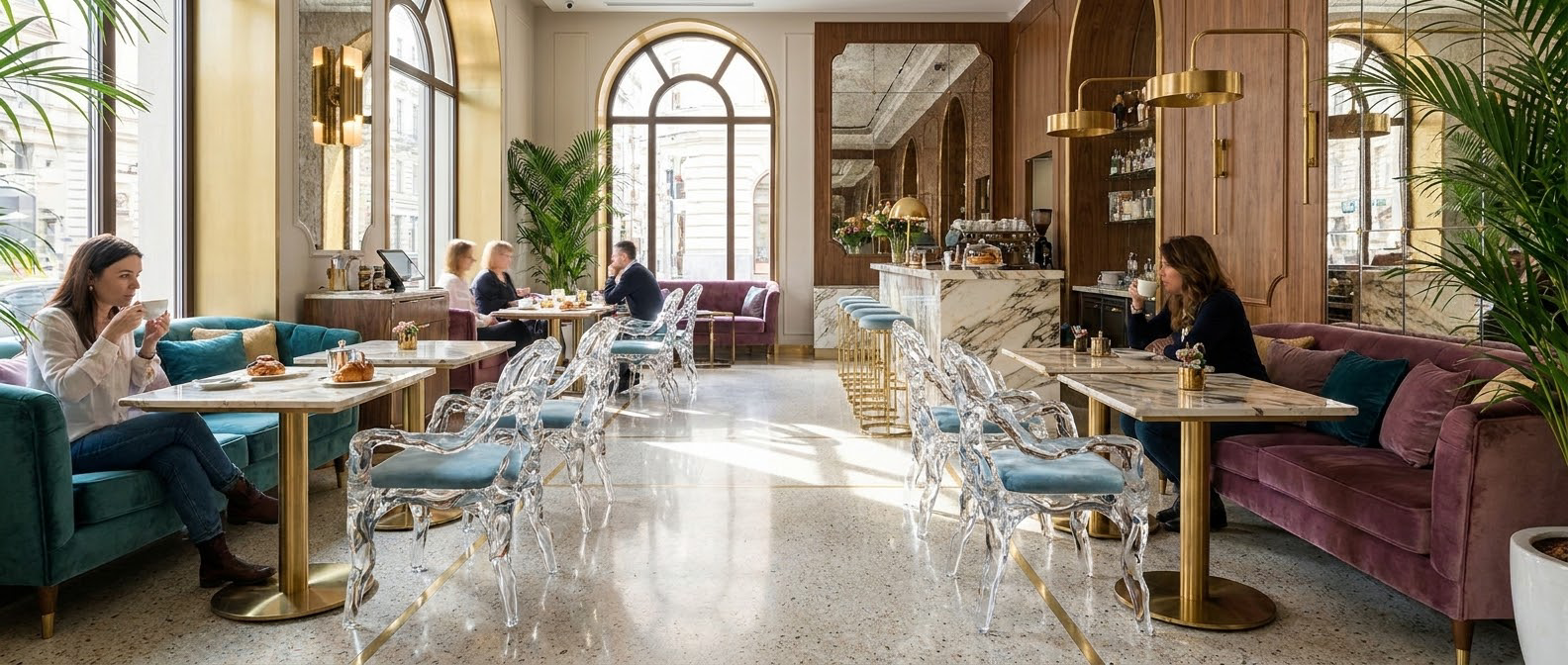
For interior designers working with textured materials—rough stone, woven textiles, matte plaster—crystal furniture provides a smooth, luminous counterpoint that prevents spaces from feeling visually cluttered. The material’s transparency means it doesn’t block sightlines, maintaining an open, connected feel even in rooms with multiple furniture pieces.
Effective material pairings for crystal furniture:
Walnut + crystal: Warm wood grain contrasts with cool clarity, perfect for traditional-modern fusion spaces
Brass + crystal: Gold tones reflect beautifully through crystal, creating a glamorous, Art Deco-inspired look
Concrete + crystal: Industrial roughness meets refined elegance, ideal for contemporary lofts
Velvet + crystal: Soft textile texture balances hard, smooth crystal, adding luxury to living rooms
Case Studies: Real-World Applications by Interior Designers
Residential Project: Manhattan Penthouse Dining Room
A leading New York interior design firm recently completed a penthouse project where a 2.4m synthetic crystal table served as the dining room centerpiece. The table featured a 20mm thick top with beveled edges, supported by brushed brass legs.
The design team selected crystal specifically to address the room’s challenge: a long, narrow space with windows only on one end. The table’s transparent form prevented it from visually blocking the space, while its light-refracting properties helped distribute natural light deeper into the room.
Key outcomes from the project:
The room appeared 15% larger according to post-occupancy client feedback
Natural light penetration increased by an estimated 20% compared to the previous wooden table
The piece became a conversation starter, with 80% of guests commenting on its unique design
The high surface hardness meant no visible scratches after 12 months of regular family use
The project also included two synthetic crystal chairs at the head of the table, their transparent forms maintaining the room’s open feel while adding sculptural interest.
Commercial Project: Milan Boutique Hotel Lobby
A boutique hotel in Milan’s Brera district used artificial crystal furniture throughout its lobby to create a sense of modern luxury that honors the neighborhood’s artistic heritage. The space features a large crystal reception desk, crystal side tables, and sculptural crystal seating elements.
The design team chose high-purity optical-grade materials specifically for their ability to interact with the lobby’s custom lighting system. Programmable LED lights installed beneath the floor shine up through the crystal pieces, creating changing color effects that shift from warm gold in the evening to cool white during the day.
Project highlights:
The lobby has become a popular Instagram spot, generating over 5,000 social media posts in its first year
Guest satisfaction scores for “lobby atmosphere” increased 35% compared to the previous design
The furniture’s high surface hardness withstood heavy foot traffic without showing signs of wear
The transparent design made the 80sqm lobby feel significantly more spacious
Future Trends and Considerations for Interior Designers
Technological Advancements in Crystal Furniture Manufacturing
The synthetic crystal furniture industry is evolving rapidly, with new manufacturing techniques expanding design possibilities. One emerging technology is 3D crystal forming, which allows for complex, organic shapes that were previously impossible to achieve with traditional cutting and polishing methods.
Another development is color-integrated crystal, where pigments are added during the manufacturing process to create pieces with subtle, uniform color throughout the material. Unlike surface coatings, these colored crystals maintain their vibrancy even when edges are polished or surfaces are scratched.
Upcoming technologies to watch:
Smart crystal: Pieces with embedded LED strips and touch controls for adjustable lighting
Textured crystal: Surfaces with micro-patterns that create unique light diffusion effects
Recycled crystal: Materials made from 100% post-industrial crystal waste, reducing environmental impact
Ultra-large format: Slabs up to 3m x 6m, made possible by new casting technologies
Specifying Synthetic Crystal Furniture: Best Practices
For interior designers new to specifying synthetic crystal furniture, several best practices ensure successful project outcomes. First, always request physical samples before finalizing selections—photographs rarely capture the material’s true optical quality and edge finish.
Second, consider installation requirements carefully. While crystal is durable, it is also heavy—a 2.4m dining table top can weigh over 150kg. Proper structural support and professional installation are essential for safety and long-term performance.
Key specification checklist for designers:
Verify material grade (insist on high-purity optical-grade materials for premium projects)
Test edge finish quality by running a finger along the edge to check for smoothness
Confirm weight load requirements for floors and supporting structures
Request maintenance guidelines to share with clients
Ask about warranty coverage—top manufacturers offer 10+ year warranties against yellowing and structural defects
As synthetic crystal furniture continues to grow in popularity, it represents more than just a design trend—it’s a material that fundamentally changes how we experience interior spaces. Through careful attention to edge design, material quality, and spatial context, interior designers can use these pieces to create environments that feel both luxurious and light-filled, balancing visual drama with everyday functionality.
READ MORE:
- Arredamento in cristallo sintetico: innovazione dei materiali e libertà nel design d’interni
- Progettazione strutturale e prestazioni d'uso dell'arredamento in cristallo sintetico: come coniugare innovazione formale, stabilità e funzionalità?
- Arredamento in cristallo sintetico: design d'interni orientato all'esperienza e modellazione dell'atmosfera
- Arredamento in cristallo sintetico: dalla trasparenza dei materiali alla gerarchia spaziale nei metodi di organizzazione visiva del design d'interni contemporaneo
- Arredamento in cristallo sintetico: scala visiva e rapporto tra proporzioni architettoniche e volume dei mobili
- Synthetic Crystal Furniture: Redefining Material Expression in Contemporary Interior Design
- Synthetic Crystal Furniture: Balancing Design Precision and Delivery in Custom Interior Projects
- Synthetic Crystal Furniture: From Furniture Design to Brand Space Shaping in High-End Retail
- How Synthetic Crystal Furniture Bridges Design Creativity and Manufacturing for Complex Custom Shapes


