Premium transparent furniture has redefined modern interior aesthetics by merging visual lightness with structural precision. As synthetic crystal furniture and acrylic furniture and decor gain traction across residential and commercial spaces, understanding the engineering behind these pieces becomes critical for industry professionals. This guide breaks down the core design principles that make high-end transparent furniture both visually striking and functionally durable.
1. Material Science Foundations of Premium Transparent Furniture
The quality of premium transparent furniture starts with rigorous material selection and performance testing. Designers and engineers balance optical properties, mechanical strength, and long-term durability to create pieces that meet luxury standards.
1.1 Core Material Types and Performance Comparisons
Three primary materials dominate the high-end transparent furniture market, each with unique structural and aesthetic characteristics:
Synthetic crystal resin: Offers 92% optical clarity, superior scratch resistance, and high mechanical strength, ideal for statement pieces like synthetic crystal tables and high-end crystal billiard tables
Cast acrylic (plexiglass): Provides excellent formability, consistent transparency, and impact resistance 10-15 times that of glass, perfect for acrylic chairs and stools and acrylic bar counters
Transparent epoxy resin: Enables custom embedded elements and organic shapes, commonly used for decorative transparent furniture and custom design furniture
The mechanical strength of synthetic crystal materials allows for thinner profiles without compromising load-bearing capacity, a key advantage over traditional glass furniture.
1.2 Key Material Performance Indicators for Furniture Applications
For furniture-grade transparent materials, manufacturers prioritize five core performance metrics:
Optical transparency: Premium grades maintain 90-93% light transmission, with minimal yellowing over 10+ years of UV exposure
Impact resistance: Acrylic and synthetic crystal materials withstand 5-10 times more impact than tempered glass, reducing safety risks in high-traffic spaces
Temperature resistance: High-quality formulations maintain structural integrity between -40°C and 80°C, suitable for both indoor and covered outdoor use
Chemical resistance: Resists common household and commercial cleaning products, preventing surface clouding or etching
Machinability: Supports precision cutting, thermoforming, and polishing for complex custom shapes
These metrics guide material selection for different product categories, from delicate transparent design console tables to heavy-use transparent dining tables in commercial settings.
2. Structural Design Principles for Aesthetic and Functional Balance
Premium transparent furniture achieves its signature look by hiding structural supports while maintaining load capacity. Engineers use advanced modeling to ensure every millimeter of material serves both visual and functional purposes.
2.1 Load-Bearing Structure Optimization
Unlike wooden or metal furniture, transparent furniture relies on material thickness and geometric design to distribute weight. Key optimization strategies include:
Thickness gradient design: Thicker sections at stress points (e.g., table leg joints) and thinner sections in low-stress areas to reduce visual bulk
Reinforced rib structures: Hidden internal ribs for large-surface pieces like transparent dining tables, adding strength without visible supports
Stress dispersion modeling: Finite element analysis (FEA) to identify high-stress zones and adjust acrylic sheet thickness accordingly
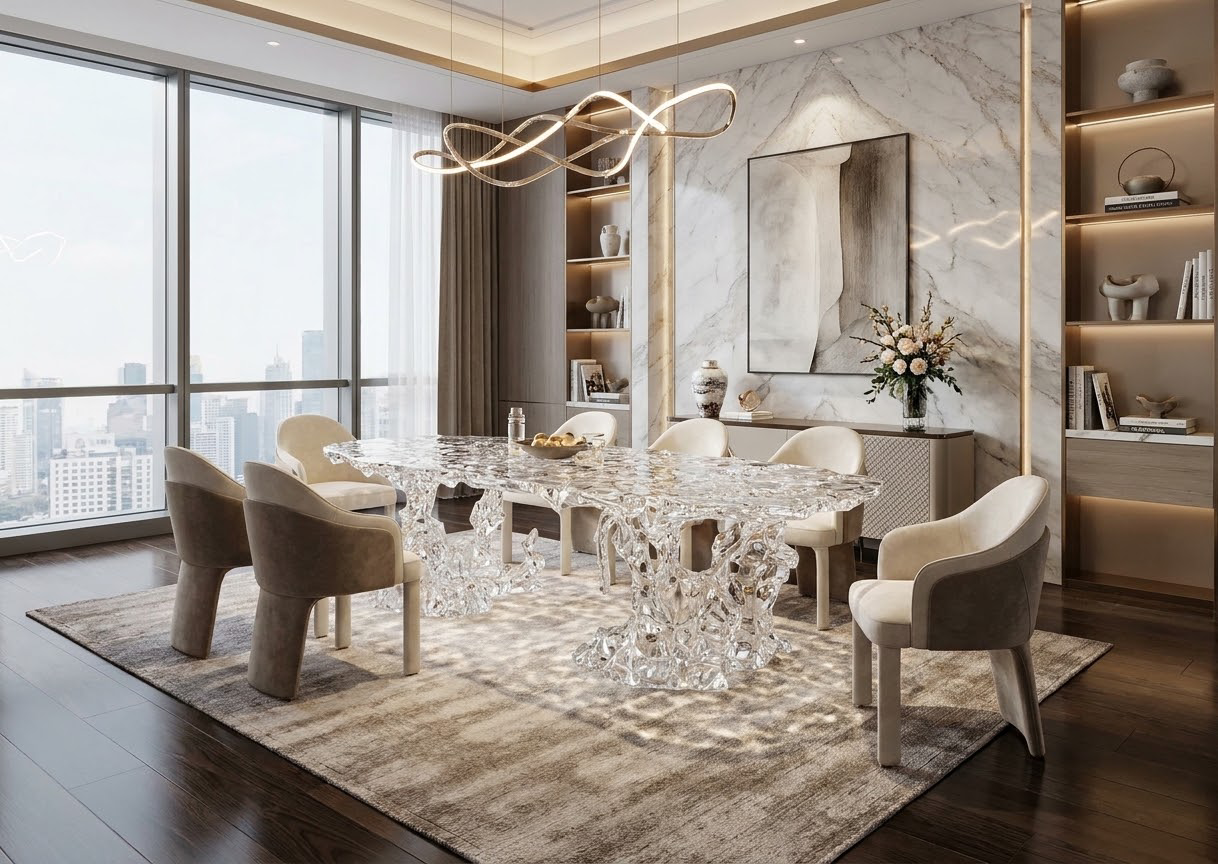
For example, a 1.8m synthetic crystal dining table may use 30mm thick edges with a 20mm thick center, reducing material use by 25% while maintaining a 150kg load capacity.
2.2 Joint and Connection Technology
Invisible connections are a hallmark of high-end transparent furniture, preserving the seamless, floating aesthetic. Common joint technologies include:
UV adhesive bonding: Creates bonds with 95% the strength of the base material, with no visible glue lines when applied correctly
Mechanical hidden fasteners: Stainless steel or aluminum inserts embedded during casting, allowing tool-free assembly while maintaining visual purity
Thermal fusion welding: Used for thick acrylic structures, creating permanent, seamless bonds for pieces like acrylic bar counters
Furniture edge processing and polishing technology further enhances joint invisibility, with diamond-polished edges creating a continuous light refraction effect across connected pieces.
3. Craftsmanship Details That Define Premium Quality
The difference between mass-market and luxury transparent furniture lies in precision craftsmanship. Every surface, edge, and finish undergoes multi-stage processing to achieve flawless optical quality.
3.1 Surface and Edge Processing Technology
High-gloss, scratch-resistant surfaces require multi-step finishing processes that can take 10+ hours per piece:
Rough cutting and CNC shaping: Achieves ±0.1mm dimensional accuracy for custom furniture sizes and shapes
Edge grinding: Progressively finer grits (from 80 to 3000) to prepare edges for polishing
Diamond polishing: Creates a mirror-like edge finish that refracts light like cut crystal
Surface buffing: Removes micro-scratches from production, achieving 95%+ gloss level
Protective coating: Optional nano-coating for enhanced scratch resistance and easy cleaning
The transparent surface high-gloss finish is what gives design-conscious transparent coffee tables and decorative furniture their distinctive luxury feel, often compared to fine crystalware.
3.2 Custom Design and Development Processes
For custom projects, manufacturers work closely with clients to translate conceptual designs into functional pieces:
3D rendering and prototyping: Full-scale prototypes allow clients to test ergonomics and visual impact before full production
Material sampling: Different transparency levels, tints, and embedded elements (e.g., gold leaf, natural materials) can be tested
Structural validation: Load testing and stability testing ensure compliance with furniture safety standards
Finish customization: Matte, satin, or textured finishes are available alongside standard high-gloss options
This acrylic material fine processing technology enables custom synthetic crystal furniture that perfectly matches unique design visions, from organic-shaped transparent design console tables to sculptural acrylic piano accessories.
4. Application Advantages in Different Scenarios
Premium transparent furniture offers unique benefits across residential, hospitality, and commercial spaces, addressing common design challenges while elevating aesthetic appeal.
4.1 Residential and Modern Interior Applications
For modern interior spaces, synthetic crystal furniture solves key design problems:
Space optimization: Transparent materials visually expand small rooms, making them ideal for urban apartments and open-concept living areas
Style versatility: Complements minimalist, mid-century modern, contemporary, and even traditional interior design styles
Light enhancement: Allows natural and artificial light to flow freely, brightening dark corners and highlighting architectural features
Statement piece potential: Pieces like synthetic crystal chandeliers and high-end crystal billiard tables serve as focal points for luxury homes
The advantages of transparent furniture in interior design extend beyond aesthetics—many pieces are also lightweight and easy to rearrange, supporting flexible living spaces.
4.2 Commercial and Hospitality Industry Applications
For commercial engineering projects, synthetic crystal furniture combines durability with luxury branding:
Hotel lobbies and common areas: Transparent furniture creates an open, welcoming atmosphere while withstanding high guest traffic
Restaurant and bar spaces: Acrylic bar counters and transparent dining tables are easy to clean and maintain, with scratch-resistant surfaces for long-term use
Retail environments: Transparent display furniture keeps focus on products while adding a premium design element
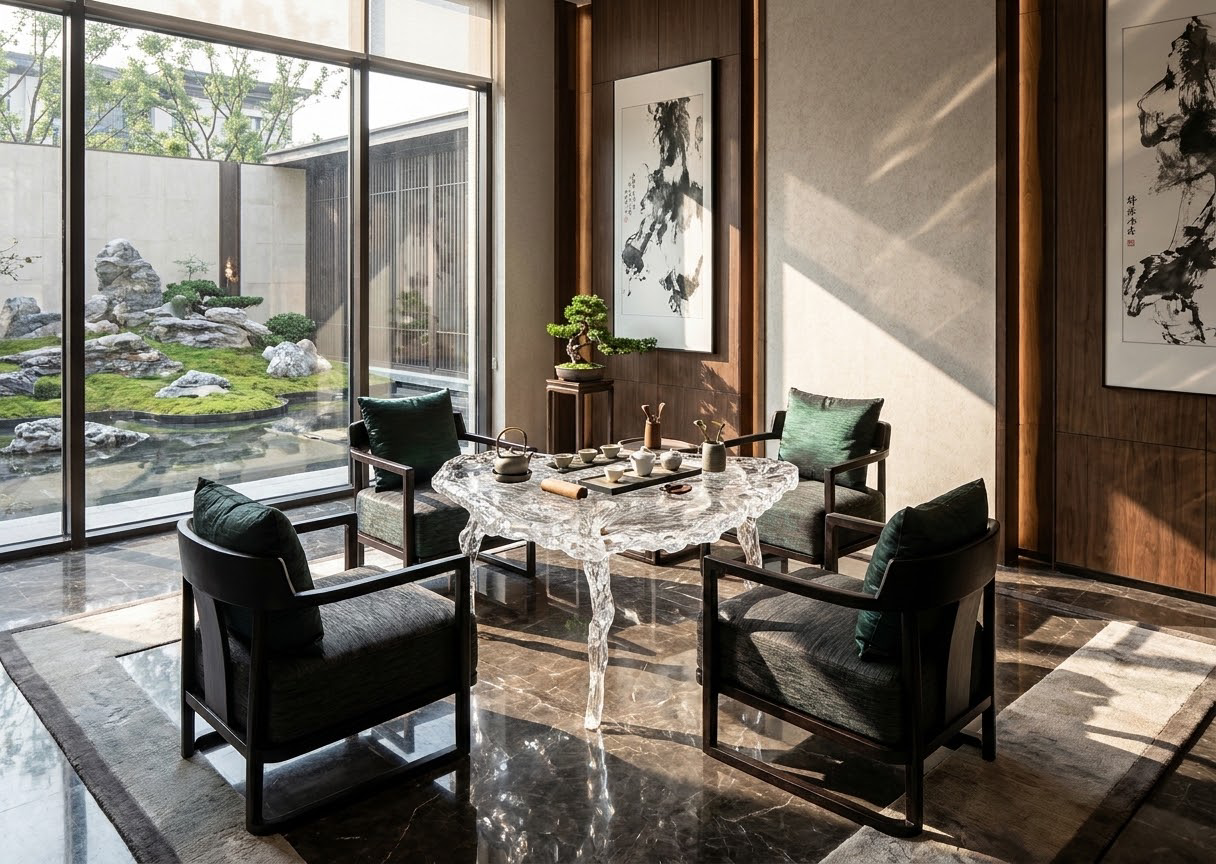
Office spaces: Modern design furniture like transparent conference tables and acrylic stools support collaborative, contemporary work environments
Luxury hotel custom furniture solutions often include custom transparent pieces tailored to brand identity, from lobby statement pieces to in-room decorative accents.
5. Customization Solutions for Professional Clients
Professional clients—from interior designers to hotel procurement managers—require tailored solutions that balance design vision, budget, and project timelines.
5.1 Solutions for Architects and Interior Designers
Design professionals need reliable partners who can translate creative concepts into tangible, code-compliant furniture:
Custom design collaboration: In-house design teams work with architects and interior designers to refine concepts for structural feasibility
Material and finish libraries: Comprehensive sample kits support material specification for project presentations
Technical documentation: Detailed engineering drawings, load test reports, and material safety data sheets support project approvals
Prototype development: Fast-track prototyping for client presentations and design validation
Custom acrylic furniture for architects and interior designers often includes site-specific pieces, such as custom-sized transparent design console tables for historic building renovations or sculptural acrylic installations for gallery spaces.
5.2 Solutions for Commercial Project and Hotel Clients
For commercial project furniture companies and luxury hotel groups, scalability and consistency are critical:
Bulk production capacity: Ability to produce 500+ identical pieces while maintaining quality consistency
Project management support: Dedicated account managers oversee timelines, quality control, and delivery coordination
Compliance certification: Products meet international safety standards (e.g., BIFMA, CAL 117) for commercial use
After-sales service: Warranty programs, repair services, and replacement part support for long-term maintenance
Custom furniture manufacturers specializing in transparent pieces often work on turnkey projects for hotel chains, providing everything from lobby synthetic crystal tables to guest room acrylic accessories.
6. Future Trends and Industry Development Directions
The premium transparent furniture industry continues to evolve, driven by material innovation, sustainability demands, and changing design preferences.
6.1 Material and Technology Innovation Trends
Emerging technologies are expanding the possibilities for transparent furniture design:
Bio-based transparent resins: Plant-derived acrylic and resin materials reduce carbon footprint while maintaining performance
Smart transparent furniture: Integrated LED lighting, wireless charging, and touch-sensitive surfaces add functionality without compromising aesthetics
3D printing of transparent materials: Advances in resin 3D printing enable complex, organic shapes that are impossible with traditional manufacturing
Self-healing coatings: Nano-coatings that repair minor scratches automatically, extending furniture lifespan
These innovations will further expand the applications of transparent materials in furniture design, blurring the line between furniture and interactive design elements.
6.2 Market Development and Sustainable Design Trends
Sustainability is becoming a core driver of purchasing decisions across all furniture segments:
Circular economy models: Manufacturers offering take-back and recycling programs for end-of-life transparent furniture
Low-VOC production: Water-based adhesives and energy-efficient manufacturing processes reduce environmental impact
Durability as a service: Subscription and maintenance models that extend furniture lifespan and reduce waste
Transparent supply chains: Full traceability of raw materials to ensure ethical and sustainable sourcing
For building and interior design firms, high-end furniture brands, and commercial space design and renovation companies, prioritizing sustainable transparent furniture will become a key competitive advantage in the coming years.


