
For interior designers specifying high-end decorative elements for luxury hospitality and commercial spaces, synthetic crystal has emerged as a go-to material for its optical clarity, design flexibility, and cost efficiency relative to natural stone. Yet a persistent industry pain point undermines even the most polished concept renders: sample-level quality rarely translates reliably to mass production, leading to costly reworks, delayed openings, and diluted brand value. According to industry observations, 40% of high-end custom material projects face quality inconsistencies between prototype and full production, with transparent decorative materials being particularly prone to deviation. This article breaks down the engineering, process, and quality control frameworks that deliver consistent mass production, and how a multi-material solutions partner can de-risk your next project.
The Root Cause of Inconsistency: Subjective "Craft" vs. Engineered Standards
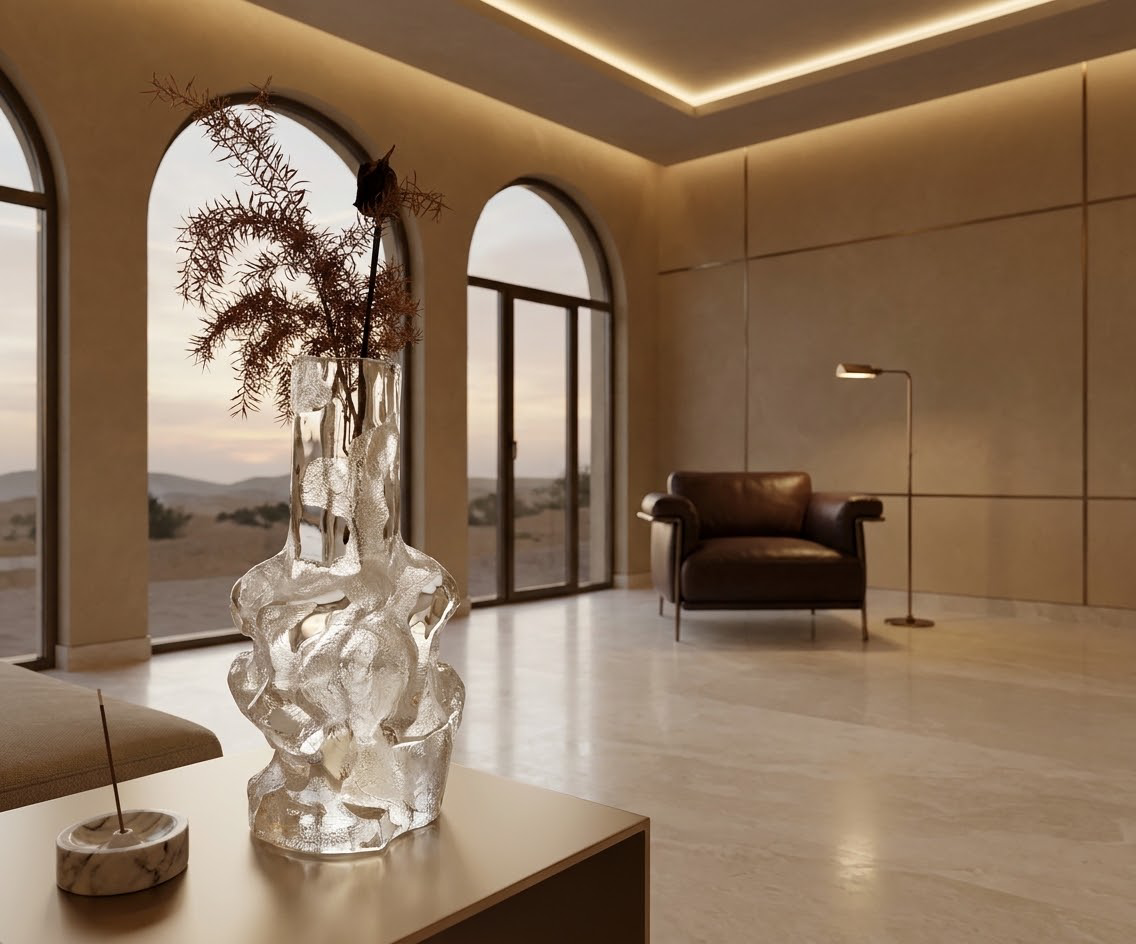
Most custom material suppliers operate on a craft-based model: a skilled technician produces a stunning sample by hand, but when the order scales to dozens or hundreds of units, shifts in personnel, raw material batches, and processing conditions create visible variations in color, transparency, internal texture, and surface finish. For synthetic crystal decor, these inconsistencies are especially noticeable because the material’s value lies in its uniform light refraction and flawless appearance—even a 5% shift in amber tint or a minor internal bubble can make a lobby feature piece look cheap rather than luxurious.
The gap between sample and mass production is not a "quality control failure" at the end of the line; it is a failure to define design intent as measurable engineering parameters from the start. Many suppliers accept design renders or sketch references without translating subjective terms like "crystal clear" or "soft milky white" into quantifiable standards for raw material purity, curing time, polishing grit, and color tolerance. Without these benchmarks, every production run becomes a guessing game.
The 3-Tier Quality Lock System for Scalable Production
Delivering consistent results across large orders requires a structured process that locks in quality at three critical stages, rather than relying on final inspection alone. This system is what separates decorative material suppliers from engineering-focused manufacturing partners.
First, pre-production material and process standardization. Before any full-scale manufacturing begins, every variable that impacts the final appearance and performance of synthetic crystal must be documented and approved. This includes raw material batch traceability, color masterbatch ratios calibrated to Pantone or custom color codes, curing temperature and duration protocols, and a critical-to-quality (CTQ) list that defines acceptable thresholds for surface scratches, internal inclusions, dimensional tolerance, and light transmittance. A golden sample—signed off by both the design team and manufacturing engineers—serves as the physical reference for all subsequent production.
Second, in-process quality gates. Instead of inspecting finished parts only, production lines should have checkpoints at every high-risk step: casting, trimming, polishing, and assembly. At each gate, trained QC technicians compare parts against the golden sample and CTQ list, with non-conforming parts pulled immediately for rework or disposal. For complex curved or custom-shaped pieces, 3D scanning is used to verify dimensional accuracy within ±0.5mm, ensuring every unit fits perfectly on-site.
Third, final audit and packaging validation. Before shipment, a statistically significant sample of each production batch undergoes full inspection, including color matching under standardized lighting conditions, surface quality assessment, and load testing where applicable. Equally important is packaging engineering: high-gloss, transparent materials are highly susceptible to scratches and impact damage during transit, so custom foam inserts, protective films, and reinforced crates are designed to eliminate friction and movement during shipping. Drop tests and vibration tests simulate ocean freight conditions to ensure parts arrive in the same condition they left the factory.
Why Multi-Material Expertise Improves Consistency (Even for Single-Material Orders)
It may seem counterintuitive, but suppliers that only specialize in one material often deliver less consistent results for complex projects than partners with expertise across acrylic, architectural resin, and synthetic crystal. The reason is simple: material selection is the first step in ensuring production feasibility and long-term performance.
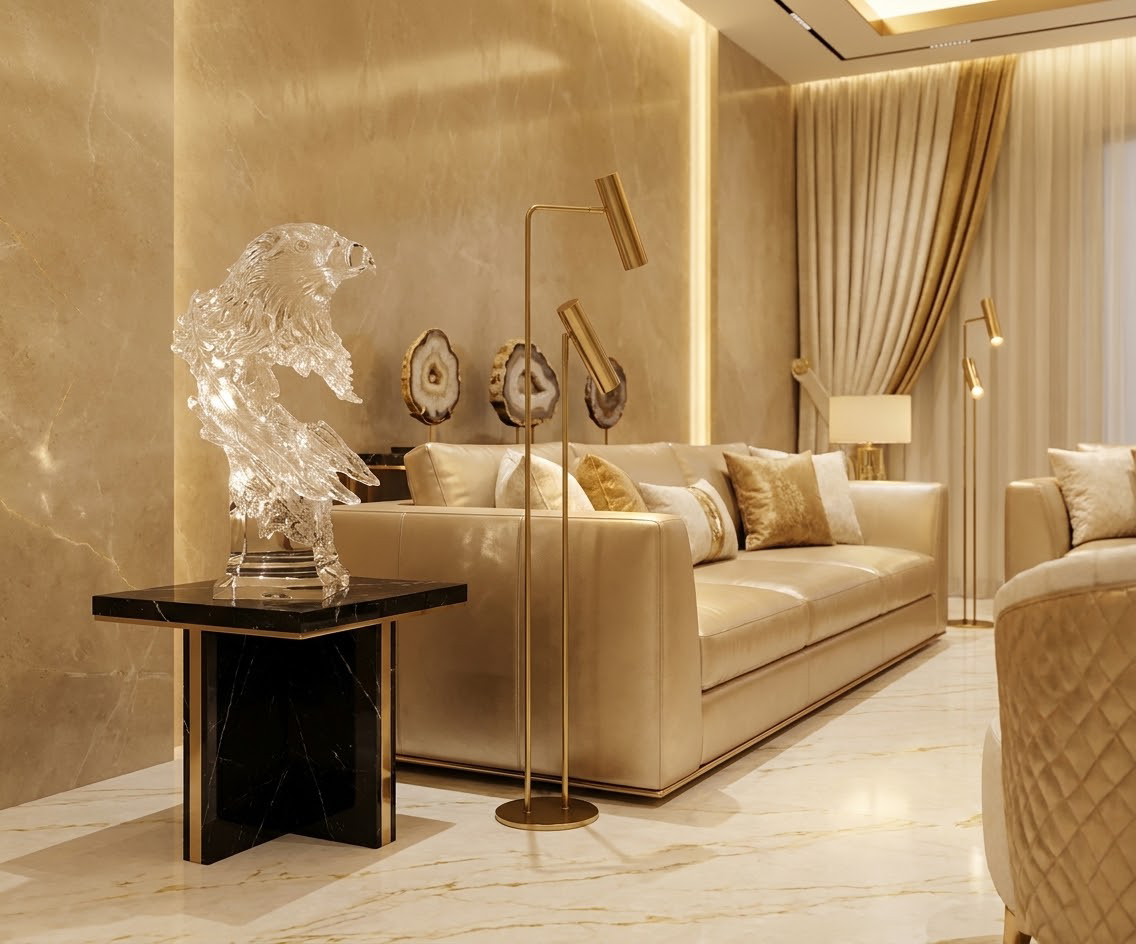
A supplier that only sells acrylic will try to force every design to work with acrylic, even when a project’s size, shape, or environmental conditions (such as high humidity or UV exposure) make acrylic a poor fit. This leads to engineering compromises that increase the risk of quality issues during mass production. In contrast, a multi-material partner will evaluate each design based on its functional and aesthetic requirements, recommending the best material for the job—whether that is acrylic for lightweight, cost-effective pieces, architectural resin for large-format seamless panels, or synthetic crystal for maximum optical depth and luxury appeal.
For example, a hotel lobby reception desk with a thick, transparent top and embedded metallic flakes might look ideal in a render, but casting a 3m-long solid acrylic piece of that thickness carries a high risk of internal stress and warping in mass production. A multi-material engineer would identify this risk early and recommend a synthetic crystal composite structure that delivers the same visual effect with far higher production consistency and long-term durability. This upfront engineering judgment prevents costly redesigns and quality failures later in the project.
Practical Action for Designers: Engage Manufacturers During DD, Not Tender
The biggest mistake design teams make is waiting until the tender phase to bring in material suppliers. By that point, drawings are finalized, budgets are locked, and there is little room to adjust designs for manufacturability—setting the stage for production inconsistencies and cost overruns.
Instead, designers should partner with an engineering-focused material supplier during the design development (DD) phase, 6 to 18 months before formal procurement [general reference]. At this stage, the supplier can conduct a design feasibility review, flag high-risk elements, recommend material alternatives, and provide cost-grade estimates so the design can be refined before it is set in stone. This early collaboration ensures that the final design is not only beautiful but also capable of being produced consistently at scale.
For designers working on signature pieces or multi-property brand rollouts, this early engagement is even more critical. A design that works perfectly for a single boutique hotel may need material or structural adjustments to be replicated across 20 locations with identical quality. An experienced partner will build in brand-specific material standards and production protocols so every location delivers the same guest experience.
Final Thoughts
Consistent mass production of high-end decorative materials is not about having the cheapest factory or the most skilled craftsmen—it is about turning subjective design intent into objective, repeatable engineering processes. For synthetic crystal and other transparent decorative materials, the difference between a successful project and a costly failure often comes down to how early you bring in the right partner, and how rigorously quality is locked in at every stage of production.
If you have experienced quality inconsistencies between sample and mass production on past projects, or are currently working on a complex design that you are not sure can be scaled, feel free to share your thoughts in the comments or send a direct message to discuss design feasibility for your next project.
READ MORE:
- 7 Common Pitfalls When Specifying Synthetic Crystal for FF&E Projects
- How a 5-Star Hotel Fixed Its Lobby Side Table Design Landing Issues
- Lowest Bid for Crystal Side Tables Often Costs More in Hotel Projects
- The Best Time to Involve a Material Partner Is Not During Tendering—It’s in DD Phase
- Mobilier in cristallo sintetico: punto focale visivo e identità di design unico negli interni
- Arredamento in cristallo sintetico: innovazione trasversale tra design del prodotto, estetica architettonica e creazione artistica
- Arredamento in cristallo sintetico: potenziale nell'arte interna contemporanea da funzionale a collezione
- Arredamento in cristallo sintetico: sinergia tra finitura superficiale e ambiente interno
- Arredamento in cristallo sintetico: come si integra nelle estetiche spaziali di nuova generazione?


