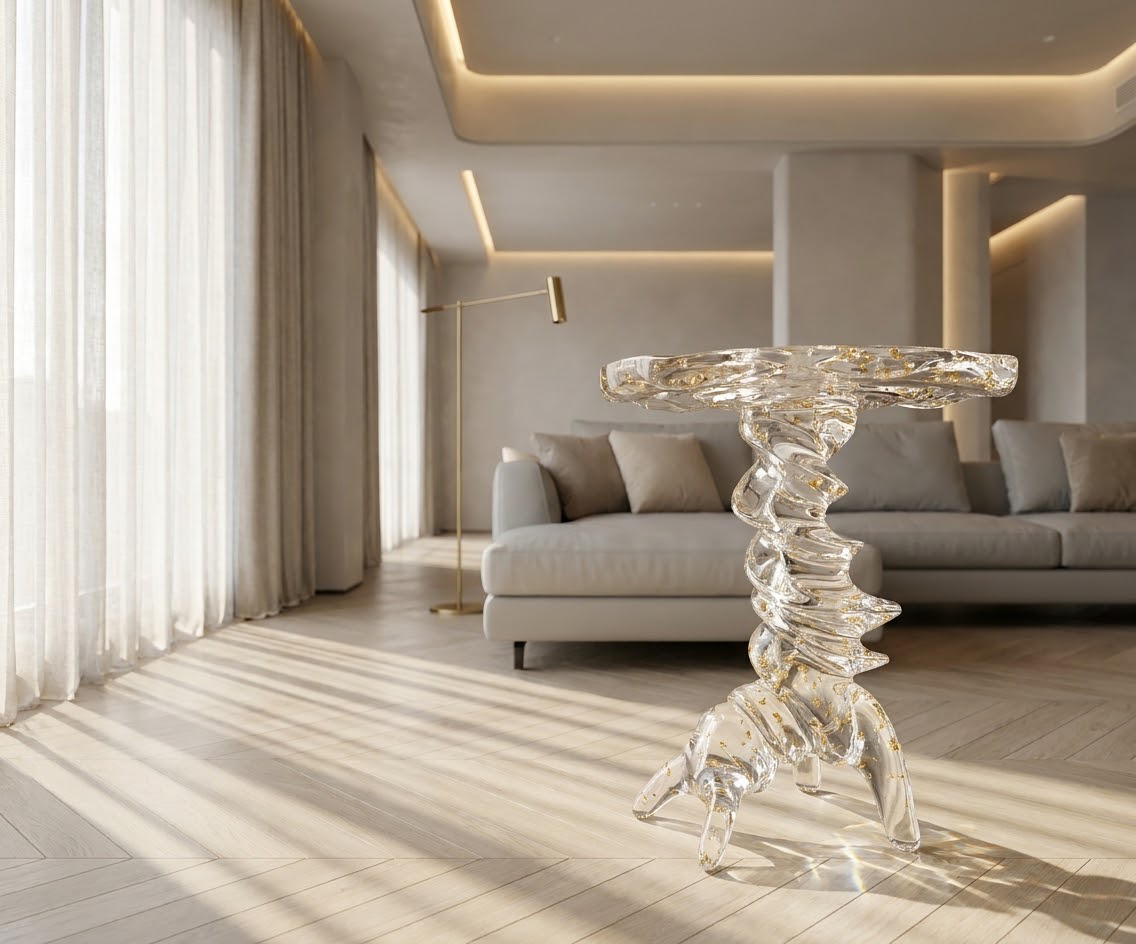
For interior designers working on luxury hospitality and commercial FF&E projects, specifying synthetic crystal has become an increasingly popular choice for statement pieces like side tables, feature installations, and decorative accents. Its optical clarity, structural versatility, and premium aesthetic make it a go-to material for spaces that demand both elegance and durability. Yet many designers and procurement teams encounter unexpected setbacks—from design misalignment to production delays—that undermine project outcomes. Based on two decades of observing global FF&E supply chains, this article breaks down the most frequent pitfalls and offers actionable guidance for smoother project delivery.
Overlooking Material Suitability for the Application
One of the most common mistakes is assuming synthetic crystal works for every transparent design concept. In reality, each material—acrylic, architectural resin, and synthetic crystal—has distinct performance characteristics that make it better suited for specific uses. For example, while acrylic offers cost efficiency for large-format panels, synthetic crystal excels in pieces that require deep light refraction, scratch resistance, and a high-end crystalline feel that mimics natural crystal without the fragility.
Designers often specify the material based on render visuals alone, without considering factors like foot traffic, cleaning protocols, load-bearing requirements, or exposure to UV light. A side table placed in a high-traffic hotel lobby, for instance, needs a material that resists surface abrasion and maintains its clarity over years of use. Failing to match material properties to the application can lead to premature wear, costly replacements, and a mismatch between the design intent and the space’s functional needs.

Skipping Early Design Feasibility Review
Many designers wait until the tender phase to engage material suppliers, only to discover that their envisioned design cannot be manufactured as drawn—or that it requires significant structural modifications that dilute the original concept. This is particularly true for complex synthetic crystal pieces with curved edges, embedded elements, or custom internal textures.
The risk here is twofold: either the project gets delayed as designs are reworked, or the final product loses the subtle details that made the concept compelling. Leading suppliers in this space offer a design feasibility review early in the design development (DD) phase, providing feedback on manufacturability, structural integrity, material thickness options, and potential cost implications. By involving engineering expertise before the design is finalized, designers can preserve their creative vision while ensuring the piece can be produced reliably and consistently.
Underestimating Color and Finish Consistency Risks
What appears as a precise “champagne tint” or “frosted edge” in a 3D render can look dramatically different when produced in physical material. Synthetic crystal, like all transparent materials, is highly sensitive to variations in raw material batches, curing processes, and surface finishing techniques. Without standardized control measures, even the same specification can yield noticeable color or clarity differences between samples and mass production runs.
This issue becomes even more critical for multi-location projects, such as hotel brands rolling out a consistent design across properties in different regions. A slight shift in tone can break the brand’s visual identity. To mitigate this, reputable suppliers establish a structured approval process: material sample, finish sample, color sample, mock-up, first article, and golden sample. Each step is documented and signed off, creating a clear benchmark that ensures every unit matches the approved standard.
Ignoring Total Project Cost Beyond Unit Price
Procurement teams often focus narrowly on the per-unit price of synthetic crystal furniture, without accounting for the total cost of project risks. A lower initial quote can end up being far more expensive if it leads to sample reworks, production delays, shipping damage, or post-installation quality issues. For high-end hotel projects, even a one-week delay in a signature lobby piece can result in lost revenue from delayed openings.
The total project cost includes not just the purchase price, but also sampling iterations, rework expenses, delay penalties, replacement parts, and the intangible cost of a design that fails to deliver the intended premium experience. When evaluating suppliers, it is essential to assess their track record in project management, quality control, packaging engineering, and after-sales support. A supplier that can guarantee consistent quality, on-time delivery, and proactive risk management often delivers better long-term value, even if their unit price is slightly higher.
Practical Recommendations for Designers
To avoid these pitfalls, designers should take a proactive approach to material specification: First, engage a multi-material engineering partner early in the design process. Companies that specialize in synthetic crystal, architectural resin, and acrylic can provide unbiased advice on which material best fits the project’s aesthetic, functional, and budgetary requirements. Second, request a full feasibility report before finalizing drawings. This should include structural analysis, finish options, tolerance guidelines, and a clear sample approval roadmap. Third, evaluate suppliers based on their end-to-end project capabilities, not just manufacturing capacity. Look for evidence of design-to-engineering translation, golden sample protocols, packaging engineering, and compliance support for different regional markets. Finally, build buffer time into the project schedule for sample approvals and mock-up reviews. Rushing these stages often leads to costly revisions later in the process.
In an industry where design integrity and project reliability are paramount, specifying synthetic crystal requires more than just selecting a beautiful material—it requires a strategic approach to engineering, quality control, and supply chain partnership. By recognizing these common pitfalls and addressing them early, designers can ensure their vision is translated into a finished product that elevates the space, meets performance standards, and delivers lasting value.
What has been your biggest challenge when specifying premium transparent materials for FF&E projects? Share your experiences in the comments below, or send a direct message to discuss how to approach your next complex design concept.
READ MORE:
- How Do You Guarantee Synthetic Crystal Mass Production Consistency?
- How a 5-Star Hotel Fixed Its Lobby Side Table Design Landing Issues
- Lowest Bid for Crystal Side Tables Often Costs More in Hotel Projects
- The Best Time to Involve a Material Partner Is Not During Tendering—It’s in DD Phase
- Mobilier in cristallo sintetico: punto focale visivo e identità di design unico negli interni
- Arredamento in cristallo sintetico: innovazione trasversale tra design del prodotto, estetica architettonica e creazione artistica
- Arredamento in cristallo sintetico: potenziale nell'arte interna contemporanea da funzionale a collezione
- Arredamento in cristallo sintetico: sinergia tra finitura superficiale e ambiente interno
- Arredamento in cristallo sintetico: come si integra nelle estetiche spaziali di nuova generazione?


