In the high-end furniture industry, pricing is not just a financial decision—it is a positioning strategy. Set your prices too low, and you risk eroding brand value. Set them too high without justification, and you lose credibility and conversion. The challenge is not simply to price competitively, but to price intelligently in a way that reflects value, reinforces brand identity, and wins the right clients.
For companies working with premium materials such as high-end synthetic crystal furniture, this balance becomes even more critical. You are not selling commodities—you are selling design, innovation, and experience. And yet, you are still operating in a market where clients compare, question, and negotiate.
So how do you maintain premium pricing without losing competitiveness? The answer lies in shifting from cost-based thinking to value-based strategy.
Understanding the Real Pricing Problem
Many businesses approach pricing from the wrong starting point. They calculate costs, add a margin, and then adjust based on competitors. While this method may work in mass markets, it is fundamentally flawed in high-end segments.
Why? Because in luxury and premium markets, price is a signal, not just a number.
Clients interpret pricing as an indicator of quality, exclusivity, and brand positioning. If your pricing does not align with the experience you deliver, it creates confusion. And confusion is the fastest way to lose trust.
The real challenge, therefore, is not “how much should we charge,” but “what does our price communicate?”
The Shift from Cost-Based to Value-Based Pricing
Cost-based pricing answers the question: What does it cost us to produce this?
Value-based pricing answers a far more important question: What is this worth to the client?
In high-end furniture projects, especially those involving custom or semi-custom crystal pieces, the value extends far beyond materials and labor. It includes:
Design uniqueness
Visual impact
Brand perception
Emotional resonance
Project differentiation
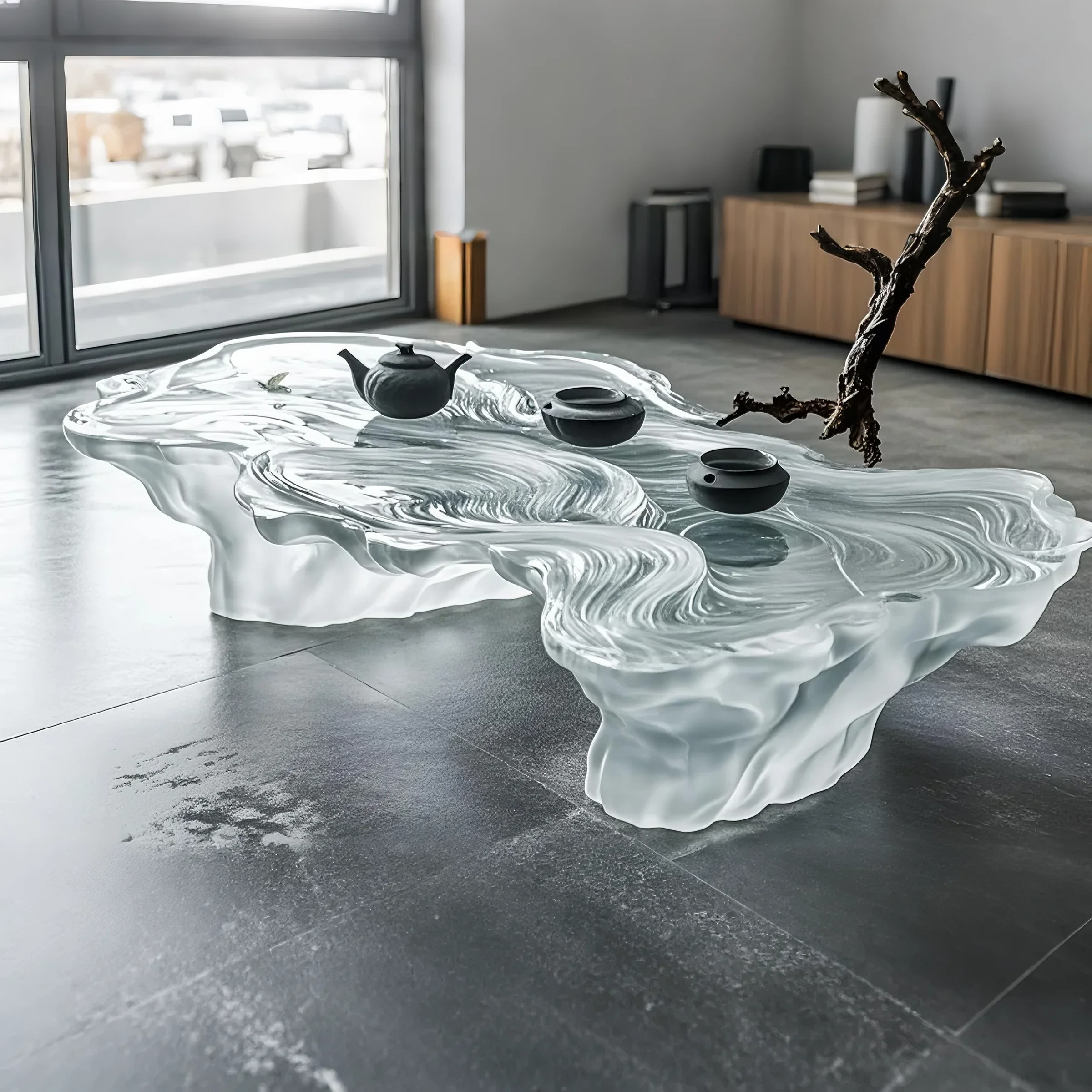
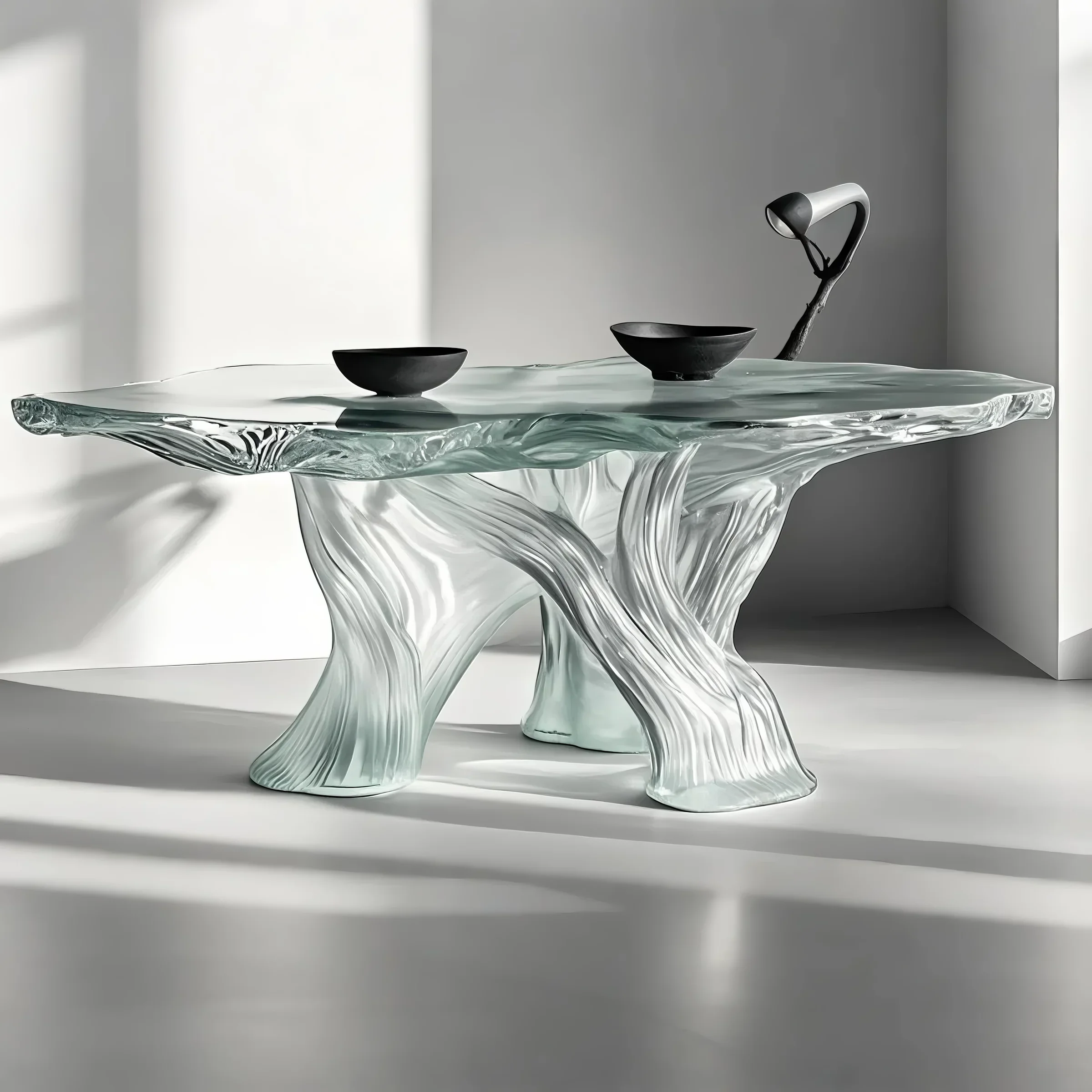
A crystal dining table, for example, is not just a functional object. It can become the centerpiece of a space, the element that defines the entire interior concept. Its value lies in what it does to the space, not just what it is.
When you price based on value, you stop competing with cheaper alternatives—because you are no longer selling the same thing.
Anchoring Price Through Design Impact
One of the most effective strategies in high-end projects is price anchoring through statement pieces.
When a project includes a visually striking element—such as a custom synthetic crystal installation—it changes the way clients perceive the entire budget. The statement piece becomes a reference point, making surrounding items feel more justified in comparison.
This is not manipulation; it is psychology.
Clients are more comfortable approving a higher overall budget when they can clearly identify where the value is concentrated. A strong focal point reduces uncertainty and reinforces the perception of intentional design.
Without this anchor, even well-priced projects can feel expensive because they lack a clear “reason why.”
Segmenting Clients Instead of Lowering Prices
A common mistake in competitive markets is trying to appeal to everyone. This often leads to price reductions in an attempt to win more projects.
In reality, lowering prices rarely attracts the right clients. It tends to bring in more price-sensitive buyers who are less loyal and more demanding.
A more effective approach is segmentation.
High-end crystal furniture naturally appeals to a specific audience:
Luxury homeowners
High-end developers
Boutique hospitality brands
Interior designers seeking differentiation
These clients are not looking for the lowest price. They are looking for something distinctive, reliable, and aligned with their vision.
By focusing your pricing strategy on this segment, you reduce direct competition and increase your ability to maintain margins.
Communicating Value Clearly and Confidently
Even the best pricing strategy fails if the value is not communicated effectively.
Clients do not automatically understand why a premium material or custom piece costs more. It is your responsibility to make that value visible.
This includes explaining:
The engineering and durability behind synthetic crystal
The level of customization involved
The design impact within the overall space
The long-term benefits compared to standard materials
But communication is not just about information—it is about confidence.
If your team hesitates when discussing price, clients will sense uncertainty. Strong positioning requires clear, consistent messaging that reinforces why your offering is worth the investment.
Avoiding the Discount Trap
Discounting is one of the fastest ways to undermine a premium brand.
While it may help close individual deals, it creates long-term damage by training clients to expect lower prices. It also weakens your negotiating position in future projects.
Instead of reducing prices, consider alternative strategies:
Adjust scope without compromising core design elements
Offer phased implementation for large projects
Provide added value through customization or service
These approaches preserve your pricing integrity while still addressing client concerns.
Leveraging Material Differentiation
Not all materials are created equal, and this is where high-end synthetic crystal offers a strategic advantage.
Unlike widely available materials, crystal requires specialized production and expertise. This creates a natural barrier to comparison. Clients cannot easily benchmark your pricing against mass-market alternatives because the offering is fundamentally different.
This uniqueness allows you to move away from price competition and toward value leadership.
In practical terms, this means:
Highlighting what cannot be replicated easily
Demonstrating craftsmanship and innovation
Positioning crystal as a signature element, not just a material option
When your product is difficult to compare, it becomes easier to justify premium pricing.
Structuring Proposals for Higher Conversion
Pricing is not only about numbers—it is also about presentation.
How you structure your proposal can significantly influence how clients perceive value.
Instead of presenting a single total price, break down the project into logical components. Highlight key elements, especially statement pieces, and explain their role in the overall design.
This approach achieves two things:
First, it increases transparency, which builds trust.
Second, it reinforces the importance of high-value elements, making the overall price feel more justified.
Clients are far more likely to approve a proposal when they understand what they are paying for and why it matters.
The Role of Experience in Pricing Power
In high-end markets, experience is a major driver of pricing power.
If your showroom, presentation, and customer journey reflect quality and professionalism, clients are more willing to accept premium pricing. Conversely, even the best products struggle to command high prices if the surrounding experience feels average.
This is particularly relevant for crystal furniture. Its visual impact depends heavily on lighting, placement, and presentation. A well-designed showroom can elevate perception dramatically, making pricing feel aligned with the experience.
In this sense, pricing is not just a sales function—it is the result of your entire brand ecosystem.
Long-Term Strategy Over Short-Term Wins
It is tempting to adjust pricing to win individual projects, especially in competitive situations. However, sustainable success comes from consistency.
Every time you compromise your pricing without a clear strategy, you weaken your brand positioning. Over time, this makes it harder to maintain margins and attract high-value clients.
A strong pricing strategy requires discipline. It means being willing to walk away from projects that do not align with your positioning. While this may feel risky in the short term, it creates a stronger foundation for long-term growth.
Conclusion
Strategic pricing in high-end furniture projects is not about being the cheapest—it is about being the most compelling.
By focusing on value rather than cost, leveraging statement pieces, targeting the right clients, and communicating your strengths clearly, you can maintain premium pricing without losing competitiveness.
High-end synthetic crystal furniture offers a unique advantage in this process. Its visual impact, material innovation, and customization potential make it inherently valuable—if positioned correctly.
In a market where clients are constantly comparing options, the brands that succeed are those that redefine the comparison itself—so when your next client questions your price, will you be defending a number, or demonstrating a value they cannot replace?
READ MORE:
- Case Study: Using Statement Furniture Pieces to Boost Conversion in High-End Projects
- Why Premium Materials Are Winning in European Furniture Markets
- From Outdoor Living Trends to Luxury Interiors: Where Crystal Art Pieces Fit In
- How High-End Crystal Furniture Can Differentiate Your Showroom in a Saturated Market
- Lead Generation Through Smart Questions: Efficient Customer Acquisition in Furniture Pricing and Budgeting
- How to Price B2B Furniture Projects Competitively? Budget Planning and Client Communication Guide
- From Quotation to Deal: Pricing Strategies and Practical Tips for Project-Based Furniture
- What’s Your Procurement Budget? Using Interaction to Uncover Real B2B Customer Needs
- Contract Furniture Pricing Guide: How to Set a Reasonable Budget and Increase Conversion Rates


