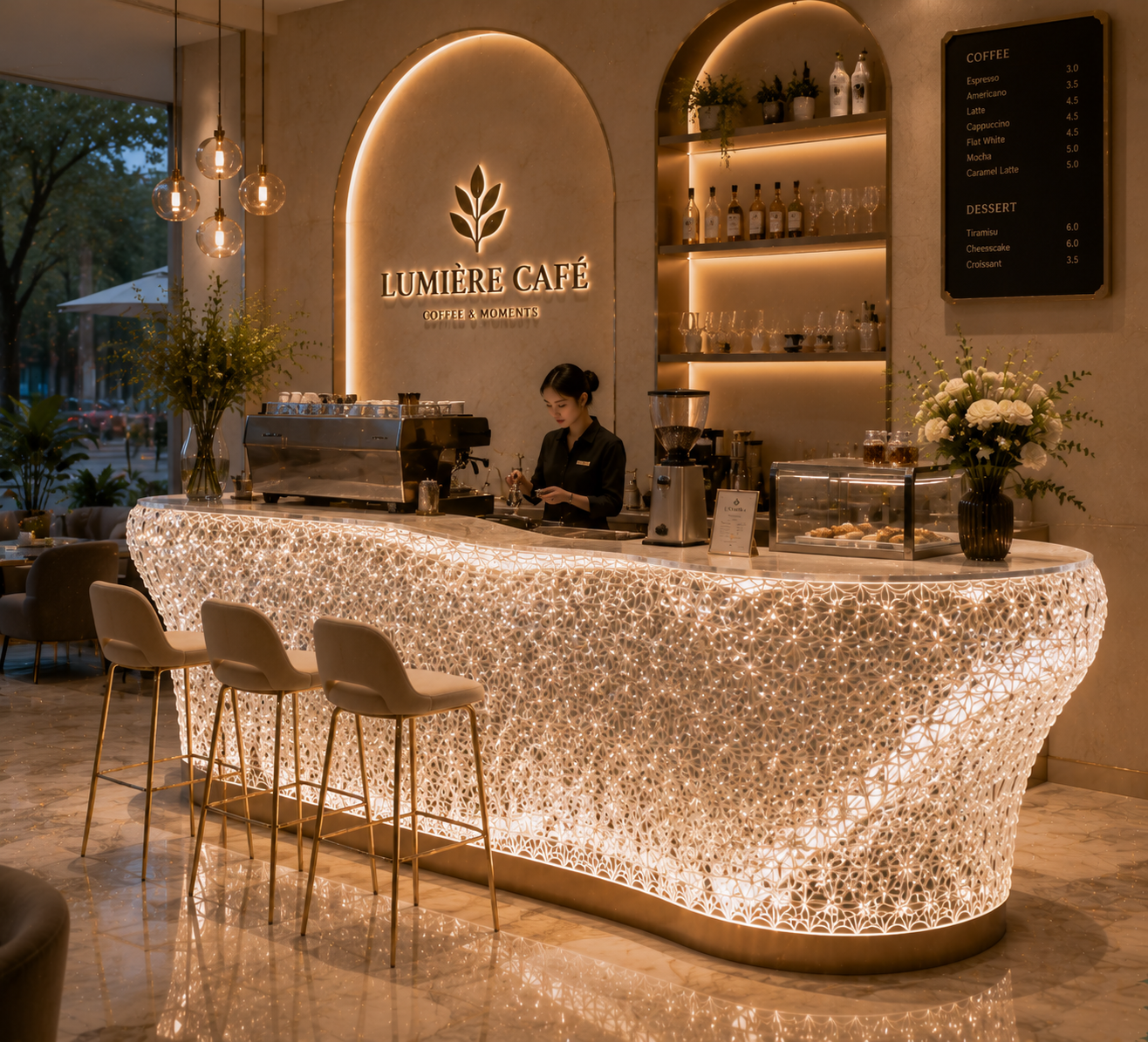
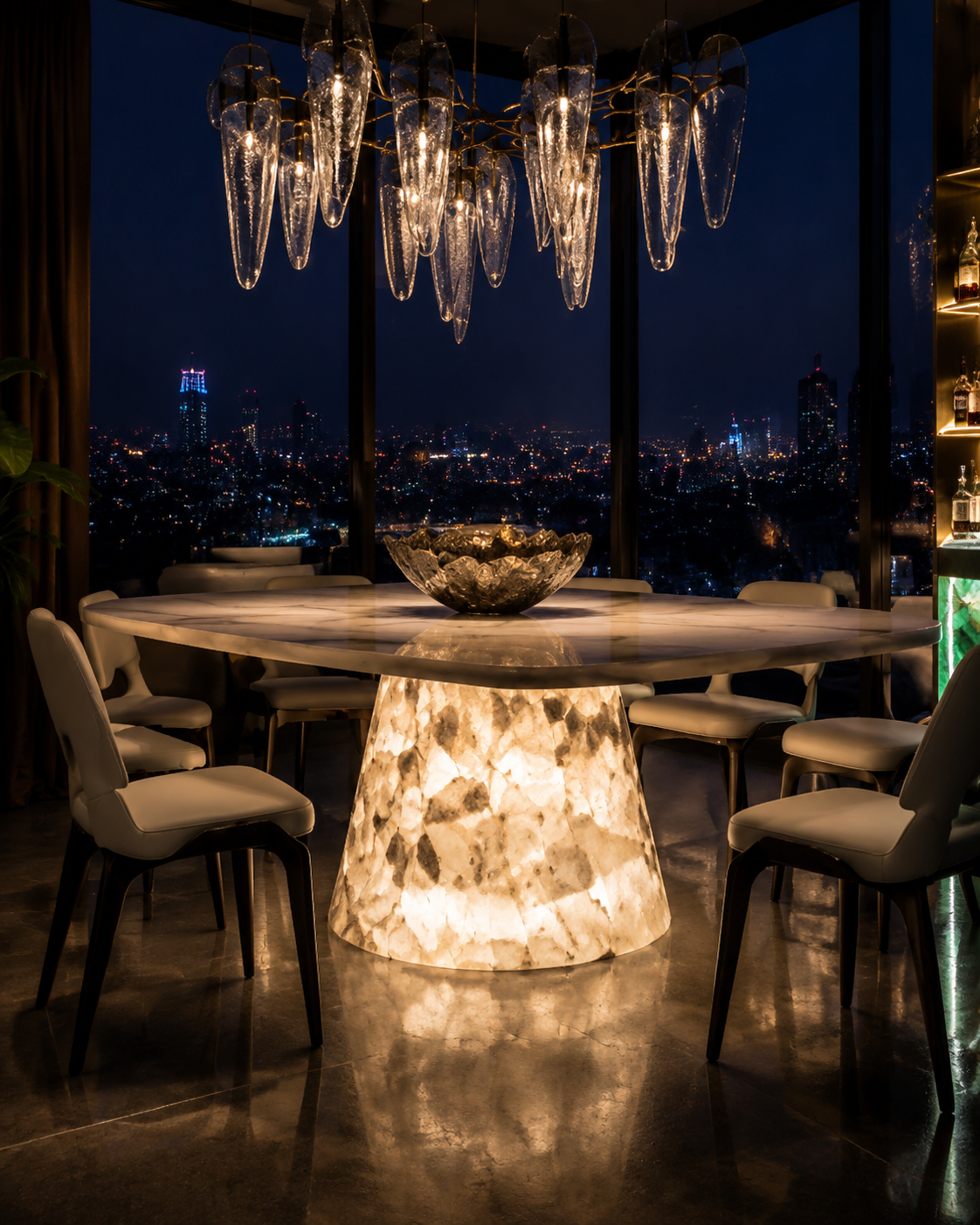
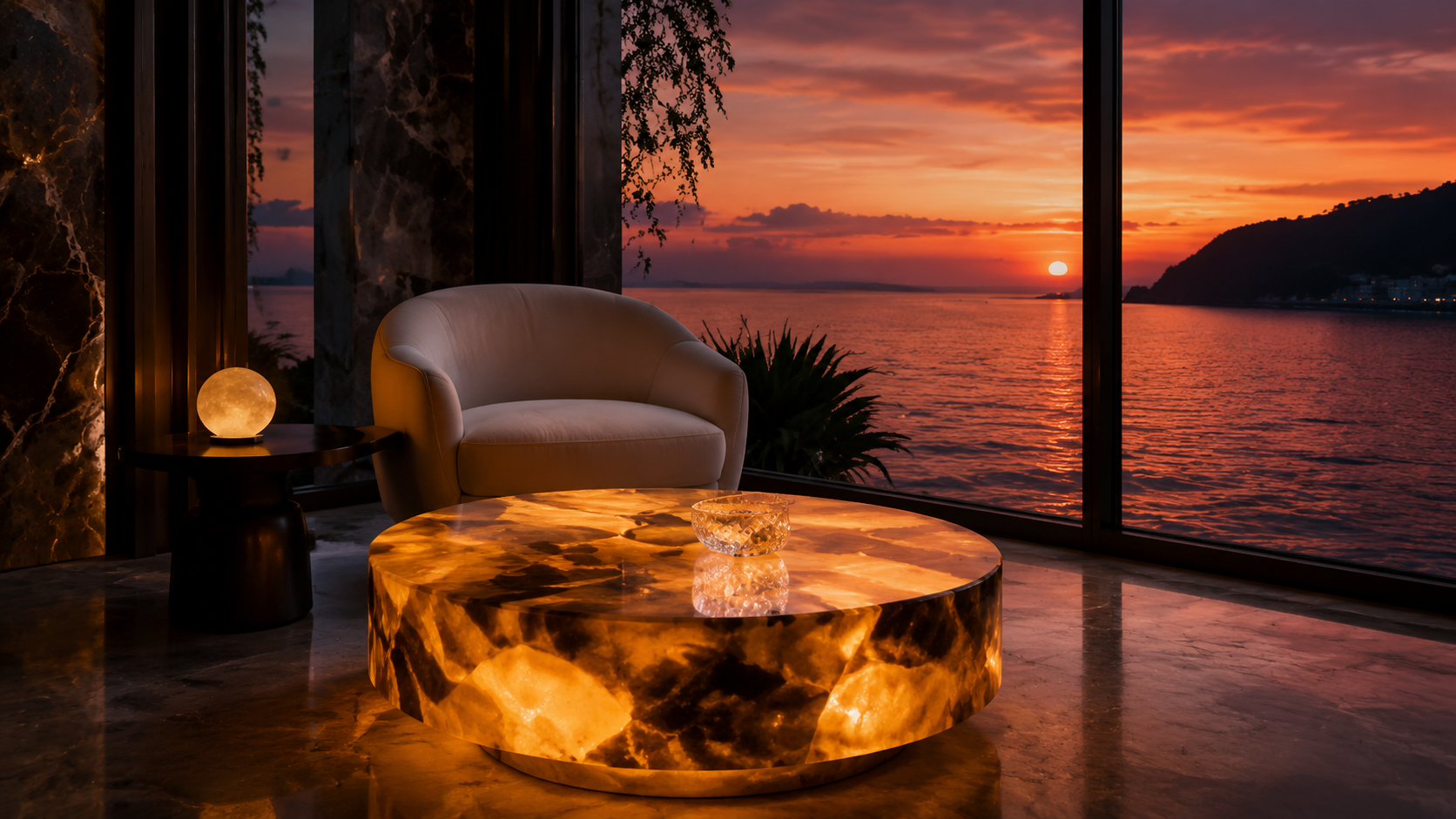
In hospitality design, spatial luxury is not determined by floor area alone. Guests experience space through sightlines, brightness, reflections, material transitions and the gradual discovery of visual details. A relatively compact lobby can feel expansive when light travels freely through it, while a large interior may still feel heavy if it is filled with opaque, visually dominant furniture.
This is where synthetic crystal, premium resin and platinum acrylic furniture can play a strategic role. Unlike conventional furniture that simply occupies space, transparent and translucent pieces interact with their surroundings. They transmit light, capture color, reflect nearby finishes and change appearance as guests move around them. A console table may appear almost weightless from one direction, then reveal a luminous edge or faceted internal structure from another.
This optical responsiveness is especially relevant to contemporary hotels. The American Hotel & Lodging Association has reported that younger travelers increasingly prioritize experiences, flexibility and memorable environments. CBRE has also noted that lifestyle hotel brands are expanding through wellness concepts, avant-garde design and differentiated brand experiences. In this market, furniture is no longer merely functional equipment. It has become part of the hotel’s visual identity and guest journey.
Used correctly, synthetic crystal furniture does more than add glamour. It can make interiors feel more open, create depth without physical clutter, support day-to-night transformations and turn ordinary lighting into a distinctive architectural feature.
1. Transparency Reduces Visual Weight and Preserves Spatial Continuity
The first contribution of transparent furniture is visual subtraction. A solid table, cabinet or pedestal blocks the floor, wall and objects behind it. A transparent piece occupies the same physical volume but allows much of the surrounding environment to remain visible. As a result, the furniture is present without appearing visually heavy.
This principle is valuable in hotel lobbies, executive lounges, corridors and guestrooms where designers must provide sufficient furniture without interrupting circulation or making the interior feel crowded. A transparent console placed beside a lift lobby, for example, can support decorative objects and directional information while preserving the continuity of the wall and floor. A clear side table beside a lounge chair provides function without visually dividing the seating composition.
Lighting research reinforces this approach. The WELL Building Standard notes that brightness distribution contributes to both the perception of spaciousness and the visual appeal of an interior. A study presented through the International Commission on Illumination also found that the quantity and location of light influence how spacious a room feels, with light distributed toward more distant areas strengthening the perception of depth.
Transparent furniture helps maintain this brightness distribution because it does not form a large opaque barrier. Light can reach the floor, pass through legs and bases, and continue toward walls or deeper layers of the room. This is particularly effective when clear furniture is positioned near windows, illuminated wall panels or reflective stone surfaces.
However, transparency should not mean invisibility without purpose. Guests must still recognize edges, surfaces and circulation boundaries. The best hotel furniture therefore balances clarity with controlled definition. Faceted corners, softly tinted edges, frosted bands, embedded textures or contrasting metal details can make a piece easy to perceive while retaining its low visual weight.
In practice, designers can use this strategy to solve common hotel-space problems:
A compact reception area can use a transparent consultation table instead of a solid desk. A narrow suite can use clear bedside tables that preserve views of the flooring and wall finishes. A restaurant can introduce transparent bases beneath stone or resin tops, allowing the tabletop to appear suspended. In each case, the furniture provides the required function while allowing the room to remain visually continuous.
2. Refraction Turns Furniture into an Additional Layer of Architecture
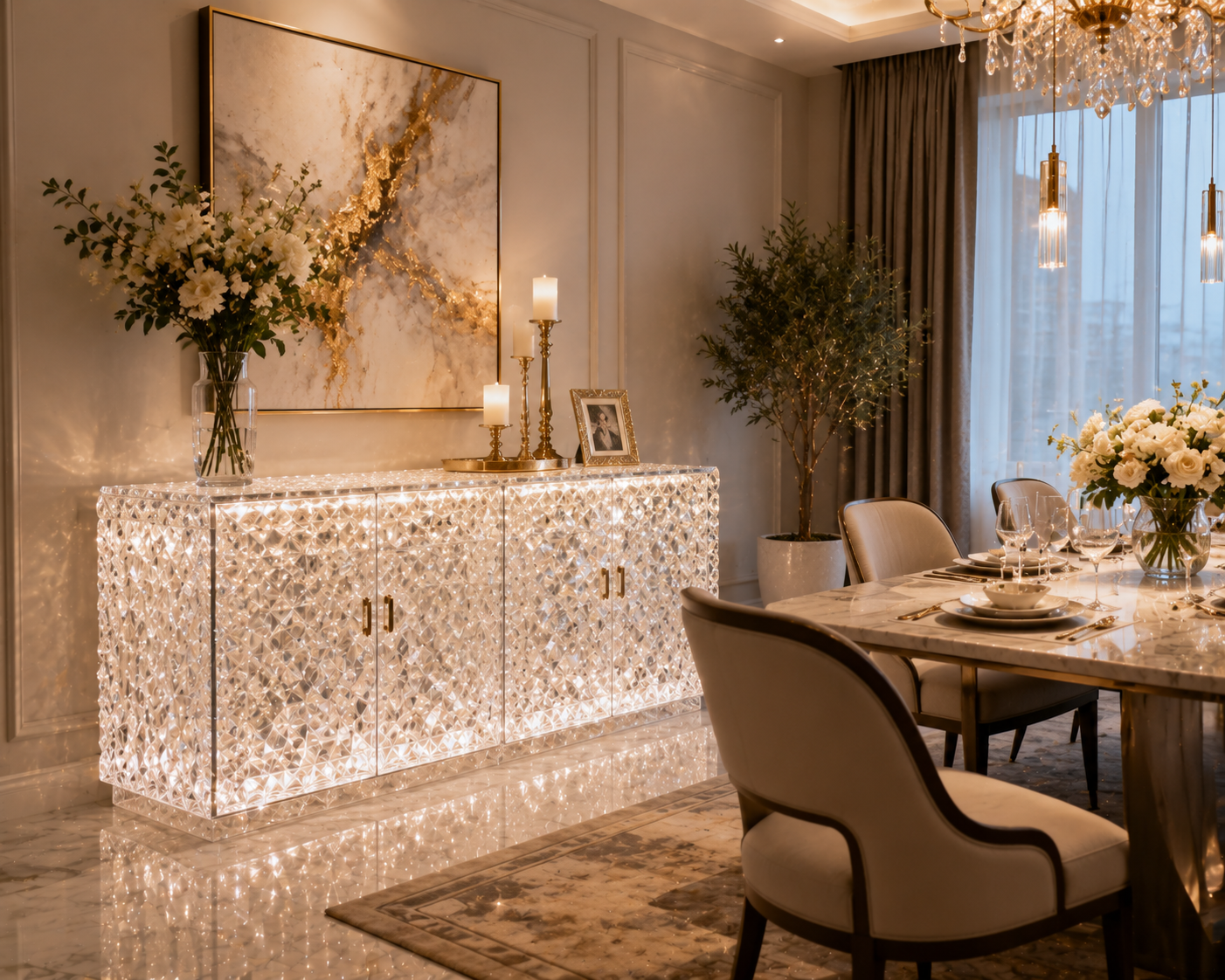
Transparency allows light to pass through a material; refraction changes the direction of that light. This distinction is important. A perfectly flat clear panel may seem visually quiet, but a beveled, curved or faceted synthetic crystal component can split, redirect and concentrate light. It becomes an active optical element rather than a neutral transparent surface.
For hotels, this creates an opportunity to add architectural depth without building additional walls, ceilings or decorative structures. A faceted crystal-resin table base can capture light from several directions and generate changing highlights. A thick platinum acrylic edge can glow when illuminated from the side. A translucent resin partition can soften direct light and create a sense of separation without fully closing the space.
The effect is strongest when designers think in layers. The furniture should not be considered independently from its background. A clear console positioned in front of a textured wall will visually contain fragments of that texture. A pale amber resin table placed near bronze lighting will intensify the warmth of the metal. A cool blue transparent pedestal near a pool or spa may borrow color from the water, creating the impression that the piece belongs to the surrounding environment.
ArchDaily has observed that translucent materials can introduce a new dimension to architecture by facilitating light, views and changing relationships between separated spaces. Its coverage of hospitality and commercial interiors also shows how transparent acrylic furniture, reflective finishes and colored translucent panels can work together to create immersive atmospheres rather than isolated decorative effects.
This approach is particularly effective in spaces where guests pause rather than simply pass through. In a lobby lounge, a synthetic crystal coffee table can reward close observation through internal layers, bubbles, mineral-like textures or controlled color gradients. In a cocktail bar, translucent tables can catch low-level lighting and appear to glow from within. In a hotel boutique, clear display furniture can frame products without competing with them.
The key is restraint. Too many highly refractive objects can create visual noise, glare and competing highlights. A more sophisticated approach is to establish one primary optical feature and support it with quieter transparent elements. For example, a sculptural faceted reception desk may serve as the focal point, while surrounding side tables use simpler clear forms. This hierarchy gives the space a memorable identity without turning it into a showroom of unrelated effects.
3. Material Layering Creates More Depth Than Transparency Alone
A successful transparent interior is rarely made entirely of clear materials. When every surface is equally transparent, the space can feel cold, visually uncertain or lacking in hierarchy. Depth emerges from contrast: transparent against opaque, polished against matte, colorless against tinted, and smooth against textured.
Synthetic crystal, premium resin and platinum acrylic each offer different design possibilities.
Synthetic crystal is best used where designers want gemstone-like mass, faceting and concentrated highlights. It can create the visual impression of carved mineral or crystal while allowing customized dimensions, colors and internal effects. This makes it suitable for statement table bases, reception features, decorative pedestals and sculptural furniture.
Premium resin is especially effective when the objective is controlled translucency rather than complete clarity. Pigments, gradients, embedded elements and clouded effects can be introduced to create visual depth inside the material. Resin furniture can therefore connect the hotel’s design story with local landscapes, water, stone, flowers or cultural patterns without relying on literal decoration.
Platinum acrylic is valuable for clean optical clarity, precise geometry and lighter-looking structures. Published data for high-quality PMMA sheets shows visible-light transmission of up to approximately 92 percent, with a density that can make acrylic significantly lighter than comparable glass components. These figures apply to specific clear sheet grades under test conditions; the final performance of a finished furniture piece will vary according to thickness, pigmentation, surface treatment, bonding and geometry.
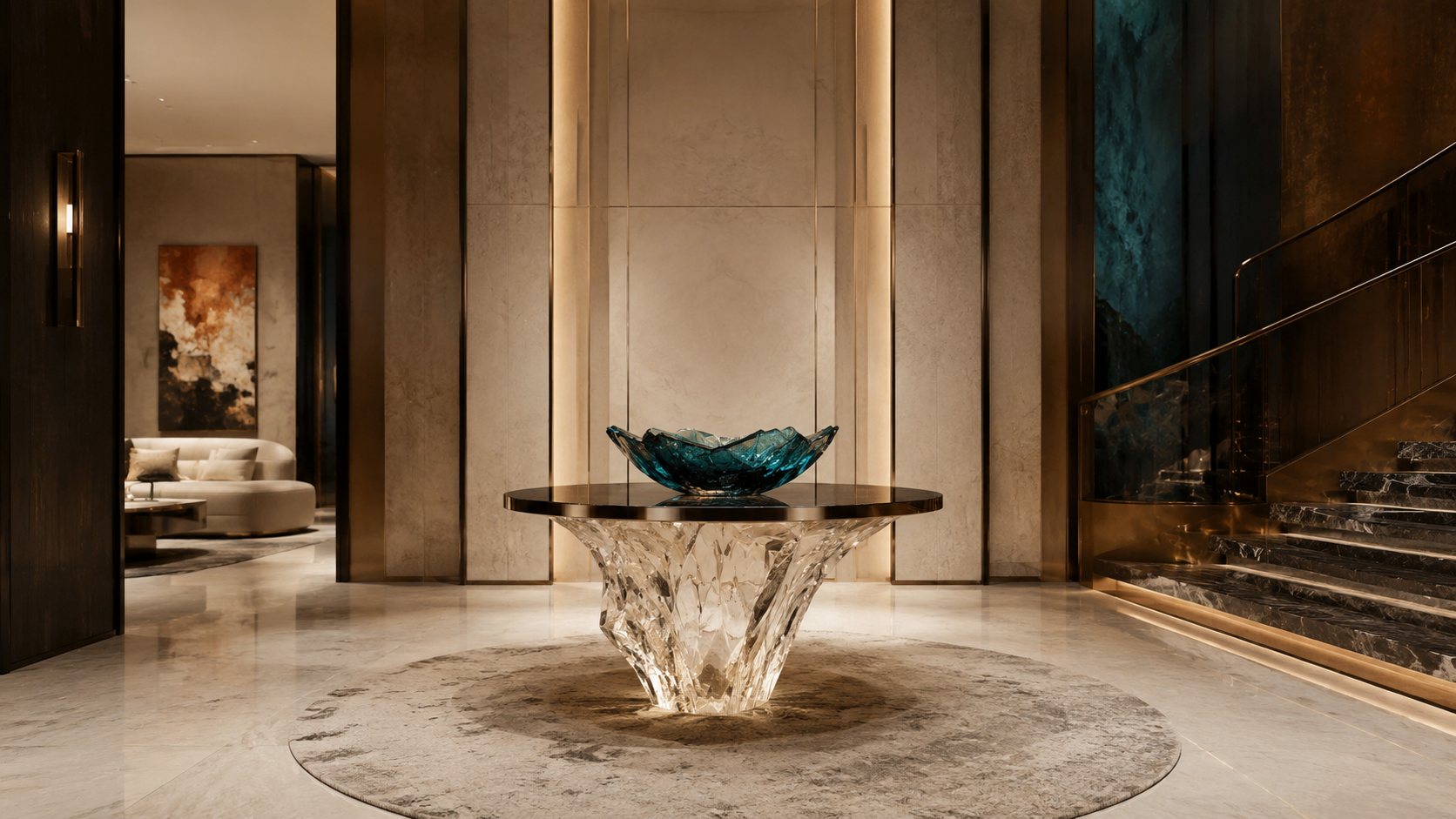
The most convincing hotel installations often combine these materials with natural and metallic finishes. A clear acrylic base beneath a heavily veined marble top creates a contrast between visual weight and visual lightness. A smoky resin console paired with brushed brass introduces warmth and sophistication. A synthetic crystal table beside textured timber seating prevents the composition from becoming overly polished or impersonal.
Material layering also supports hotel zoning. Clear pieces can be used in circulation areas where openness is important. Tinted translucent resin can define semi-private lounge zones. More intensely faceted synthetic crystal can mark high-value locations such as the reception, presidential suite, signature restaurant or VIP salon.
The result is a gradual material journey. Guests first encounter openness, then color, then detail. This sequence makes the interior feel deeper because it cannot be understood in a single glance.
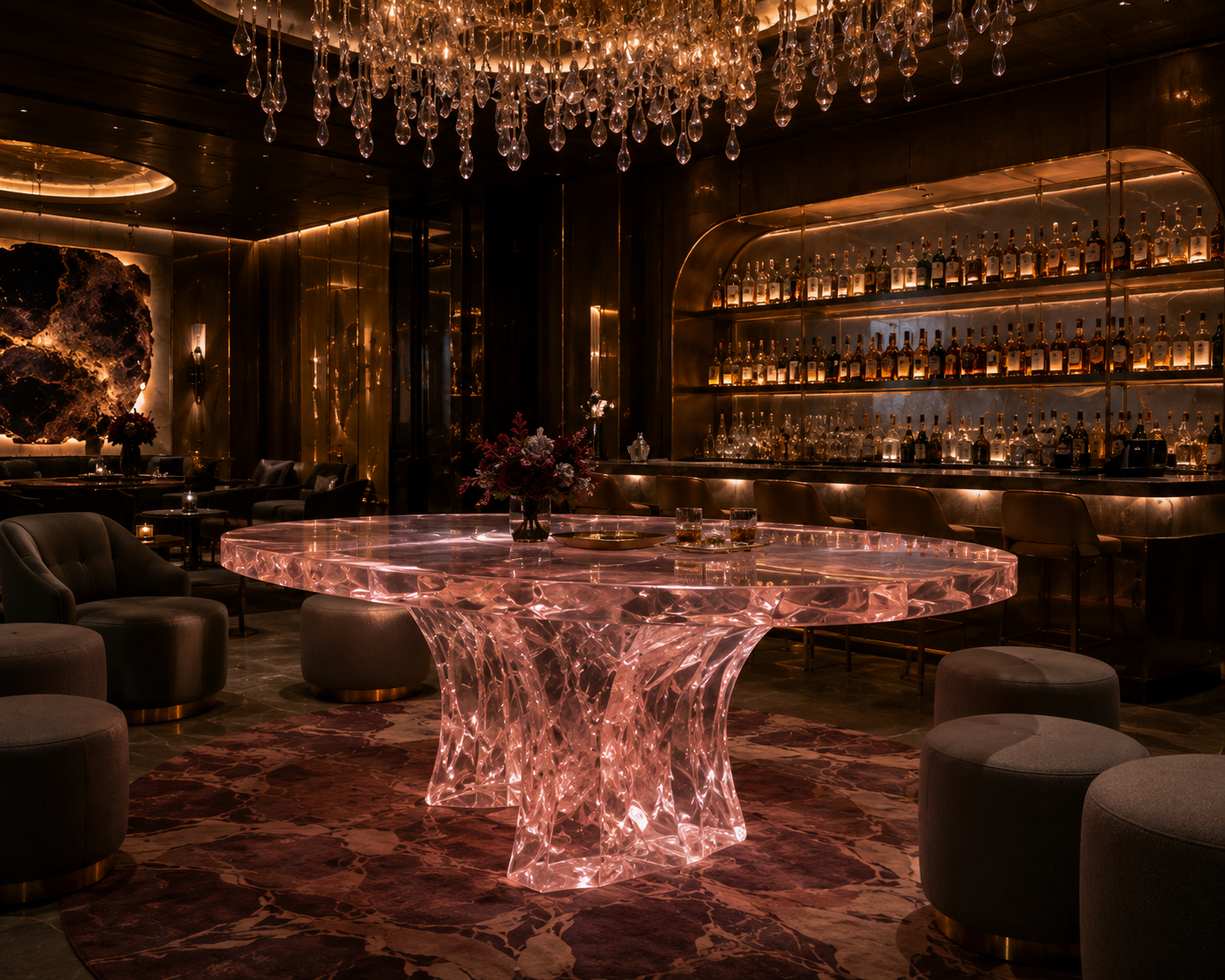
4. Light-Responsive Furniture Supports the Hotel’s Day-to-Night Transformation
Hotels operate continuously, but their atmosphere should not remain static. A breakfast restaurant must feel fresh in the morning and intimate in the evening. A lobby must support daylight, business meetings, social gatherings and late-night arrivals. Furniture that responds to changing light can help the same interior perform across these different conditions.
During the day, transparent furniture receives natural light and reflects surrounding colors. It may appear quiet, almost disappearing into the architecture. As daylight decreases, integrated or nearby electric lighting can reveal edges, internal textures and color. The furniture effectively gains a second identity after dark.
Bermonds Locke in London provides a useful hospitality precedent for this type of transformation. Its interior uses overhead mirrors, iridescent finishes and polarizing glass elements to create a shifting, atmospheric environment inspired by desert light. Although the project uses several different materials, its central lesson is relevant to synthetic crystal furniture: optical change can become part of the hotel narrative rather than a temporary decorative effect.
For a synthetic crystal or resin furniture program, designers can develop several lighting relationships:
Side lighting emphasizes polished edges and beveled details. Backlighting makes translucent resin appear deeper and more saturated. Narrow-beam spotlights create concentrated reflections on faceted surfaces. Diffuse lighting produces a softer, calmer glow. Concealed LED channels can make a clear base appear illuminated without exposing the light source.
The light source should not automatically be built into every object. In many cases, external architectural lighting is easier to maintain and provides greater flexibility. Where lighting is integrated, access panels, heat management, cable routing, electrical certification and component replacement should be resolved before production.
Guest comfort is equally important. The current ISO/CIE guidance for indoor lighting emphasizes that good lighting depends not only on illuminance but also on glare control, color quality and the way light interacts with surrounding surfaces. Scientific recommendations for healthy indoor light exposure also distinguish between brighter daytime conditions and much lower evening or nighttime exposure. This suggests that luminous transparent furniture is most effective in social areas when it is dimmable and carefully shielded, rather than operating as an uncontrolled bright object near guestrooms or sleeping areas.
The objective is not maximum brightness. It is controlled transformation.
5. Performance, Safety and Maintenance Must Be Designed into the Aesthetic
Hotel furniture is exposed to frequent cleaning, luggage impacts, food and beverage service, constant guest contact and occasional misuse. A transparent piece may look delicate, but contract furniture must be engineered for real operational conditions.
This starts with the exact material specification. “Synthetic crystal,” “premium resin” and “platinum acrylic” may describe different formulations, production methods or commercial grades. Designers and purchasing teams should therefore evaluate tested properties for the actual material being supplied, including structural strength, UV stability, surface hardness, chemical compatibility, heat resistance and fire performance.
Furniture geometry must also be tested as a complete product. ISO 19682 provides methods for evaluating the stability, strength and durability of tables and desks, regardless of their material or construction method. UL Solutions similarly identifies mechanical stability, structural integrity, fire hazards and electrical safety as important areas for commercial furniture evaluation.
For transparent furniture, several details deserve particular attention:
First, load paths should be visually discreet but structurally clear. Thick transparent legs may look strong while containing stress concentrations around joints or drilled connections. Bonding, mechanical reinforcement and internal frames must be engineered according to the intended load.
Second, edges should be polished and softened for guest safety. In crowded lobbies or restaurants, extremely sharp clear corners may be difficult to see. Subtle edge tinting, beveling or contrasting glides can improve visibility.
Third, high-touch zones may require replaceable protective components or hard-coated surfaces. Tabletops, luggage benches and minibar furniture experience more abrasion than decorative pedestals. The material finish should therefore match the level of contact.
Fourth, cleaning must be considered before installation. AHLA’s industry reporting continues to identify cleanliness as a leading guest priority. Transparent furniture makes dust, fingerprints, residue and scratches more visible, so the hotel needs a manufacturer-approved care protocol and realistic housekeeping schedule.
Finally, sustainability claims must go beyond the appearance of longevity. A transparent product is not automatically environmentally responsible. A stronger approach is to design pieces for long service, refinishing, component replacement and eventual disassembly. The Ellen MacArthur Foundation highlights modularity, repair, upgrades and life extension as core principles for more circular furniture systems. For hotel owners, this can mean replaceable tops, detachable metal fittings, accessible lighting components and documented material identification.
Beauty attracts the guest’s attention, but engineering protects the hotel’s investment.

6. Optical Furniture Can Become a Measurable Brand and Commercial Asset
The strongest reason to use synthetic crystal furniture is not simply that it looks luxurious. Its value lies in its ability to perform several roles simultaneously: furniture, lighting instrument, spatial device, artwork and brand marker.
A hotel lobby needs at least one visual moment that guests remember and can describe. A custom crystal-resin reception desk, a group of glowing translucent tables or a faceted installation in the arrival zone can provide that moment. Because the pieces change with viewing angle and lighting, they are naturally suited to photography and video. This supports the hotel’s social-media content, event marketing and visual consistency across booking platforms.
The design should be connected to a specific story. A coastal resort might use blue-green resin layers inspired by shallow water. An urban hotel could use smoked crystal forms that reflect city lights. A heritage property might combine clear acrylic with brass, stone or motifs derived from local craft. The goal is not to imitate a natural crystal but to create an optical language that belongs to the property.
CBRE’s hotel outlook indicates that upscale and luxury development continues to emphasize lifestyle concepts, wellness and avant-garde design. At the same time, hotel margins remain under pressure from rising expenses. This means design investments must deliver more than novelty: they should support differentiation, remain serviceable and continue looking relevant over a long operating period.
Hotel owners can evaluate optical furniture through practical performance indicators. Does the feature improve the visibility of the reception area? Does it reduce the need for additional decorative structures? Can the same lounge transition between daytime and evening use? Does the installation generate guest photography or become associated with the property’s identity? Can damaged components be repaired without replacing the entire piece?
A mock-up is often the best way to answer these questions. Before approving a full furniture package, the design team should test one representative piece under the actual lighting conditions of the hotel. The mock-up can reveal unexpected reflections, visible joints, glare, color shifts, cleaning challenges and scale issues. It also allows the operator, designer, lighting consultant and manufacturer to align their expectations before mass production.
Conclusion
Transparent furniture should not be treated as an accessory added at the end of a hotel project. When it is coordinated with architecture, lighting and operations from the beginning, it becomes a tool for shaping spatial perception.
Synthetic crystal can concentrate light and create a sculptural focal point. Premium resin can introduce color, translucency and narrative depth. Platinum acrylic can preserve sightlines and give functional furniture a lighter visual presence. Together, these materials help designers create spaces that feel more open, layered and responsive.
Their greatest strength is change. The furniture looks different in morning light, evening illumination, photographs and movement. It can be nearly invisible at one moment and visually dramatic at another. That changing relationship between transparency, refraction and shadow gives hotel interiors something increasingly valuable: an experience that cannot be fully understood from a floor plan or a single image.
For hotels competing through atmosphere and identity, optical furniture is therefore more than a material choice. It is a way to make light itself part of the guest experience.
READ MORE:
- From Functional Furniture to Art Installation: How Transparent Materials Elevate Hotel Brand Recognition
- How Can One Transparent Piece of Furniture Activate Hotel Corners and Transitional Spaces?
- Luxury Without Excess: How Resin and Synthetic Crystal Create a Premium Furniture Aesthetic
- Hotel Corridors Should Never Be Boring: How Transparent Furniture Creates a Distinctive Spatial Memory
- Synthetic Crystal Acrylic Furniture: Creating Stronger Market Competitiveness Through a Distinctive Material
- Why Is Transparent Furniture Becoming an Important Trend in Modern Luxury Design?
- Synthetic Crystal Acrylic Furniture: A Key Element in Creating Differentiated Experiences for High-End Projects
- From Material Selection to Brand Upgrading: An Analysis of the Commercial Value of Synthetic Crystal Acrylic Furniture
- Synthetic Crystal Acrylic Furniture: Why Are More High-End Buyers Willing to Pay for “Quality and Texture”?
READ MORE:
- Dalla prima installazione alla manutenzione: come preservare nel tempo l'aspetto di un arredo trasparente
- Come integrare un'opera scultorea negli spazi commerciali senza ostacolare il flusso delle persone
- Trasparenza, colore e spessore: come valutare davvero la qualità di un arredo in cristallo sintetico
- Come scegliere i materiali più adatti ai diversi climi senza compromettere estetica e durata
- Come rendere uno spazio memorabile anche di notte attraverso la luce
- From Functional Furniture to Art Installation: How Transparent Materials Elevate Hotel Brand Recognition
- How Can One Transparent Piece of Furniture Activate Hotel Corners and Transitional Spaces?
- Luxury Without Excess: How Resin and Synthetic Crystal Create a Premium Furniture Aesthetic
- Hotel Corridors Should Never Be Boring: How Transparent Furniture Creates a Distinctive Spatial Memory


