In commercial interiors, the lowest quotation is rarely the lowest-cost decision. A reception desk, retail display, dining table, or executive table may remain in service for years, repeatedly cleaned, moved, repaired, and judged as part of the brand experience. Designers therefore ask what it will cost to maintain, what happens if it fails, whether it creates compliance or indoor-air risks, and what removal or disposal will eventually require.
This is especially important for furniture made from synthetic crystal, premium resin, and platinum acrylic. These materials can deliver exceptional clarity, color, depth, and sculptural impact, but performance depends on formulation, fabrication, finishes, cleaning, and after-sales support. In this article, “platinum acrylic” refers to premium furniture-grade cast PMMA with high optical clarity and carefully controlled fabrication; it is a commercial description rather than a universal technical standard. For designers and buyers, the practical question is not simply which material looks most luxurious on the day of installation, but which one protects the project budget and brand over its entire working life.
1. The Purchase Price Is Only the Entry Cost
A professional designer sees furniture as part of a long-term operating system, not as an isolated object. The Whole Building Design Guide defines life-cycle cost analysis as a method that considers the cost of acquiring, owning, operating, maintaining, replacing, and disposing of a building or system. Its framework includes initial investment, replacement, maintenance and repair, residual value, and disposal costs. The same logic applies to commercial furniture.
Consider two lobby tables. The first is inexpensive but has weak joints, an easily scratched surface, no replacement parts, and no documented cleaning protocol. The second costs more but uses a repairable surface, concealed reinforcement, replaceable feet, and a manufacturer who can reproduce the same color and dimensions three years later. The first product may win the tender; the second may cost less over the life of the hotel.
This matters especially with transparent furniture because damage is difficult to hide. A small scratch on wood can sometimes blend into the grain, while scratches, adhesive marks, cloudy patches, yellowing, and edge chips are immediately visible on clear acrylic, crystal-like materials, and polished resin. Designers therefore evaluate service life, use intensity, restoration, and the cost of preserving the original appearance. In a luxury space, a table that remains structurally sound but looks worn may already have failed commercially.
For example, a low-priced acrylic console installed in a hotel corridor may initially appear to offer excellent value. However, if the material is too thin, the joints are poorly bonded, or the edges were polished without controlling internal stress, repeated movement and impact can quickly produce cracks or visible distortion. The client may then pay for emergency transport, removal, production of a replacement, and installation outside normal operating hours. The original quotation represented only the entry cost.
The same principle applies to custom resin and synthetic crystal furniture. A premium resin table may require a higher initial investment because of mold development, controlled casting, curing, reinforcement, sanding, and polishing. Yet if the manufacturer retains the mold, color formula, production records, and approved sample, future repairs or reproduction become more predictable. Designers understand that reliable documentation, repeatability, and service support have financial value even when they do not appear as separate lines in the quotation.

2. Long-Term Cost One: Maintenance, Cleaning, and Appearance Recovery
The first hidden cost is the effort required to keep furniture looking new. In a hotel lobby, staff may wipe a table several times a day. In a restaurant, surfaces are exposed to food, drinks, heat, grease, disinfectants, and constant contact. In a beauty store or jewelry boutique, fingerprints and fine dust are visible under bright lighting. Every material choice therefore creates a maintenance schedule.
Platinum acrylic can be highly effective in luxury retail and hospitality because its optical clarity creates visual lightness, but the cleaning method must be controlled. Abrasive cloths, dry wiping, and incompatible chemicals can produce fine scratching, haze, or stress damage. A good specification should include approved cleaners, microfiber cloths, a polishing procedure, and a realistic standard for acceptable surface wear. High-contact panels should be replaceable without rebuilding the whole piece.
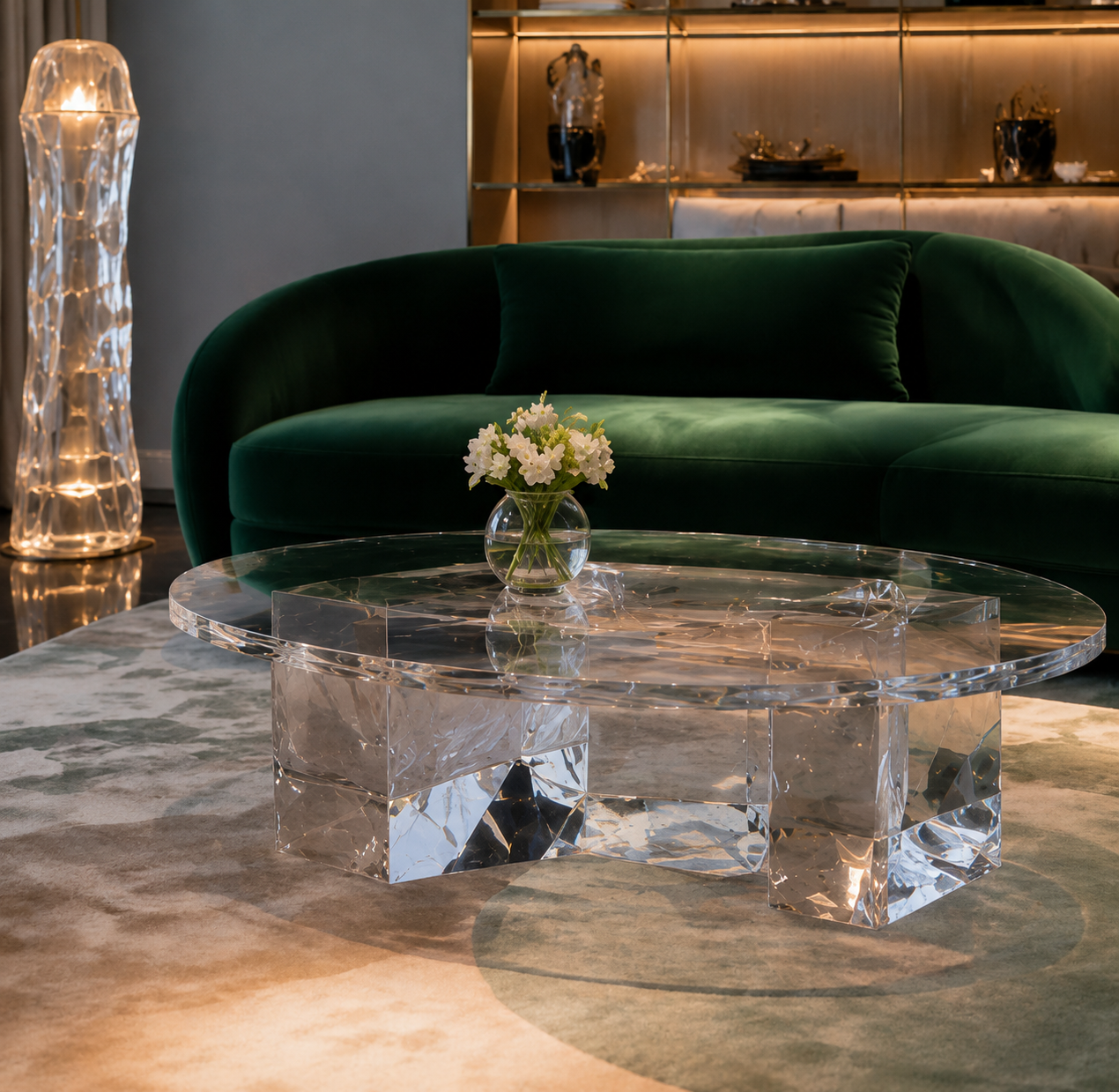
Acrylic furniture is often described as easy to maintain, but “easy” does not mean maintenance-free. A clear acrylic display table beneath strong retail lighting can show fine scratches earlier than an opaque surface. The issue is not necessarily material failure; it is the contrast between the polished transparent surface and the illuminated environment. Designers therefore consider lighting direction, customer access, cleaning frequency, and whether the top can be refinished on site.
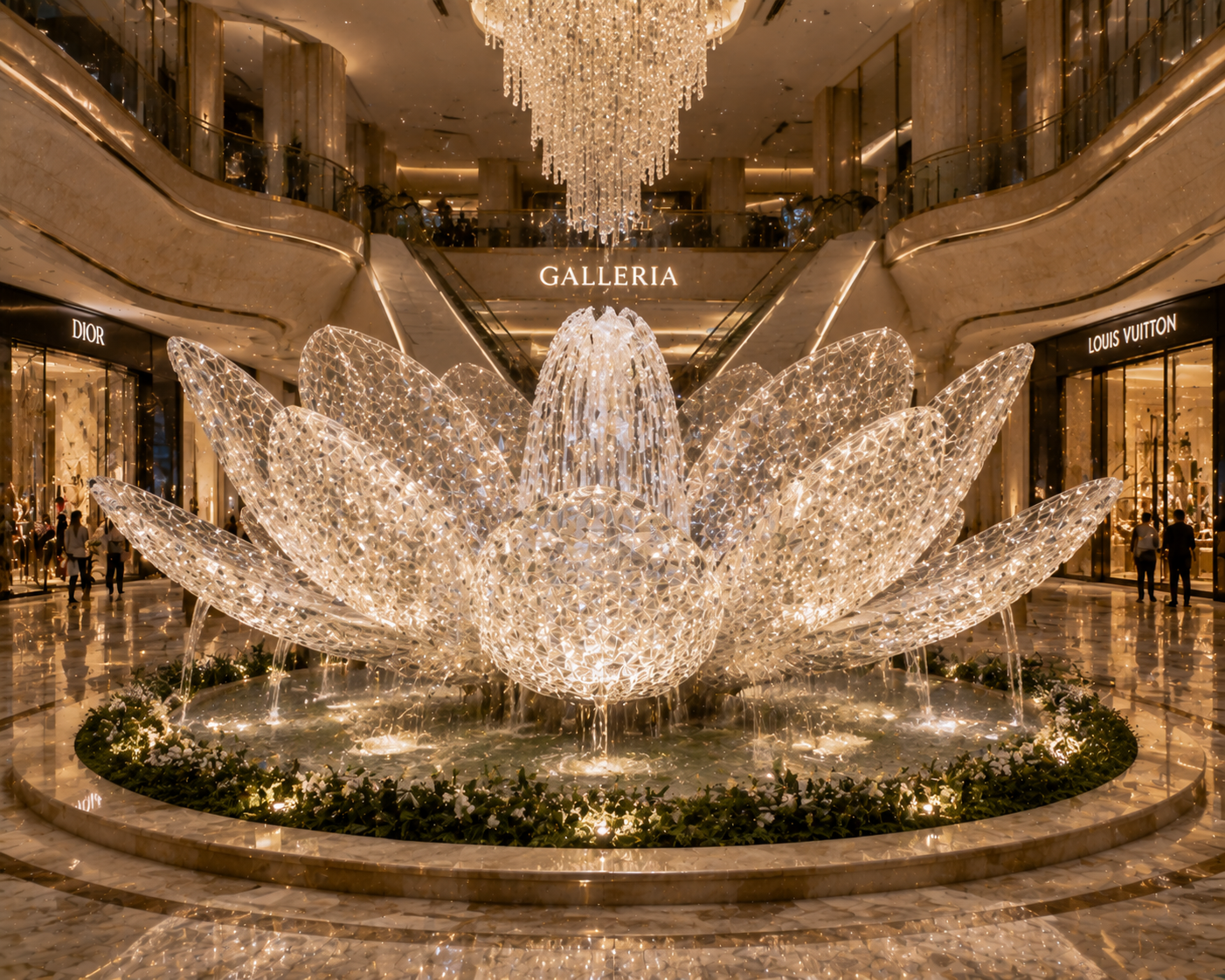
Premium resin requires even more attention to formulation and finishing. Different resin systems vary in hardness, heat resistance, ultraviolet stability, chemical resistance, and repairability. A resin reception desk may perform well if the casting is fully cured and protected with an appropriate topcoat, yet the same design may fail quickly if the surface is too soft for keys, luggage, or cleaning chemicals. Synthetic crystal can create a jewel-like focal point, but polished edges and corners may need protection from carts, vacuum cleaners, and repeated impact.
In a restaurant project, for instance, using an artistic resin surface directly as a high-contact dining top may create unnecessary maintenance risk. A more practical construction may use the resin as the sculptural base or decorative core while adding a replaceable glass or engineered top. The customer still experiences the visual depth of the resin, but scratches, heat, and food contact affect a component that can be changed independently.
BIFMA’s furniture standards show why cleaning durability is now treated as a performance issue rather than a housekeeping detail. Its X8.1 standard addresses furniture-surface design and durability when exposed to cleaning, sanitizing, and disinfecting methods, while its desk and table standards provide a common basis for evaluating safety, durability, and structural performance in commercial settings, including retail, restaurants, and cafeterias. Surface testing, cleaning compatibility, and repair instructions control years of labor, complaints, refinishing, and premature replacement.
3. Long-Term Cost Two: Failure, Downtime, Replacement, and Brand Disruption
The second hidden cost is not the damaged furniture itself, but the disruption caused by failure. A cracked display plinth in a flagship store may require merchandise to be removed, the area to be closed, and visual merchandising to be rebuilt. A damaged reception desk may interfere with check-in operations. A custom resin dining table that cannot be repaired locally may need to be crated, shipped, reproduced, and reinstalled. The commercial cost includes labor, transport, lost use, management time, and visible brand disruption.
This is why designers care about repeatability and serviceability. Platinum acrylic is often attractive for multi-location retail rollouts because sheet thickness, machining, polishing, and color can be controlled across repeated units. However, the quality of joints and internal stress management is critical. Premium resin offers greater artistic freedom, but custom pigments, inclusions, and hand-cast effects can be difficult to reproduce later unless the manufacturer keeps batch records, formulas, molds, and approved samples. Synthetic crystal statement pieces can be highly durable in low-contact locations, yet a large, heavy, one-off object may be expensive to move or replace.
Testing reduces uncertainty. ANSI/BIFMA X5.5-2021 was developed to evaluate the safety, durability, and structural performance of desks and tables in commercial and institutional environments, with specific attention to stability, leg strength, and top retention. For a custom transparent table, comparable thinking should be applied to the finished assembly: expected load, concentrated load, edge impact, joint strength, stability, and transport stress should all be reviewed before production.
A hotel may order twenty identical platinum acrylic side tables for guest suites. If each table is constructed as one permanently bonded unit, damage to a single top could require replacement of the complete table. If the top, base, and protective feet are independently replaceable, the hotel can keep spare components and return the room to service quickly. The second construction may initially cost more, but it reduces inventory requirements, freight costs, installation labor, and room downtime.
Packaging also belongs in the long-term cost calculation. Transparent furniture can leave the factory in perfect condition and arrive with damaged edges, abrasions, or pressure marks if the packaging does not support the weight correctly. Designers working on international projects often evaluate whether the supplier has experience with export crates, moisture protection, edge isolation, lifting points, and installation sequences. A product that is difficult to transport safely is inherently more expensive to own.
A strong commercial specification also includes a recovery plan. Designers increasingly ask whether a scratched top can be polished on site, whether a damaged section can be replaced independently, whether spare parts are stocked, and whether the supplier can reproduce the original finish after several years. The best long-term design is one that recovers quickly and predictably without closing an area or replacing an entire furniture family.
4. Long-Term Cost Three: Compliance, Indoor Air Quality, and Health Risk
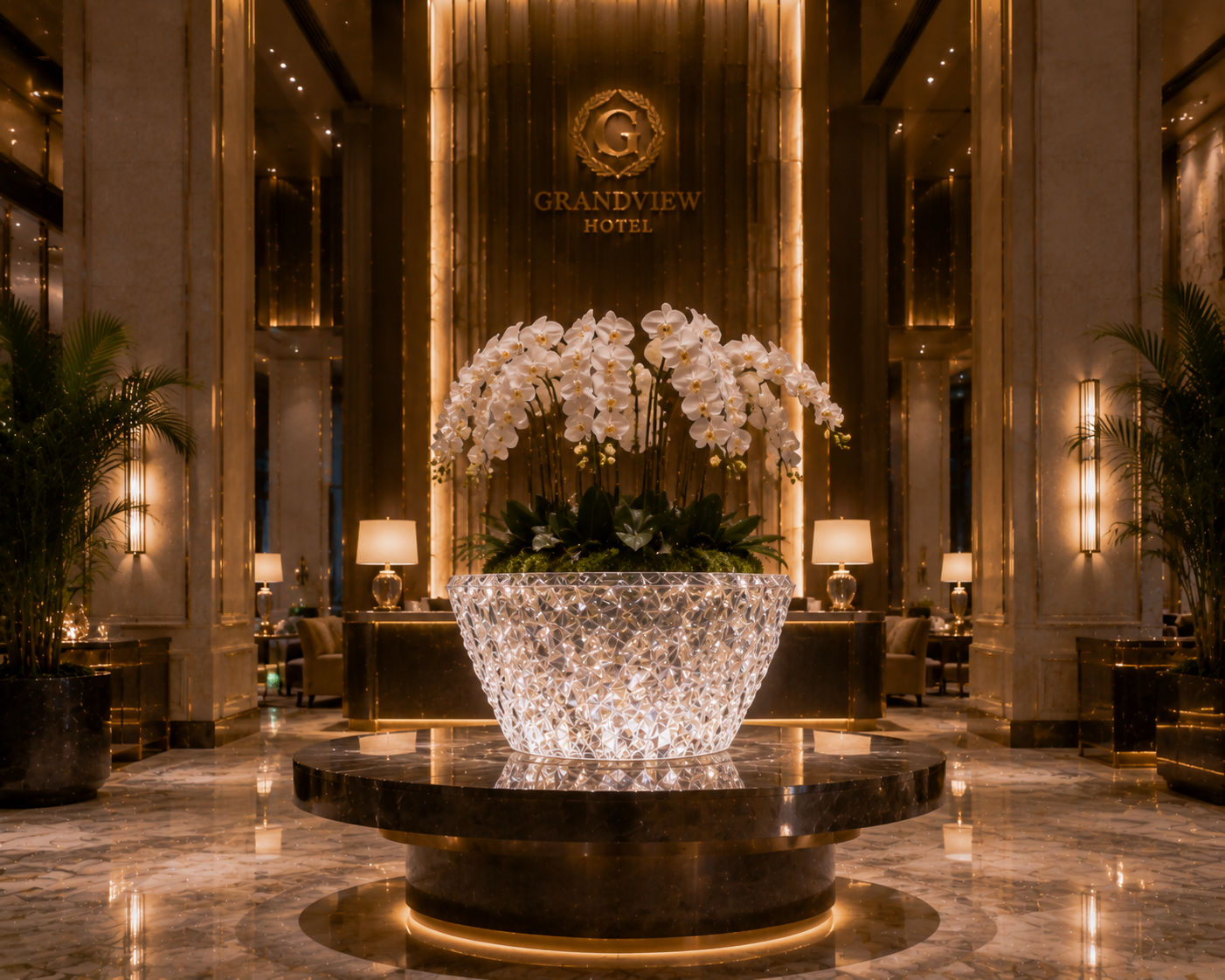
The third hidden cost is compliance. A beautiful piece can become expensive if it lacks the documentation required for a hotel, office, healthcare environment, school, public building, or international project. Designers may need evidence concerning chemical emissions, fire behavior, structural safety, material ingredients, and cleaning compatibility. When requested late, this information can cause testing, redesign, delayed approvals, or substitution.
Indoor air quality is particularly relevant to resin casting, coatings, adhesives, and repair work. The U.S. Environmental Protection Agency states that volatile organic compounds are emitted by many products, including building materials and furnishings, and reports that levels of several common organic pollutants have been measured at two to five times higher indoors than outdoors. This does not make every resin or acrylic product unsafe; it means buyers should distinguish documented, fully cured factory products from materials mixed, coated, bonded, or repaired in occupied spaces.
A large resin reception counter, for example, should ideally be cast, cured, finished, and inspected in a controlled factory environment. Carrying out extensive wet processing, coating, or adhesive work inside an operating hotel increases ventilation requirements and may create odor complaints, installation delays, or restrictions on when the work can take place. The cost of controlled factory production may be lower than the cost of resolving complaints after installation.
UL Solutions’ GREENGUARD program tests furniture and other interior products against chemical-emission limits, and GREENGUARD Gold applies lower limits intended for sensitive environments such as schools and healthcare settings. UL also notes that certified office furniture aligns with BIFMA X7.1 requirements. BIFMA’s e3 furniture sustainability standard similarly covers environmental, health, wellness, and social impacts and is designed to align with frameworks such as LEED and WELL.
Designers should request documentation for the actual product, not a generic brochure. The exact resin system, adhesive, coating, substrate, thickness, and fabrication method matter. A certificate issued for one acrylic grade, resin formulation, or production method may not automatically represent another. Factory curing and ventilation should be completed before delivery whenever possible.
A supplier who can provide safety data, emissions information, test reports, material declarations, and clear installation instructions reduces more than technical risk. They reduce the probability of design revisions, tender disputes, approval delays, product rejection, and reputational damage. In high-end commercial projects, documentation is therefore part of the furniture’s value rather than an administrative extra.
5. Long-Term Cost Four: Environmental Burden, Removal, and End-of-Life Value
The fourth hidden cost appears when the space is refurbished. Commercial interiors change frequently as brands update concepts, hotels renovate, and offices adapt. Furniture that cannot be repaired, separated, reused, or recycled may create disposal fees and environmental reporting problems, even if it was inexpensive to purchase.
The scale of the wider waste issue is significant. The U.S. Environmental Protection Agency estimated that 600 million tons of construction and demolition debris were generated in the United States in 2018, more than twice the amount of municipal solid waste generated that year. Furniture is not the main component, but the figure shows the material consequences of renovation and replacement.
In Europe, the European Environment Agency reported that each person uses about 14 tonnes of materials and generates about 5 tonnes of waste annually, while circular business models have not yet scaled enough to transform overall material use. These figures make durability and reuse commercially relevant, particularly for brands that publish environmental targets or operate under green-building requirements.
For transparent furniture, end-of-life planning begins with construction. A platinum acrylic table mechanically fixed to a metal frame is easier to disassemble than one permanently bonded from mixed materials. A resin feature can have a longer useful life if the artistic core is protected by a replaceable top. A synthetic crystal element can be transferred to a new interior if it is designed as a removable centerpiece rather than built permanently into a disposable structure.
Imagine a luxury retail brand replacing its store concept after five years. A custom resin display incorporating the previous logo may have little reuse value. A neutral resin or acrylic base with a removable branded panel can be updated and used in the next concept. The difference is a design decision made before manufacturing, but it determines whether the furniture becomes an asset or waste during refurbishment.
Designers also consider whether the product can be refinished, resold, relocated, returned to the manufacturer, or converted into another use. Modular dimensions can make a display suitable for another location. Mechanical connections can allow acrylic, metal, glass, and lighting components to be separated. Detailed material records can help future contractors identify the correct handling or recycling route.
ISO 14040 describes life-cycle assessment as evaluating inputs, outputs, and potential environmental impacts across a product’s life cycle, and it identifies product design and redesign as important applications of that information. For furniture procurement, the lesson is practical: durability, modularity, separable materials, replaceable parts, and documented composition create residual value. A cheaper one-piece product may become waste after one damaged component, while a better-engineered product can remain in service through several design cycles.
6. The Designer’s Real Decision: Which Option Has the Lowest Cost of Ownership?
The professional decision should be made through a life-cycle comparison, not a price comparison. For each furniture item, the designer should define the intended service period and then estimate four cost groups: maintenance and appearance recovery, failure and operational disruption, compliance and health documentation, and removal or end-of-life treatment. Even a simple low-, medium-, and high-risk comparison can expose weaknesses hidden by a low quotation.
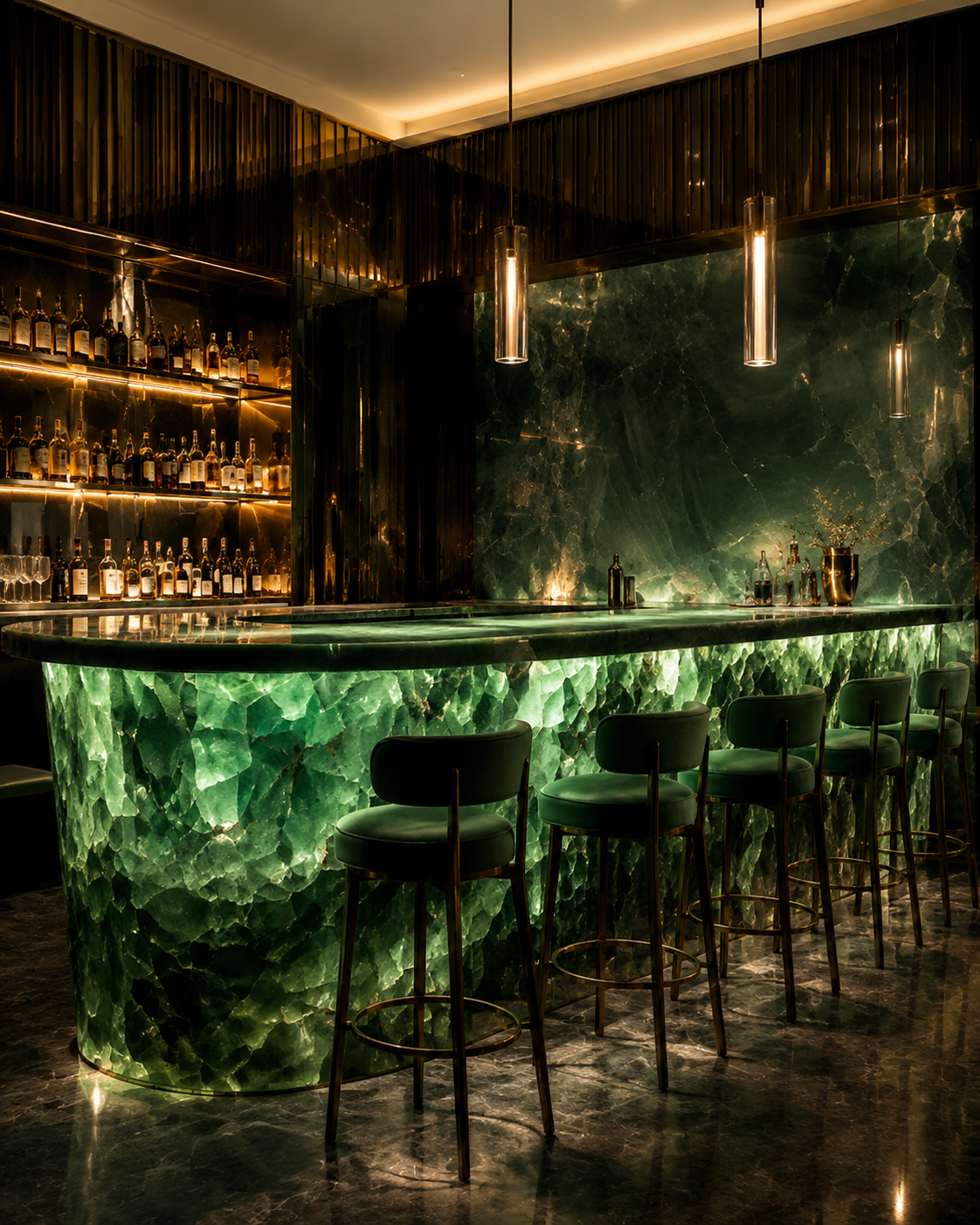
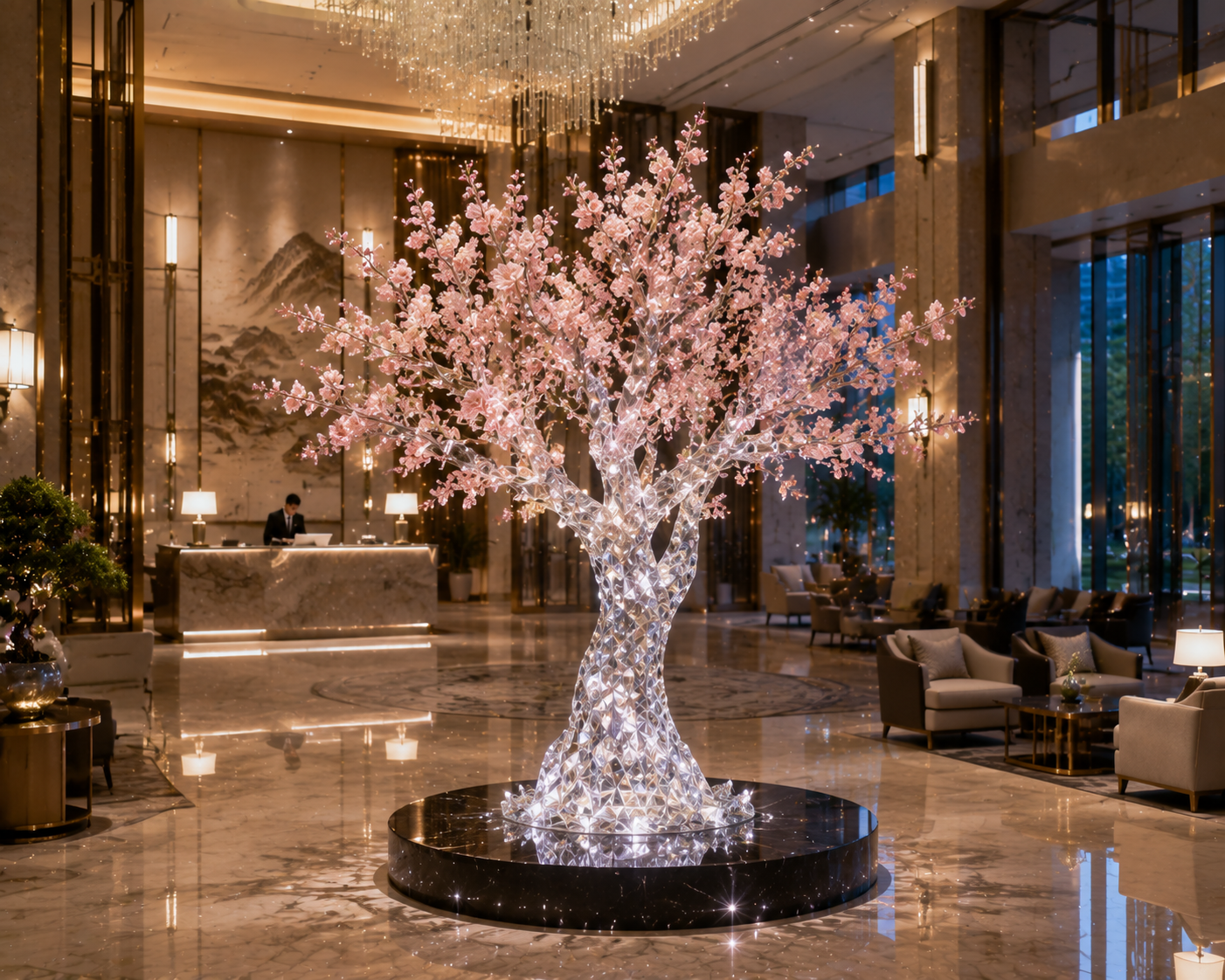
In practice, the material should follow the zone. Synthetic crystal is best used where maximum visual impact justifies careful placement and lower contact, such as a lobby centerpiece, luxury display platform, or ceremonial console. Premium resin is ideal when the project requires unique color, depth, embedded elements, sculptural form, or a proprietary brand effect, provided that the formulation, curing, topcoat, and repair process are controlled.
Platinum acrylic is often the strongest choice for visually light, precise, repeatable furniture systems, especially in retail displays, hotel suites, galleries, and contemporary offices, but high-contact surfaces should be protected or made replaceable. The material’s value comes not only from transparency but also from its ability to support controlled machining, polished edges, consistent dimensions, and modular construction.
Hybrid construction can reduce long-term cost further. A resin art body can be paired with a replaceable glass top. A platinum acrylic base can support a more abrasion-resistant work surface. Synthetic crystal accents can be mounted on a serviceable metal frame rather than carrying the entire structural load. These solutions preserve visual value while placing wear, heat, and impact on easier-to-maintain components.
Designers should also assess the supplier through long-term questions. Can the manufacturer reproduce the same transparent color after three years? Are molds and digital production files retained? Can a damaged acrylic panel be supplied separately? Are approved cleaners and polishing methods documented? Is there a clear warranty covering workmanship, bonding, cracking, discoloration, and structural performance? Is export packaging included in product development or treated as an afterthought?
The best supplier does more than quote a price: they explain material grades, provide samples and test information, anticipate installation risks, define cleaning methods, retain records, and support repair or reproduction. For designers, this capability is part of the product.
A piece of furniture that protects the brand, remains attractive, recovers from damage, satisfies project requirements, and retains value after refurbishment is not merely more expensive furniture. It is a lower-risk commercial asset. That is why experienced designers do not begin by asking, “Which piece has the lowest price?” They begin by asking, “Which solution will create the lowest total cost while protecting the design for its entire working life?”
READ MORE:
- Come trasformare un arredo distintivo in un elemento riconoscibile del brand
- Dove collocare un elemento artistico per migliorare il percorso del cliente all'interno dello spazio
- Come abbinare mobili in cristallo sintetico, illuminazione e superfici senza creare un ambiente eccessivo
- I 3 aspetti dei materiali più importanti nella riqualificazione degli hotel internazionali
- Come mantenere nel tempo l'eleganza di uno spazio commerciale
- Why Low-Cost Transparent Furniture Loses Its Shine—and How Premium Materials Preserve Long-Term Quality
- Synthetic Crystal, Premium Resin, or Platinum Acrylic: How Should Commercial Spaces Choose?
- One Transparent Furniture Project: How to Balance Visual Impact, Transport Safety, and Long-Term Maintenance
- From "Photogenic" to "Built to Last": How High-End Commercial Furniture Is Changing


