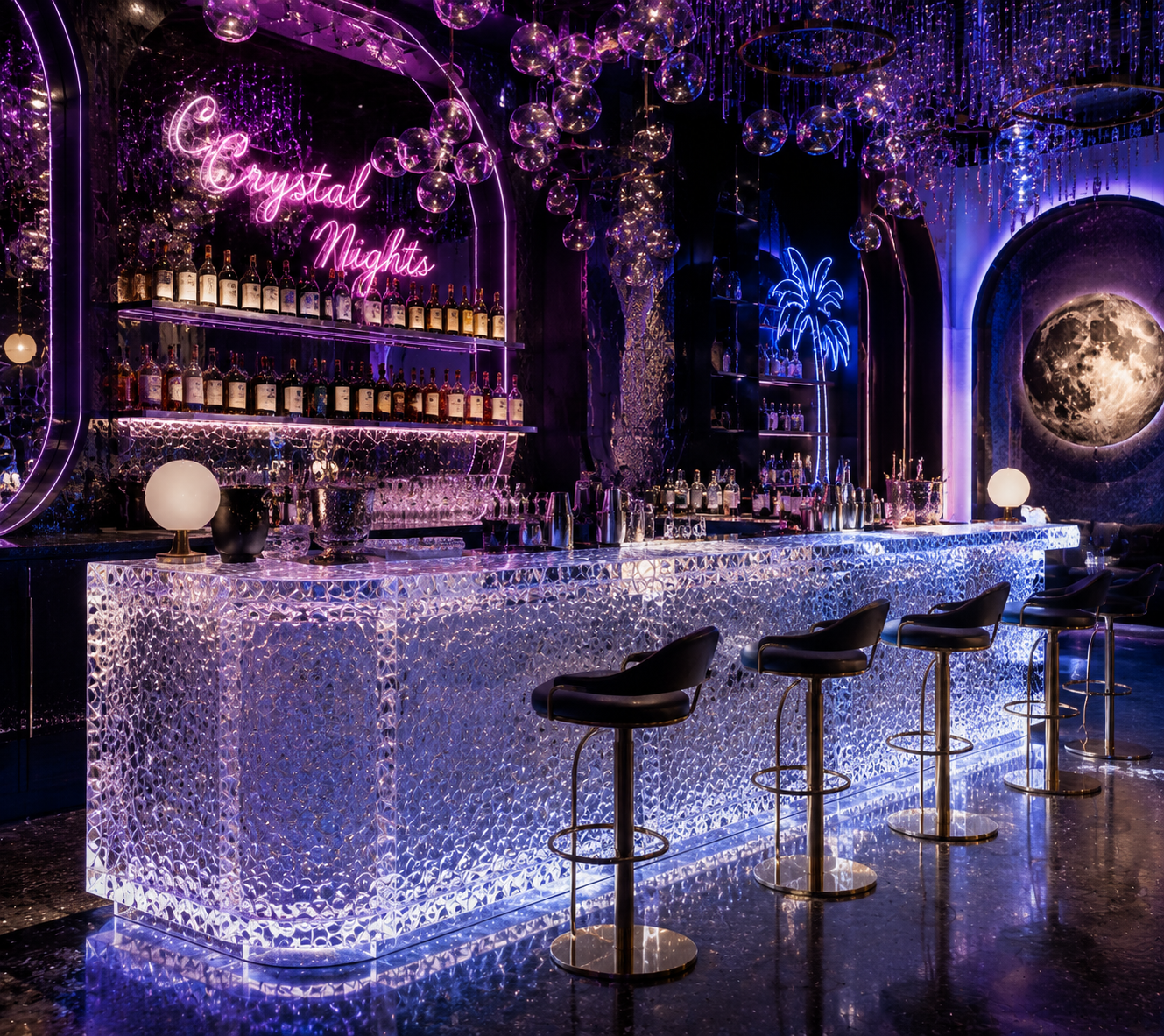
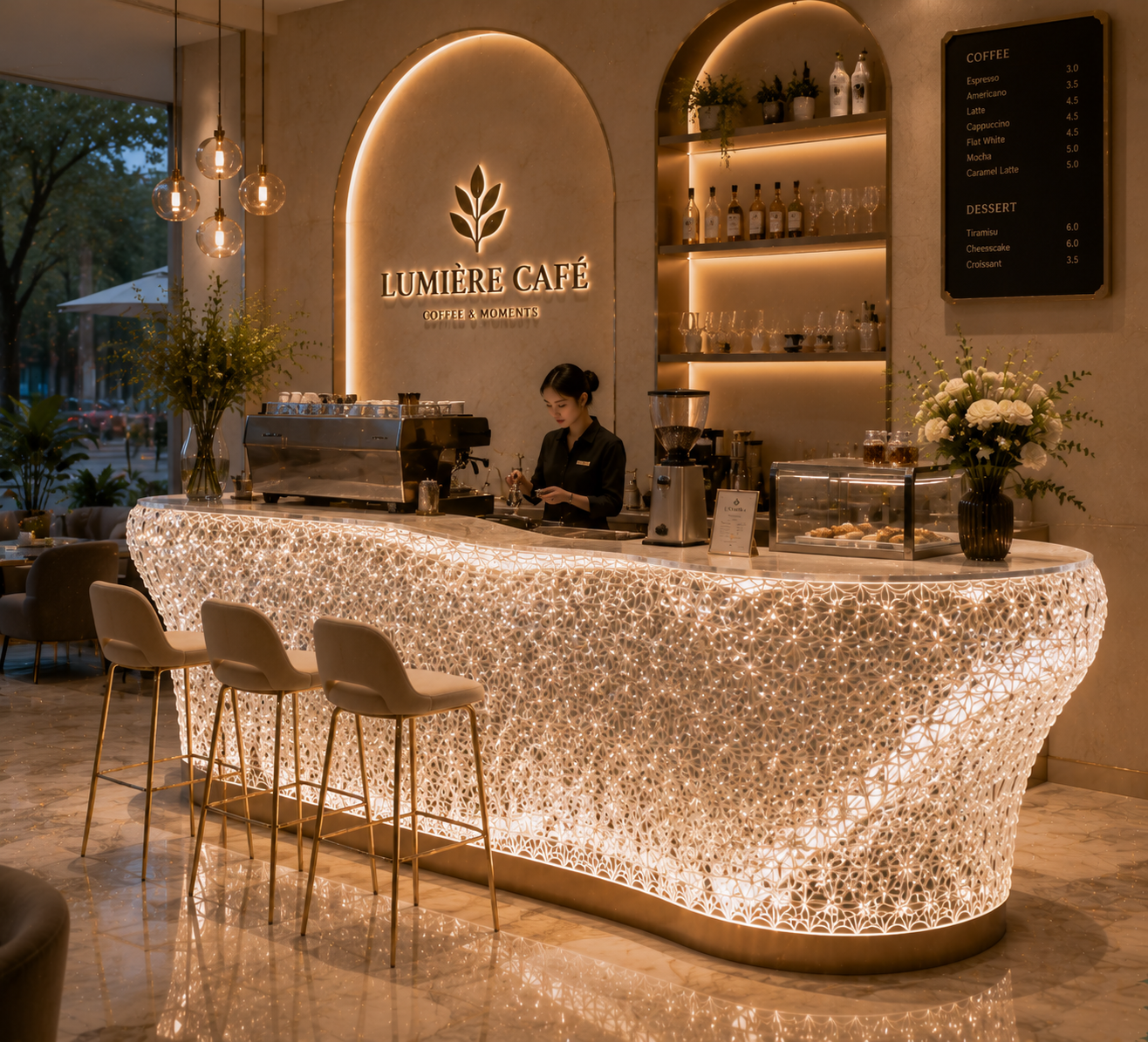
Furniture in a hotel is not simply part of the decoration. In high-frequency areas, it is touched, moved, cleaned, bumped, loaded, and photographed hundreds of times every day. A beautiful table that quickly develops scratches, a sculptural reception desk that cannot tolerate the hotel’s disinfectant, or a transparent chair that is difficult to repair can create far more operational cost than its original purchase price.
For hotel owners, designers, and procurement teams, the real question is therefore not which material looks the most luxurious in a showroom. It is which material can preserve its appearance, structural stability, cleanliness, and brand value under the actual conditions of the property.
Synthetic crystal, premium resin, and platinum acrylic can all create highly distinctive hospitality furniture. However, they should not be treated as interchangeable transparent materials. Each has a different role in terms of visual depth, formability, surface performance, maintenance, and long-term commercial value.
1. Begin with Operational Pressure, Not Material Appearance
The first step in selecting hotel furniture is to identify how the furniture will actually be used. A console table in a quiet presidential suite does not face the same conditions as a luggage bench in a lobby, a communal table in an all-day dining restaurant, or a side table beside a busy ballroom entrance.
High-frequency hotel areas normally include the main lobby, reception zone, elevator lobby, corridors, restaurants, bars, executive lounges, meeting pre-function spaces, poolside areas, and frequently occupied guest rooms. In these locations, furniture may be exposed to luggage impact, food and beverage spills, repeated cleaning, sunlight, humidity, temperature changes, and unplanned movement by guests or staff.
This operational perspective is important because the physical condition of a hotel directly influences how guests evaluate the property. A Cornell hospitality study analyzing more than 95,000 online reviews of 99 independent upscale hotels and resorts found that rooms and service were overwhelmingly more important to ratings than many secondary amenities. The research reinforces a practical reality: guests may not know what material a table is made from, but they immediately notice whether the room feels comfortable, well maintained, and visually consistent.
Earlier Cornell research involving Holiday Inn properties also found that an increase in physical defects was associated with lower revenue per available room, with guest rooms, bathrooms, and exterior areas showing particularly strong relationships with performance. Furniture condition is only one part of overall product quality, but damaged, unstable, cloudy, or poorly repaired furniture contributes to the same perception of neglect.
This issue has become more important as hotel operators face rising expenses. The American Hotel & Lodging Association reported that operating-cost pressure continued to keep industry gross operating profit per available room at approximately 90 percent of its 2019 level. Under these conditions, selecting furniture that reduces repairs, replacement frequency, room downtime, and housekeeping difficulty is not merely a design decision. It is an operating-profit decision.
Before choosing a material, the project team should therefore define the expected contact frequency, cleaning frequency, impact risk, chemical exposure, sunlight exposure, load requirement, and acceptable maintenance interval for every furniture category.
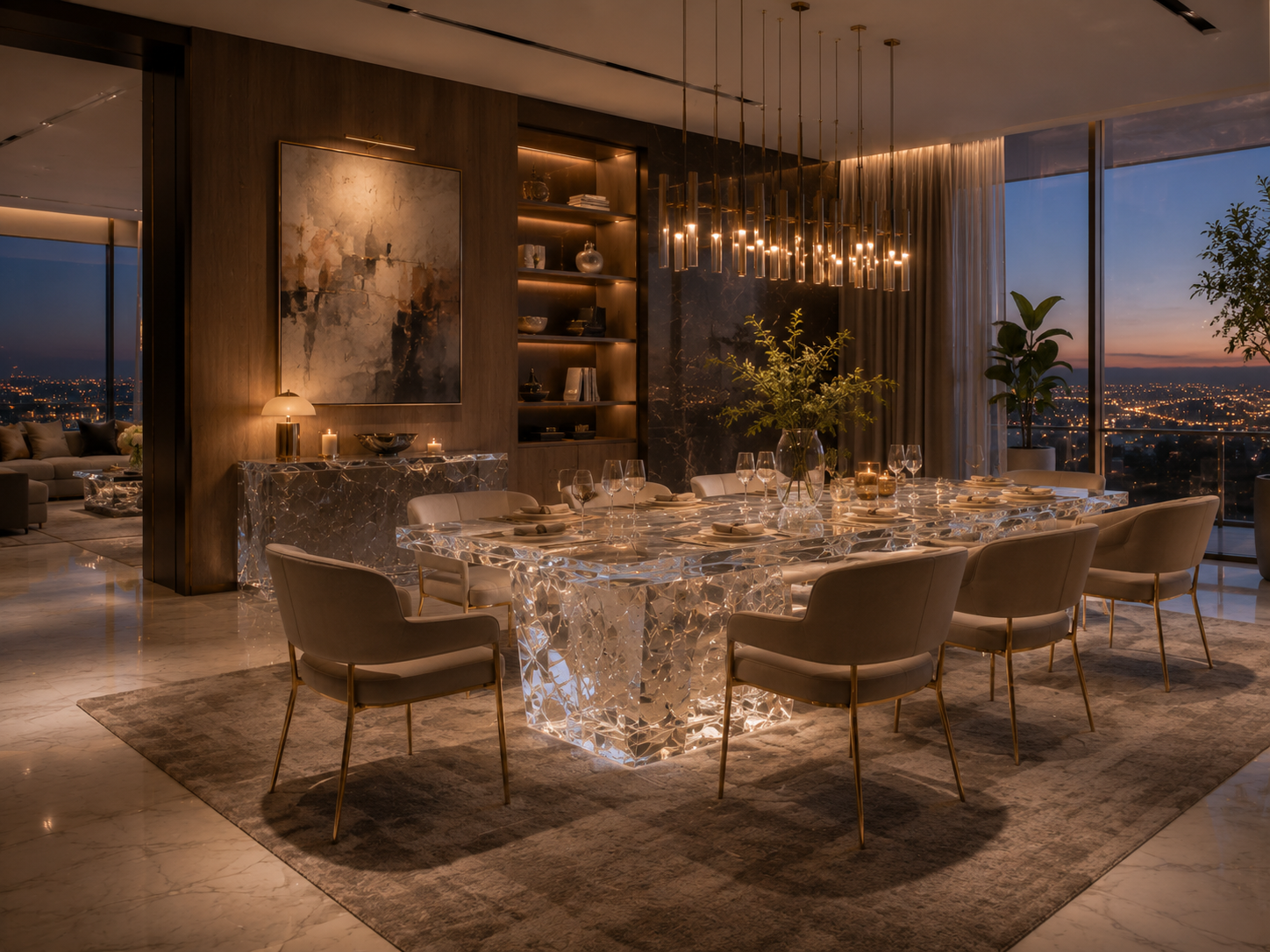
2. Understand What the Three Materials Are Designed to Achieve
Synthetic crystal, premium resin, and platinum acrylic can produce a transparent or translucent appearance, but their commercial strengths are different.
Synthetic crystal should be treated as a design and manufacturing description rather than a complete technical specification. Depending on the manufacturer, it may refer to a cast transparent resin system, a crystal-effect composite, or a decorative material containing pigments, metallic elements, stone, flowers, shells, fabrics, or other inclusions. Its main advantage is visual depth. It can create the impression of frozen movement, mineral formations, water, ice, or suspended artwork.
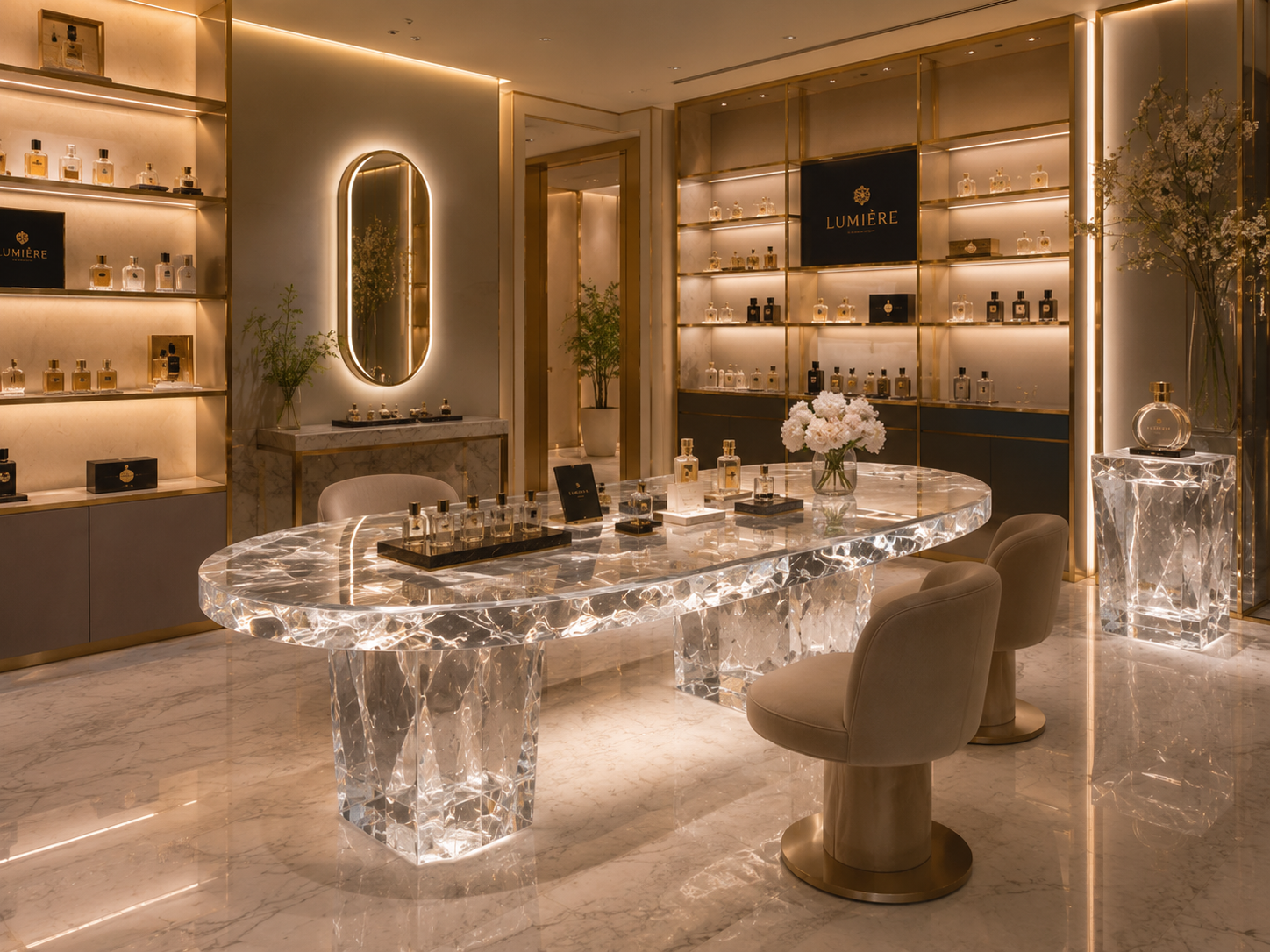
For hotels, synthetic crystal is particularly valuable when furniture needs to become a memorable visual object. A lobby table containing metallic textures inspired by the local landscape, for example, can communicate the hotel’s story more effectively than a generic transparent table. Its value lies in customization, artistic expression, and the ability to create pieces that guests photograph and remember.
Premium resin is a broader material category. Its suitability depends on the resin chemistry, formulation, pigments, additives, casting process, curing quality, protective coating, and internal support structure. High-quality resin allows designers to create organic curves, thick sculptural volumes, seamless surfaces, complex colors, and embedded decorative elements that may be difficult to achieve with conventional sheet materials.
Its strongest application is generally furniture with a sculptural identity: reception-desk features, bar fronts, statement bases, decorative benches, art tables, illuminated installations, and custom accessories. However, the words “premium resin” alone do not prove scratch resistance, heat resistance, UV stability, flame performance, or low emissions. Those characteristics must be supported by material data and testing.
Platinum acrylic can be positioned as a premium furniture-grade acrylic, normally based on high-quality PMMA, with close attention to optical clarity, color consistency, polishing, bonding, thickness control, and fabrication quality. Acrylic is especially suitable for visually light furniture with clean geometry, precise edges, transparent structures, layered forms, and integrated lighting.
As a reference, clear PLEXIGLAS-branded PMMA products can achieve visible-light transmission of up to 92 percent, although actual performance depends on grade and thickness. The manufacturer also offers hard-coated grades developed to improve abrasion and chemical resistance. These figures should not be automatically applied to every acrylic product, but they demonstrate why correctly specified PMMA is widely used where optical clarity matters.
The practical distinction is clear: synthetic crystal is strongest when visual depth and artistic storytelling are required; premium resin is strongest when sculptural freedom and customization are required; platinum acrylic is strongest when optical clarity, precision, lightness of appearance, and contemporary detailing are required.
3. Match Each Material to the Correct Hotel Zone
The most effective hotel interiors rarely use one material everywhere. They create a hierarchy in which each material is placed according to its visual purpose and operational exposure.
In the main lobby, furniture has to establish the property’s identity immediately. This is an appropriate location for a synthetic-crystal center table, a premium-resin sculptural console, or a platinum-acrylic table with integrated lighting. The furniture can act as a signature object, but circulation must remain the priority. Corners should be softened, projecting elements controlled, and transparent edges made visible enough to reduce accidental contact.
Synthetic crystal is especially effective in lobby areas where the hotel wants to express a destination story. A coastal resort could use layers resembling water and sand, while an urban luxury hotel might use metallic inclusions that reference the city skyline. Such pieces should be positioned as focal furniture rather than as luggage-handling surfaces.
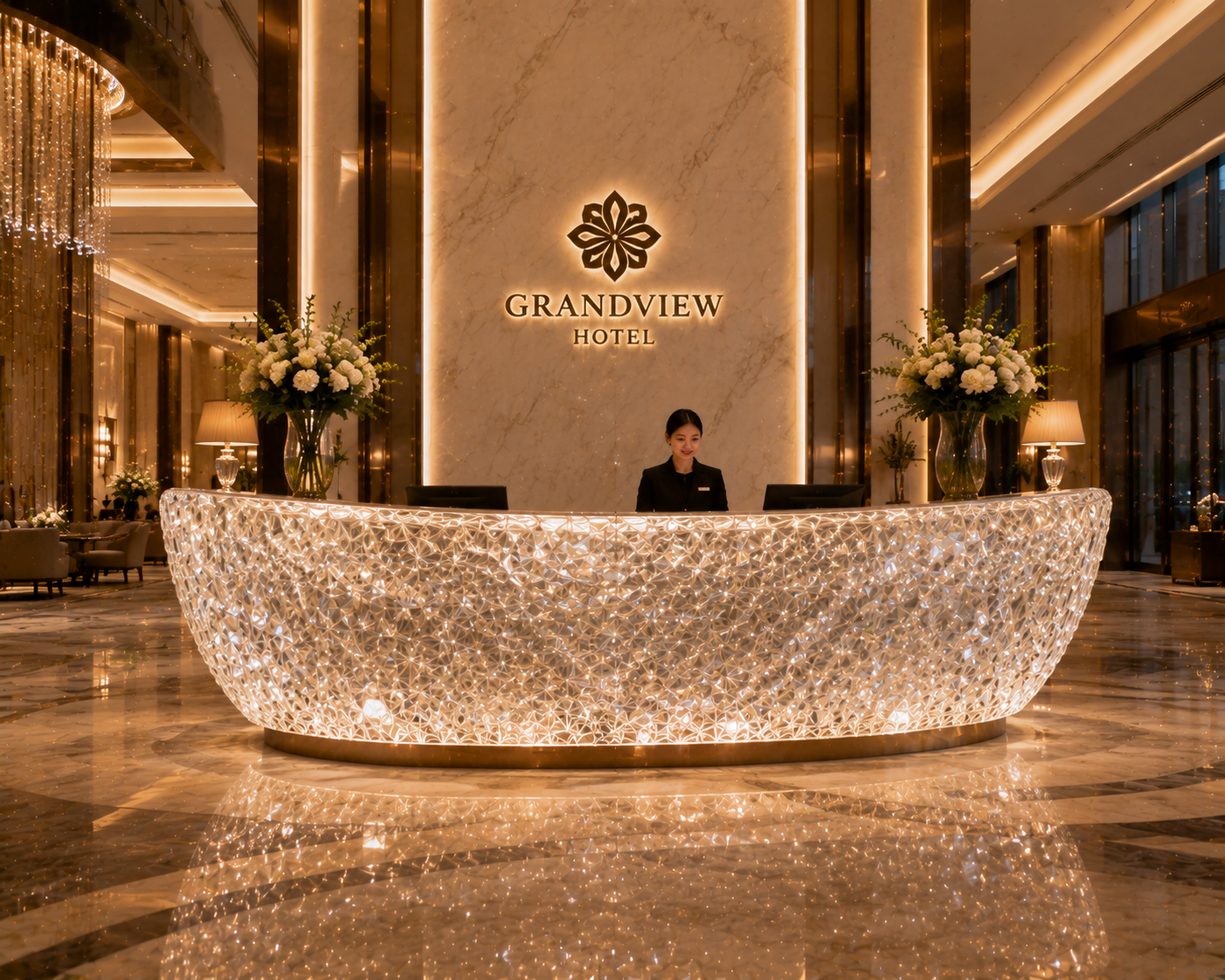
At reception, premium resin can be used for a monolithic feature panel or decorative front, while the actual working counter may require a replaceable, more chemically resistant surface. This separation allows the designer to preserve the sculptural effect without exposing the most expensive decorative material to constant contact with keys, devices, luggage hardware, pens, and cleaning chemicals.
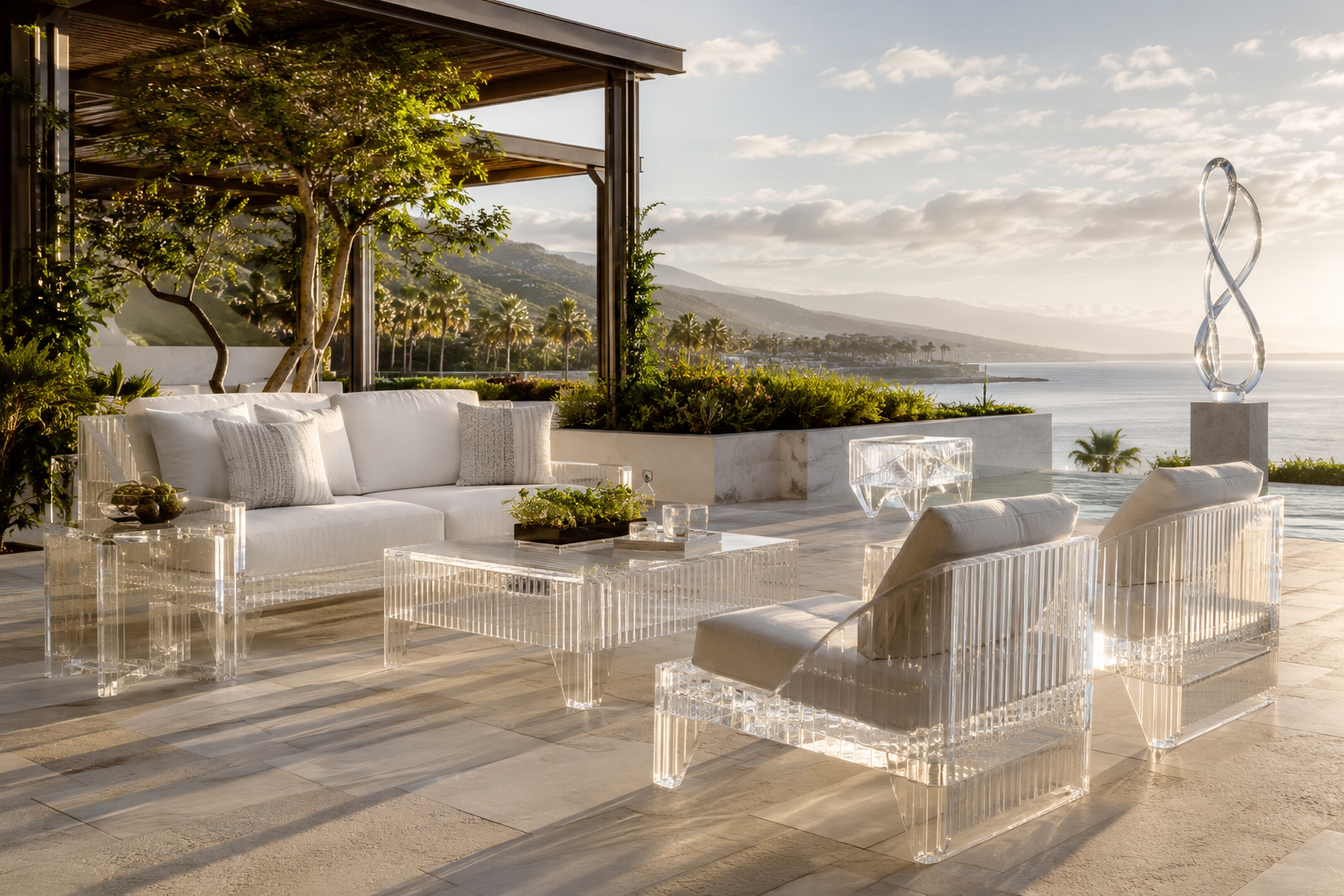
Platinum acrylic is well suited to reception screens, illuminated signage furniture, concierge consoles, display furniture, lounge side tables, and visually lightweight partitions. In elevator lobbies and corridors, compact acrylic or resin tables can add character without making the space feel crowded. However, transparent furniture should be detailed carefully so that guests with reduced vision can identify its edges.
Restaurants and bars create a more demanding environment. Furniture may encounter alcohol, coffee, citrus juice, oil, heat, cutlery, and aggressive cleaning. A decorative resin or synthetic-crystal base can work successfully, but a heavily used tabletop should be validated against the hotel’s real cleaning products and service temperatures. Hot serving equipment should not be placed directly on an untested resin or acrylic surface.
In guest rooms, platinum-acrylic side tables, desks, minibar units, luggage-area details, and decorative panels can create visual openness, particularly in smaller rooms. Yet housekeeping practicality must be considered. A highly polished clear surface may show fingerprints and dust more easily than a tinted, textured, frosted, or satin finish.
For suites, villas, executive lounges, and private dining rooms, synthetic crystal and premium resin can be used more expressively because contact frequency is usually lower and the furniture can be given more controlled maintenance. In ballroom pre-function areas, by contrast, furniture should prioritize impact resistance, stable bases, replaceable components, and ease of movement.
The application principle is not to reserve premium materials only for low-use spaces. It is to use the most visually valuable material where it creates the greatest guest impact, while protecting it from operational conditions it was not designed to handle.
4. Design the Cleaning and Maintenance System Before Production
Hotels do not experience wear only through guest use. They also experience wear through housekeeping.
The U.S. Centers for Disease Control and Prevention recommends regular cleaning of high-touch surfaces and emphasizes the use of cleaning products appropriate for the specific surface. Counters, desks, handles, rails, and similar contact points receive frequent attention in commercial facilities. This means hotel furniture must be evaluated not only against spills, but also against repeated wiping and chemical exposure.
A common project failure occurs when a visually successful sample is approved without testing it against the hotel’s cleaning procedure. After installation, housekeeping staff may use an alcohol-based spray, concentrated disinfectant, abrasive pad, or solvent-containing product. The surface can then become cloudy, develop fine cracks, lose gloss, or show circular wiping marks.
PMMA, for example, can resist many inorganic substances and low concentrations of acids, alkaline solutions, and salts, but certain organic compounds, ketones, esters, chlorinated hydrocarbons, and unsuitable alcohol-containing cleaners may damage it. This does not make acrylic unsuitable for hotels; it means the cleaning method must be part of the furniture specification.
Before mass production, the manufacturer should prepare finished samples using the actual material, coating, color, edge treatment, adhesive, and polishing process proposed for the project. The hotel’s real cleaning chemicals should then be applied at realistic concentrations and dwell times. Repeated wiping tests are more useful than a single application because hotel damage usually develops gradually.
For transparent materials, abrasion should also be assessed objectively. ASTM D1044 provides a method for estimating the resistance of transparent plastics to surface abrasion by measuring changes in optical properties, including haze. It is useful for comparing materials and surface treatments, although test conditions and reporting methods must be clearly defined.
Maintenance planning should influence the furniture design itself. High-contact top panels can be made removable. Bases and decorative inserts can be separated from service surfaces. Polishing access can be preserved. Protective feet can reduce floor grit from reaching lower edges. Replaceable glides can prevent uneven loading. Spare components can be produced with the original order to avoid future color variation.
The manufacturer should also provide a simple care manual identifying approved cleaners, prohibited chemicals, recommended cloth types, scratch-removal limits, polishing methods, and repair procedures. A premium material becomes commercially valuable only when hotel staff can maintain it without specialist intervention after every minor incident.
5. Require Safety and Compliance Evidence, Not Marketing Labels
Luxury appearance cannot replace technical evidence. Furniture in a commercial hotel must remain stable, structurally sound, and appropriate for the regulations of the destination market.
For tables and desks, ISO 19682:2023 provides test methods covering stability, strength, durability, static loading, impact, deflection, assemblies, and products with castors. The standard does not set one universal acceptance level for every application, so the specifier must determine suitable loads and performance requirements based on intended use.
UL Solutions also identifies mechanical strength, structural integrity, electrical hazards, and fire hazards as major considerations in commercial furniture testing. Relevant requirements may vary according to whether the product is a table, illuminated display, powered furniture item, retail-type fixture, outdoor product, or other furniture category.
This is particularly important for acrylic and resin furniture incorporating LED lighting, power outlets, charging modules, metal frames, or concealed wiring. The decorative material may perform well, but the complete furniture item still needs safe cable routing, ventilation, grounding where applicable, secure access panels, and verified electrical components.
Flammability must also be evaluated according to the finished product, its location, and local code requirements. A small-scale material rating should not automatically be presented as proof that the complete piece of furniture satisfies every hospitality fire requirement. UL notes that furniture, plastics, components, wall coverings, and upholstered products may require different recognized test methods and classifications.
Indoor-air quality is another procurement concern, particularly when many new furniture pieces are installed shortly before a hotel opening. UL GREENGUARD certification, for example, uses testing and emission limits for product groups including furniture, building materials, flooring, and interiors. BIFMA and other industry frameworks also address environmental, health, wellness, and social impacts associated with furniture.
For synthetic crystal and premium resin, procurement teams should request the precise resin type, safety data, curing information, VOC or emissions evidence, flame-test documentation where required, UV-performance information, and details of pigments, adhesives, coatings, and internal frames.
For platinum acrylic, they should request the PMMA grade, production method, thickness tolerance, impact or breakage information, abrasion data, chemical-compatibility guidance, UV documentation, fabrication details, and bonding method.
The correct question is not, “Is this a high-end material?” It is, “What evidence proves that this finished product is suitable for this exact hotel application?”
6. Evaluate Total Lifecycle Value and Build a Project-Specific Material Strategy
The lowest furniture quotation is not always the lowest hotel cost. A complete commercial evaluation should include original price, installation risk, cleaning labor, repair frequency, replacement lead time, room or area downtime, availability of spare parts, and the visual consequences of ageing.
Consider two lobby tables. The first is inexpensive but begins to haze after repeated cleaning and must be replaced after two years. The second costs more but has a validated hard-coated surface, replaceable top, repair documentation, and matching spare components. Even before guest-perception effects are considered, the second table may deliver a lower annual cost.
Lifecycle thinking is increasingly reflected in commercial-furniture standards. The ANSI/BIFMA e3 Furniture Sustainability Standard evaluates environmental, health, wellness, and social impacts, while the related LEVEL program uses independent third-party certification. This approach encourages buyers to look beyond a material name and consider the product, manufacturing facility, company practices, and lifecycle information together.
A strong hospitality specification should therefore begin with a full-size prototype or representative mock-up. The hotel team should examine it under the project’s actual lighting, because transparent materials behave differently under daylight, warm decorative lighting, and strong ceiling spotlights. The mock-up should also be loaded, moved, cleaned, viewed from guest eye level, and checked for fingerprints, reflections, visible joints, edge clarity, and internal defects.
The purchasing contract should define the approved sample, measurable color range, acceptable bubbles or inclusions, edge and polishing quality, joint appearance, structural frame, hardware, test evidence, packaging method, installation responsibility, repair procedure, warranty, and spare-material plan.
Within a balanced hotel project, platinum acrylic is often the preferred option for precise transparent furniture, illuminated elements, modern guest-room pieces, and visually lightweight structures. Premium resin is often the preferred option for curved, seamless, colored, or sculptural furniture. Synthetic crystal is oft en the preferred option for artistic statement pieces that communicate a strong brand or destination narrative.
The most effective result may combine all three. A lobby installation could use a premium-resin sculptural base, a synthetic-crystal decorative feature, and a platinum-acrylic light-diffusing component. The materials are selected not because they share a transparent appearance, but because each performs a different task.
For hotel owners, the best furniture is not the piece that looks most impressive on delivery day. It is the piece that still looks intentional after thousands of guest interactions, repeated housekeeping cycles, seasonal occupancy peaks, and years of operation. When synthetic crystal, premium resin, and platinum acrylic are specified according to real hotel conditions, they can provide more than luxury aesthetics. They can reduce operational frustration, support brand recognition, and turn furniture into a durable part of the guest experience.
READ MORE:
- Elevating Hotel Interiors Without Increasing the Budget: Three Ways to Combine High-End Materials
- How High-End Transparent Furniture Can Balance Visual Impact, Structural Stability, and Easy Maintenance
- From "Beautiful" to "Built to Last": How Custom Hotel Furniture Can Balance Design Impact and Long-Term Maintenance
- Reducing Maintenance Pressure at Hotel Front Desks and Public Areas Through Smarter Furniture Materials
- Synthetic Crystal Acrylic Furniture: A New Direction for Differentiated Competition in the Future High-End Furniture Market
- Why Are Designers and High-End Clients Paying More Attention to Synthetic Crystal Acrylic?
- Synthetic Crystal Acrylic Furniture: Turning Products from a Functional Choice into an Aesthetic Choice
- From Material Upgrade to Brand Upgrade: New Opportunities Created by Synthetic Crystal Acrylic Furniture
- Synthetic Crystal Acrylic Furniture: Why It Is Becoming a New Symbol of Value in High-End Spaces


