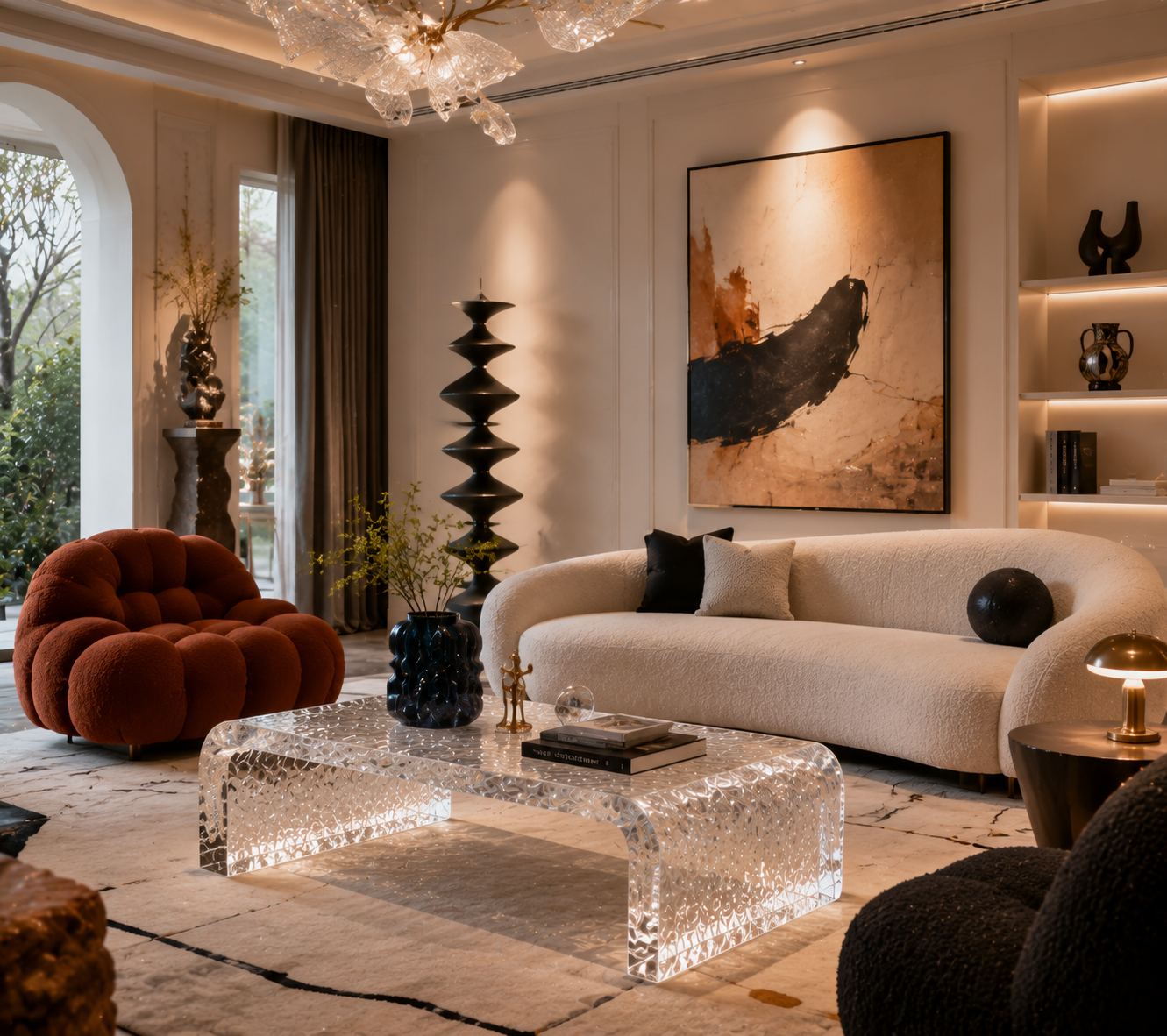
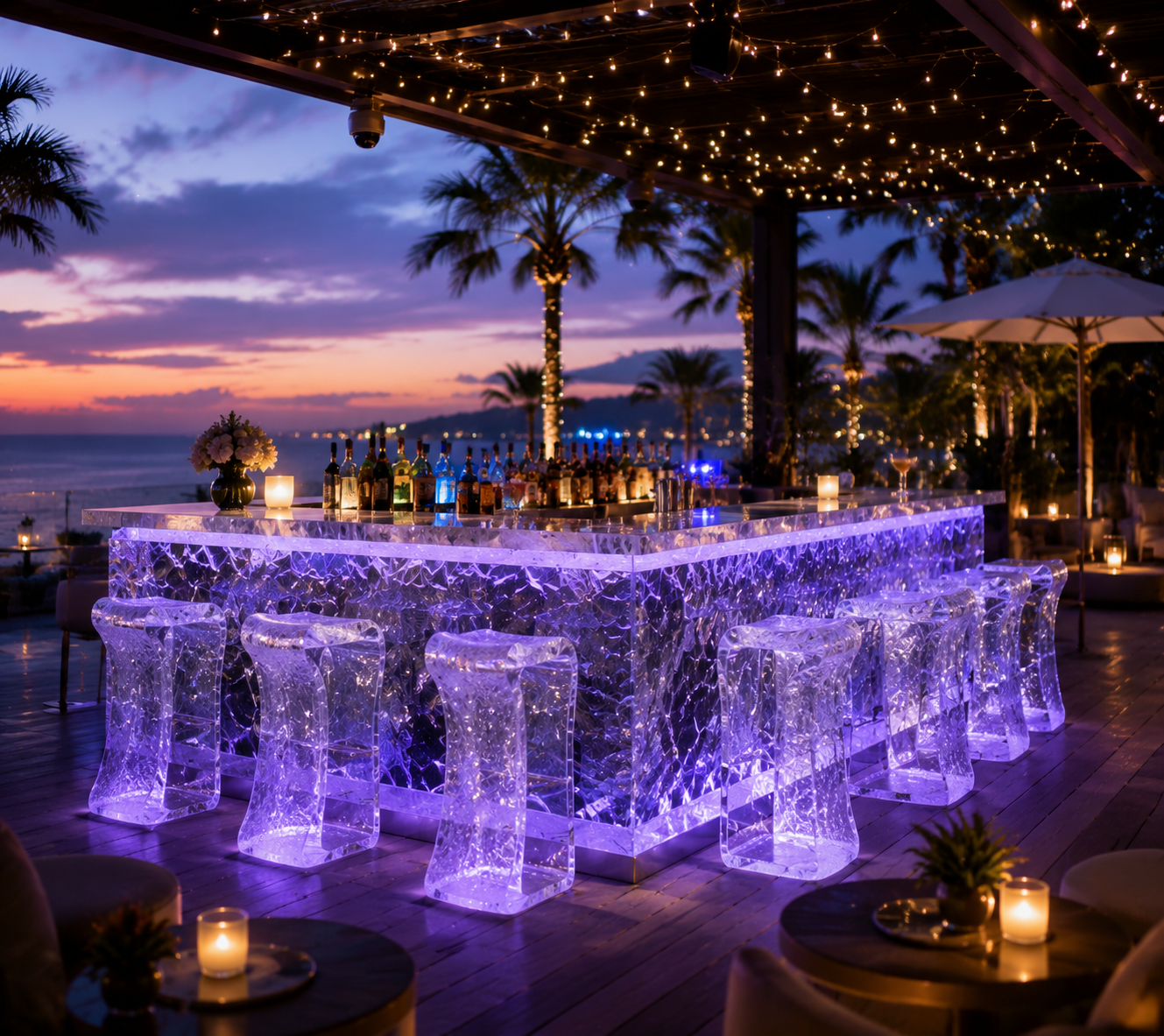
Transparent furniture is often discussed as though synthetic crystal, high-end resin, and premium acrylic were interchangeable. They are not. Although all three materials can create luminous, sculptural, and visually lightweight furniture, they communicate different levels of luxury, perform differently under commercial use, and solve different design problems.
For clarity, “synthetic crystal” in this article refers to optically polished, crystal-like cast materials or engineered crystal components used in furniture rather than engineered quartz countertops. “High-end resin” refers to professionally formulated casting systems, including epoxy, polyurethane, polyester, and hybrid resin compositions. “Platinum acrylic” is best understood as a premium commercial designation for high-clarity cast PMMA acrylic rather than a universally standardized material category. Buyers should therefore verify the actual PMMA grade, casting process, thickness tolerance, UV package, polishing quality, and test documentation behind the name.
The best material is not simply the clearest or most expensive one. The correct choice depends on what the space must communicate, how frequently customers will touch the furniture, how often the layout will change, and how the product will be cleaned and maintained.
1. Commercial Furniture Should Be Selected by Business Function, Not Appearance Alone
In commercial interiors, furniture is part of the customer experience and not merely a decorative object. A display pedestal in a luxury jewelry boutique, a communal table in a resort restaurant, and a modular product stand in a cosmetics store may all need a transparent appearance, but their operational requirements are completely different.
This distinction is increasingly important because physical space now functions as a branding and customer-acquisition channel. Research published by ICSC and McKinsey, based on a survey of 3,004 US consumers, found that more than 40 percent of Gen Z and millennial respondents said experiential retail made them more likely to shop with a retailer. The research argues that discovery-led stores must invest in engagement, digital storytelling, personalized service, and memorable physical environments rather than treating every location as a standardized sales outlet.
Another ICSC study examined almost $850 billion in transactions across 69 retailers and 2,103 stores. It found that opening a physical store increased online sales in the surrounding trade area by an average of 6.9 percent, rising to 13.9 percent for emerging direct-to-consumer brands. These figures show why a distinctive reception desk, sculptural table, illuminated display, or photogenic lounge setting can deliver value beyond the room in which it is installed. Commercial furniture may appear in social media content, campaign photography, press coverage, and online product discovery.
Material selection should therefore begin with five practical questions: Is the furniture primarily a visual landmark or a working surface? Will it be touched continuously or viewed from a controlled distance? Does it need to move regularly? Will it be exposed to sunlight, alcohol-based cleaners, food, heat, or moisture? Is the objective ceremonial luxury, artistic individuality, or operational flexibility?
Synthetic crystal is strongest as a luxury signal. Resin is strongest as a medium for artistic customization. Platinum acrylic is strongest when clarity, precision, lower weight, repeatability, and adaptable fabrication are priorities. Treating them as interchangeable usually results in overspending in one area and underperformance in another.
2. Synthetic Crystal Furniture Is Best for Luxury Retail, Hotel Lobbies, VIP Areas, and Statement Spaces
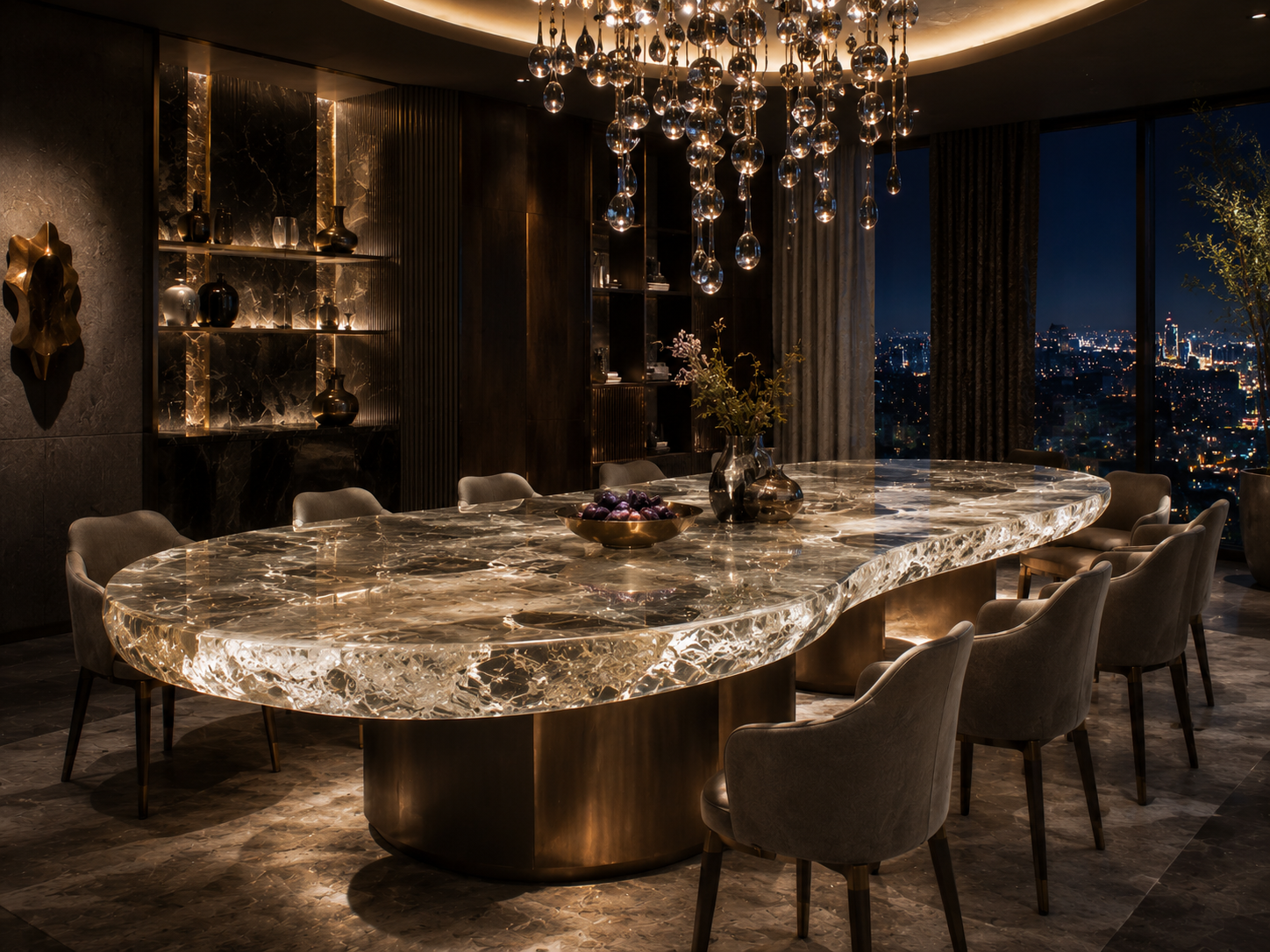
Synthetic crystal furniture is most effective in commercial environments where perceived value is concentrated into a small number of highly visible objects. Its optical depth, faceted surfaces, polished edges, and jewel-like reflections make it particularly suitable for fine-jewelry boutiques, watch stores, luxury fashion flagships, premium hotel lobbies, private clubs, VIP lounges, art galleries, real-estate sales centers, and high-end beauty environments.
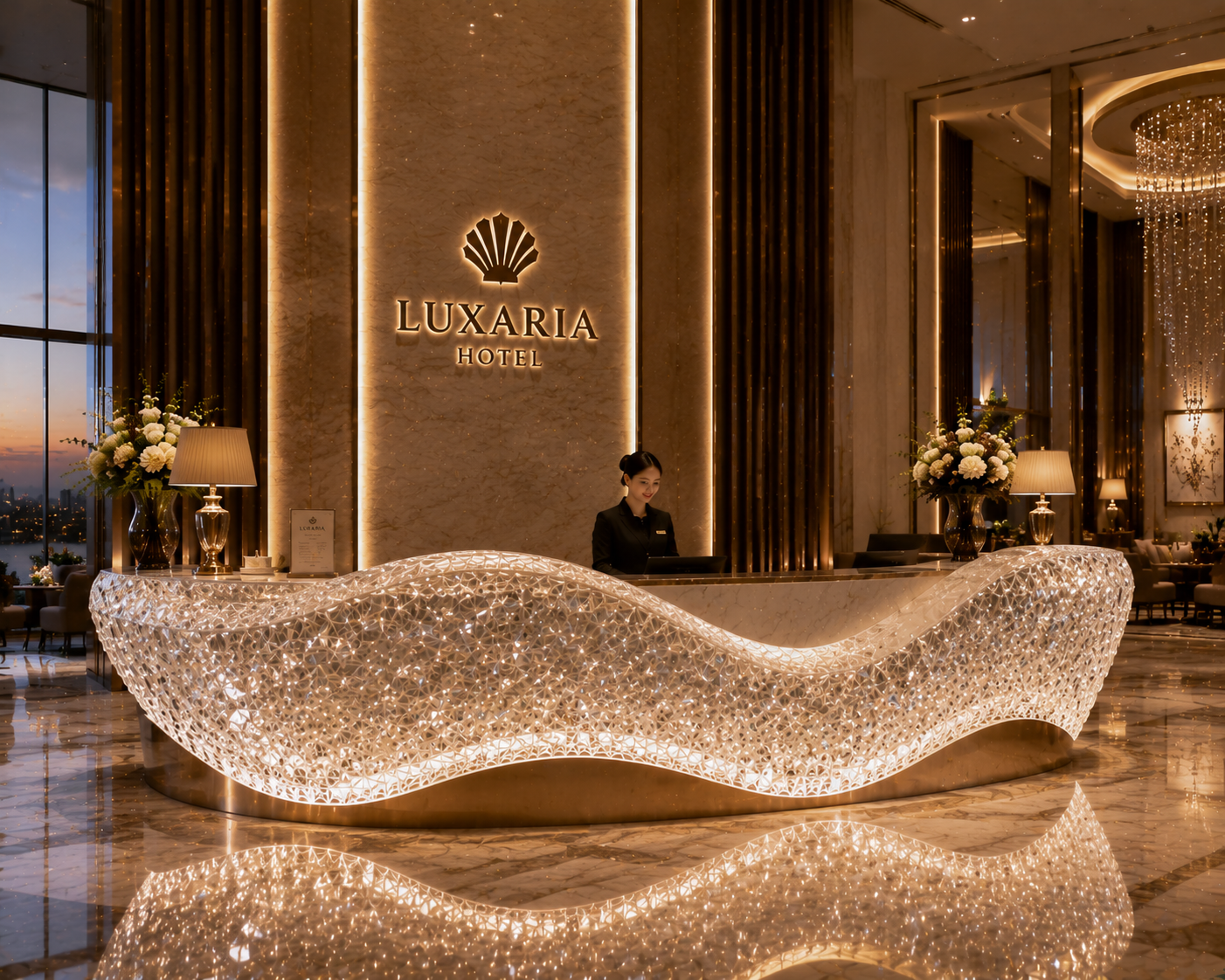
In a jewelry boutique, for example, a synthetic crystal display plinth can visually connect the furniture to the gemstones or watches presented above it. Under carefully controlled spotlighting, the base becomes part of the merchandising story rather than disappearing into the background. A synthetic crystal console behind a hotel concierge area can perform a similar role by creating a ceremonial focal point without requiring the entire reception desk to be made from the same material.
The most commercially effective applications are usually statement consoles, sculptural table bases, occasional tables, luxury display pedestals, illuminated columns, reception-area features, and limited-edition furniture. These pieces occupy relatively little floor area but have a high visual value per square meter. They can make an entrance, VIP room, or product presentation feel more exclusive without overwhelming the space.
Synthetic crystal is generally less suitable for environments where furniture must be rearranged daily, transported between events, or exposed to uncontrolled impact. The exact performance depends on the material formulation and construction, but thick crystal-like components can be heavy, while highly polished corners may be less forgiving than rounded acrylic edges in busy public areas. For that reason, designers should avoid using exposed sharp corners in circulation routes and should specify concealed steel reinforcement, protected bases, replaceable glides, and realistic installation access.
A luxury hotel could use a synthetic crystal console in the lobby, crystal side tables in a presidential suite, and a faceted pedestal in a retail gallery, while selecting more operationally forgiving materials for restaurant dining tables and check-in counters. The objective is not to maximize the quantity of crystal. It is to place it where guests will interpret it as evidence of craftsmanship, rarity, and brand confidence.
This approach also supports experience-led retail. When younger shoppers are more responsive to memorable environments, a distinctive crystal furniture piece can become a recognizable visual asset for photography and social sharing. However, the effect depends on lighting design. Crystal furniture placed under flat, diffuse illumination may look heavy or visually inactive, while controlled beams, reflected light, and dark contrasting backgrounds can reveal its depth and refraction.
3. High-End Resin Furniture Is Best for Hospitality, Experiential Retail, Restaurants, Spas, and Artistic Interiors
High-end resin offers greater freedom of color, form, texture, and embedded storytelling than either synthetic crystal or conventional acrylic sheet. It can be cast into organic shapes, layered with pigments, combined with metallic powders, filled with minerals, or used to encapsulate botanical elements and decorative objects. This makes it especially suitable for boutique hotels, resorts, restaurants, cocktail bars, spas, experiential stores, art-driven offices, entertainment venues, and branded hospitality spaces.
Resin works well when the furniture is expected to express a specific concept. A coastal resort might commission a translucent blue reception counter with mineral-like layers. A restaurant could use a resin communal table containing abstract color gradients that reference its cuisine. A cosmetics flagship might specify pearl, amber, or smoky resin display blocks that coordinate with product packaging. Suitable products include bar fronts, reception desks, communal tables, wall panels, benches, side tables, partitions, decorative screens, and sculptural bases.
The commercial advantage of resin is that it does not need to imitate glass or crystal. Its value lies in controlled irregularity, visual depth, and customization. Resin can appear liquid, mineral, cloudy, metallic, or stone-like while still being formed into furniture that would be difficult to produce from natural materials. This gives designers an opportunity to create brand-specific finishes that competitors cannot easily purchase from a standard catalog.
However, “resin” is not a complete technical specification. Different epoxy, polyester, polyurethane, and hybrid systems have different levels of UV resistance, hardness, heat resistance, chemical resistance, and color stability. Research cataloged by the Smithsonian Museum Conservation Institute found significant differences in yellowing among room-temperature-cure epoxy formulations exposed to high-intensity light. Most of the tested products did not provide an acceptable level of stability, although several formulations performed substantially better. The implication for commercial furniture is not that epoxy should be avoided, but that UV stability must be demonstrated for the exact formulation being purchased.
The US National Park Service also notes that visible and ultraviolet light can accelerate discoloration and degradation in plastics. In a commercial project, designers should therefore request accelerated-weathering data, an approved control sample, an agreed color-difference tolerance, and information about UV absorbers or protective topcoats when resin furniture will be installed near windows or outdoors.
Indoor-air quality must also be considered, particularly in offices, hotels, healthcare environments, schools, and wellness spaces. WELL’s published VOC guidance treats furniture and furnishings as potential emission sources and references recognized furniture-emission testing methods. UL GREENGUARD similarly evaluates furniture and other interior products against chemical-emission limits, with stricter GREENGUARD Gold requirements intended for sensitive environments. Finished resin furniture should therefore be fully cured before shipment, supported by emissions documentation where required, and installed without unnecessary high-VOC adhesives or coatings.
For restaurants and bars, buyers should also test the finished surface against coffee, wine, citrus, cooking oil, alcohol, heat, and the cleaning products actually used by the operator. A beautiful resin table that is tested only with water may fail quickly in a real food-and-beverage environment.
4. Platinum Acrylic Furniture Is Best for Modern Retail, Offices, Exhibitions, Museums, and Flexible Commercial Layouts
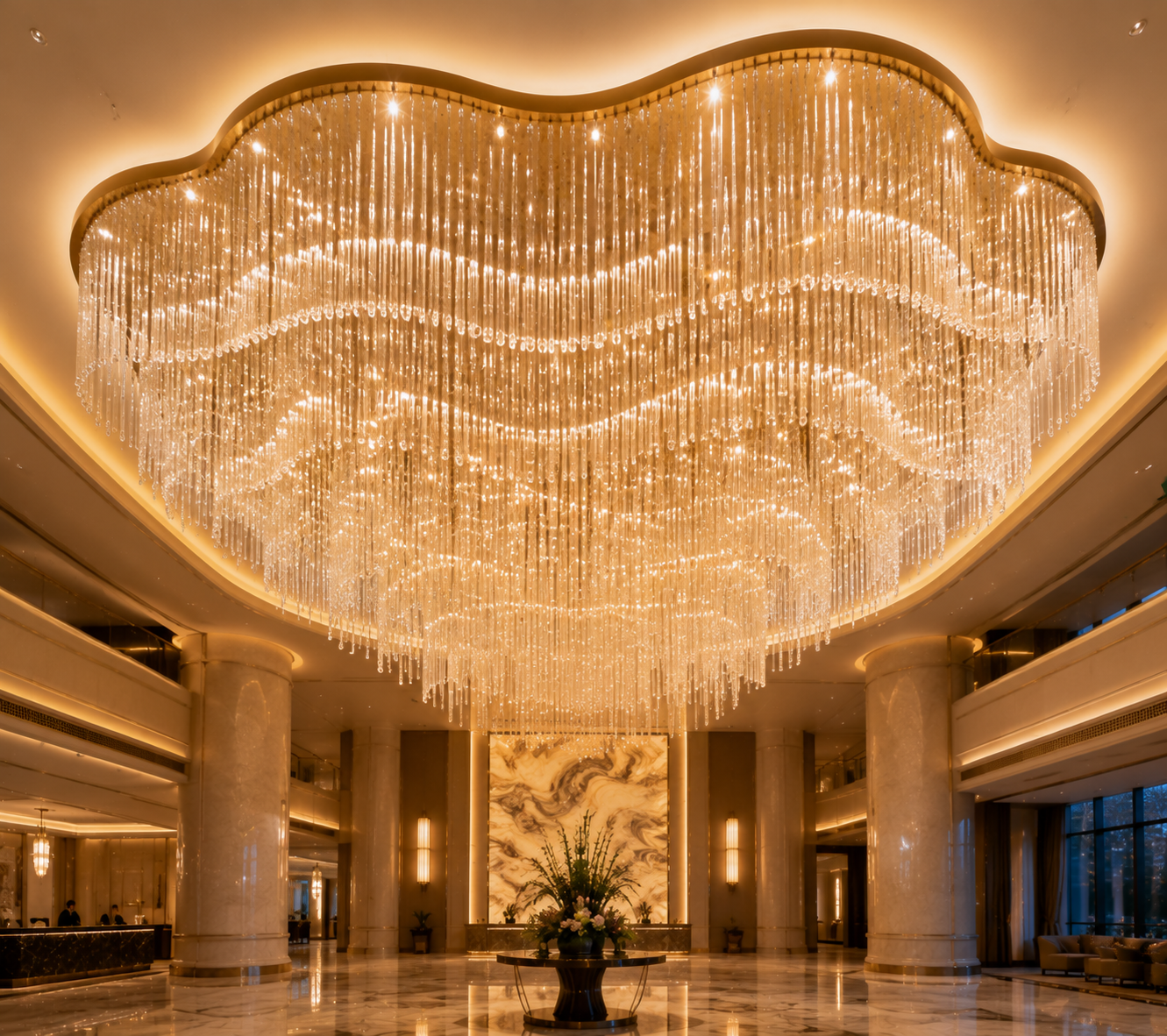
Premium cast acrylic, commonly identified chemically as PMMA, is the most versatile of the three materials for commercial interiors. It offers high optical clarity, lower weight than glass, precise fabrication, repeatable color, and the ability to be machined, bonded, polished, engraved, thermoformed, or integrated with lighting.
Technical information published for PLEXIGLAS and ACRYLITE products reports light transmission of approximately 91 to 92 percent for certain clear grades. ACRYLITE also states that its acrylic sheet weighs approximately half as much as glass, while impact-modified grades are designed to provide greater resistance to breakage for retail displays, glazing, exhibitions, and store fixtures. Exact values depend on the grade, thickness, surface treatment, and manufacturing process, so project specifications should identify the tested product rather than relying on the word “acrylic” alone.
These properties make platinum acrylic furniture particularly appropriate for fashion stores, cosmetics counters, technology showrooms, museum shops, exhibition booths, pop-up stores, corporate offices, galleries, event venues, and contemporary hotel interiors. Common products include transparent consoles, nesting tables, illuminated display stands, shelving, product bridges, reception desks, magazine racks, partitions, podiums, and modular merchandising systems.
Acrylic performs especially well where designers want objects to appear visually light or “floating.” It can support merchandise without competing with product packaging, and its edges can be polished or illuminated to create a controlled glow. Compared with heavier crystal-like pieces, acrylic units are easier to relocate and can be manufactured repeatedly for multi-store rollouts. This makes them valuable for brands that need the same visual language across different locations but also require local dimensional customization.
Flexibility is relevant beyond retail. Gensler’s 2025 Global Workplace Survey gathered responses from 16,809 office workers across 15 countries and found that employees increasingly value choice, adaptable settings, natural light, and a wider range of work environments. Transparent or translucent acrylic occasional tables, movable screens, display units, and collaborative furniture can help divide space without creating the visual weight of solid partitions.
Museum and gallery applications may benefit from specialized UV-filtering acrylic. The Canadian Conservation Institute reports that acrylic products meeting the cited ASTM D4802 requirements reduce at least 95 percent of ultraviolet radiation in the 200-to-390-nanometer range. This does not mean that every acrylic grade provides conservation-level protection, but it demonstrates why certified UV-filtering acrylic is widely considered for display enclosures and protective panels.
Acrylic does have limitations. It can scratch more easily than mineral glass, expand with temperature changes, and develop stress crazing when exposed to incompatible cleaners or solvents. Technical guidance for ACRYLITE products warns that resistance depends on chemical type, temperature, fabrication stress, and exposure conditions. Commercial buyers should approve a cleaning protocol, avoid aggressive solvent products, specify adequate expansion allowances, and consider replaceable top panels or protective coatings for high-contact surfaces. Clear acrylic is also a combustible thermoplastic, so furniture located in public venues must be reviewed against the applicable fire and building requirements.
5. The Strongest Commercial Projects Combine Materials According to Touch, Traffic, and Brand Value
Many successful interiors should not be limited to a single transparent material. A layered material strategy often produces a better balance between luxury, storytelling, maintenance, and budget.
Consider a premium hotel lobby. A synthetic crystal console can establish the first impression, a custom resin reception front can introduce the property’s colors and local narrative, and platinum acrylic display units can support seasonal retail products or events. Each material performs a different commercial function. The crystal creates symbolic value, the resin creates identity, and the acrylic creates flexibility.
The same principle applies to a beauty flagship. Acrylic shelving and product bridges can keep the merchandise visually dominant. Resin counters can introduce proprietary colors, pearl effects, or embedded textures. Synthetic crystal pedestals can be reserved for limited-edition products, VIP consultation rooms, or campaign installations. Using synthetic crystal for every fixture would increase weight and reduce adaptability, while using only acrylic might not provide enough visual distinction for the brand’s highest-value products.
Restaurants and bars require a more operational hierarchy. Resin can be effective for bar fronts, feature communal tables, and decorative panels, provided that the surface formulation has been tested for stains, heat, and cleaning chemicals. Acrylic is useful for illuminated bottle displays, partitions, menu stands, and replaceable decorative components. Synthetic crystal is better reserved for reception consoles, private-dining features, or sculptural side tables rather than the hardest-working dining surfaces.
JLL’s 2025 analysis of Asia-Pacific hotel asset management advises operators to reconsider underused meeting and restaurant areas and convert them into more flexible, revenue-generating environments such as pop-up retail and collaborative food-and-beverage concepts. Furniture that can be repositioned, reconfigured, or visually refreshed therefore has direct operational value. Acrylic systems are well suited to these changing layouts, while resin and crystal elements can supply the memorable focal points that prevent flexible spaces from feeling temporary or generic.
The correct ratio should be determined by traffic and customer contact. High-contact working surfaces need the strongest cleaning, scratch, stain, heat, and repair strategy. Low-contact focal pieces can prioritize optical depth and sculptural value. Movable fixtures should prioritize weight, edge safety, replaceable components, and packaging. Permanent installations can justify heavier materials, hidden reinforcement, integrated lighting, and more complex forms.
In simple terms, synthetic crystal should be treated as the jewel, high-end resin as the narrative, and platinum acrylic as the adaptable system connecting the space.
.png)
6. Commercial Buyers Should Specify Performance Before Approving the Final Design
A rendering cannot demonstrate whether transparent furniture will survive commercial use. Before production, the buyer, designer, and manufacturer should agree on measurable performance requirements for the finished item rather than approving only a color sample or visual concept.
For tables and desks, ISO 19682:2023 provides test methods for evaluating stability, strength, and durability across different furniture types, materials, and construction processes. The standard emphasizes that specifiers must determine which tests and loading conditions are appropriate for the intended environment. A decorative hotel side table and a restaurant communal table should not be approved against the same duty expectations.
Environmental and health requirements should also be written into the purchasing documents. The ANSI/BIFMA e3 Furniture Sustainability Standard, currently in its sixth edition, evaluates furniture across environmental, health, wellness, and social-impact criteria. BIFMA’s associated LEVEL program provides independent certification at the product, manufacturing-facility, and company level. Such frameworks can help commercial buyers evaluate more than visual quality, particularly when furniture is being specified for corporate, institutional, hospitality, or green-building projects.
For synthetic crystal pieces, the specification should cover optical quality, bubbles or inclusions, edge polishing, load-bearing reinforcement, corner geometry, allowable color variation, installation weight, and replacement procedures. For resin furniture, it should address resin chemistry, cure condition, UV stability, yellowing tolerance, Shore hardness, stain resistance, heat exposure, chemical resistance, repairability, and the finish system. For platinum acrylic, it should define cast or extruded PMMA, thickness tolerance, light transmission, annealing, edge quality, bonding method, UV performance, expansion allowance, approved cleaners, and scratch-protection strategy.
Fire documentation must relate to the final material thickness and construction. ASTM notes that plastic fire-test results can vary with thickness, additives, color, deterioration, and test conditions, and that small-scale results do not by themselves represent every factor involved in real fire risk. Compliance should therefore be reviewed against the project’s local building regulations, occupancy type, installation location, and authority having jurisdiction.
Finally, buyers should evaluate the complete service life rather than the purchase price alone. Packaging, installation, daily cleaning, repair, refinishing, component replacement, and eventual relocation may cost more than the original material difference. A premium material becomes commercially valuable only when its appearance can be maintained under real operating conditions.
Synthetic crystal is the strongest choice when exclusivity, optical drama, and symbolic luxury are more important than mobility. High-end resin is the strongest choice when the space requires custom colors, artistic forms, embedded narratives, or a finish unique to the brand. Platinum acrylic is the strongest choice when the project requires transparency, precision, lower weight, modularity, repeatable production, and easier reconfiguration.
The most effective commercial interior does not ask which material is universally superior. It assigns each material to the role it performs best.
READ MORE:
- Beyond the Purchase Price: How to Evaluate the Real Value of a High-End Synthetic Crystal Furniture Piece
- How to Use Transparent Furniture Without Making an Interior Feel Cold, Empty, or Overly Modern
- Will It Scratch, Yellow, or Lose Its Clarity? A Practical Guide to the Long-Term Performance of Synthetic Crystal Furniture
- What Designers, Retailers, and Hospitality Buyers Should Verify Before Specifying Synthetic Crystal Furniture
- Why Some Crystal-Clear Furniture Looks Luxurious—and Some Simply Looks Like Plastic
- How Premium Resin and Platinum Acrylic Elevate Brand Perception in High-End Furniture
- Lighting and Transparent Furniture: How to Make an Interior Feel Brighter, Deeper, and More Refined
- Does Spatial Quality Really Affect How Long Customers Stay?
- How Can Commercial Spaces Increase Average Transaction Value Through Material Upgrades? Start with the Quality of the Furniture


