1. Memorable Interiors Need a Focal Point, Not More Decoration
A memorable interior is rarely the one with the greatest number of expensive materials. More often, it is the space where visitors can immediately recall one defining moment: a sculptural reception desk, an unexpected dining table, a dramatic installation, or a piece of furniture that changes character as the light moves across it.
There is a psychological reason for this. Research published in The Journal of Neuroscience found that visual salience—the degree to which an object stands out from its surroundings—can influence how successfully information is encoded into working memory. In one study, participants recalled the locations of visually salient objects more accurately, while later neuroscience research similarly found improved memory performance as object salience increased. These studies were not conducted specifically on interior furniture, so they should not be interpreted as a formula for spatial design. They do, however, reinforce an important principle: what visually stands out is more likely to attract attention and become part of what people remember.
That principle is increasingly relevant to contemporary interior design.
The American Society of Interior Designers' 2026 Trends Outlook notes a movement toward stronger individuality, saturated color, playful silhouettes, and visible personality, describing a shift away from the extreme restraint associated with recent quiet-luxury aesthetics. ASID's 2025 research had already emphasized personal narratives, artisanal craftsmanship, authenticity, and timeless elegance as important components of evolving luxury.
The implication is not that designers need louder interiors. It is that generic luxury is becoming less compelling.
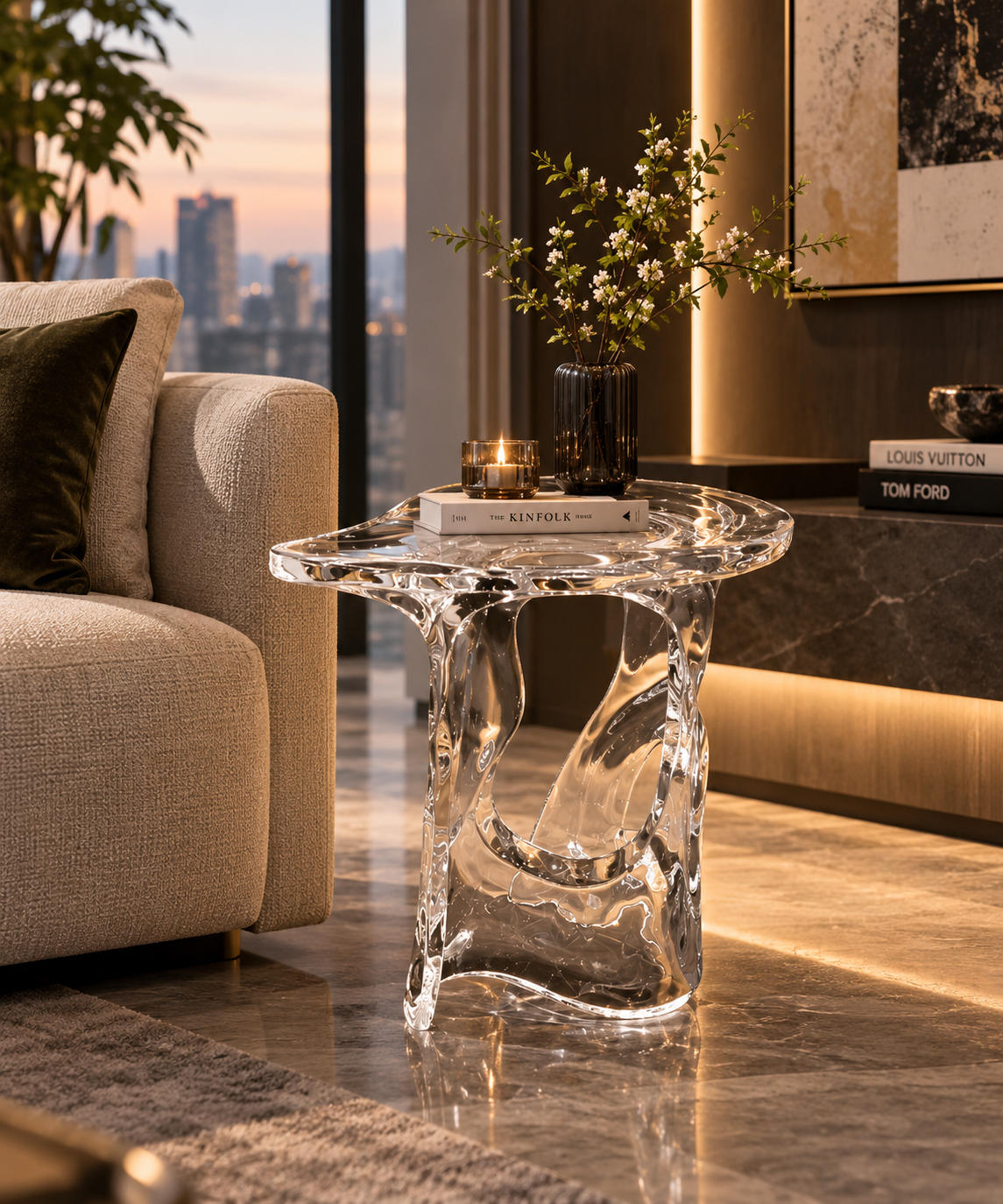
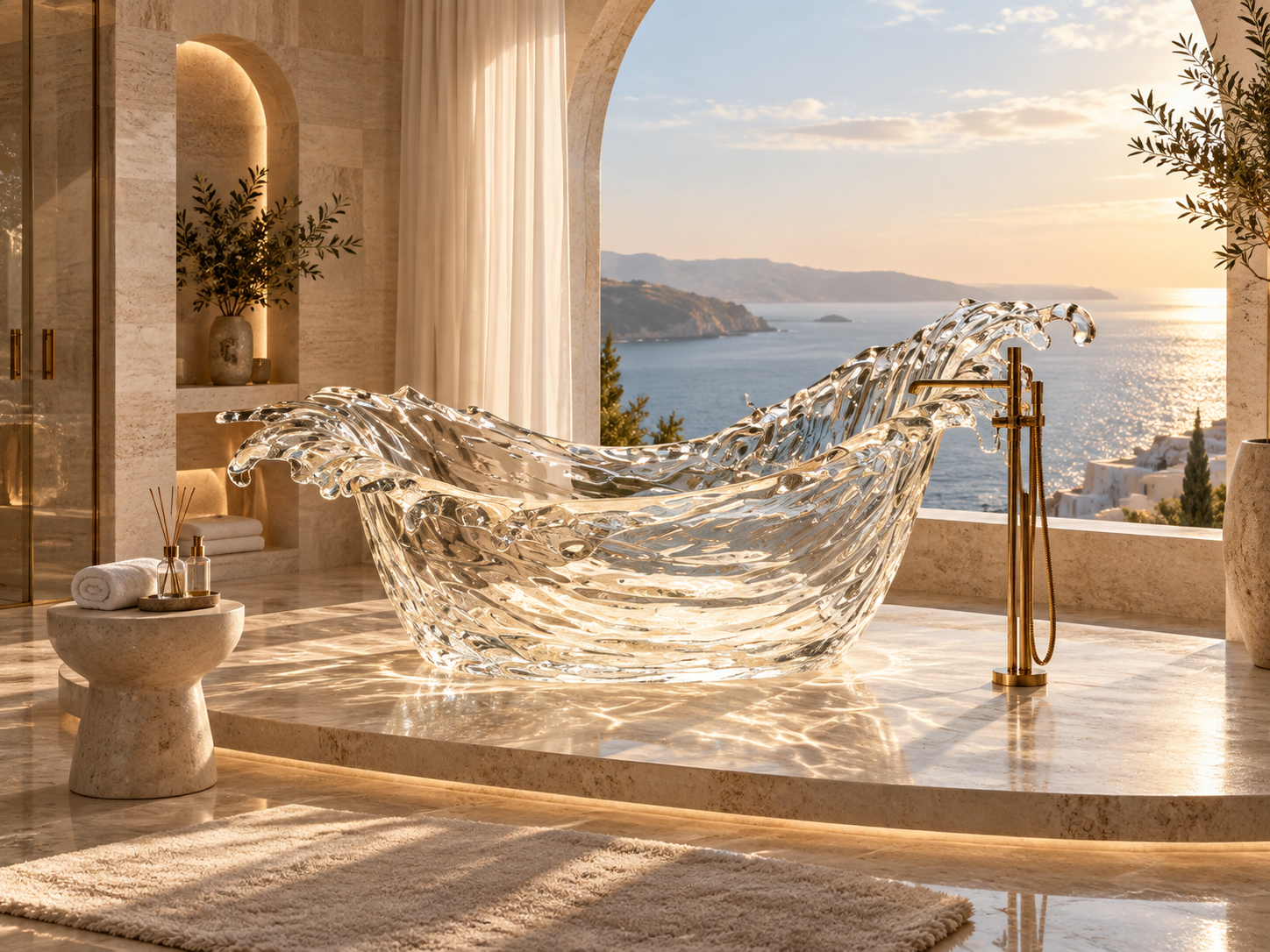
Synthetic crystal furniture is particularly interesting within this context because it can create a focal point without filling the room with visual mass. A substantial transparent dining table, high-end resin reception desk, or platinum acrylic console may have a strong physical presence while still revealing the flooring, wall finishes, lighting, and architecture around it.
This produces an unusual visual contradiction: the furniture feels important without feeling heavy.
For luxury residences, hotels, restaurants, clubs, galleries, boutiques, and branded commercial spaces, that contradiction can become a powerful tool for creating a project people actually remember.
2. Why Transparent Furniture Can Be More Effective Than Another Expensive Material
Designers already have many materials capable of communicating luxury. Marble can provide geological drama. Walnut communicates warmth. Brass introduces richness. Leather adds tactility. The challenge is that placing too many visually dense premium materials together can make a space feel overloaded.
Transparent materials behave differently.
High-quality PMMA acrylic, for example, can transmit exceptionally high levels of visible light. Röhm reports visible-light transmission of up to 92 percent for clear PLEXIGLAS PMMA, depending on product and configuration. Because so much of the surrounding environment remains visible through the material, transparent furniture can occupy a substantial physical volume without producing the equivalent visual obstruction of stone, timber, or metal.
This property creates an important opportunity for statement furniture.
Imagine a large coffee table in the center of a hotel suite. Make it from dark marble and the table becomes an obvious solid mass. Make the same volume from thick, optically clear synthetic crystal and the experience changes. The rug remains visible beneath it, daylight travels through the body, edges collect reflections, and the object changes appearance as guests move around it.
The table is noticeable precisely because it behaves differently from everything surrounding it.
The effect becomes even stronger with substantial cast sections. Thin acrylic can visually disappear, while thick synthetic crystal or high-end resin can produce internal reflections, distortion, colored edges, and an almost frozen sense of depth. It can appear nearly weightless from one direction and highly sculptural from another.
Design history demonstrates that transparent polymers have been used to challenge conventional expectations of furniture for decades. The V&A notes that David Colwell's clear acrylic Contour Chair, designed in 1967–68, exploited manufacturing techniques to create an unusual bubble-like seating form at a time when designers were exploring entirely new possibilities offered by plastics.
For today's designers, manufacturing possibilities are far broader. Platinum acrylic can be precision-cut, polished, bonded, bent, laminated, or combined with other materials. High-end resin can be cast into substantial sculptural forms. Synthetic crystal can be developed into dining tables, consoles, coffee tables, benches, side tables, reception furniture, plinths, shelving, and custom installations.
The opportunity is therefore not to imitate glass.
It is to use transparency to create furniture that could not achieve the same effect in an opaque material.
3. Method One: Use One Strong Scale or Silhouette Instead of Several Attention-Seeking Objects
The first way to create a memorable focal point is surprisingly simple: make one piece visually decisive.
Luxury spaces often lose impact because too many objects are competing for attention. A dramatic marble wall is combined with a sculptural chandelier, patterned flooring, metallic furniture, artwork, decorative accessories, and several different stone finishes. Everything is intended to be special, so nothing becomes dominant.
A synthetic crystal statement piece works best when the hierarchy is clearer.
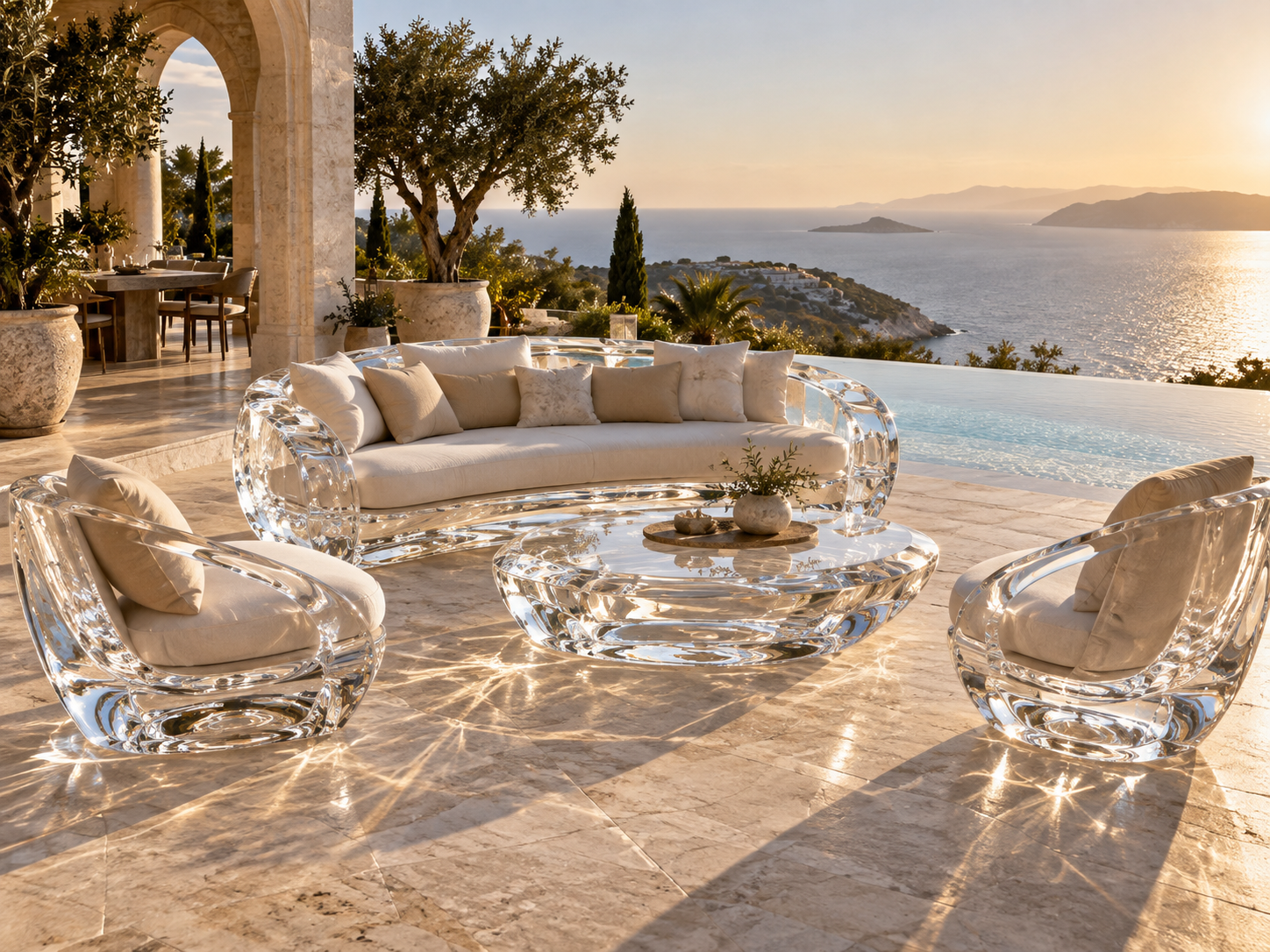
In a luxury residence, that might mean placing one substantial transparent coffee table in front of a quieter sofa composition. In a restaurant, it could be a sculptural high-end resin communal table positioned directly within the entrance sightline. In a hotel, a large transparent console or custom reception desk could establish the identity of the lobby before guests notice smaller decorative details.
Scale does not necessarily mean making furniture enormous. It means giving one form enough visual authority to organize the composition.
Zaha Hadid's Gyre lounge chair offers a useful precedent. The Metropolitan Museum of Art describes the 2006 piece as being made from polyester resin and polyurethane lacquer and notes that its design pushed the boundaries of materials and production processes. At approximately 212 centimeters long and weighing around 120 kilograms, it demonstrates how resin can become the primary sculptural substance of furniture rather than merely a coating or decorative component.
Synthetic crystal can create a different version of the same principle.
A table can use an exaggerated single pedestal rather than four conventional legs. A resin console can flow from vertical support into horizontal surface as one continuous form. A platinum acrylic bench can use a bold geometric silhouette while retaining visual transparency. A clear dining table can introduce dramatically thick legs that catch light at their polished edges.
Because the material remains transparent, designers can often increase physical scale without making the room feel correspondingly heavier.
Placement is equally important. A statement piece deserves a deliberate viewing position: aligned with an entrance, framed by an architectural opening, centered beneath a pendant, positioned against a contrasting wall, or placed where natural light can change its appearance throughout the day.
The goal is not simply to make unusual furniture.
It is to create the one object a visitor would use when describing the project later.
4. Method Two: Turn Light, Color and Internal Depth into Part of the Furniture
The second method is to stop treating transparent furniture as colorless furniture.
Synthetic crystal and high-end resin become much more memorable when designers treat the internal volume of the material as creative territory.
One of the most famous examples remains Shiro Kuramata's 1988 Miss Blanche Chair. MoMA records the chair as being made from acrylic resin, synthetic flowers, and aluminum. Artificial red roses appear to float inside the transparent body of the chair, turning the material itself into both structure and display space. MoMA describes the work as an icon of postmodern design, while the Design Museum notes the dream-like, almost insubstantial quality created by flowers suspended inside transparent resin.
The lesson for contemporary projects is not that designers should embed flowers in every table. It is that transparency can hold a narrative.
A high-end resin console might contain a controlled amber gradient that relates to a hotel's brand palette. A synthetic crystal side table can incorporate subtle mineral-like inclusions. A reception desk might use translucent layers rather than complete transparency. A platinum acrylic installation can combine clear and frosted sections to create depth without adding another material.
Light expands those possibilities further.
PMMA's optical properties make it particularly useful for illuminated applications. Röhm produces dedicated acrylic grades for edge lighting, side lighting, and backlighting, designed to distribute LED illumination and create controlled lighting effects.
A real commercial project shows how effective this can be. In Cher's Hair Salon in Kuala Lumpur, documented by ArchDaily in 2025, DualSpace Studio created an acrylic installation above the waiting area that acts simultaneously as a sculptural feature and brand statement. The piece is illuminated from within, while an etched logo integrates identity into the object rather than relying on conventional signage. The designers also combined diffused acrylic, stone, textiles, and controlled lighting to produce visual depth without excessive gloss.
The same strategy can be applied to furniture.
Instead of adding more decorative lighting around a synthetic crystal reception desk, light can become part of the desk. Instead of placing accessories on a resin console, the material itself can contain the visual story.
That is how transparent furniture moves from object to experience.
5. Method Three: Create Contrast with Stone, Wood and Metal So the Transparency Becomes More Visible
The third method sounds paradoxical: sometimes the best way to make transparent furniture stand out is to surround it with opaque materials.
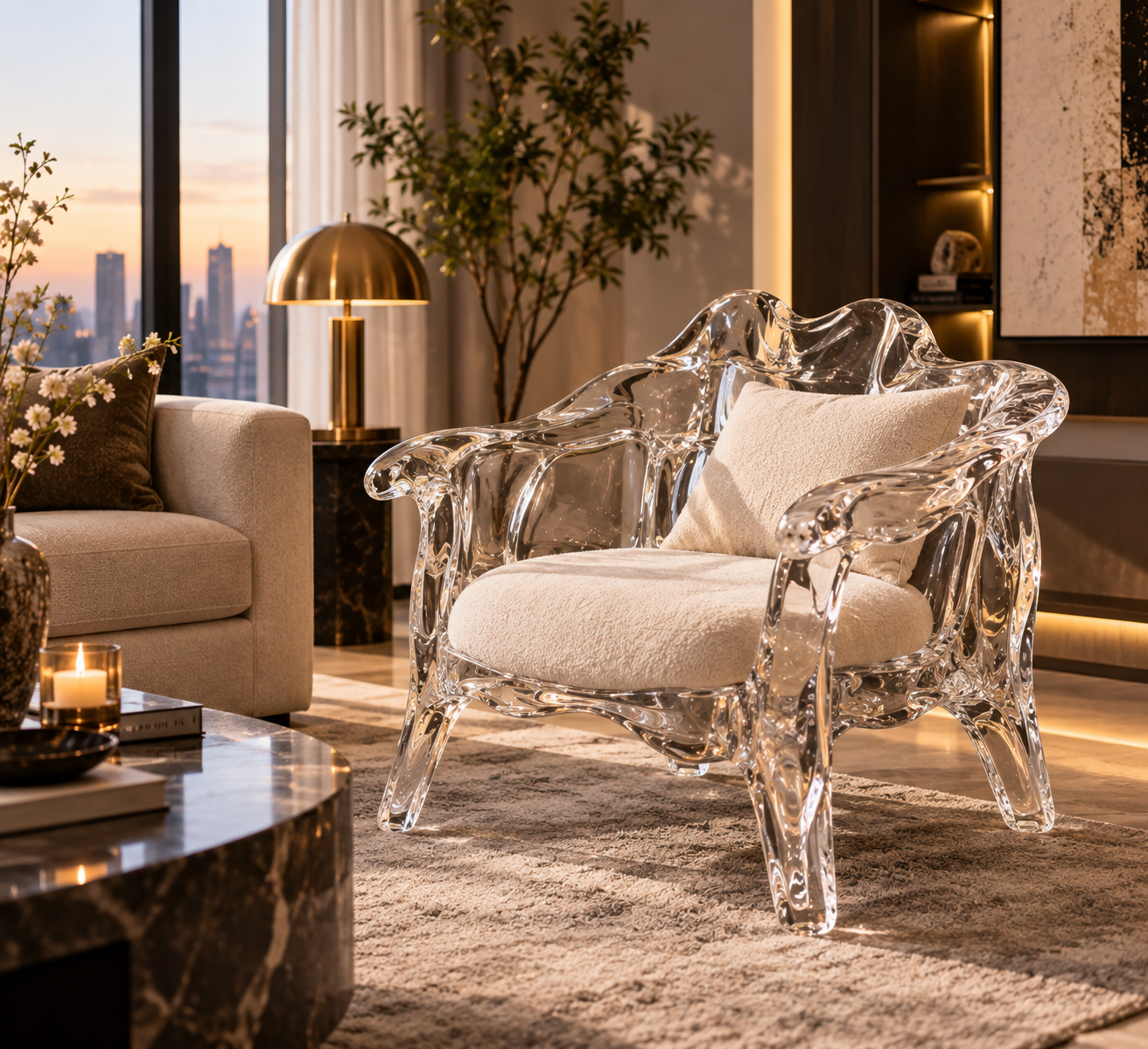
A clear synthetic crystal table against another transparent surface may almost disappear. Place the same table against walnut, travertine, textured plaster, dark metal, or richly colored upholstery, and its optical character immediately becomes more noticeable.
Contrast creates the focal point.
This is especially useful in refined luxury interiors, where the goal is not visual noise but controlled tension between materials.
Consider a synthetic crystal dining-table base supporting a richly veined stone top. The stone gives the table weight and permanence, while the transparent base makes the top appear lighter than expected. Reverse the relationship—a transparent resin top above a monolithic stone pedestal—and the visual emphasis moves upward.
Wood produces another effect. A platinum acrylic console against a walnut-paneled wall becomes sharper and more architectural because the irregular wood grain contrasts with its optical precision. A crystal-clear coffee table above timber flooring introduces contemporary lightness without covering the natural pattern beneath it.
Metal can provide definition. Champagne stainless steel or bronze can add warmth to clear resin, while blackened steel can make transparent furniture feel more graphic and architectural.
This approach is consistent with broader design thinking around material diversity. WELL's biophilic design guidance explicitly identifies natural materials such as wood and stone as elements that can be incorporated into furniture and interiors to strengthen connections with nature.
The objective is not to prove that one material is more luxurious than another. It is to assign each material a role.
Stone provides gravity. Wood introduces warmth and grain. Metal establishes precision. Textile introduces softness. Synthetic crystal supplies optical depth and visual breathing room.
This is why transparent furniture can be especially effective in projects already using expensive materials. It does not have to compete with the marble, timber, artwork, or rug. It can allow those materials to remain visible while simultaneously becoming distinctive through contrast.
The result feels curated rather than decorated.
That is an important difference in premium design: luxury is often more convincing when the eye can understand what matters.
6. A Memorable Focal Point Still Has to Work as Real Furniture
A dramatic rendering can create attention. A successful project must create attention while surviving daily use.
This is where statement furniture needs to move from visual concept to professional specification.
For synthetic crystal, high-end resin, and platinum acrylic furniture, designers should consider the material formulation, transparency level, thickness, edge quality, structural loads, connection methods, scratch resistance, cleaning requirements, UV exposure, lighting integration, tolerances, and repair strategy before approving a final design.
The more visually simple transparent furniture appears, the more visible poor manufacturing becomes.
Bubbles that were not intentional, imperfect bonding lines, cloudy edges, uncontrolled color variation, scratches, misaligned joints, or poorly concealed metal inserts can immediately weaken the premium effect. Conversely, precise polishing and controlled casting can turn a technically simple table into an object that appears almost architectural.
This is also why custom design adds value.
A branded hotel does not necessarily need the same transparent coffee table that appears in hundreds of residential interiors. It may benefit more from a custom synthetic crystal console whose proportions respond to the lobby architecture. A luxury boutique might require resin plinths tinted specifically to its brand palette. A restaurant could use a platinum acrylic communal table engineered around lighting, circulation, and the positioning of key seating.
Current design trends make this approach increasingly relevant. ASID's 2026 outlook emphasizes personality and individuality, while its 2025 research framed evolving luxury around authentic personal expression, craftsmanship, and timelessness rather than excess alone.
That provides a useful definition of what a refined-luxury focal point should accomplish.
It should not shout louder than the architecture.
It should make the architecture easier to remember.
One strong silhouette can establish hierarchy. Light, color, and internal depth can turn transparent material into an experience. Contrast with stone, timber, metal, and textiles can give transparency greater emotional richness.
Synthetic crystal, premium resin, and platinum acrylic are particularly effective because they allow designers to create something seemingly contradictory: furniture that becomes the visual centerpiece while leaving much of the space around and behind it perceptually available.
A marble table can be impressive because of its mass.
A carved timber table can be memorable because of its grain and craftsmanship.
A synthetic crystal table has another possibility. It can be massive yet visually light, sculptural yet transparent, functional yet almost immaterial.
That contradiction is difficult to forget.
And in projects where clients increasingly want something identifiable, photographable, and genuinely specific to their space, being difficult to forget may be one of the most valuable qualities furniture can offer.