A showroom is not simply a place to store products. It is a sales environment where customers decide, often within seconds, whether an object feels desirable, relevant, and worth its price. Transparent furniture is especially sensitive to presentation because it does not rely on color, upholstery, or decorative surface patterns to attract attention. Its value is expressed through proportion, clarity, reflection, thickness, craftsmanship, and the way it interacts with everything around it.
For premium synthetic crystal furniture, strong showroom presentation reduces the amount of explanation a salesperson needs to provide. The customer should first respond visually, then become curious about the material and craftsmanship. If the sales conversation must begin by defending the product before the customer feels any attraction, the display is probably doing too little work.
1. Scale Must Be Easy to Read
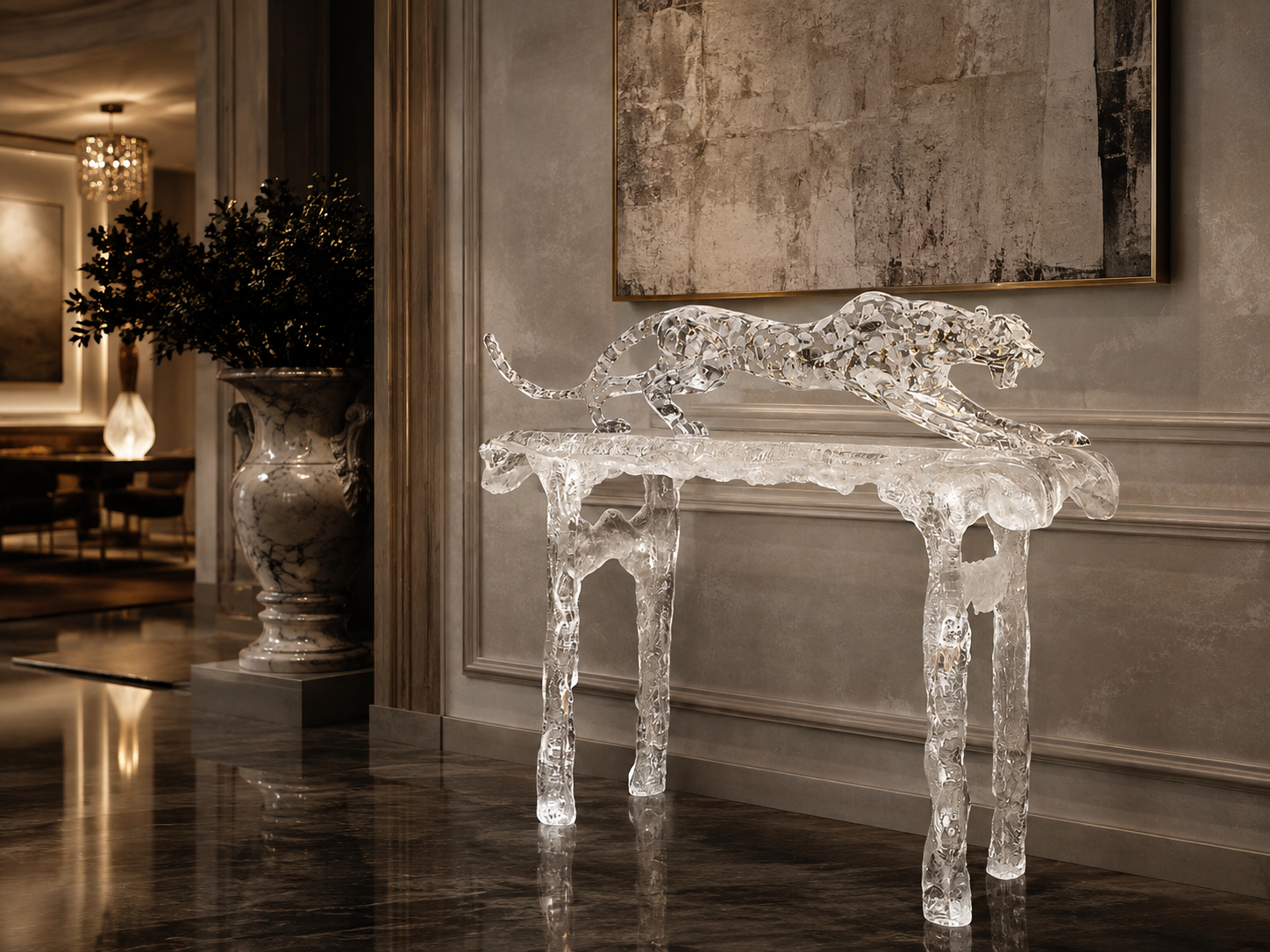
Transparent furniture can appear visually lighter than opaque furniture of the same dimensions. This creates an advantage in compact interiors, but it can also make a substantial piece look smaller or less important if the surrounding products overpower it.
A console placed beside a large upholstered sofa, heavy cabinet, or oversized artwork may disappear visually. The same console positioned against a quieter backdrop can become a focal object. Retailers should therefore think about perceived scale rather than dimensions alone.
One effective approach is to give the piece enough negative space. When customers can see its full silhouette, thickness, and geometry, they understand the design more quickly. Crowding transparent pieces together often weakens the individuality of each product.
2. Lighting Should Reveal Depth, Not Create Glare
Lighting has an unusually strong effect on transparent material. Good lighting reveals polished edges, internal reflections, precise joints, and dimensional depth. Poor lighting can flatten the piece or produce distracting glare.
Direct spotlights can work when they are positioned to highlight an edge or sculptural detail, but they should not create harsh reflections at the customer’s normal viewing angle. Layered ambient lighting is often more successful because it allows the furniture to interact naturally with the space.
Backlighting can be effective in selected settings, especially for shelving, consoles, or display plinths, but it should be used with restraint. The goal is to reveal craftsmanship, not turn the furniture into a lighting effect.
3. Surrounding Materials Shape Perceived Value
Customers rarely judge furniture in isolation. They judge it in context. A transparent table placed beside inexpensive finishes and visually noisy accessories may inherit some of that perceived value. The same table paired with refined stone, textured fabric, brushed metal, or carefully finished wood can feel more intentional and collectible.
This matters because synthetic crystal acts almost like a visual bridge between other materials. It reflects their colors, surfaces, and light. Retailers can use this quality strategically by placing the piece near materials that reinforce its premium positioning.
A clear side table next to a rich boucle chair can feel softer and more residential. A transparent console beside stone can feel architectural. A sculptural table paired with metal objects can feel contemporary and gallery-like. Presentation should support the story the dealer wants to sell.
4. Styling Must Explain Function Without Hiding the Product
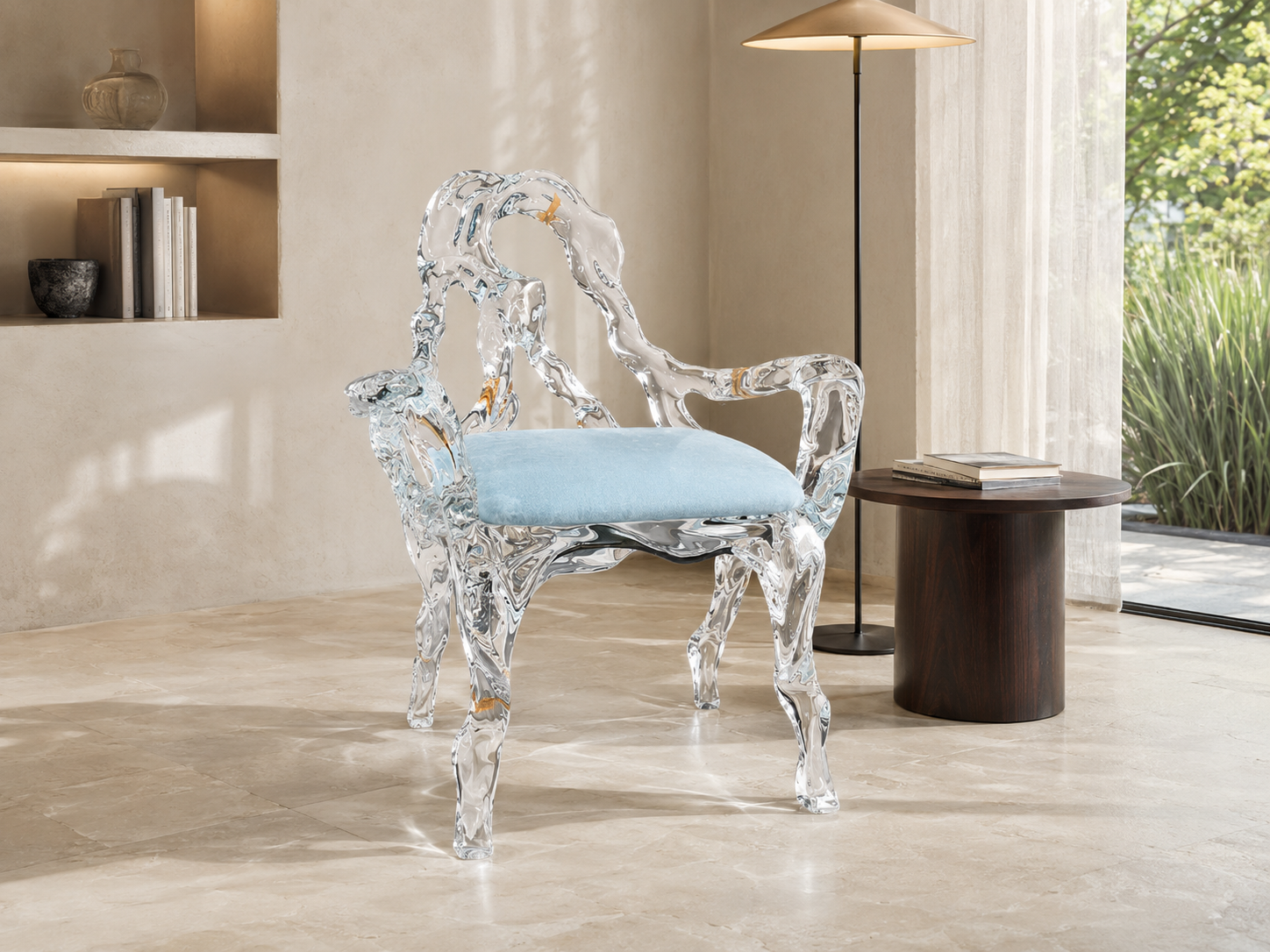
Customers need to understand how a piece can live in a real interior. Styling helps, but over-styling creates a problem. Too many books, vases, trays, or decorative objects can cover the very surfaces that demonstrate clarity and finishing quality.
The best showroom styling is selective. A few objects can establish function while leaving key edges, joints, and structural details visible. For a console, one lamp and one sculptural object may be enough. For a coffee table, a low tray can show scale without obscuring the top.
Dealers should remember that a transparent product already interacts visually with the room. It does not need heavy decoration to feel complete.
5. Placement Should Encourage Movement Around the Piece
One of the strengths of transparent furniture is that its appearance changes from different angles. A customer who sees only the front view may miss the most impressive details.
Whenever possible, allow enough circulation space for customers to walk around the product. Side views often reveal material thickness, edge treatment, connection details, and the relationship between transparent and opaque components. This is particularly important for mixed-material designs.
For high-end synthetic crystal pieces, physical movement becomes part of the selling experience. The product should reward a second look. If every angle reveals another controlled detail, customers begin to understand why the piece belongs in a premium category without needing a technical lecture.
6. Create a Clear Visual Hierarchy
Not every product should compete for equal attention. A showroom needs hero pieces, supporting pieces, and quieter background items. Transparent furniture often performs best when one strong piece anchors a vignette instead of several similar products being grouped together.
A hero console, dining table, or sculptural side table can introduce the category. Smaller pieces can then support it nearby. This allows the customer to understand the material first through one memorable object and then imagine different applications.
Visual hierarchy also helps dealers protect pricing. A product presented as one of many similar items is more likely to be compared only by price. A product presented as the centerpiece of a considered setting is more likely to be judged by design, proportion, craftsmanship, and emotional appeal.
7. Give Customers a Reason to Touch
Transparent furniture is visual, but premium sales often become stronger when the customer also experiences the product physically. A polished edge, a substantial top, a stable base, and a carefully integrated connection all communicate quality through touch.
Sales teams should not be afraid to invite customers to interact with the furniture. The weight, smoothness, and solidity can change the perception from “clear furniture” to a carefully manufactured object.
This is where showroom presentation and product engineering meet. If a piece looks delicate but feels stable and substantial, the contrast can be persuasive.
8. Avoid Generic Luxury Language
A showroom should communicate premium positioning before a salesperson uses words such as luxury, exclusive, or high-end. Those labels are much more convincing when supported by visible evidence.
Instead of saying a product is luxurious, show customers the depth of the edge, the clarity of the finish, the precision of the joint, the alignment of mixed materials, and the amount of hand finishing. Specific details give sales teams credible reasons to explain the price.
For synthetic crystal furniture, the best showroom strategy is not to make the material mysterious. It is to make the craftsmanship obvious enough that customers want to know more.
9. Design the Display for Photography as Well as In-Person Selling
Many customers first encounter a showroom through social media, dealer websites, digital catalogs, or messaging apps. The physical display should therefore work both in person and on camera.
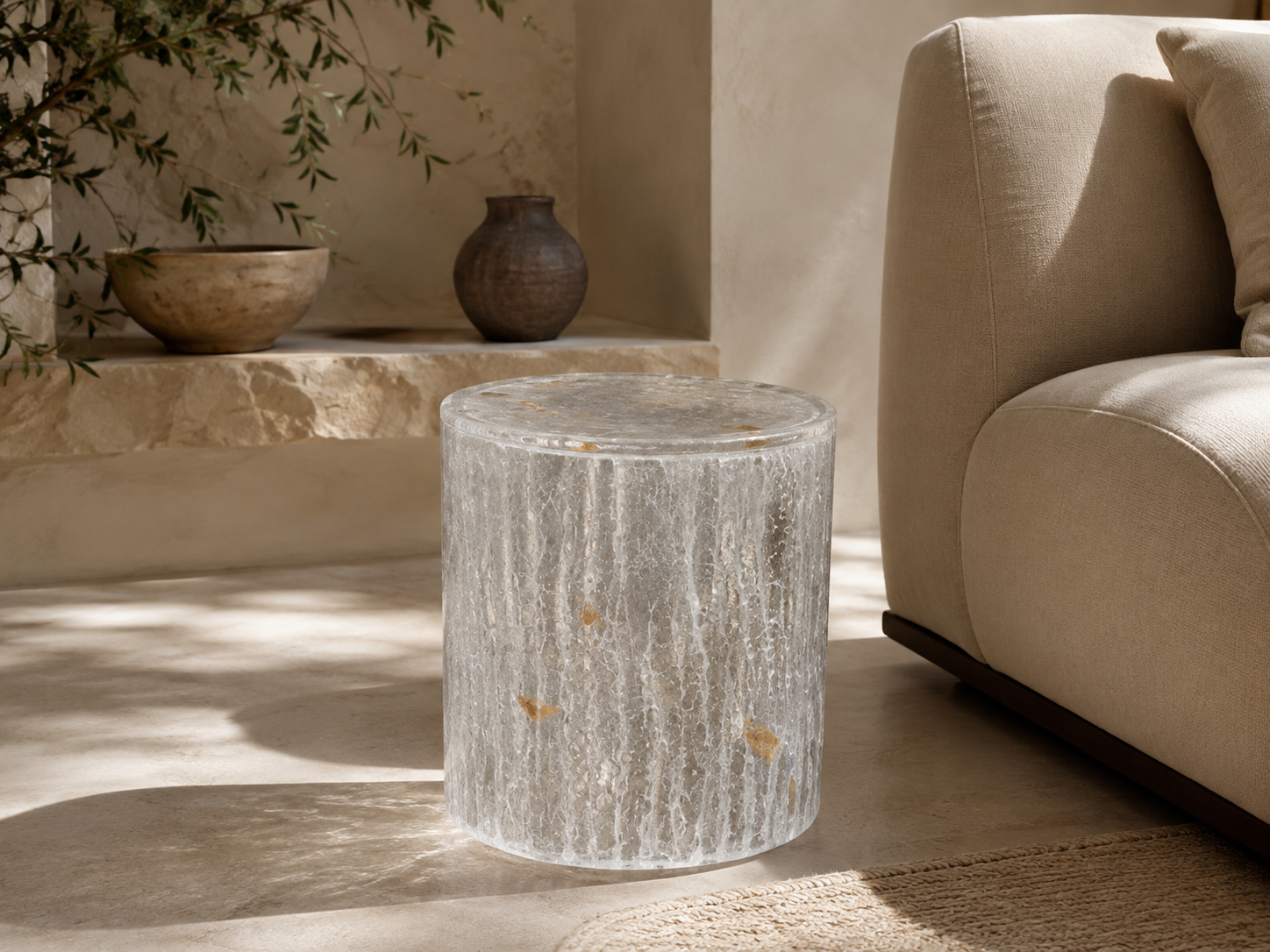
Transparent products can be difficult to photograph against busy backgrounds. Clean contrast, controlled lighting, and thoughtful angles are essential. A strong setup should make the silhouette readable in a small image while still showing enough depth to communicate the material.
Dealers can improve results by creating one or two dedicated photography positions in the showroom. This makes it easier for staff to capture consistent images for clients and social channels without rearranging the entire space.
10. The Product Should Sell Before the Explanation Begins
Showroom selling becomes easier when the environment answers the customer’s first questions visually. Is the piece substantial? Does it look refined? Can I imagine it in a real interior? Does it feel different from ordinary transparent furniture? Is the price supported by what I can see?
The role of the salesperson is then to deepen the customer’s interest, not create it from nothing. They can explain customization, finishing, project capability, mixed-material options, and production standards after the object has already established desire.
A successful display turns synthetic crystal furniture into a visual experience rather than a technical category. It gives the piece space, flattering light, strong material neighbors, and styling that supports rather than competes. When those elements work together, customers stop asking why the furniture is clear and start asking where it could fit in their own project. The most powerful showroom question is not “How do we explain this product better?” but “What can we change so the product explains itself?”


