Mixed-material furniture can be visually powerful because it creates contrast: transparent against solid, reflective against matte, cool against warm, light against heavy. Yet combining expensive materials is not enough. A product can include stone, brass, timber, and synthetic crystal and still feel unresolved if the proportions, transitions, and connection details do not work as one design.
The most successful pieces feel integrated. Customers do not see four expensive materials competing for attention. They see one object with a clear visual hierarchy. That distinction matters for designers, dealers, hospitality buyers, and residential project teams because mixed-material furniture often carries a higher budget and therefore needs a stronger design justification.
1. Start With a Dominant Material, Not Equal Competition
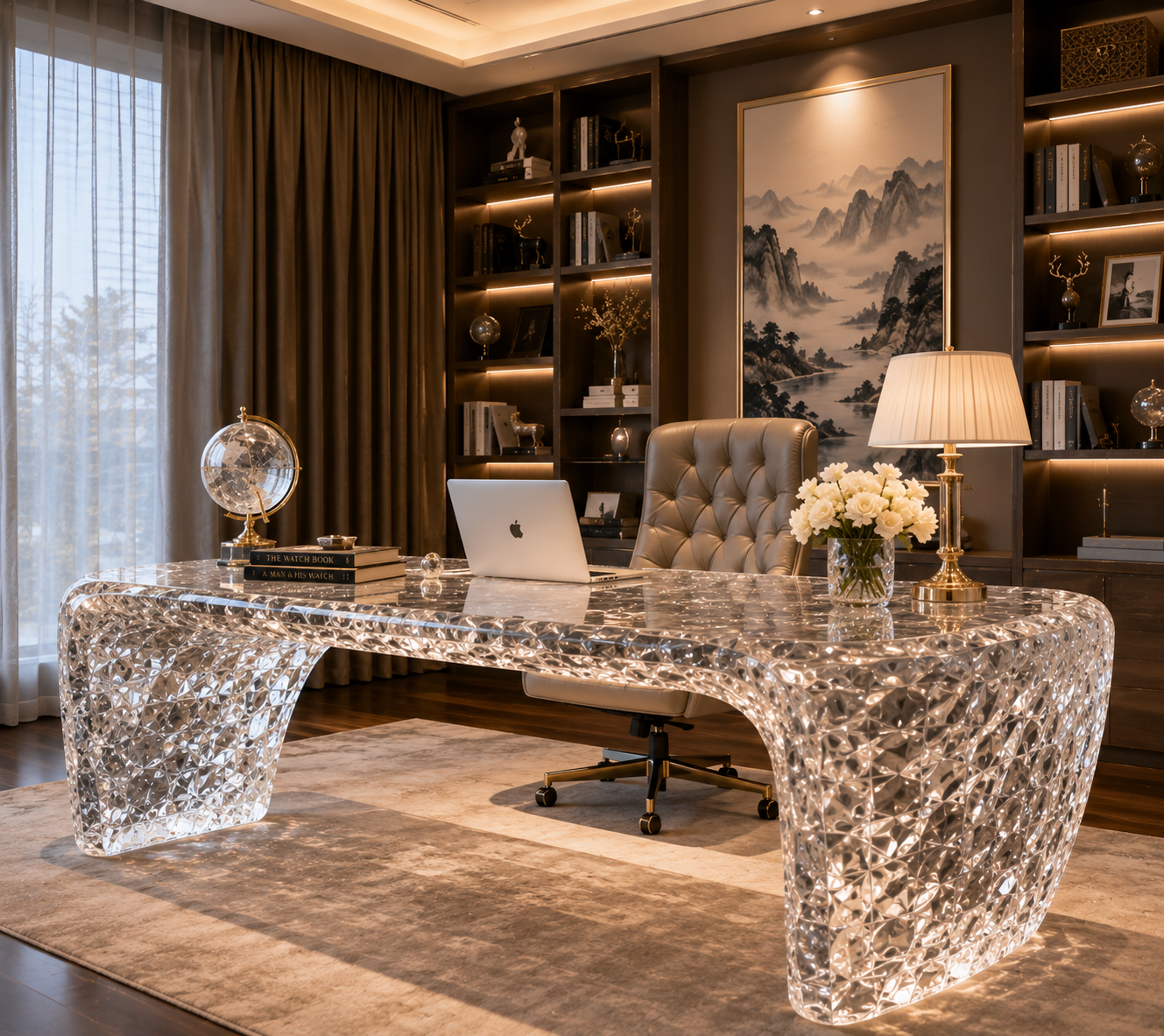
Premium mixed-material furniture usually has one dominant visual idea. The secondary materials support that idea rather than fighting it. A transparent structure with a stone top may use the stone as the focal surface and the clear base as a visual support. A transparent cabinet with metal details may allow the metal to frame the geometry without overwhelming it.
Problems appear when every material tries to become the hero. Too much stone makes the product heavy. Too much metal can turn elegance into visual noise. Too much timber can weaken the transparency that made the concept distinctive in the first place.
A disciplined hierarchy creates confidence. It also helps control cost because the design team can invest in the areas customers notice most.
2. Proportion Determines Whether Contrast Feels Balanced
Material proportion is not only about percentage. It is about visual weight. A thin metal line can have more visual impact than a much larger clear surface because the eye naturally notices strong edges and color contrast.
Stone creates another challenge. Marble and other natural stones feel visually dense. If a stone component is too thick compared with the transparent structure beneath it, the clear material may appear like a support rather than an intentional part of the design.
For synthetic crystal furniture, the transparent sections need enough thickness and presence to hold their own visually. Otherwise, the piece can look like conventional furniture with a clear component added afterward.
3. Connection Details Reveal the Quality of the Design
The joint between two materials is often the place where premium intent is either confirmed or lost. When transparent material meets metal, stone, or wood, even a small mismatch can become obvious.
Connections should answer practical and visual questions at the same time. Is the hardware meant to be seen or hidden? Does the transition feel deliberate? Is there a clean shadow gap? Are the materials flush where they should be? Does the connection accommodate differences in movement, weight, and tolerance?
A poor connection can make expensive materials look cheaper because it reveals assembly rather than design. A refined connection does the opposite: it makes the product feel engineered as a complete object.
4. Exposed Hardware Must Earn Its Visibility
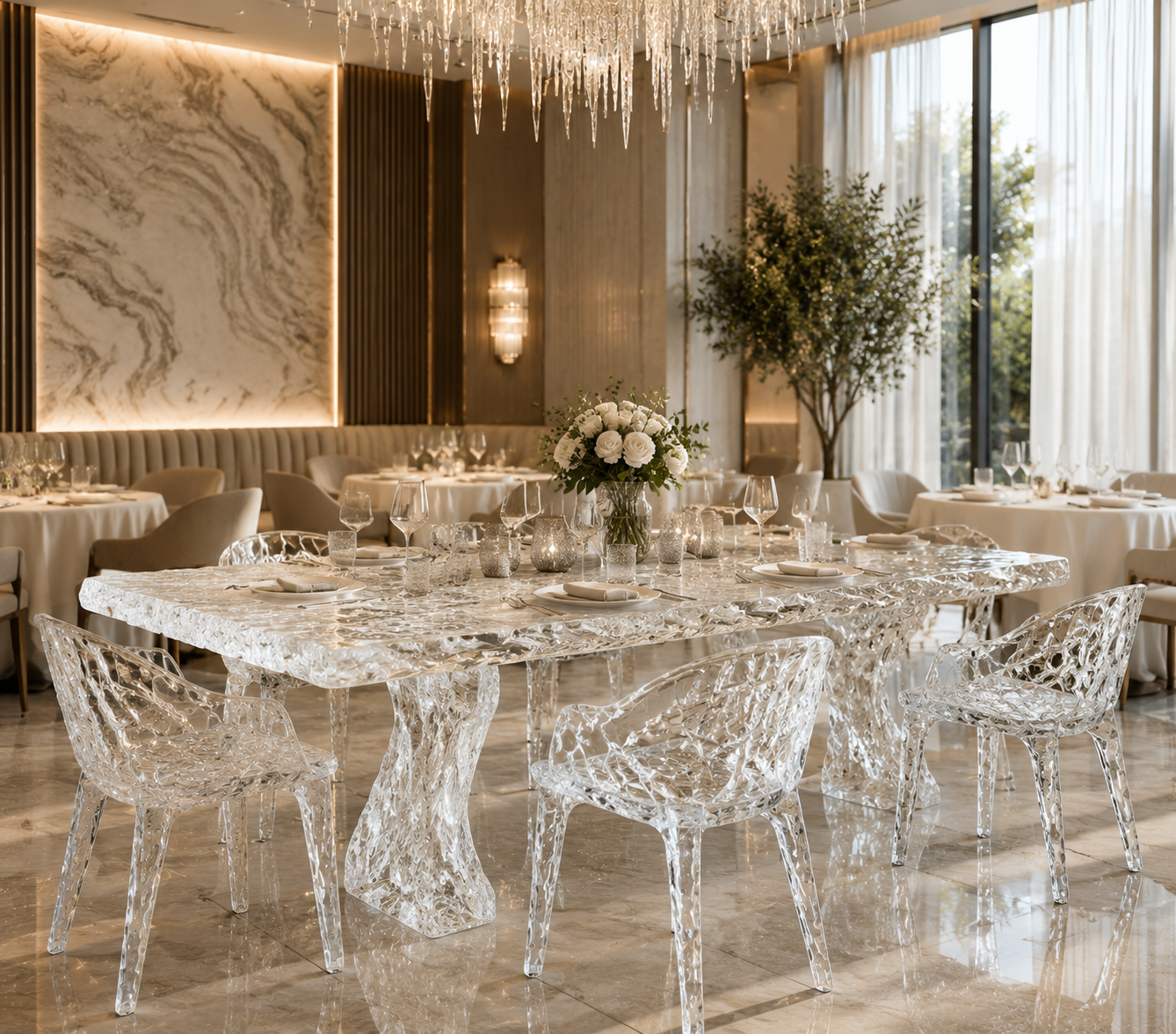
Transparent furniture makes hardware unusually visible. Screws, brackets, inserts, plates, and fasteners that disappear inside opaque furniture can become part of the visual composition.
If hardware is exposed, it should look intentional. The finish, shape, alignment, and spacing need to support the design language. Brushed metal may complement a softer contemporary interior, while polished metal can create a sharper jewelry-like effect. Blackened hardware can add contrast, but too much of it may visually divide the piece.
Concealed hardware can create a cleaner look, but it often demands more precise machining and assembly. For high-end synthetic crystal pieces, the decision should be based on visual value rather than the assumption that hidden is always better.
5. Color Temperature Matters More Than Many Buyers Expect
Transparent material does not exist in a visual vacuum. It reflects nearby colors and makes the undertones of surrounding materials more noticeable. Warm timber, cool steel, cream stone, gray marble, brass, and blackened metal can all create different moods when placed next to a clear structure.
This is why material samples should be reviewed together whenever possible. A metal finish that looks elegant on its own may feel too yellow next to a cool stone. A wood tone that appears rich in isolation may look too red beside neutral interiors.
Luxury is often created through subtle control. Color temperature is one of those details customers may not describe technically, but they feel the difference immediately.
6. Surface Finish Should Create Contrast Without Conflict
A successful mixed-material piece usually benefits from controlled contrast in texture. Highly polished transparent surfaces can pair beautifully with honed stone, brushed metal, or softly finished wood because each material remains legible.
When every surface is highly reflective, the design can become visually busy. When every surface is matte, the transparent element may lose some of its brilliance. The goal is not uniformity but balance.
Designers should consider how surfaces behave under real lighting rather than only under studio conditions. Reflections from windows, ceiling lights, and nearby objects can change the character of the piece throughout the day.
7. Natural Materials Bring Variation That Must Be Managed
Marble and wood naturally vary. Veining, grain, tone, and pattern can change from one piece to another. That variation can add richness, but it becomes important in project orders where several units must feel related.
Buyers should define how much variation is acceptable and whether components should be selected for visual consistency. Book-matched stone, controlled grain direction, or grouped timber tones can add cost, but they may be justified when the furniture is installed repeatedly in the same space.
Transparent structures make these variations more visible because there is less visual mass competing with them.
8. Structural Logic Should Remain Visually Calm
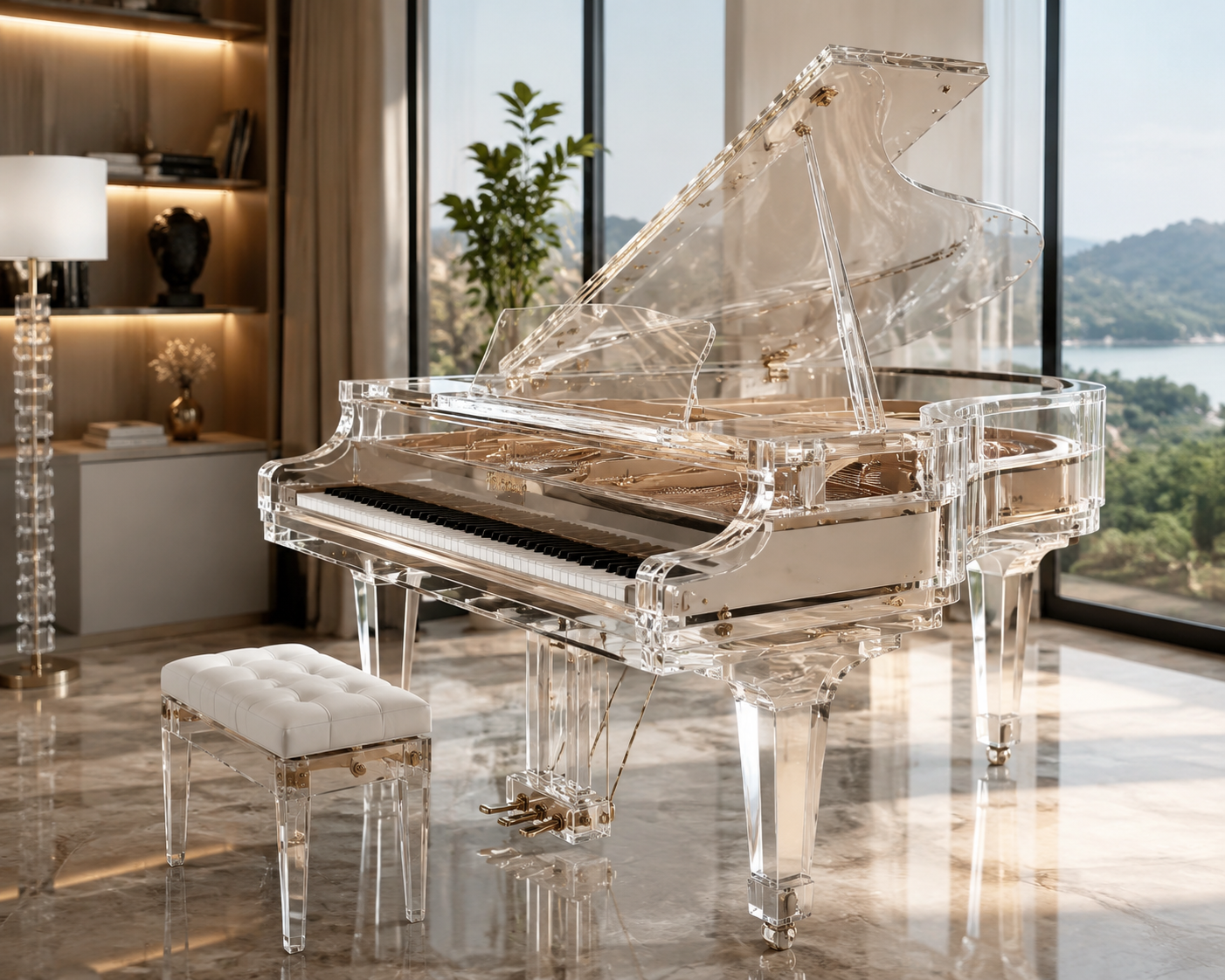
Mixed-material furniture must solve real engineering problems. Stone is heavy. Metal can concentrate loads. Wood can move. Transparent components can reveal stress points and hardware. The design therefore needs a structural strategy that does not look over-engineered.
Premium products often feel effortless because the technical solution is visually calm. Supports are positioned where they make sense. Hardware is minimized or integrated. Loads appear balanced. Nothing looks improvised.
This is especially important for tables and consoles, where customers instinctively test stability. If a visually delicate piece feels solid when touched, the design gains credibility.
9. The Transition Between Materials Should Be Designed as a Detail
The best mixed-material products pay close attention to the few millimeters where one surface ends and another begins. A crisp reveal, a controlled overlap, a clean recess, or a deliberate gap can make the entire product feel more refined.
These details should be resolved before production rather than left to installers or assemblers. Drawings, prototypes, and samples should clarify how every transition is intended to look.
When synthetic crystal meets marble or metal, the eye naturally goes to the junction because the contrast is strong. That junction therefore deserves as much design attention as the larger surfaces.
10. Premium Means Integration, Not Ingredient Count
It is easy to market mixed-material furniture by listing ingredients: marble, brass, solid wood, transparent crystal-like material. But customers ultimately judge the result as one object.
The strongest pieces have a clear reason for every material. Stone may add mass and pattern. Metal may provide precision and accent. Wood may add warmth. The transparent structure may create lightness and depth. Each component contributes something distinct while supporting the same overall identity.
This is why a simpler three-material piece can feel more expensive than a five-material design. Premium perception comes from editing, proportion, and execution.
For buyers and designers, the key question is not “How many premium materials can we combine?” but “Does every material make the entire object better?” When that question guides the process, synthetic crystal furniture can move beyond novelty and become a sophisticated part of architectural interiors. And the next time two mixed-material pieces look similar at first glance, look closely at the transitions—the smallest junction may reveal which one was truly designed and which one was merely assembled.


