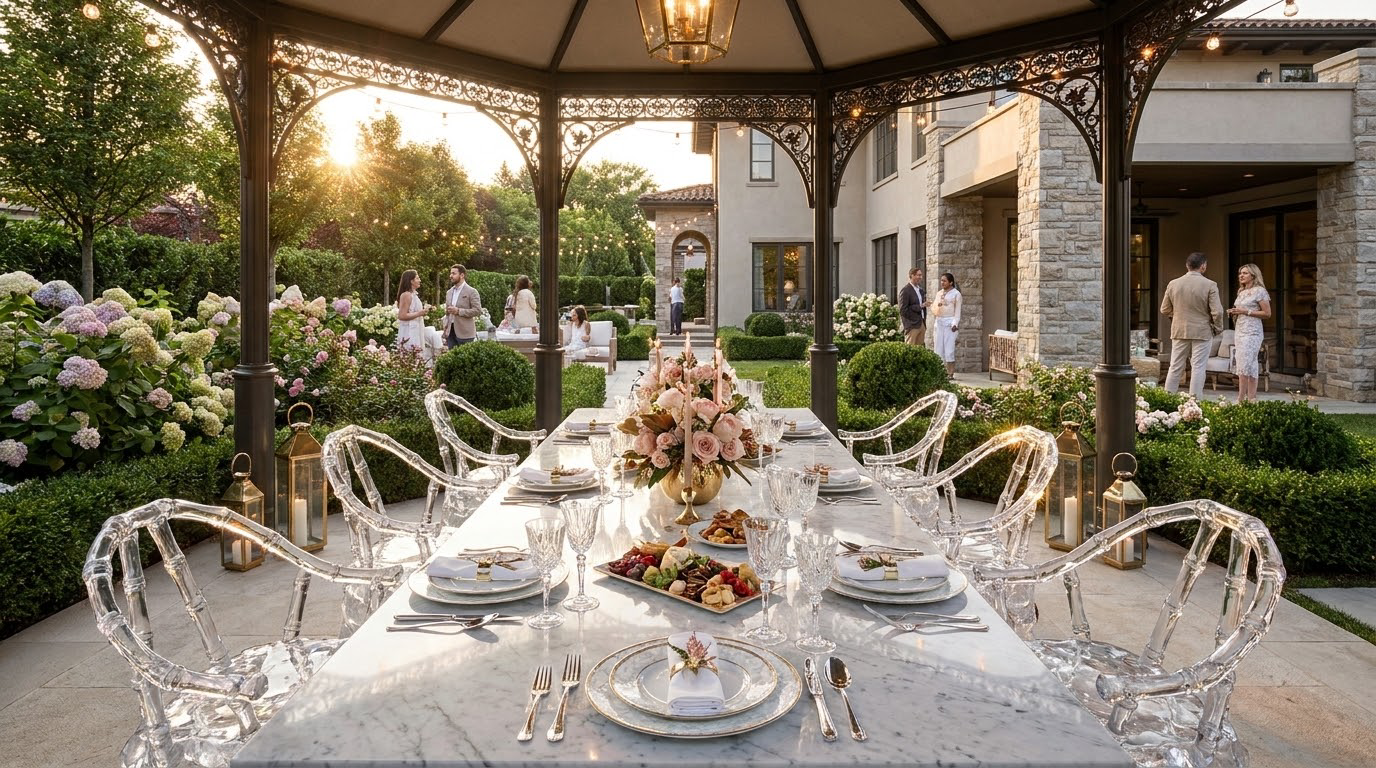
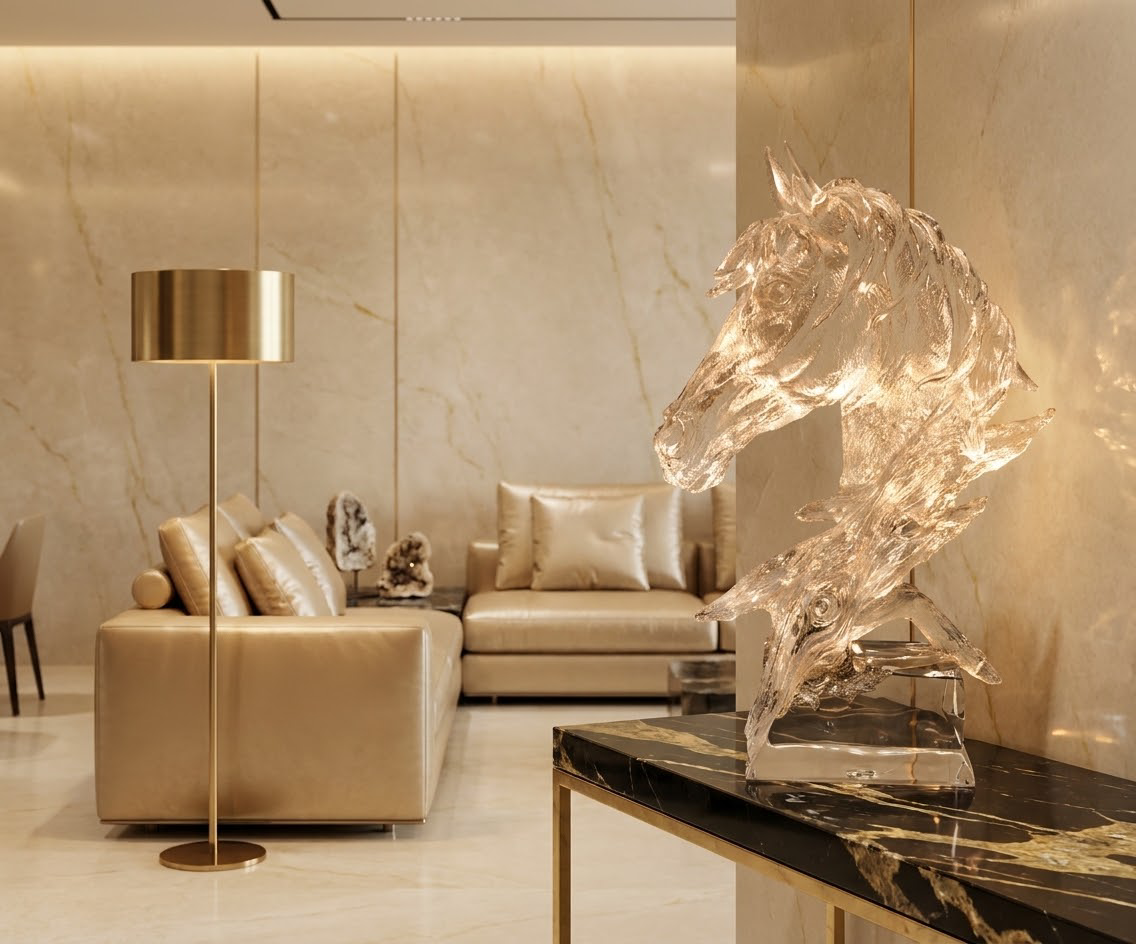
For interior designers pushing the boundaries of luxury spaces, synthetic crystal furniture has emerged as a game-changing medium that blends artistic vision with structural feasibility. Unlike natural crystal, which carries inherent flaws and size limitations, man-made variants unlock fully customizable forms that were once impossible to produce at scale. This guide breaks down the technical and creative workflows that turn bold design concepts into tangible, high-performance pieces.
1. Material Foundations: Why Synthetic Crystal Furniture Outperforms Natural Alternatives
The rise of artificial crystal furniture in high-end interiors stems directly from advancements in material formulation that address the core limitations of natural stone and crystal. Manufacturers can now tune material properties to match exact design and functional requirements, opening new possibilities for bespoke pieces.
Core Material Composition and Grades
Modern synthetic crystal furniture relies on carefully engineered formulations that balance clarity, strength, and workability.
Standard grade: Used for decorative accents and low-traffic pieces, with 85-90% light transmittance
High-purity optical-grade material: The premium tier for statement pieces, delivering 99.2% light transmittance with zero internal impurities
Reinforced grade: Blended with polymer matrices for high-impact applications like commercial seating
This tiered system lets interior designers select the exact material profile that aligns with both aesthetic and functional project goals.
Key Performance Advantages Over Natural Crystal
Synthetic variants eliminate the natural inconsistencies that make natural crystal unpredictable for furniture production.
High surface hardness: Rated at 6.5-7 on the Mohs scale, matching natural quartz and resisting scratches from daily use
Dimensional consistency: Free from natural veining, cracks, or color variations that complicate custom cutting
Size scalability: Can be cast in blocks up to 2 cubic meters, far larger than any natural crystal formation
Color customizability: Tinted during casting for uniform color throughout the material, not just surface coatings
2. Design Translation: Turning Interior Designer Concepts into Manufacturable Specs
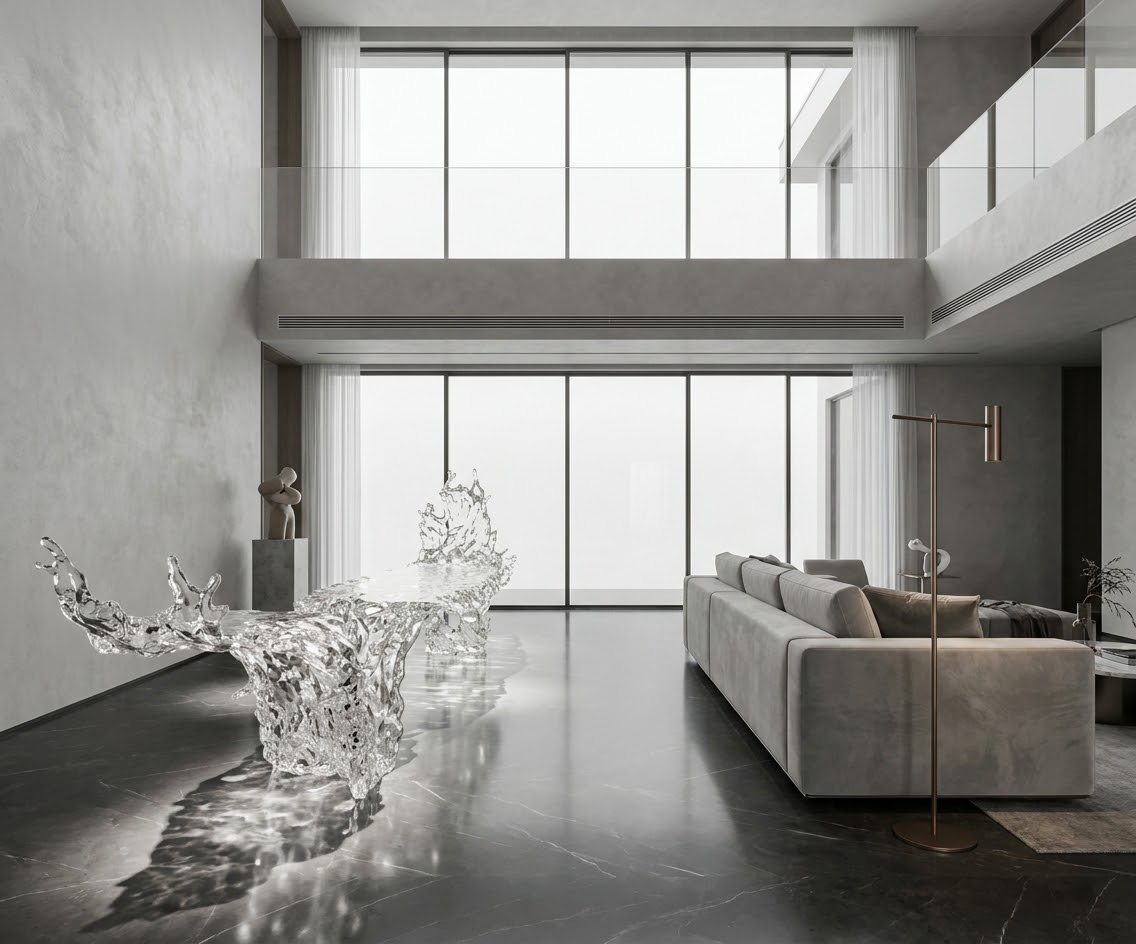
The biggest gap in custom furniture production lies between creative sketches and engineering-ready blueprints—especially for complex geometric forms. Synthetic crystal furniture requires a specialized translation process that preserves design intent while accounting for material constraints.
Digital Modeling and Feasibility Analysis
Every custom project starts with a 3D modeling phase that tests both aesthetic and structural viability.
Initial concept import: Interior designers submit CAD files or hand sketches, which are converted into parametric 3D models
Stress testing: Finite element analysis (FEA) simulates load distribution for pieces like a synthetic crystal table to identify weak points
Material yield optimization: Algorithms nest custom shapes within raw crystal blocks to minimize waste and reduce production costs
This phase typically takes 3-5 business days for standard projects, and up to 2 weeks for highly complex sculptural pieces.
Design Adjustments for Manufacturability
Even the most creative concepts require small tweaks to be producible without compromising visual impact.
Edge radius minimums: Internal corners require at least 2mm radius to prevent cracking during polishing
Wall thickness guidelines: Load-bearing components need a minimum 15mm thickness to maintain structural integrity
Support integration: Hidden metal brackets are designed into the piece’s base to avoid visible hardware
Weight distribution: For large pieces like a 2-meter synthetic crystal chair, internal rib structures reduce total weight by 30% while maintaining strength
3. Manufacturing Workflow: Precision Techniques for Complex Crystal Forms
The production of synthetic crystal furniture combines traditional craftsmanship with cutting-edge digital fabrication. Each step is calibrated to preserve the material’s clarity while achieving tight dimensional tolerances.
Cutting and Rough Shaping
The first manufacturing stage transforms raw crystal blocks into near-net-shape components.
CNC wire sawing: Uses diamond-impregnated wire to cut large blocks into basic shapes with 0.5mm tolerance
5-axis CNC milling: Carves complex curves and organic forms with 0.1mm precision, ideal for sculptural synthetic crystal chair designs
Waterjet cutting: For thin, intricate components where heat from other cutting methods could cause thermal stress
All cutting operations are performed under constant water cooling to prevent micro-cracks that would compromise the material’s optical clarity.
Polishing and Finishing
The final finish determines both the aesthetic appeal and durability of the finished piece.
Rough grinding: Removes milling marks using progressively finer diamond abrasives, starting at 60 grit
Precision polishing: Uses cerium oxide compounds to achieve a mirror finish with 99.8% light reflection
Edge detailing: Hand-polishes complex edge profiles that machines cannot reach uniformly
Quality inspection: Uses laser scanning to verify dimensional accuracy and polariscopes to detect internal stress
High-purity optical-grade material pieces undergo an extra 3-stage polishing process to eliminate even microscopic surface imperfections.
4. Quality Assurance: Ensuring Durability and Aesthetic Consistency
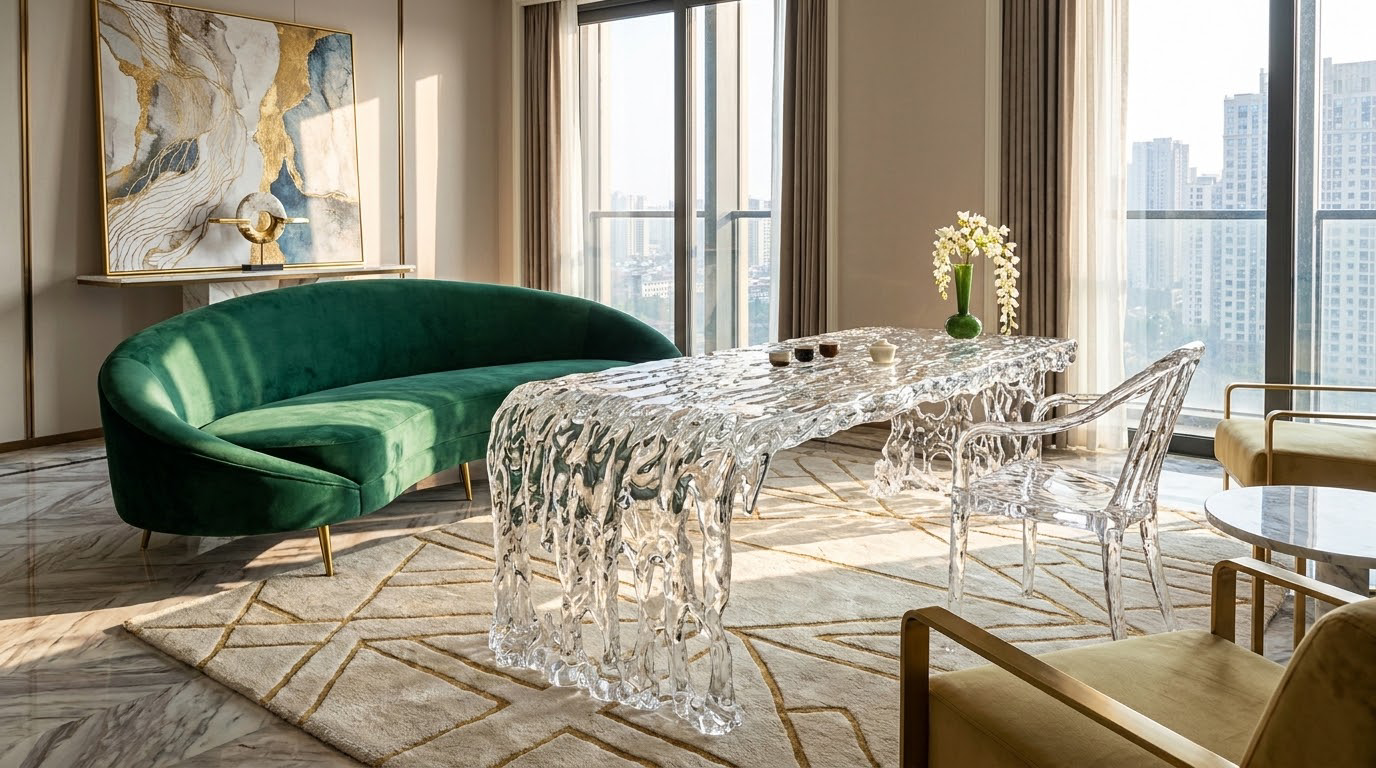
For synthetic crystal furniture to perform in high-end residential and commercial spaces, it must meet strict quality standards that go beyond visual appeal. Third-party testing and in-process checks ensure every piece meets performance expectations.
Structural and Durability Testing
Every new design undergoes rigorous testing to validate its real-world performance.
Load testing: A standard synthetic crystal table is tested to support 150kg of distributed weight without deflection
Impact testing: Drop tests with 1kg steel weights from 1m height verify resistance to chipping, thanks to the material’s high surface hardness
UV stability testing: 1000 hours of accelerated UV exposure confirm no yellowing or discoloration
Thermal shock testing: Cycles between -10°C and 60°C test resistance to temperature changes near windows or heating elements
Commercial-grade pieces must pass an additional 10,000-cycle fatigue test to qualify for public spaces.
Aesthetic Quality Control
Visual consistency is critical for luxury projects, especially when multiple pieces are ordered for a single space.
Color matching: Uses spectrophotometers to ensure color consistency within ΔE < 1, imperceptible to the human eye
Clarity grading: Inspects for internal bubbles, inclusions, or streaks using 10,000-lux backlighting
Surface inspection: Uses automated optical scanning to detect any surface defects larger than 0.05mm
Installation fit check: Pre-assembles all components in the factory to verify perfect alignment before shipping
5. Real-World Applications: Case Studies of Custom Synthetic Crystal Furniture
The true value of synthetic crystal furniture lies in its ability to bring unique interior designer visions to life. These case studies demonstrate how the material performs across different project types.
Residential Luxury: A Custom Sculptural Dining Set
A 2023 residential project in Miami required a statement dining set that would serve as the focal point of an open-concept living space.
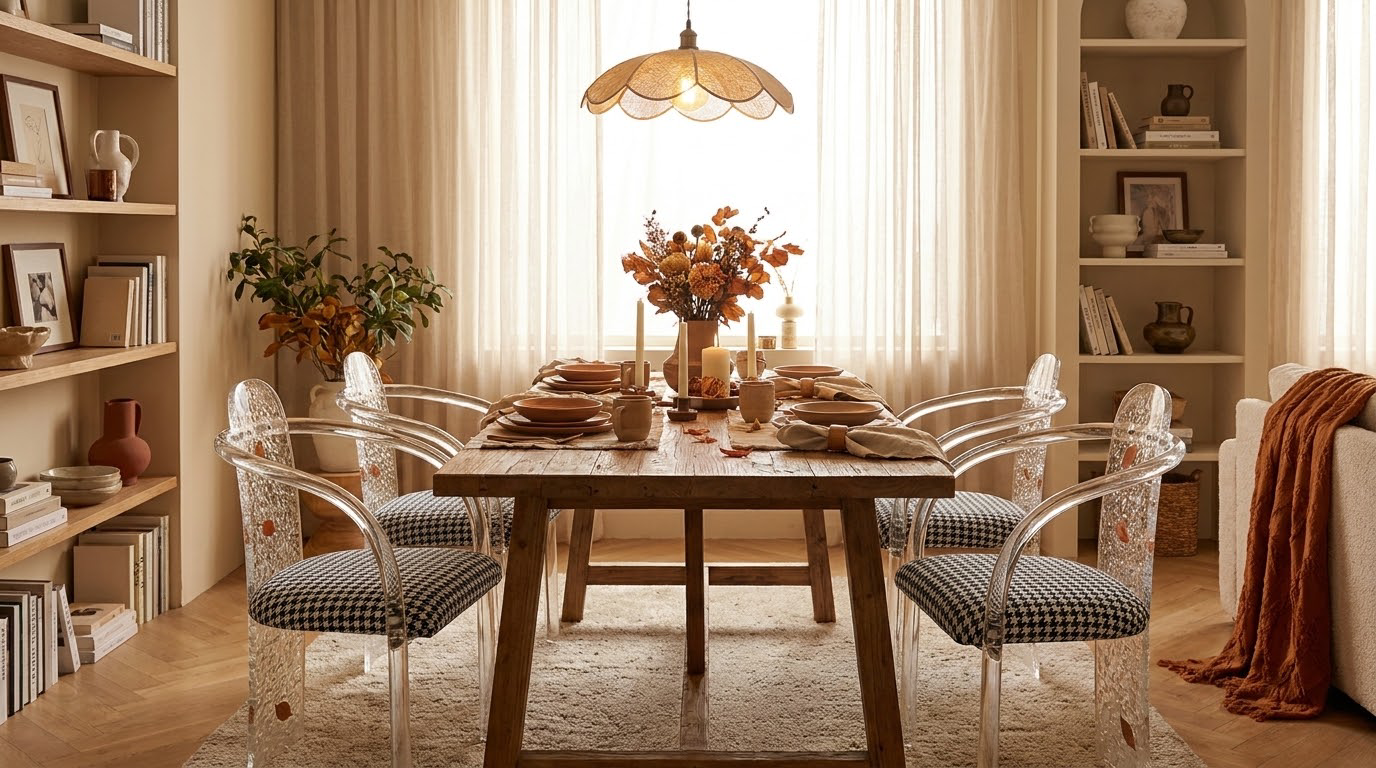
Design challenge: The interior designer wanted an organic, wave-shaped table base and matching synthetic crystal chair set with zero visible hardware
Solution: Used high-purity optical-grade material cast in custom molds, with internal stainless steel supports hidden within the crystal structure
Outcome: The 3-meter table and 8 chairs were installed in 2 days, with post-installation testing confirming 200kg load capacity
Client feedback: The piece has become a signature element of the home, featured in 3 luxury design publications
This project proved that synthetic crystal could match the luxury feel of natural crystal at 40% lower cost and with full design flexibility.
Commercial Hospitality: A Lobby Feature Seating Installation
A 5-star hotel in Singapore commissioned a large-scale seating installation for its main lobby in 2024.
Design challenge: 12 interconnected synthetic crystal chair forms needed to withstand 10+ hours of daily use in a high-traffic area
Solution: Used reinforced synthetic crystal with a polymer core, paired with hand-polished edges for a soft, inviting feel
Outcome: The installation has been in use for 8 months with zero signs of wear, despite an estimated 500+ daily interactions
ROI: The hotel reports a 25% increase in social media mentions of its lobby since the installation went live
As material and manufacturing technologies continue to evolve, synthetic crystal furniture will become an even more versatile tool for interior designers seeking to push creative boundaries. The key to successful projects lies in early collaboration between design teams and manufacturing experts, ensuring that creative vision is paired with practical engineering from the very first sketch.
READ MORE:
- Arredamento in cristallo sintetico: innovazione dei materiali e libertà nel design d’interni
- Progettazione strutturale e prestazioni d'uso dell'arredamento in cristallo sintetico: come coniugare innovazione formale, stabilità e funzionalità?
- Arredamento in cristallo sintetico: design d'interni orientato all'esperienza e modellazione dell'atmosfera
- Arredamento in cristallo sintetico: dalla trasparenza dei materiali alla gerarchia spaziale nei metodi di organizzazione visiva del design d'interni contemporaneo
- Arredamento in cristallo sintetico: scala visiva e rapporto tra proporzioni architettoniche e volume dei mobili
- Synthetic Crystal Furniture: How Edge Aesthetics in Detail Design Define Interior Spatial Texture
- Synthetic Crystal Furniture: Redefining Material Expression in Contemporary Interior Design
- Synthetic Crystal Furniture: Balancing Design Precision and Delivery in Custom Interior Projects
- Synthetic Crystal Furniture: From Furniture Design to Brand Space Shaping in High-End Retail


