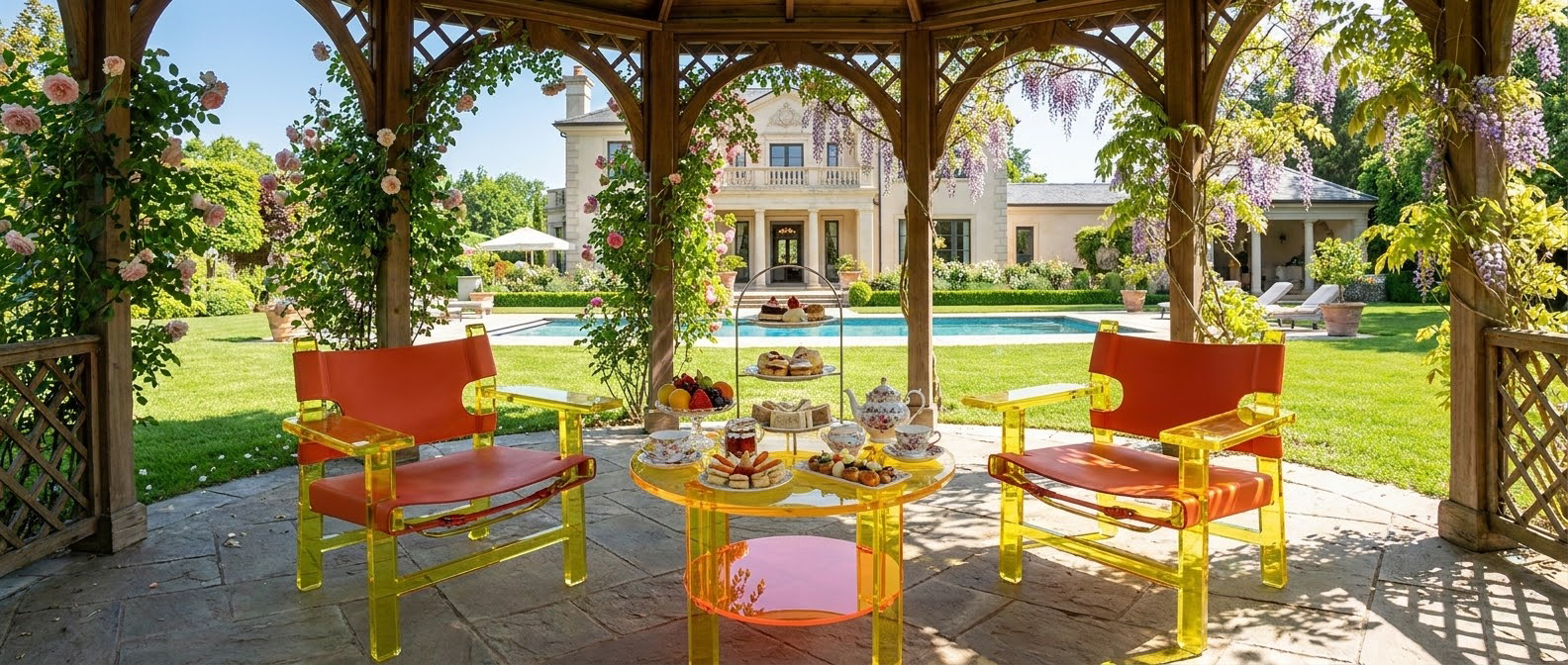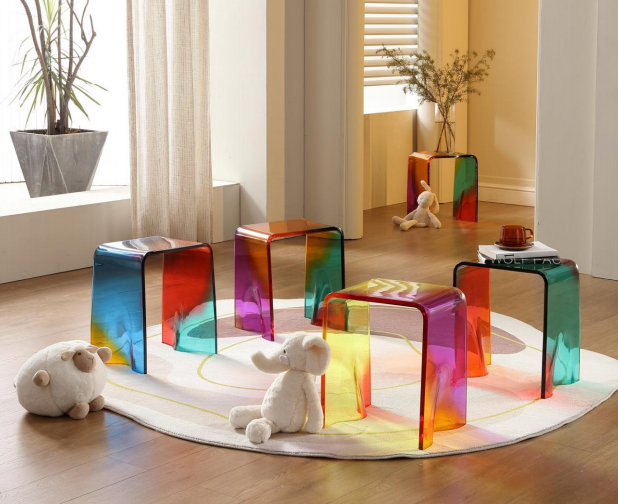
Synthetic crystal furniture has emerged as a transformative category for interior designers seeking to merge high-end aesthetics with functional acoustic performance. As open-plan layouts and minimalist design trends dominate commercial and residential spaces, the role of hard transparent materials in sound management has grown in importance. This guide breaks down the technical properties, acoustic behaviors, and practical design strategies for integrating these pieces into modern spatial configurations.
1. Material Properties of Synthetic Crystal Furniture for Acoustic Applications
1.1 Core Physical Characteristics of High-Purity Optical-Grade Materials
High-purity optical-grade materials form the base of premium synthetic crystal furniture, delivering consistent clarity and structural stability that lower-quality alternatives cannot match. These materials are manufactured through controlled polymerization processes that eliminate internal impurities, ensuring uniform density across every panel and component.
Density ranges from 1.18 to 1.2 g/cm³, creating a rigid surface that produces predictable sound reflection patterns
Light transmission rates reach 92% or higher, matching the clarity of natural crystal while offering greater design flexibility
Thermal stability supports use in temperature-variable spaces without warping or structural degradation
Interior designers value this consistency because it allows for precise acoustic modeling during the pre-installation design phase. Unlike natural stone or glass, which can have internal variations that alter sound behavior, synthetic crystal furniture delivers repeatable performance across every custom piece.
1.2 High Surface Hardness and Long-Term Acoustic Consistency
High surface hardness is a defining performance metric for synthetic crystal furniture, with most premium grades measuring 6-7 on the Mohs scale. This durability does more than resist scratches and wear—it maintains consistent acoustic properties over decades of use.
Resists surface pitting and abrasion that would diffuse sound unevenly over time
Supports repeated cleaning without degrading the smooth surface required for predictable sound reflection
Maintains structural integrity in high-traffic commercial spaces where softer materials would degrade
Unlike artificial crystal furniture made from lower-grade acrylics, premium synthetic crystal retains its smooth surface finish for 15+ years. This longevity means the acoustic performance of a space remains consistent with its original design intent, reducing the need for costly retrofits.
2. Acoustic Behavior of Hard Transparent Materials in Enclosed Spaces
2.1 Sound Reflection Patterns of Synthetic Crystal Surfaces
Synthetic crystal furniture produces highly specular sound reflection due to its non-porous, uniformly smooth surface. This behavior differs significantly from porous materials that absorb sound, or textured surfaces that diffuse it randomly.
Mid and high-frequency sounds reflect at angles equal to their incidence, creating predictable sound pathways
Low-frequency sounds (below 250 Hz) pass through or resonate slightly with the material, depending on panel thickness
Reflection coefficients reach 0.97 for frequencies above 500 Hz, making these pieces highly effective sound redirection tools
Interior designers can leverage this predictable reflection to direct sound toward absorptive ceiling panels or diffusive wall treatments. For example, synthetic crystal tables placed in conference rooms can reflect speech upward toward ceiling baffles, reducing echo at ear level.
2.2 Diffusion vs. Absorption: Strategic Tradeoffs for Designers
A common misconception is that hard materials are always detrimental to acoustic comfort. When positioned intentionally, synthetic crystal furniture can support balanced acoustic design by complementing absorptive materials rather than competing with them.
Use reflective synthetic crystal chairs in dining areas to maintain lively ambient sound without harsh echo
Pair reflective surfaces with fabric wall panels and carpeted floors to control overall reverberation time
Position reflective pieces away from primary listening positions to avoid direct sound bounce-back
Research from acoustic design firms shows that spaces with a 60/40 mix of absorptive and reflective surfaces achieve the highest user satisfaction scores for both speech intelligibility and ambient warmth. Synthetic crystal furniture fills the reflective component of this balance without sacrificing visual lightness.
3. Product-Specific Applications of Synthetic Crystal Furniture
3.1 Synthetic Crystal Tables: Focal Points With Acoustic Function
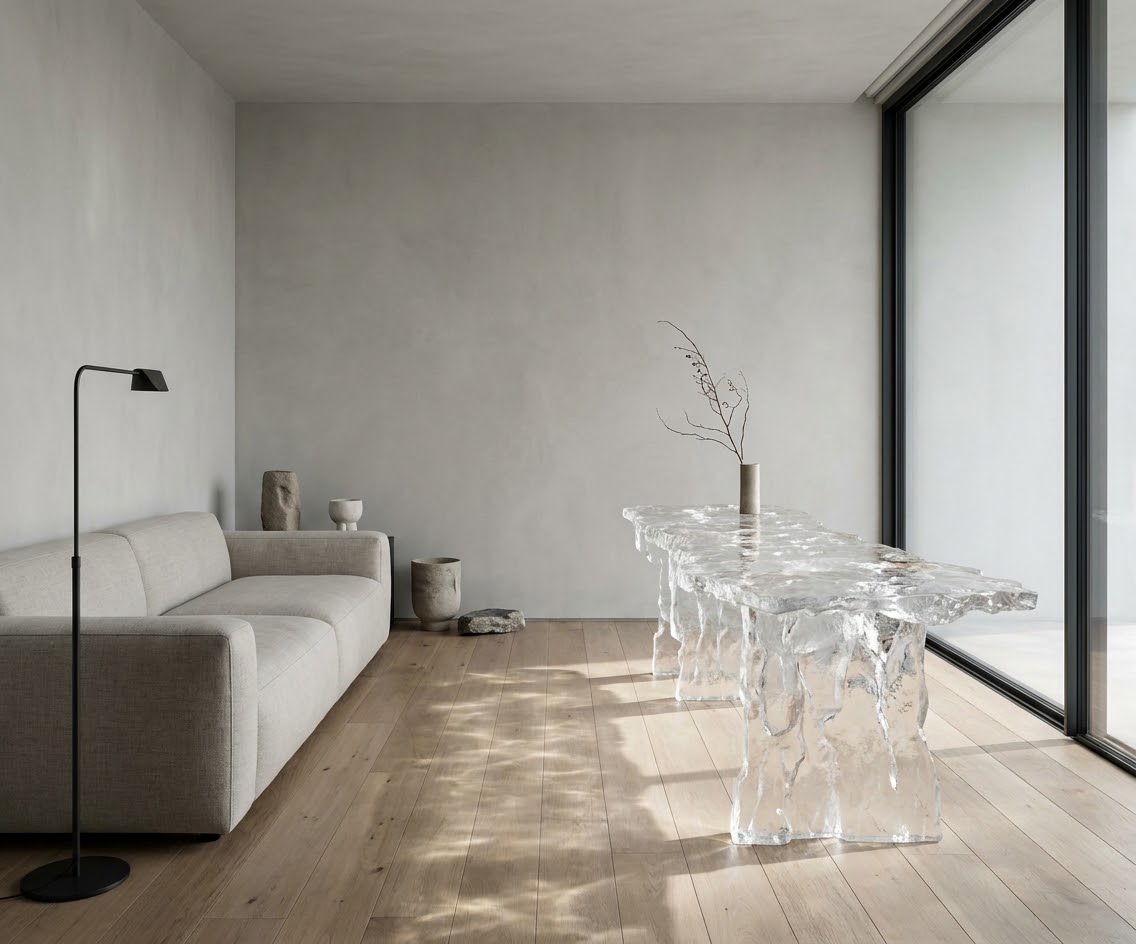
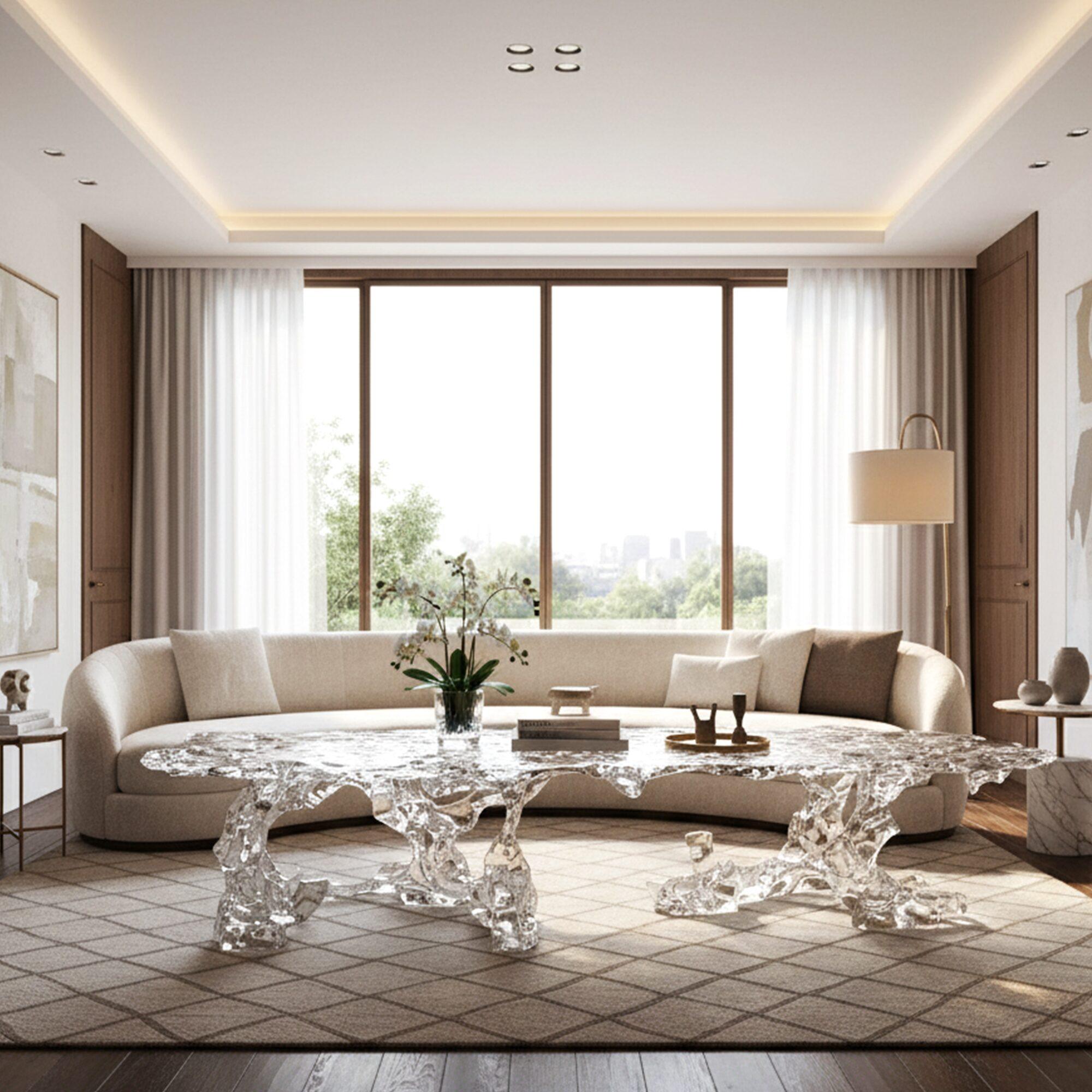
Synthetic crystal tables serve dual roles as design centerpieces and acoustic control elements in both residential and commercial spaces. Their large horizontal surfaces make them impactful for sound distribution, especially in rooms with limited wall space for treatments.
Dining tables: Reflect ambient conversation upward, creating a lively social atmosphere without overwhelming echo
Conference tables: Direct speech toward ceiling microphones and absorptive panels, improving remote meeting audio quality
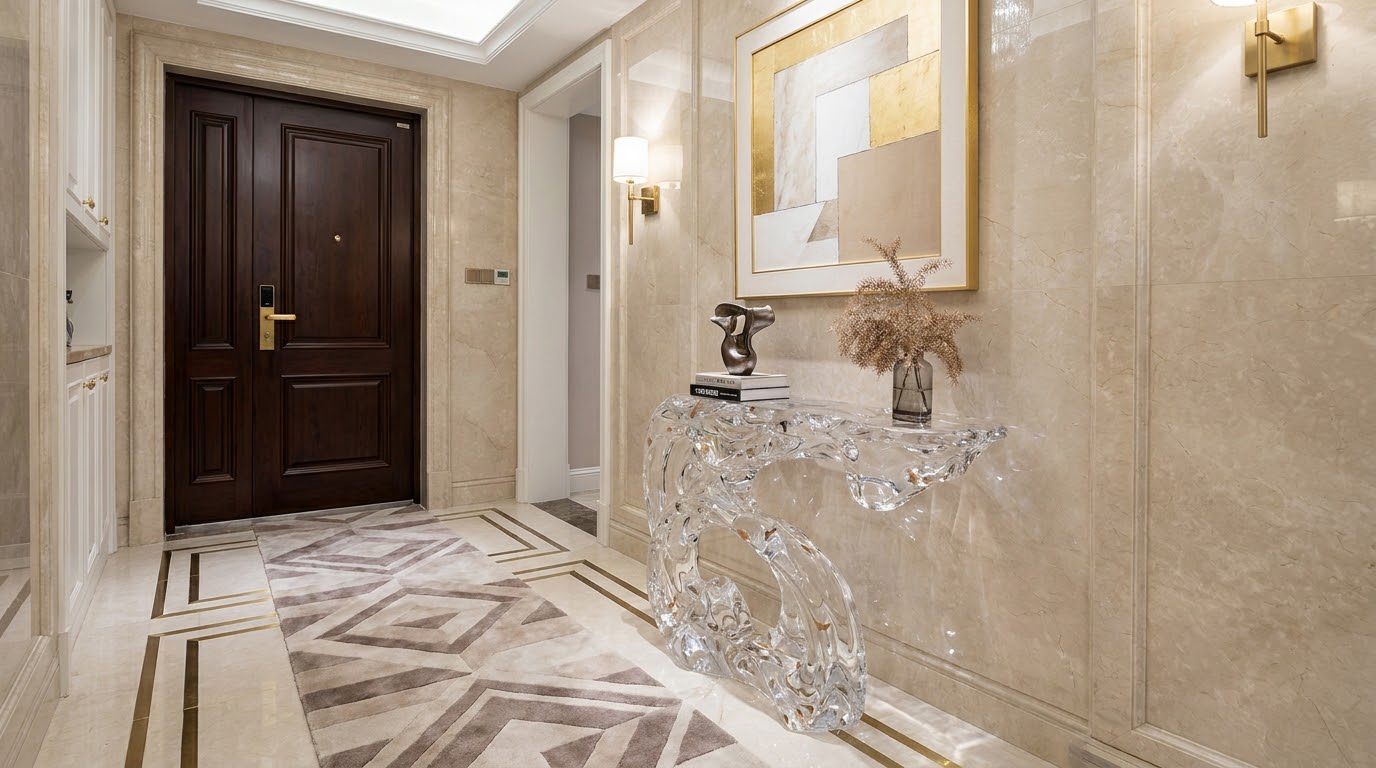
Console tables: Break up parallel wall reflections in narrow hallways, reducing flutter echo
High surface hardness makes these tables suitable for high-use commercial settings, including hotel lobbies and co-working spaces. Unlike glass tables, which can chip and create uneven reflection points, synthetic crystal tables maintain their acoustic performance even with heavy daily use.
3.2 Synthetic Crystal Chairs: Lightweight Design With Acoustic Impact
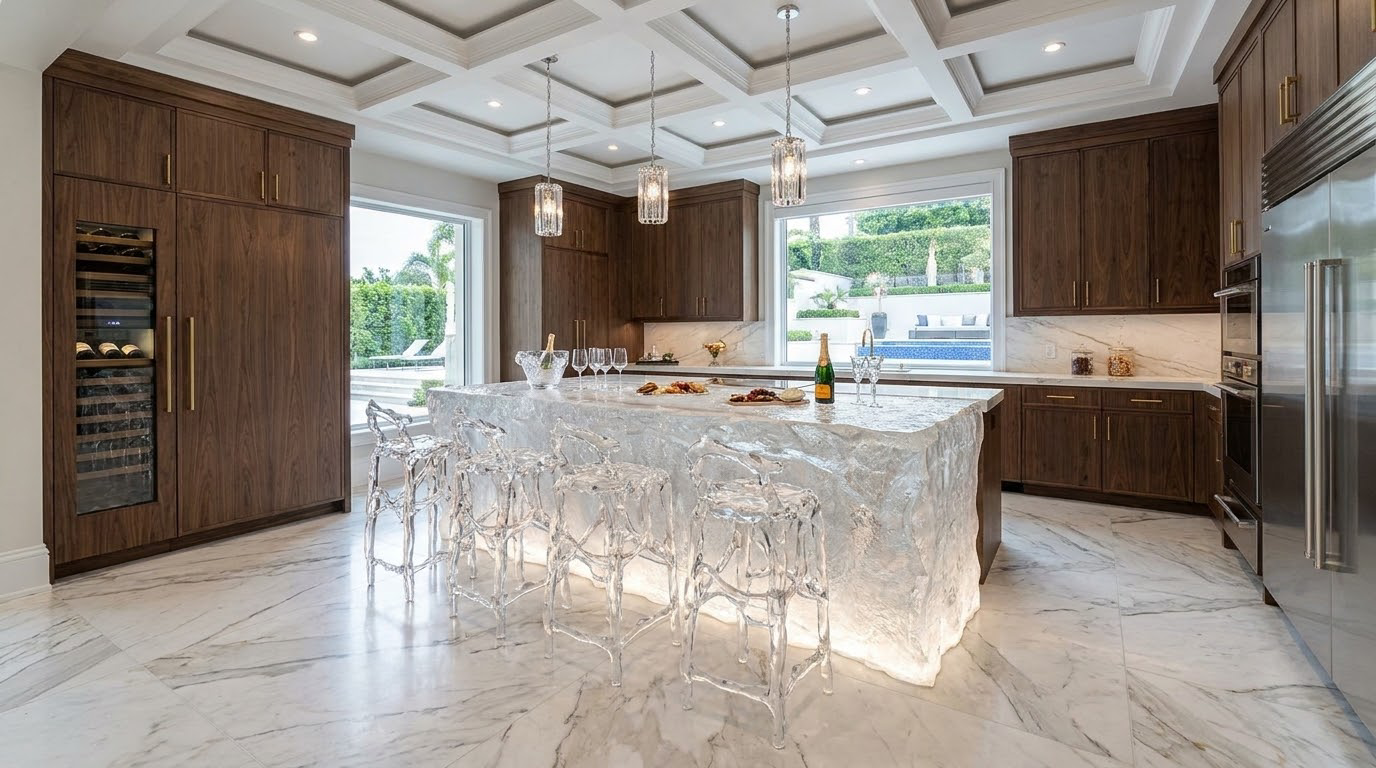
Synthetic crystal chairs offer a unique advantage for flexible spaces: they deliver reflective surface area without visual bulk, supporting open, airy design aesthetics while contributing to acoustic balance.
Stackable designs for event spaces allow adjustable acoustic properties based on crowd size
Transparent form avoids visual clutter in small rooms where opaque furniture would feel heavy
Molded seat shapes diffuse sound slightly at mid-frequencies, reducing harsh reflection from flat surfaces
Artificial crystal furniture options at lower price points can replicate this visual effect, but often lack the density and surface consistency needed for predictable acoustic performance. For projects with strict acoustic requirements, premium synthetic crystal chairs deliver measurable performance benefits.
4. Design Strategies for Interior Designers Balancing Aesthetics and Acoustics
4.1 Spatial Configuration Principles for Optimal Sound Performance
Interior designers working with synthetic crystal furniture can follow evidence-based spatial configuration rules to maximize both visual and acoustic outcomes. These principles apply across residential, hospitality, and commercial project types.
Place large reflective pieces at 30-45 degree angles to primary sound sources to avoid direct reflection back to listeners
Use smaller reflective pieces (side tables, accent chairs) to break up standing waves in rectangular rooms
Maintain at least 18 inches of clearance between reflective furniture and walls to reduce flutter echo
For open-plan offices, strategic placement of synthetic crystal tables between work zones can help define spatial boundaries visually while redirecting sound away from quiet work areas. This approach eliminates the need for bulky partition walls that block natural light.
4.2 Material Layering Techniques for Balanced Reverberation
The key to successful integration of synthetic crystal furniture is thoughtful material layering that balances reflection, absorption, and diffusion. Interior designers can use a tiered approach to build spaces that feel both open and acoustically comfortable.
Base layer: Use carpet, rugs, or fabric wall panels to absorb excess mid and high frequency sound
Mid layer: Add synthetic crystal furniture for controlled reflection and visual lightness
Top layer: Install ceiling diffusers or baffles to manage reflected sound from hard surfaces
High-purity optical-grade materials work particularly well in layered designs because their clear composition allows them to visually recede into the space. This means designers can add reflective surface area without making rooms feel cluttered or visually heavy.
5. Future Trends and Technical Innovations in Synthetic Crystal Furniture
5.1 Advanced Material Formulations for Tunable Acoustics
Recent innovations in material science are expanding the acoustic capabilities of synthetic crystal furniture beyond simple reflection. New formulations incorporate micro-patterned surfaces and composite layers that can diffuse or partially absorb sound while maintaining visual clarity.
Nano-textured surfaces that diffuse high frequencies without reducing light transmission
Core-layered panels with damping materials that reduce low-frequency resonance
Customizable density options for project-specific acoustic requirements
These advancements will allow interior designers to specify synthetic crystal tables and chairs with tailored acoustic properties, rather than treating them as generic reflective surfaces. Early adopter projects in luxury hospitality have already reported 15-20% improvements in speech intelligibility compared to standard synthetic crystal designs.
5.2 Integration With Smart Acoustic Design Systems
The next wave of innovation combines synthetic crystal furniture with embedded smart acoustic technologies, creating dynamic systems that adapt to changing room conditions.
Integrated piezoelectric sensors that measure real-time reverberation levels
Embedded micro-speakers that emit neutralizing sound waves for active noise control
Connected systems that sync with building management software for automated acoustic adjustment
While still in early adoption, these smart integrations position synthetic crystal furniture as a high-tech solution for modern smart buildings. As workplaces and hospitality spaces increasingly prioritize adaptive environments, demand for these intelligent, aesthetically refined pieces is expected to grow 22% annually through 2028, according to interior design industry forecasts.