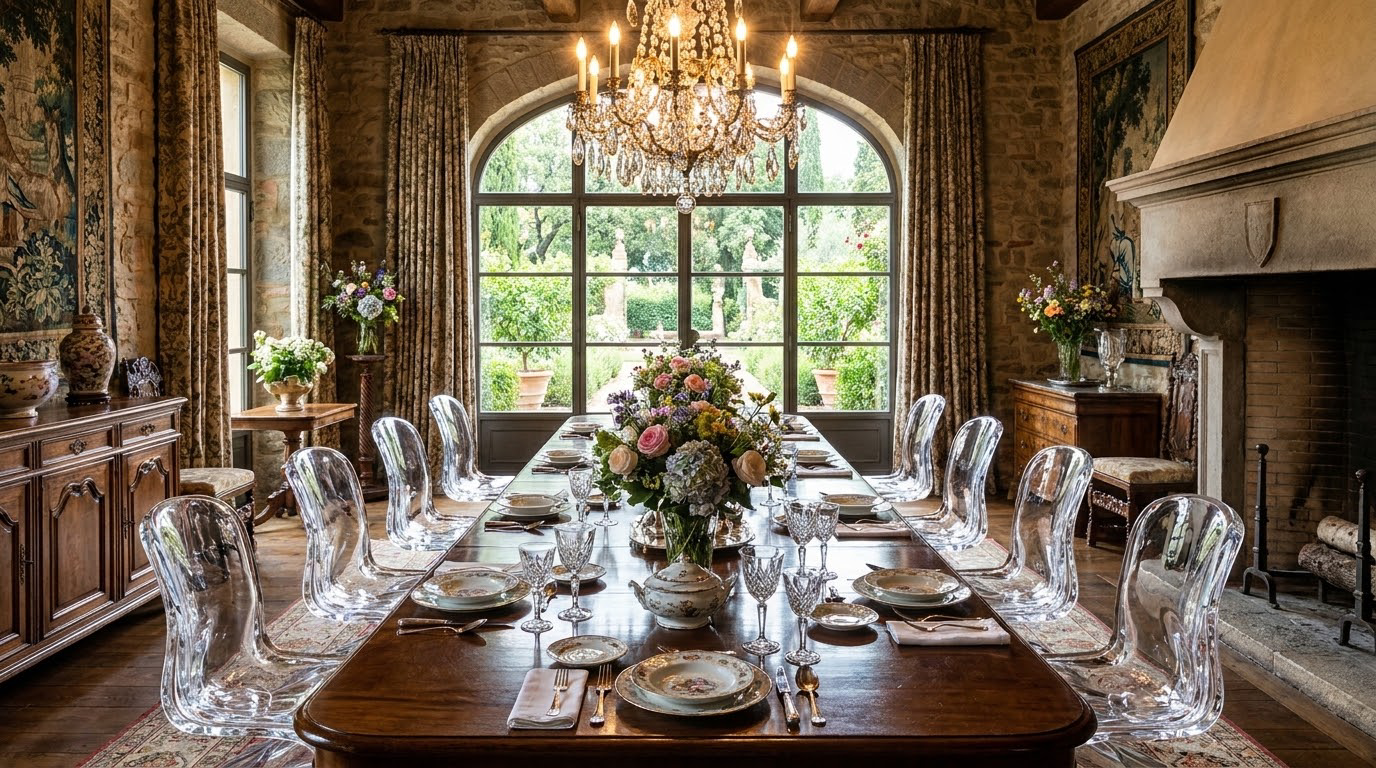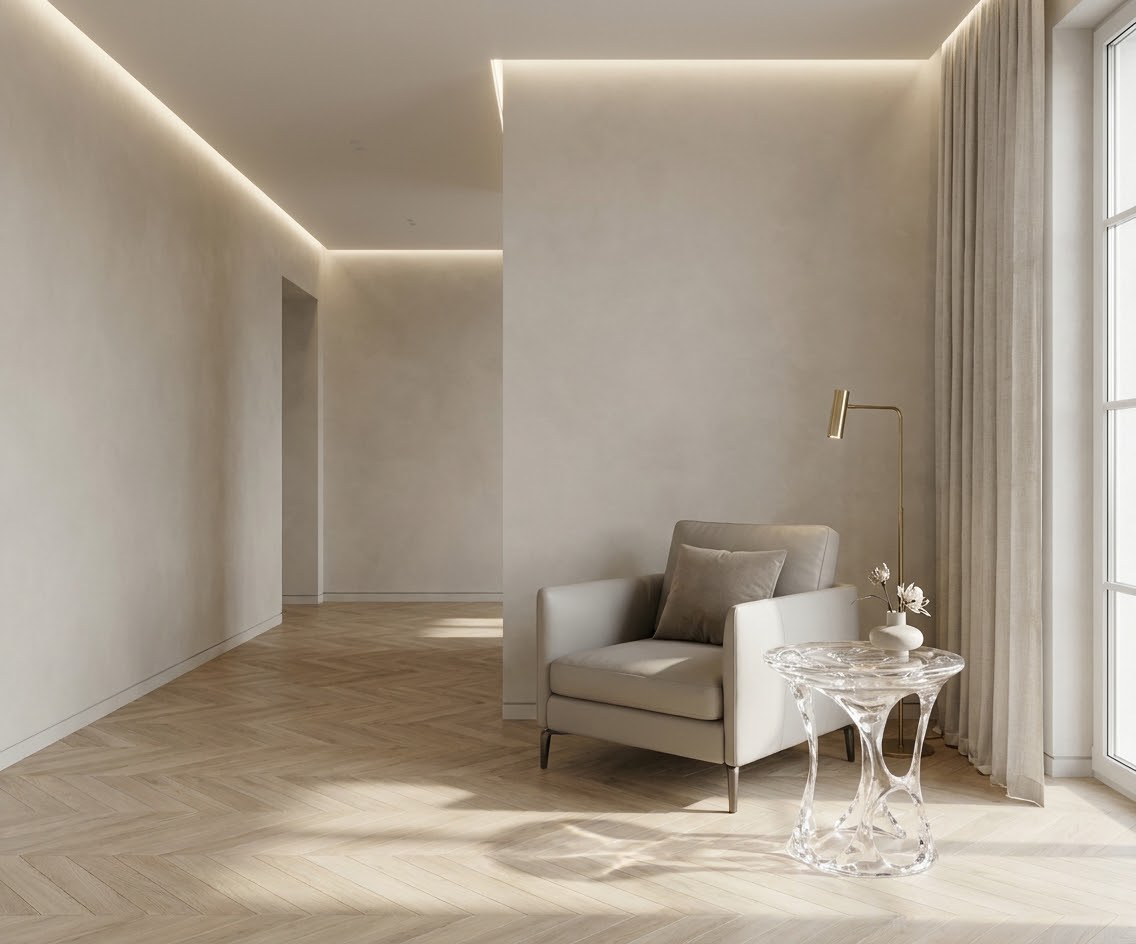
For interior designers working on high-end residential and commercial projects, synthetic crystal furniture has emerged as a transformative material option that balances aesthetic appeal with functional durability. Unlike natural crystal, which carries high cost and structural limitations, man-made alternatives deliver consistent quality for custom installations. This guide breaks down a systematic evaluation framework to help professionals select the right pieces for every design brief.
1. Core Material Performance Indicators of Synthetic Crystal Furniture
The first step in any selection process is verifying baseline material quality, as performance varies drastically across manufacturing standards. Top-tier products use high-purity optical-grade material, which delivers clarity and structural integrity unmatched by lower-grade alternatives.
1.1 Optical Clarity and Purity Grading
Clarity is the defining aesthetic feature of synthetic crystal furniture, directly impacting how light interacts with a space.
Grade AAAA (optical grade): 99.99% silica purity, zero internal bubbles, 92% light transmittance
Grade AAA (commercial premium): 99.9% silica purity, minimal micro-bubbles, 88% light transmittance
Grade AA (standard): 99.5% silica purity, visible small bubbles, 82% light transmittance
High-purity optical-grade material falls under the AAAA category, making it the preferred choice for statement pieces in luxury projects. Lower grades often appear cloudy or contain visible flaws that detract from high-end design visions. Interior designers should request material sample cards with side-by-side clarity comparisons before finalizing selections.
1.2 Mechanical Property Verification
Beyond aesthetics, synthetic crystal furniture must meet strict structural requirements for daily use.
High surface hardness: Mohs hardness of 6.5-7, comparable to granite, resisting scratches from daily use
Compressive strength: 200-250 MPa, supporting heavy loads without cracking
Impact resistance: 2-3 times that of natural crystal, reducing breakage risk from minor impacts
High surface hardness is a critical parameter for frequently used pieces like synthetic crystal tables, which face constant contact with dishes, laptops, and decorative objects. For commercial spaces with high foot traffic, prioritize products with reinforced edge treatments to further reduce chipping risk. Always request third-party test reports to confirm mechanical property claims, as manufacturer specifications can sometimes be overstated.
2. Structural Safety Assessment for Synthetic Crystal Furniture
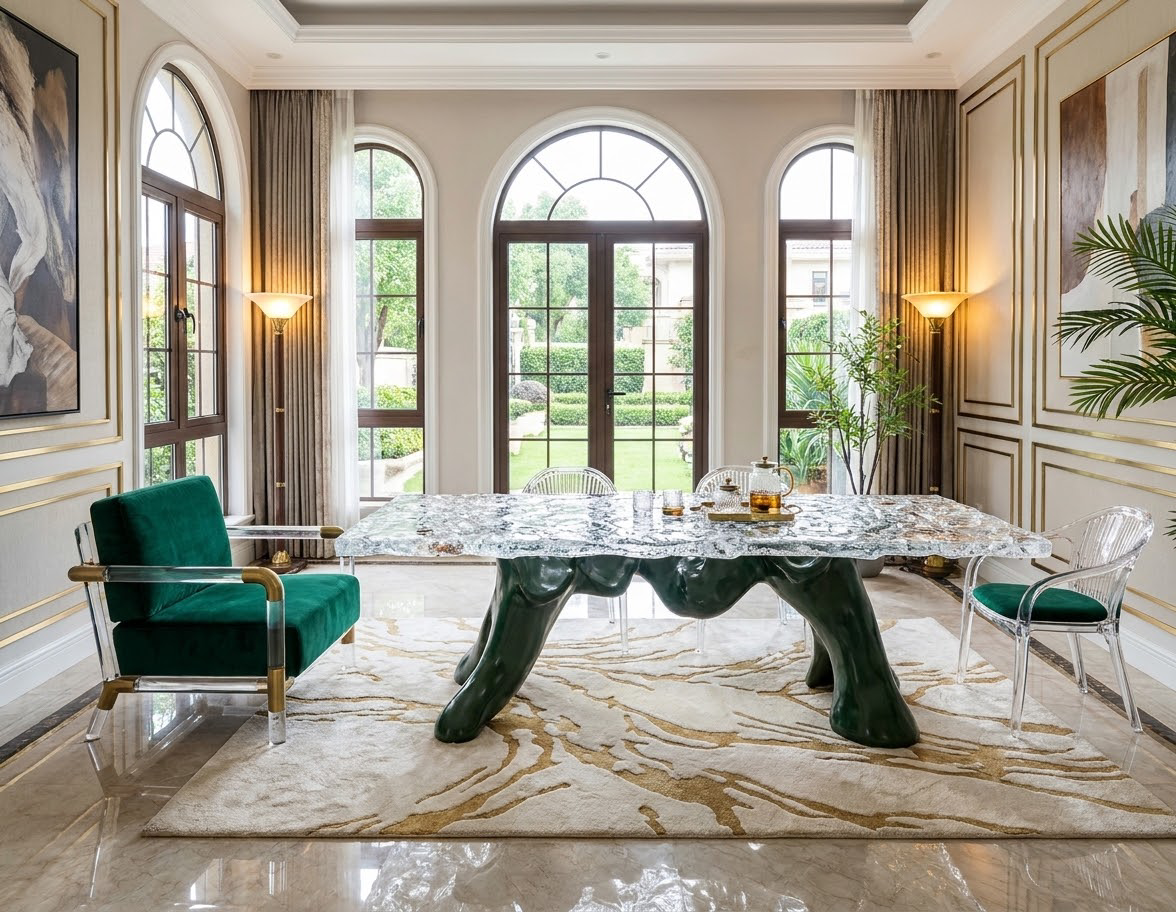
Structural integrity is non-negotiable for functional furniture, especially for pieces that support weight or are installed in high-traffic areas. A thorough assessment combines material properties with design engineering to ensure long-term safety.
2.1 Load-Bearing Capacity Testing
Load-bearing performance varies significantly across product types and design configurations.
Synthetic crystal tables: Standard 12mm thick tops support 50kg evenly distributed load; 20mm thick tops support 120kg
Synthetic crystal chairs: Solid crystal seats support 150kg static load; hollow designs support 100kg
Shelving units: 10mm thick shelves support 30kg per linear meter
For custom projects, always calculate expected maximum load and add a 50% safety margin. For example, a dining table expected to hold 80kg should use a thickness rated for at least 120kg. Interior designers should also consider load distribution—concentrated heavy objects (like stone sculptures) require additional support pads to prevent stress fractures.
2.2 Joint and Connection Design
Most structural failures occur at connection points, not in the crystal material itself.
Adhesive bonding: Use UV-cured optical adhesive that matches crystal refractive index for invisible joints
Mechanical fasteners: Stainless steel or brass hardware with rubber gaskets to prevent stress concentration
Integrated molding: One-piece cast designs eliminate joints entirely for maximum strength
Artificial crystal furniture with integrated molding is ideal for high-use commercial spaces, as it removes the weakest point of assembled designs. For custom pieces that require assembly, specify that joints be tested for shear strength before installation. Always inspect connection points during on-site delivery to ensure no gaps or misalignment that could compromise structural safety.
3. Space Adaptation Evaluation Framework
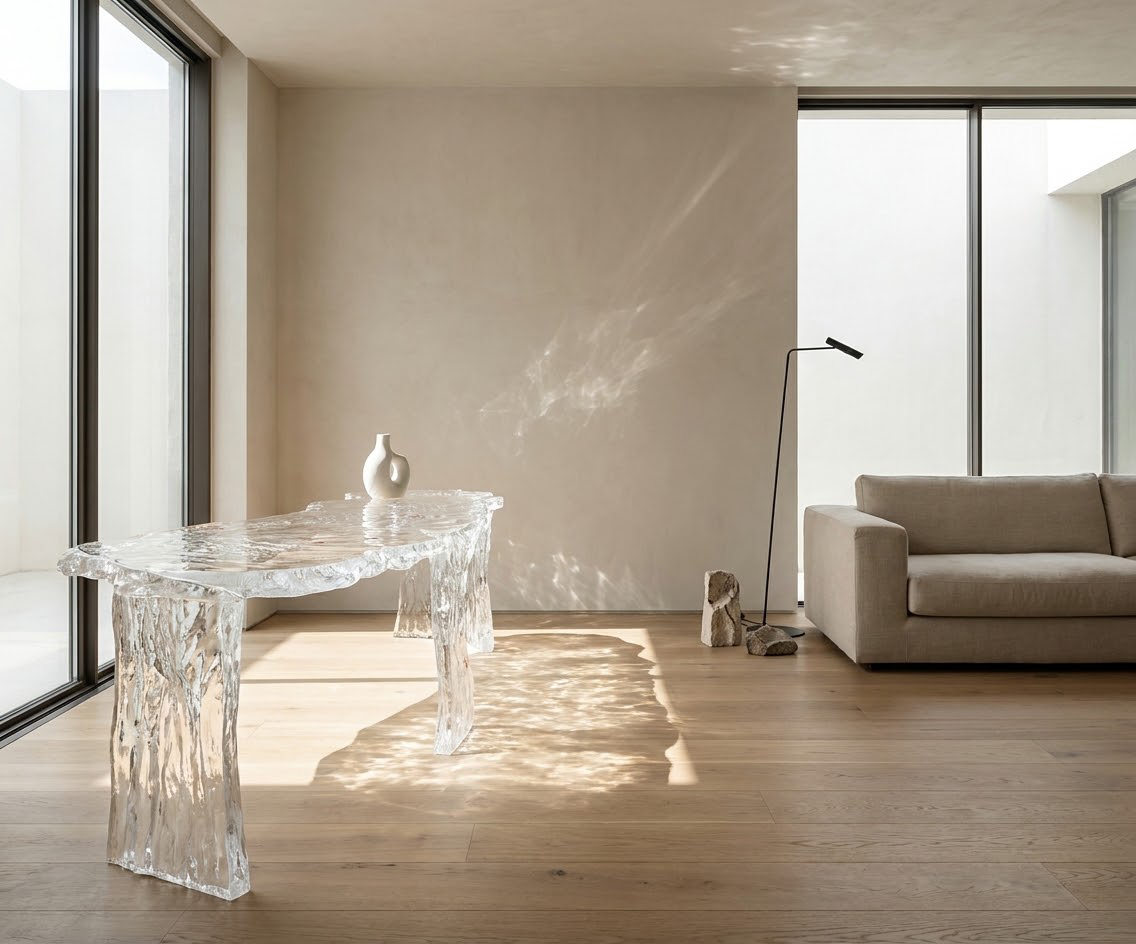
Even the highest-quality synthetic crystal furniture will fail if it does not align with the space’s functional needs, aesthetic style, and environmental conditions. This framework ensures selections enhance rather than disrupt the design vision.
3.1 Spatial Scale and Proportion Matching
Proper sizing prevents crystal pieces from overwhelming or getting lost in a space.
Small rooms (under 20 sqm): Use thin-profile (10-12mm) synthetic crystal tables with minimalist bases to maintain visual lightness
Medium rooms (20-50 sqm): 15-18mm thick pieces with moderate decorative details work well
Large spaces (over 50 sqm): 20mm+ thick statement pieces with carved details can anchor the room
For example, a 1.8m synthetic crystal dining table works best in rooms at least 4m wide, allowing 1m of clearance on all sides. Synthetic crystal chairs should be proportionate to the table—thin, delicate designs pair with slim tabletops, while substantial chairs match thicker tops. Always create 3D renderings with accurate scale before finalizing furniture dimensions.
3.2 Environmental Condition Compatibility
Environmental factors can impact both the appearance and longevity of synthetic crystal furniture.
Humidity: Synthetic crystal is non-porous, making it suitable for bathrooms and pool areas where wood furniture would warp
UV exposure: Direct sunlight over 6 hours daily can cause slight yellowing in lower-grade materials; use UV-resistant coatings for sunlit spaces
Temperature: Withstands -20°C to 80°C, suitable for both indoor and covered outdoor areas
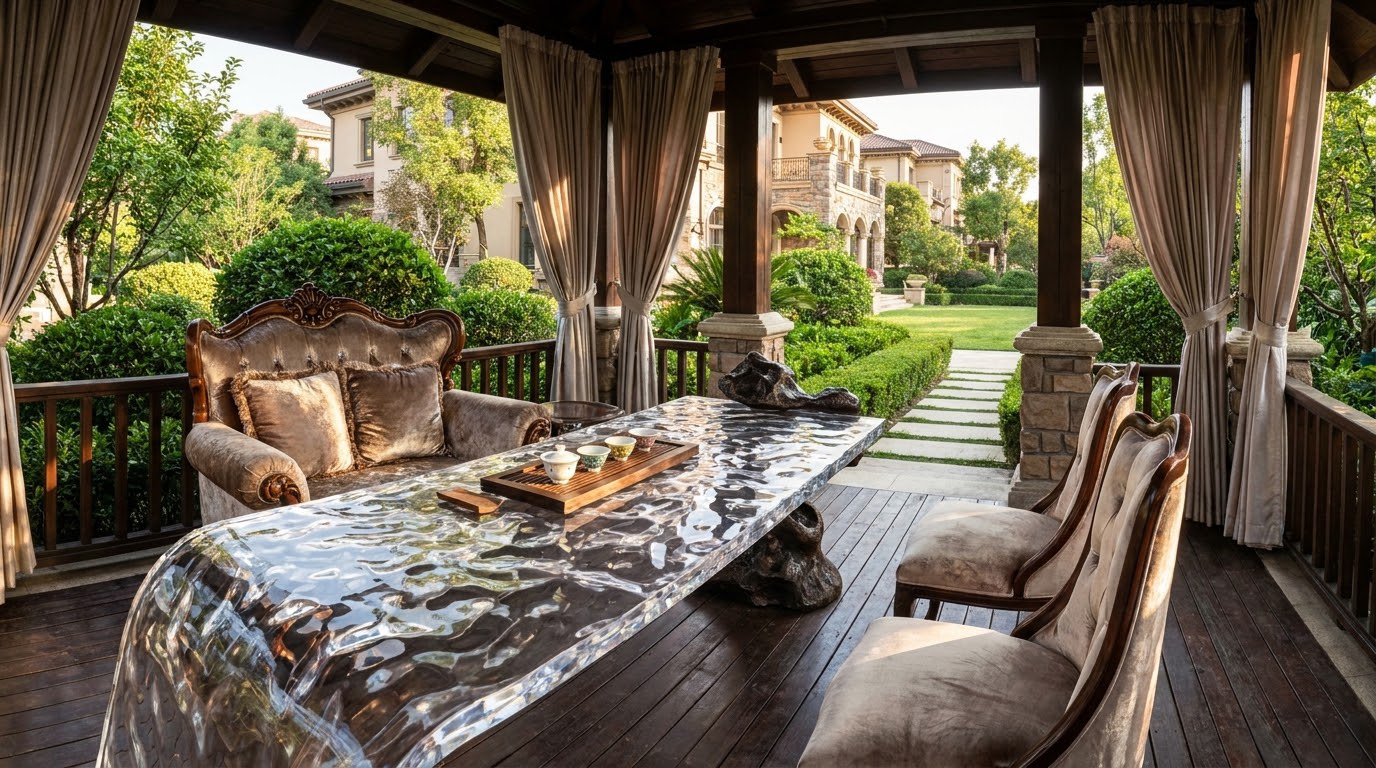
High-purity optical-grade material has better UV resistance than standard grades, making it the better choice for rooms with large windows or skylights. For outdoor covered patios, confirm that the crystal has been treated with additional UV protective coatings to prevent discoloration over time. Interior designers should also consider cleaning requirements—crystal furniture only needs mild soap and water, making it low-maintenance for busy households and commercial spaces.
4. Aesthetic Style Integration Strategies
Synthetic crystal furniture is incredibly versatile, but it must be intentionally integrated to match the overall design aesthetic. Poor styling can make crystal pieces look out of place or overly flashy.
4.1 Style Matching for Different Design Themes
Crystal furniture adapts well to most popular design styles when selected thoughtfully.
Modern minimalist: Clear, unadorned synthetic crystal tables with geometric shapes and metal bases
Art deco: Frosted or colored crystal with geometric carving details and brass accents
Scandinavian: Thin-profile crystal pieces paired with light wood and natural textiles
Glam luxury: Cut crystal surfaces with mirrored bases and plush upholstered seating
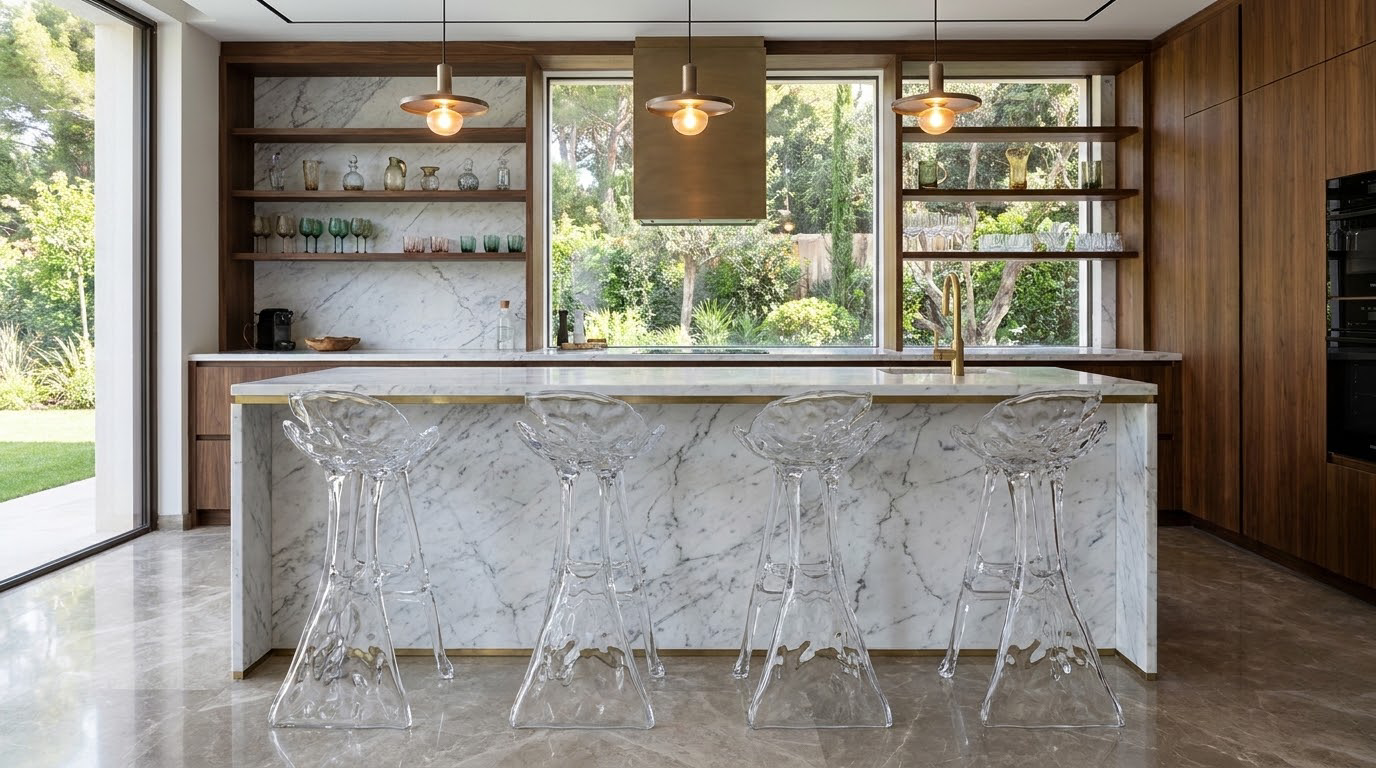
Artificial crystal furniture works particularly well in small spaces because its transparent quality creates the illusion of more square footage. For minimalist projects, avoid overly decorative edges—opt for clean, straight lines that blend seamlessly with the rest of the decor. For maximalist spaces, use crystal pieces as statement focal points surrounded by rich textures and bold colors.
4.2 Light Interaction Design
One of the unique benefits of crystal furniture is how it interacts with light to enhance space atmosphere.
Natural light: Place synthetic crystal pieces near windows to create rainbows and light refractions across the room
Artificial light: Pair with warm LED strip lighting under tabletops for a glowing, ethereal effect
Ambient lighting: Use crystal chandeliers above crystal dining sets to create cohesive light reflection
Interior designers often use light interaction as a key selling point for high-end residential projects. For dining rooms, install dimmable overhead lights that can be adjusted to create different moods—bright light for dinner parties, soft glow for romantic meals. For office spaces, position synthetic crystal desks near windows to reduce visual heaviness and make the workspace feel more open.
5. Cost-Effectiveness and Long-Term Value Assessment
For both residential and commercial clients, understanding total cost of ownership helps justify investment in high-quality synthetic crystal furniture. The initial purchase price is only part of the equation.
5.1 Initial Cost Breakdown
Pricing varies based on material grade, size, and design complexity.
Material grade: High-purity optical-grade material costs 30-50% more than standard commercial grade
Size: Thicker pieces cost exponentially more due to longer production time and more raw material
Customization: Carved edges, colored tinting, and custom shapes add 20-100% to base pricing
For example, a standard 1.6m synthetic crystal dining table in commercial grade costs $1,200-$1,800, while the same size in optical grade with custom edge detailing costs $2,500-$4,000. Synthetic crystal chairs range from $300-$800 each depending on material grade and design complexity. For budget-constrained projects, consider using higher-grade crystal for visible statement pieces and standard grade for secondary furniture that gets less attention.
5.2 Long-Term Maintenance and Durability Value
The high surface hardness of quality synthetic crystal furniture means lower long-term costs compared to many other materials.
Scratch resistance: Unlike glass (Mohs 5.5), synthetic crystal resists most daily scratches, maintaining its appearance longer
Repair cost: Minor scratches can be polished out for $50-$100 per piece, compared to $200+ for glass resurfacing
Lifespan: 15-20 years with proper care, compared to 5-10 years for mid-range wood furniture
When presenting to clients, frame synthetic crystal furniture as a long-term investment rather than a decorative expense. For commercial spaces like hotel lobbies or high-end retail stores, the durability of crystal furniture reduces replacement costs over time. Interior designers should also provide clients with simple care instructions—avoid harsh chemical cleaners, use coasters for hot items, and dust regularly with a microfiber cloth—to extend the furniture’s lifespan.
Conclusion
Selecting the right synthetic crystal furniture requires a balanced assessment of material performance, structural safety, space adaptation, aesthetic integration, and long-term value. By starting with high-purity optical-grade material verification and working through each evaluation layer, interior designers can make informed decisions that deliver both visual impact and functional reliability. As demand for luxury, durable furniture continues to grow, mastering this evaluation framework will help professionals deliver exceptional results for every project type.